
Need activated carbon?
Get Factory-Direct Pricing — No Middlemen
20+ years manufacturing. MOQ 1 ton. Free samples. Reply within 2 hours.
In This Guide
What Is a Carbon Filter?
A carbon filter is a filtration device that uses activated carbon to remove contaminants, odors, and impurities from water or air through a process called adsorption. Unlike mechanical filters that physically trap particles, carbon filters work at the molecular level — contaminant molecules bind to the vast internal surface area of the activated carbon.
The term "carbon filter" almost always refers to an activated carbon filter. The activation process — heating carbon materials to 800–1,000°C with steam or chemical agents — creates an extensive network of microscopic pores. A single gram of properly activated carbon can have a surface area exceeding 1,000 m² (about the size of four tennis courts). This enormous surface area is what makes carbon filters so effective.
Carbon filters are used in an extraordinarily wide range of applications: from the municipal water treatment plants that provide your drinking water, to the air purifiers in your home, to the industrial emission control systems at chemical plants. The global activated carbon market — valued at $4.19 billion in 2026 — is driven largely by carbon filtration demand, particularly for water treatment (42.5% of total market value) and air purification.
How Carbon Filters Work: The Science of Adsorption
Carbon filters remove contaminants through adsorption (not absorption). In adsorption, molecules adhere to the surface of the carbon rather than being soaked into it. Think of it like a magnet attracting metal filings — except the attraction is chemical rather than magnetic.
The Adsorption Process
When contaminated water or air passes through activated carbon, three things happen simultaneously:
- Physical adsorption (van der Waals forces): Organic molecules are attracted to and held on the carbon surface by weak intermolecular forces. This is the primary mechanism for removing taste, odor, chlorine, VOCs, and most organic compounds.
- Chemical adsorption (chemisorption): Some contaminants form actual chemical bonds with the carbon surface or with impregnated chemicals. This is how impregnated carbons target specific pollutants like mercury, hydrogen sulfide, or formaldehyde.
- Catalytic reduction: Activated carbon acts as a catalyst for certain reactions, most notably converting free chlorine (Cl₂) to chloride ions (Cl⁻). This is why carbon filters are so effective for dechlorination — the carbon itself is barely consumed in the process.
What Determines Filtration Performance?
Five factors control how well a carbon filter performs:
| Factor | Impact | Practical Implication |
|---|---|---|
| Surface area & pore structure | More pores = more adsorption sites | Higher iodine number (≥1,000 mg/g) generally means better performance |
| Contact time (EBCT) | Longer contact = more complete removal | Design beds for 5–20 min EBCT depending on target contaminant |
| Contaminant type & size | Pore size must match molecule size | Micropores (<2 nm) for small molecules; mesopores (2–50 nm) for larger ones |
| Water/air temperature | Higher temp = lower adsorption capacity | Carbon filters work better in cooler conditions |
| pH level (water) | Acidic pH generally improves organic removal | pH 6–7 is optimal for most organic contaminants |
Types of Carbon Filter Media
Not all carbon filters are the same. The type of carbon media determines what the filter can remove, how long it lasts, and what it costs. Here's a breakdown of the main types:
By Physical Form
Granular Activated Carbon (GAC) Filters
GAC filters use loose granules of activated carbon, typically 8×30 or 12×40 mesh size for water treatment. Water or air flows through the bed of granules, and contaminants adsorb onto the carbon surfaces.
- Pros: Low pressure drop, easy to replace/regenerate, cost-effective for large systems, well-understood design parameters
- Cons: Can channel (water finds the path of least resistance), requires proper bed depth for effectiveness
- Best for: Municipal water treatment, industrial process water, large-scale air treatment, PFAS removal systems
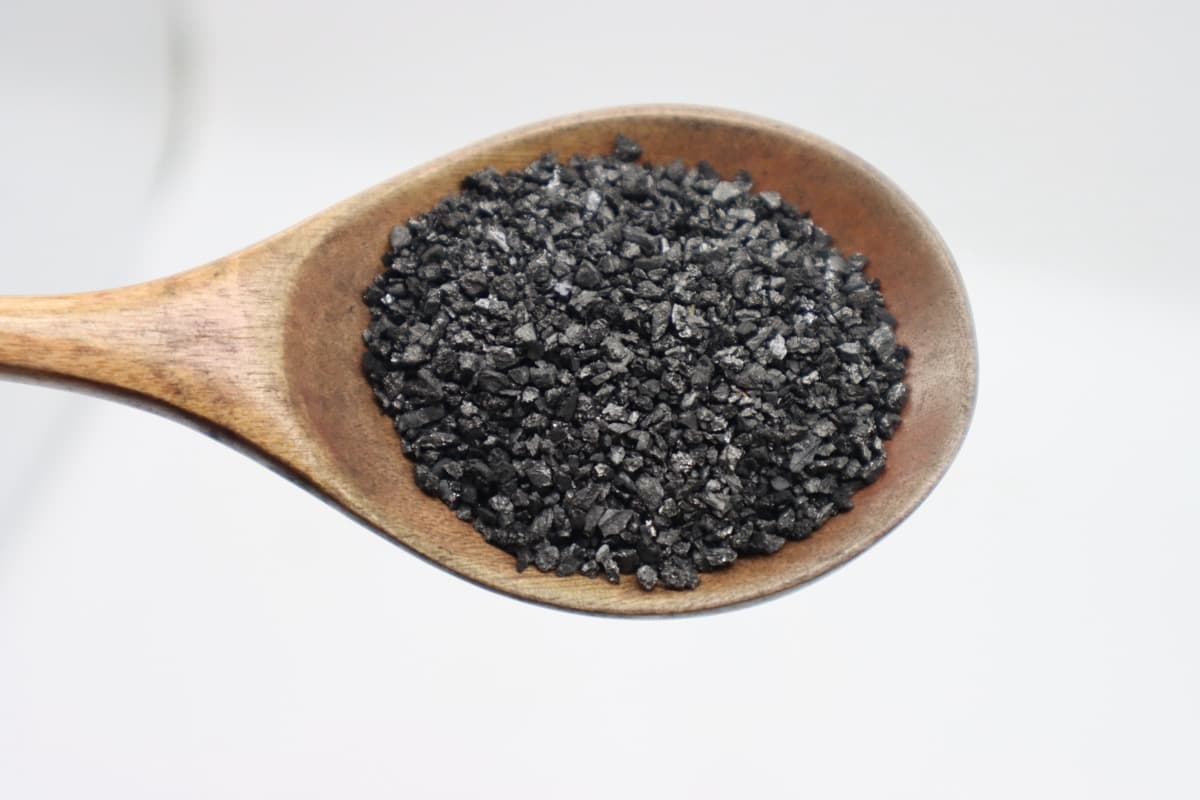
Coal-based GAC (8×30 mesh) — the workhorse of industrial carbon filtration systems
Carbon Block Filters
Carbon block filters are made by compressing fine activated carbon powder with a binding agent into a solid block. The result is a dense filter with a very uniform pore structure.
- Pros: Superior contaminant removal (no channeling), can achieve sub-micron filtration, compact design
- Cons: Higher pressure drop, cannot be regenerated, limited flow rates
- Best for: Point-of-use drinking water (under-sink, countertop), residential water purification, medical-grade water
Powdered Activated Carbon (PAC) Dosing
While not a "filter" in the traditional sense, PAC is dosed directly into water, mixed, and then removed by sedimentation or membrane filtration. It's widely used in municipal water treatment.
- Pros: No capital equipment for carbon beds, flexible dosing, handles seasonal contamination spikes
- Cons: Cannot be regenerated on-site, creates sludge for disposal, higher operating cost over time
- Best for: Seasonal taste/odor events, emergency contamination response, plants without GAC infrastructure
Activated Carbon Fiber (ACF) Filters
ACF filters use woven or non-woven fabrics made from activated carbon fibers. They offer extremely fast adsorption kinetics due to direct micropore access.
- Pros: Fastest adsorption rate, lightweight, low pressure drop, uniform structure
- Cons: Expensive ($3,500–$6,000/ton vs. $700–$1,800 for GAC — see our activated carbon price guide for current market rates), limited availability
- Best for: High-purity applications, protective equipment, specialized air treatment, solvent recovery
By Raw Material
| Carbon Source | Pore Structure | Iodine Number | Best For | Price Range (FOB) |
|---|---|---|---|---|
| Coconut Shell | Predominantly microporous | 1,000–1,200 mg/g | Drinking water, gold recovery, point-of-use filters | $2,900–$4,500/MT |
| Bituminous Coal | Mixed micro/mesoporous | 800–1,100 mg/g | Municipal water, PFAS removal, industrial wastewater | $450–$1,550/MT |
| Lignite Coal | Predominantly mesoporous | 500–700 mg/g | Flue gas treatment, large-molecule organic removal | $375–$950/MT |
| Wood-Based | Macroporous/mesoporous | 800–1,000 mg/g | Food & beverage decolorization, pharmaceutical purification | $590–$3,700/MT |
Carbon Filter Applications
Water Treatment
Water treatment is the single largest application for carbon filters, accounting for 42.5% of global activated carbon demand by value. Carbon filters serve multiple functions in water treatment:
- Dechlorination: Removing residual chlorine before RO membranes, boilers, or distribution. GAC filters achieve >99% chlorine removal with EBCT as low as 5 minutes.
- Taste & odor control: Removing MIB, geosmin, and other compounds that cause musty or earthy taste in drinking water purification.
- Organic removal: Reducing TOC, DBP precursors (THMs, HAAs), pesticides, and pharmaceutical residues.
- PFAS treatment: GAC is one of EPA's recommended technologies for PFAS removal. With the 2026 PFAS MCL rules now driving compliance, hundreds of water utilities are installing GAC systems — creating the single fastest-growing segment of the carbon filter market.
- Industrial wastewater: Polishing effluent to meet discharge limits for COD, BOD, and specific organic pollutants.
Air & Gas Purification
Carbon filters are essential for air purification and industrial gas treatment:
- VOC removal: Adsorbing volatile organic compounds from industrial emissions to meet environmental regulations
- Odor control: Removing H₂S, mercaptans, ammonia from wastewater treatment plants, food processing, and industrial facilities
- Mercury capture: Brominated and halogenated activated carbon injected into coal plant flue gas to capture mercury under MATS regulations
- Indoor air quality: HVAC carbon filters and portable air purifiers removing formaldehyde, benzene, and other indoor pollutants
- Solvent recovery: Recovering valuable solvents from industrial exhaust using activated carbon adsorption-desorption systems
Specialty Applications
- Food & beverage: Decolorizing sugar, purifying edible oils, removing unwanted flavors from spirits
- Pharmaceutical: API purification, removing pyrogens from injectable water
- Gold mining: Carbon-in-pulp (CIP) and carbon-in-leach (CIL) processes for gold recovery
- Automotive: EVAP canister carbon filters capturing fuel vapor emissions
- 3D printing: Carbon filters in 3D printer enclosures removing UFPs and VOCs
How to Choose the Right Carbon Filter
Selecting the right carbon filter requires matching the carbon media to your specific application. Here's a decision framework we use with our customers:
Step 1: Identify Your Target Contaminant
This is the most critical step. Different contaminants require different carbon types:
| Contaminant | Recommended Carbon | Key Specification |
|---|---|---|
| Chlorine / Chloramines | Coconut shell GAC or catalytic carbon | Iodine ≥1,000; dechlorination half-value ≤5 cm |
| PFAS (PFOA/PFOS) | Bituminous coal GAC | BET surface area ≥1,000 m²/g; mesopore volume important |
| VOCs / Solvents | Coconut shell or coal GAC | High micropore volume; butane activity ≥25% |
| H₂S / Odor | KOH/NaOH impregnated | H₂S breakthrough capacity ≥0.15 g/cc |
| Mercury (flue gas) | Brominated PAC | Bromine content 5–15%; particle size 90% <44μm |
| Color / Large organics | Wood-based PAC or coal GAC | Methylene blue ≥180 mg/g; high mesopore volume |
Step 2: Determine System Type
- Fixed bed (GAC): For continuous treatment with predictable flow. Design bed depth of 1–3 meters, flow rate 5–15 m/h.
- Carbon block: For point-of-use with strict removal requirements. Flow rates typically <2 L/min.
- PAC dosing: For batch treatment or emergency response. Dose rates typically 5–50 mg/L.
- Packed tower / canister: For gas-phase treatment. Select pelletized or granular carbon to minimize pressure drop.
Step 3: Specify Carbon Grade
Request a detailed technical data sheet (TDS) from your supplier — see our guide on how to choose an activated carbon supplier for vetting criteria. The minimum specifications to verify:
- Iodine number (overall adsorption capacity indicator)
- Mesh size / particle size distribution (affects pressure drop and contact efficiency)
- Moisture content (<5% for GAC, <15% for PAC)
- Ash content (<5% for coconut, <12% for coal — higher ash means lower adsorption)
- Hardness / Abrasion number (>95% for coconut GAC — prevents fines generation)
- Apparent density (determines how much carbon fits in your vessel)
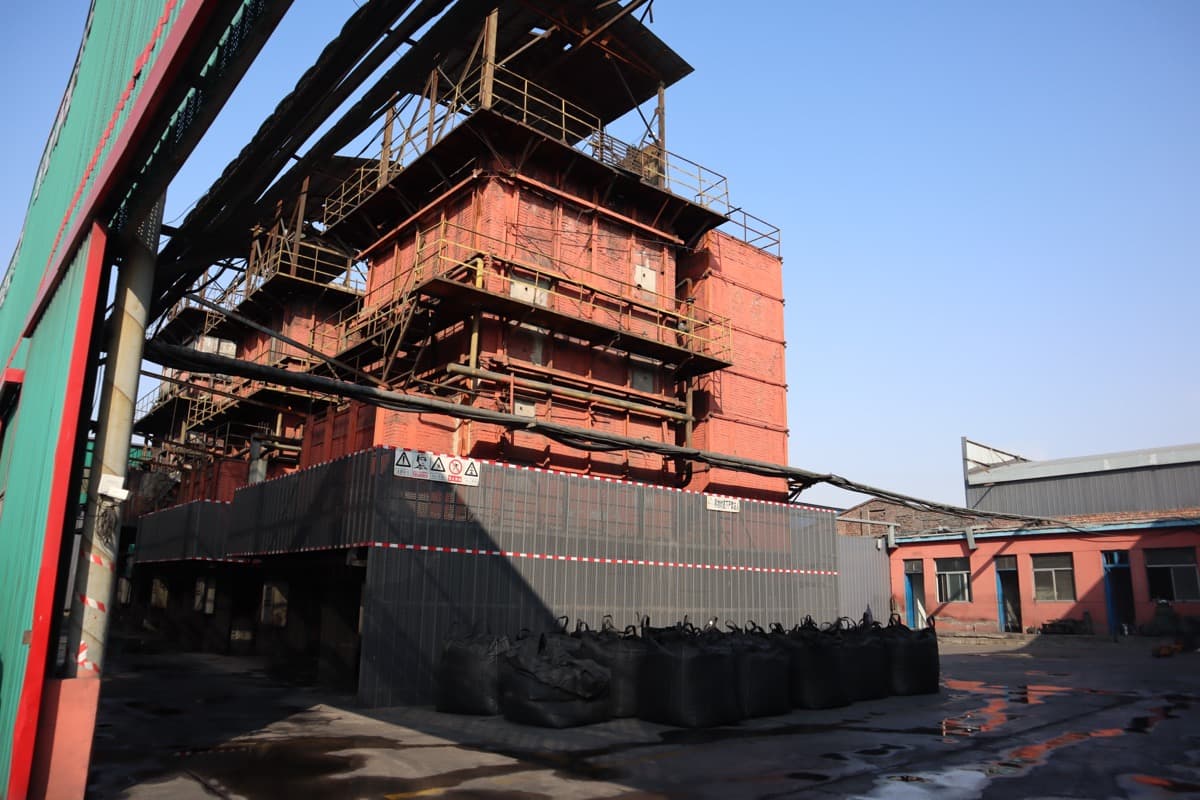
Our production workshop — where raw materials become high-performance carbon filter media. 3 production bases, 25,000+ MT annual capacity.
Carbon Filter Specifications: What the Numbers Mean
Understanding carbon specifications helps you compare suppliers and verify quality. Here are the key numbers:
Iodine Number (mg/g)
The most widely used quality indicator. Measures the carbon's ability to adsorb small molecules. Higher is generally better, but it's not the whole story — a carbon with iodine 1,100 might underperform one with iodine 950 if the 950 has better pore size distribution for your target contaminant.
- ≥1,000 mg/g: Premium grade (drinking water, gold recovery)
- 800–1,000 mg/g: Standard grade (industrial water, air treatment)
- 600–800 mg/g: Economy grade (wastewater polishing, pretreatment)
BET Surface Area (m²/g)
Measures the total internal surface area. Typically 800–1,200 m²/g for quality activated carbon. Critical for understanding adsorption capacity.
Mesh Size
Determines particle size and is crucial for system design. Read our complete mesh size guide for detailed specifications.
- 4×8 mesh: Coarse — used in air treatment and where low pressure drop is critical
- 8×30 mesh: Standard — most common for water treatment GAC beds
- 12×40 mesh: Fine — used in point-of-entry residential systems
- 200 mesh (PAC): Powder — for direct dosing into water
When to Replace Your Carbon Filter
All carbon filters have a finite capacity. Once the adsorption sites are saturated, contaminants break through. Here's how to know when it's time:
Monitoring Methods
- Effluent testing: The gold standard. Regular lab analysis of outlet water/air tells you exactly when breakthrough is approaching. For drinking water, test weekly for chlorine and monthly for target organics.
- Runtime tracking: Based on manufacturer data and your specific loading conditions, calculate expected bed life. Replace proactively before expected exhaustion.
- Sensory indicators: For residential filters — if you detect chlorine taste/odor in filtered water, the carbon is exhausted for dechlorination.
Typical Replacement Intervals
| Application | Filter Type | Typical Lifespan | Replace When |
|---|---|---|---|
| Residential drinking water | Carbon block / GAC cartridge | 3–6 months | Per manufacturer schedule or taste change |
| Municipal dechlorination | GAC bed | 2–4 years | Chlorine breakthrough >0.1 mg/L |
| PFAS removal | GAC bed | 6–18 months | Effluent PFAS approaches 50% of MCL |
| Industrial air treatment | GAC / pellet canister | 6–24 months | Outlet concentration exceeds emission limit |
| Aquarium | GAC bag | 4–6 weeks | Yellowing water or medication removal needed |
Can You Regenerate Carbon Filters?
GAC can be thermally regenerated at specialized facilities, restoring 85–95% of original capacity. This is standard practice for municipal and industrial users — it reduces cost by 40–60% compared to virgin carbon and is more environmentally sustainable. Carbon blocks and PAC generally cannot be regenerated.
Carbon Filter Market Trends: What's Driving Demand in 2026
The carbon filter market is experiencing significant shifts driven by regulatory changes and supply chain dynamics:
- PFAS regulations are the #1 driver: The US EPA's PFAS maximum contaminant levels (MCLs) are forcing hundreds of water utilities to install GAC systems. American Water's multi-state supply agreement with Calgon Carbon is just one example of the massive procurement wave underway.
- Coconut shell carbon supply is tight: Supply chain disruptions in Indonesia, the Philippines, and Sri Lanka continue to pressure coconut shell GAC prices ($2,900–$4,500/MT FOB), with Mordor Intelligence estimating a -0.8% drag on industry CAGR. This is pushing buyers to consider coal-based alternatives.
- US import tariffs reshaping trade: Tariffs on activated carbon imports are accelerating North American production expansion and creating opportunities for suppliers with competitive pricing from non-tariff origins.
- New technology frontiers: Research from Rice University shows PFAS-laden spent GAC can be used to extract lithium from brine — potentially transforming carbon filter waste from a disposal cost into a resource. Meanwhile, activated carbon fiber (ACF) technology is advancing rapidly for next-generation air filtration.
Frequently Asked Questions
What is the difference between a carbon filter and an activated carbon filter?
They are essentially the same thing. 'Carbon filter' is the common term, while 'activated carbon filter' is the technical name. All effective carbon filters use activated carbon — carbon that has been processed at high temperatures to create millions of microscopic pores. Non-activated carbon (like charcoal briquettes) has minimal filtration capacity and is not used in water or air treatment systems.
How long does a carbon filter last?
Carbon filter lifespan depends on the application: residential water filters last 3–6 months, industrial GAC beds last 1–3 years for dechlorination and 6–18 months for specific contaminant removal, air purification carbon filters last 6–12 months. Replace when you detect taste/odor breakthrough or when effluent testing shows contaminant levels approaching limits.
Can carbon filters remove PFAS from water?
Yes. Granular activated carbon (GAC) filters are one of the EPA-recommended technologies for PFAS removal. Coconut shell and bituminous coal-based GAC with high surface area (>1,000 m²/g) and appropriate pore size distribution are most effective. Typical EBCT of 10–20 minutes achieves >90% removal of long-chain PFAS (PFOA/PFOS). Short-chain PFAS require longer contact times or specialized carbon.
What contaminants can carbon filters NOT remove?
Carbon filters cannot effectively remove dissolved minerals (hardness, TDS), fluoride, nitrates, sodium, most heavy metals (without special impregnation), or microorganisms (bacteria, viruses). They also cannot soften water. For these contaminants, technologies like reverse osmosis, ion exchange, or UV disinfection are needed, often used in combination with carbon filtration.
Should I use coconut shell or coal-based carbon for my filter?
Coconut shell carbon is ideal for drinking water treatment — higher micropore volume for small molecule removal (chlorine, THMs, VOCs), lower ash content, harder granules (less fines), and NSF-certifiable. Coal-based carbon is more cost-effective for industrial applications, wastewater treatment, and removing larger organic molecules due to its broader pore size distribution. For PFAS removal, bituminous coal-based carbon often outperforms coconut shell.
Request a Quote
Get Carbon Filter Media Pricing — Factory Direct
Tell us your application, target contaminant, and required volume. Our engineers recommend the right carbon grade and reply with a factory FOB quote within 24 hours.
Need Carbon Filter Media for Your Project?
We manufacture GAC, PAC, pelletized, and specialty carbon filter media for water treatment, air purification, and industrial applications. With 3 production bases and 25,000+ MT annual capacity, we supply carbon filters to customers in 30+ countries.
Tell us your application, target contaminant, and required volume — we'll recommend the right carbon grade and provide a competitive FOB quotation within 24 hours.
Request Carbon Filter Media Quote →Related Articles
- Granular Activated Carbon (GAC) — Specs & Pricing
- Coconut Shell Carbon for Water Filtration
- Browse All Activated Carbon Products
- Activated Carbon for Water Treatment: Complete Selection Guide
- GAC vs PAC: Which Activated Carbon Is Right for Your Application?
- Activated Carbon for PFAS Removal: Treatment Guide
- Activated Carbon for Air Purification: Industrial & Residential Guide
- Understanding Iodine Number in Activated Carbon