
Coal-based activated carbon — manufactured from bituminous coal, anthracite, or lignite — is the backbone of industrial water treatment, air purification, and chemical processing worldwide. While coconut shell carbon often gets more marketing attention, coal-based carbon accounts for the majority of activated carbon consumed in municipal water treatment, gas-phase purification, and environmental remediation. Its balanced pore structure, excellent mechanical hardness, and lower cost make it the default choice for most large-scale industrial applications.
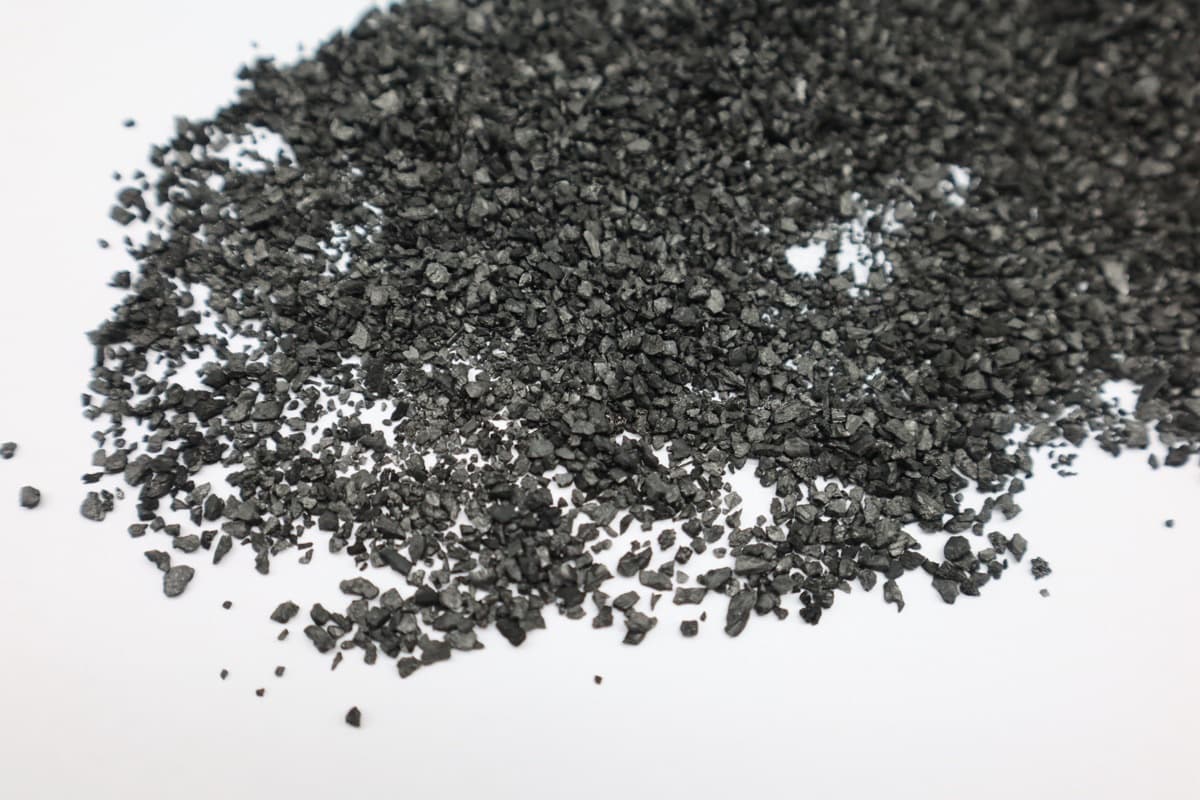
Bituminous coal-based granular activated carbon — our flagship product line for water treatment and industrial applications.
As a manufacturer with 15+ years of experience producing coal-based activated carbon in both granular (GAC) and powdered (PAC) forms, we supply utilities, industrial plants, and environmental contractors across 40+ countries. This guide covers the three types of coal-based carbon, their unique properties, application-specific selection criteria, current market dynamics, and practical procurement guidance.
Three Types of Coal-Based Activated Carbon
Not all coal is created equal. The type of coal feedstock fundamentally determines the activated carbon's pore structure, hardness, density, and optimal application. Understanding these differences is essential for correct product selection.
Bituminous Coal — The Industry Standard
Bituminous coal-based activated carbon is the most widely used type globally. Bituminous coal's moderate volatile matter content produces a well-balanced pore structure with significant micropore, mesopore, and macropore volumes. This versatility makes it effective across the widest range of applications: drinking water treatment, PFAS removal, VOC adsorption, industrial wastewater treatment, and solvent recovery.
| Property | Bituminous Coal GAC |
|---|---|
| Iodine number | 800–1,100 mg/g |
| Surface area (BET) | 900–1,200 m²/g |
| Ball-pan hardness | 85–95% |
| Apparent density | 0.42–0.52 g/cm³ |
| Ash content | 8–15% |
| Moisture | ≤5% |
| Pore structure | Balanced micro/meso/macropores |
Anthracite Coal — Maximum Hardness
Anthracite — the highest-rank coal with >90% carbon content — produces activated carbon with exceptional mechanical strength (ball-pan hardness 95–99+%). Anthracite-based carbon has a predominantly microporous structure and higher apparent density than bituminous carbon. Its superior abrasion resistance makes it the preferred choice for high-flow water filtration systems with frequent backwashing, pressure swing adsorption (PSA) systems, and applications where carbon bed integrity is critical over extended service life.
However, anthracite carbon's predominantly microporous structure makes it less effective for adsorbing large organic molecules compared to bituminous carbon. It excels at removing small molecules like chlorine, VOCs, and dissolved gases.
Lignite Coal — High Mesopore Volume
Lignite (brown coal), the lowest-rank coal, produces activated carbon with very high mesopore and macropore volumes — ideal for adsorbing large molecular weight contaminants like humic acids, natural organic matter, color bodies, and high-MW industrial pollutants. Lignite-based carbon (often marketed as “lignite coke” or “Norit-type” carbon) has lower hardness and mechanical strength, limiting it primarily to fixed-bed and powdered applications where abrasion is not a concern.
Need activated carbon?
Get Factory-Direct Pricing — No Middlemen
20+ years manufacturing. MOQ 1 ton. Free samples. Reply within 2 hours.
Coal Type Comparison: Bituminous vs. Anthracite vs. Lignite
| Property | Bituminous | Anthracite | Lignite |
|---|---|---|---|
| Pore structure | Balanced (micro+meso+macro) | Mostly microporous | Mostly meso+macroporous |
| Hardness | 85–95% | 95–99% | 60–80% |
| Iodine number | 800–1,100 | 700–1,000 | 400–700 |
| Density | 0.42–0.52 | 0.50–0.60 | 0.35–0.45 |
| Ash content | 8–15% | 5–12% | 15–25% |
| Best for | PFAS, water treatment, general purpose | High-flow filtration, PSA, gas purification | Color removal, large-molecule adsorption |
| Relative cost | $$ | $$$ | $ |
Coal-Based vs. Coconut Shell Activated Carbon
This is the most common comparison buyers make. Here is an honest assessment from a manufacturer who produces both:
| Factor | Coal-Based | Coconut Shell |
|---|---|---|
| Raw material cost (2026) | Stable | Rising (+15–20% YoY) |
| Supply chain risk | Low (diverse global sources) | Elevated (Indonesia supply tightening) |
| Pore structure | Balanced (versatile) | Mostly microporous |
| PFAS removal | Superior (especially short-chain) | Good for long-chain, weak on short-chain |
| VOC removal | Good | Excellent (more micropores) |
| Hardness | 85–99% (type dependent) | 97–99% |
| Reactivation | Excellent (90–95% recovery) | Good (85–90% recovery) |
| Food/pharma use | Limited (higher ash) | Preferred (low ash, renewable) |
| Price (FOB China) | $700–1,200/MT | $1,200–2,200/MT |
Our recommendation: Use coal-based carbon for water treatment, PFAS removal, air purification, and industrial applications where its balanced pore structure and lower cost provide clear advantages. Reserve coconut shell carbon for food-grade, pharmaceutical, gold recovery, and applications where micropore capacity and low ash are specifically required. For a deeper comparison, see our coconut shell vs coal carbon guide.
Key Applications for Coal-Based Activated Carbon
1. Drinking Water Treatment & PFAS Removal
Coal-based GAC is the gold standard for municipal drinking water treatment. It removes chlorine, taste and odor compounds, disinfection byproduct precursors, pesticides, and — critically in 2026 — PFAS forever chemicals. With the US EPA finalizing MCLs at 4 ppt for PFOA and PFOS (compliance deadline 2029), hundreds of water utilities are installing or upgrading GAC contactor systems.
Bituminous coal GAC outperforms coconut shell GAC for PFAS treatment because its mesopore network provides better access for short-chain PFAS compounds (PFBA, PFHxA) that are difficult to adsorb. This is why the AWWA and major engineering firms specify coal-based GAC as the default carbon type for PFAS treatment systems. Calgon Carbon's recent $100 million expansion of their Ohio reactivation facility — specifically targeting PFAS-laden GAC — underscores the scale of demand.
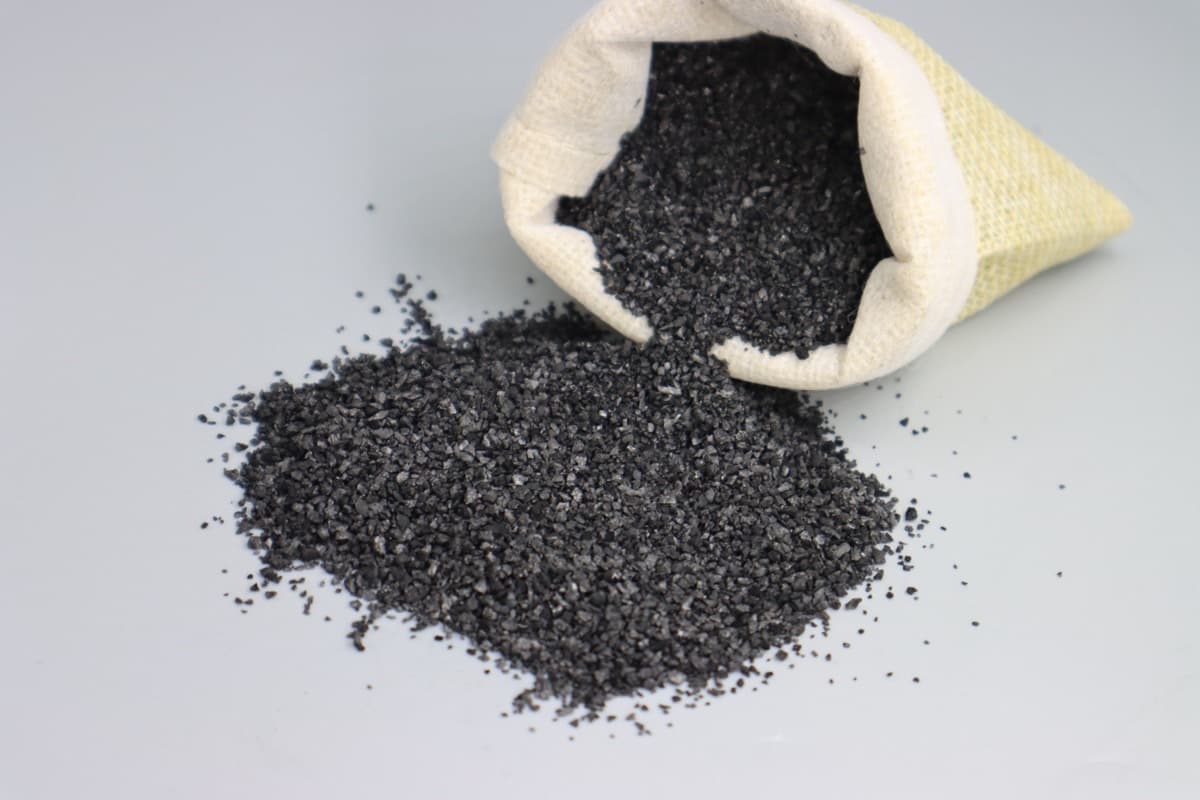
Coal-based GAC in 8×30 and 12×40 mesh sizes — the standard specifications for drinking water treatment and PFAS removal applications.
2. Air Purification & VOC Control
Coal-based activated carbon (both GAC and pelletized) is widely used in industrial air purification: VOC removal from paint shops and printing facilities, solvent recovery systems, odor control at wastewater plants, and industrial emission control. Pelletized coal carbon (extruded cylindrical shapes, typically 3–4 mm diameter) offers lower pressure drop than granular forms, making it preferred for high-volume air treatment systems.
3. Mercury Emission Control (MATS Compliance)
The US EPA Mercury and Air Toxics Standards (MATS) require coal-fired power plants to control mercury emissions. Powdered coal-based activated carbon — often brominated for enhanced mercury capture — is injected into flue gas streams upstream of particulate control devices. This is one of the fastest-growing applications globally, with China and India now implementing similar mercury emission regulations for their coal-fired power sectors. The global market for mercury-control activated carbon is projected to grow at 6–8% CAGR through 2030.
4. Industrial Wastewater Treatment
Coal-based GAC and PAC handle the toughest industrial wastewater treatment challenges: petrochemical effluent, pharmaceutical manufacturing waste, textile dye removal, and landfill leachate treatment. Coal carbon's balanced pore structure makes it effective across the wide range of molecular sizes found in industrial waste streams. Combined with its lower cost and excellent reactivation performance, coal-based carbon is the economic choice for industrial facilities with high carbon consumption rates.
5. Solvent Recovery
Fixed-bed coal-based GAC adsorbers recover valuable organic solvents (acetone, toluene, ethanol, MEK) from industrial exhaust streams. The carbon adsorbs solvent vapors during the loading phase, then releases them during steam or hot-gas regeneration for reclamation. Coal carbon's mechanical strength is critical here — the carbon must withstand thousands of adsorption-regeneration cycles without excessive breakage. For a deep dive, see our solvent recovery guide.
6. Gold Recovery
While coconut shell carbon dominates carbon-in-pulp (CIP) and carbon-in-leach (CIL) gold extraction due to its superior hardness and micropore structure, coal-based carbon (particularly anthracite-based) is used in heap leach operations and as a lower-cost alternative in gold recovery circuits where carbon losses are high. See our gold recovery carbon guide for detailed selection criteria.
Coal-Based Activated Carbon Market in 2026
The global activated carbon market is valued at $40.69 billion in 2025, projected to reach $54.97 billion by 2033 (CAGR 4.0%), with coal-based products representing the single largest segment. Several factors are shaping the coal-based carbon market right now:
- PFAS treatment is the #1 growth driver: US EPA PFAS MCLs, European Drinking Water Directive updates, and emerging PFAS regulations in Australia and Canada are driving unprecedented demand for coal-based GAC. Water utilities are signing multi-year supply contracts, locking in volumes.
- Coconut shell supply tightening benefits coal carbon: With Indonesian coconut shell exports declining and prices rising 15–20%, buyers are actively qualifying coal-based alternatives. Our client in Southeast Asia recently switched from coconut to coal-based GAC for their municipal water treatment plant, reducing carbon costs by 35% with no detectable change in treated water quality.
- Reactivation economics favor coal carbon: Coal-based GAC delivers superior reactivation recovery (90–95% vs 85–90% for coconut) and withstands more reactivation cycles. With Calgon Carbon investing $100M in reactivation infrastructure, the industry is clearly moving toward a circular economy model where coal-based GAC is reactivated multiple times before final disposal.
- US tariffs on Chinese carbon: Ongoing US tariffs on imported activated carbon (including Chinese coal-based products) are influencing supply chain decisions. Some buyers are diversifying sources — Chinese manufacturers like us are establishing operations in Mexico and Southeast Asia to maintain competitive access to US markets. Yuanli's recent 49% acquisition of Mexico's Clarimex is one example of this trend.
- Asia-Pacific dominates at 48.9%: China, India, and Southeast Asia remain the largest consumers, driven by industrialization and tightening pollution standards. China is simultaneously the world's largest producer and consumer of coal-based activated carbon.
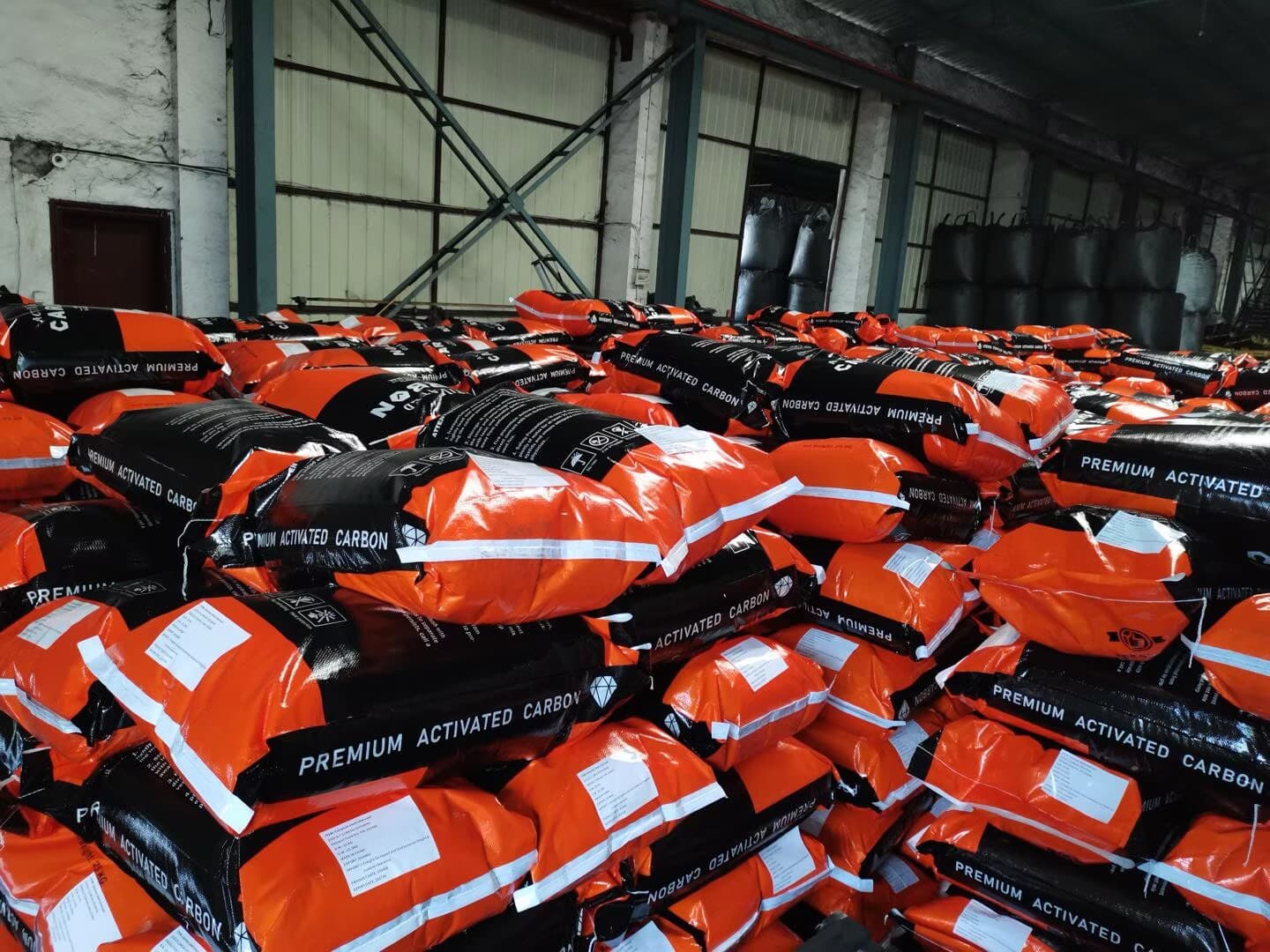
Our manufacturing facility — three production bases with combined annual capacity of 20,000+ metric tons of activated carbon.
How to Select the Right Coal-Based Carbon
Use this decision framework to narrow down the right coal-based product for your application:
Application → Recommended Type
- PFAS drinking water treatment → Bituminous GAC, 8×30 or 12×40 mesh, iodine ≥950 mg/g
- General water treatment → Bituminous GAC, 8×30 mesh, iodine ≥800 mg/g
- High-flow filtration / backwash-intensive → Anthracite GAC, high hardness (≥97%)
- Air / VOC treatment → Pelletized coal carbon (3–4 mm), or bituminous GAC 4×8 mesh
- Mercury flue gas control → Coal-based PAC, brominated or sulfur-impregnated
- Industrial wastewater → Bituminous GAC or PAC, iodine ≥600 mg/g (cost-optimized)
- Solvent recovery → Bituminous GAC 4×8 or 4×10 mesh, high hardness for cyclic use
- Color / NOM removal → Lignite-based carbon (high mesopore volume)
Key specification checks: Beyond iodine number, request these data points from any supplier: (1) methylene blue value for mesopore assessment, (2) ball-pan hardness number for mechanical durability, (3) apparent density for bed volume calculations, (4) ash content for purity-sensitive applications, and (5) particle size distribution for pressure drop and flow characteristics. Our quality testing guide explains each test method in detail.
Common Mesh Sizes and Their Applications
| Mesh Size | Particle Range | Typical Application |
|---|---|---|
| 4×8 | 2.4–4.8 mm | Air/gas treatment, solvent recovery, large vessels |
| 8×16 | 1.2–2.4 mm | Gas-phase adsorption, point-of-entry water filters |
| 8×30 | 0.6–2.4 mm | Drinking water treatment (most common), PFAS |
| 12×40 | 0.42–1.7 mm | Drinking water, gravity-fed systems, PFAS |
| 20×50 | 0.3–0.85 mm | Point-of-use filters, cartridge filling |
| PAC (80 mesh+) | <0.18 mm | Batch dosing, mercury injection, wastewater |
For a comprehensive mesh size reference including sieve opening conversions and selection criteria, see our mesh size guide.
Reactivation: The Coal-Based Carbon Advantage
One of coal-based GAC's most significant economic advantages is its excellent reactivation performance. Thermal reactivation at 800–900°C in rotary kilns or multiple-hearth furnaces destroys adsorbed contaminants (including PFAS — converting C-F bonds to HF which is captured by scrubbers) and restores 90–95% of the carbon's original adsorption capacity.
Coal-based GAC can typically undergo 4–8 reactivation cycles before attrition losses require complete replacement. At reactivation costs of 40–60% of virgin carbon pricing, this translates to significant lifecycle savings:
Lifecycle Cost Example: 50,000 lb GAC System
- Virgin coal GAC cost: $1.00–1.20/lb delivered
- Reactivation cost: $0.45–0.65/lb (including transport)
- Average bed life: 12–18 months per cycle
- 5 reactivation cycles = 7.5+ years before full replacement
- Savings: 35–45% reduction in total carbon cost over 10 years vs. single-use virgin carbon replacement
For more on reactivation technology and economics, see our regeneration methods guide.
Ordering Coal-Based Activated Carbon
We manufacture the full range of coal-based activated carbon products — bituminous GAC in all standard mesh sizes, anthracite GAC, pelletized carbon, and coal-based PAC. Standard packaging and shipping details:
- MOQ: 1 metric ton (sample orders of 5–25 kg available for testing)
- Packaging: 25 kg woven bags (palletized), 500 kg super sacks, or bulk
- 20' container capacity: ~20 MT (bagged) or 24 MT (super sacks)
- Lead time: 2–4 weeks from order confirmation
- Certifications: ISO 9001, ISO 14001, NSF/ANSI 61, AWWA B604
- COA: Certificate of Analysis provided with every shipment
For complete import logistics including Incoterms, container loading plans, and total landed cost calculations, see our MOQ and shipping guide. For current market pricing across all carbon types and grades, our activated carbon price guide covers FOB China benchmarks and the factors that drive cost.
Frequently Asked Questions
What is the difference between bituminous and anthracite activated carbon?
Bituminous coal-based activated carbon has a well-developed mix of micropores, mesopores, and macropores, making it the most versatile coal carbon for both liquid and gas phase applications. Anthracite-based carbon has higher density, greater hardness (95–99+ ball-pan), and a more microporous structure. Anthracite carbon excels in applications requiring high mechanical strength — water filtration beds with frequent backwashing, pressure swing adsorption, and high-flow industrial systems where carbon breakage must be minimized.
Is coal-based activated carbon effective for PFAS removal?
Yes. Bituminous coal-based GAC is the industry standard for PFAS removal in drinking water treatment. Its balanced pore structure effectively adsorbs both long-chain PFAS (PFOA, PFOS) and short-chain compounds (PFBA, PFHxA, PFHxS). Coal-based GAC outperforms coconut shell GAC for short-chain PFAS because its mesopores provide better access to adsorption sites. For EPA MCL compliance (PFOA/PFOS at 4 ppt), 8×30 or 12×40 mesh coal-based GAC with iodine number ≥900 mg/g in multi-bed contactor systems is the proven approach.
How does coal-based activated carbon compare to coconut shell carbon in cost?
Coal-based activated carbon is typically 30–50% less expensive than coconut shell carbon on a per-ton basis. In 2026, the price gap has widened further because coconut shell raw material costs have risen 15–20% due to supply tightening in Indonesia and Southeast Asia. For applications where coal-based carbon delivers equivalent performance — water treatment, air purification, industrial wastewater — switching from coconut to coal can reduce carbon procurement costs by $300–600 per metric ton without sacrificing treatment performance.
What iodine number should I look for in coal-based activated carbon?
For drinking water treatment: ≥900 mg/g (AWWA B604 minimum is 500 mg/g, but higher iodine numbers indicate more micropore volume for contaminant adsorption). For PFAS removal: ≥950 mg/g. For VOC air treatment: ≥800 mg/g. For general industrial wastewater: ≥600 mg/g is often sufficient. Remember that iodine number measures micropore capacity only — for applications targeting large molecules, also check methylene blue value (mesopore indicator) and molasses number (macropore indicator).
Can coal-based activated carbon be reactivated?
Yes, and this is one of coal-based GAC's key advantages. Spent coal-based GAC can be thermally reactivated at 800–900°C in rotary kilns or multiple-hearth furnaces, restoring 90–95% of original adsorption capacity. Reactivation costs 40–60% less than purchasing virgin carbon. The process also destroys adsorbed contaminants — including PFAS, which are broken down at reactivation temperatures. Calgon Carbon recently announced a $100 million investment to expand reactivation capacity specifically for PFAS-laden GAC, confirming the economic viability of the reactivation cycle.
Related Articles
Request Coal-Based Activated Carbon Samples
Tell us your application, target contaminants, and flow rate — our engineers will recommend the optimal coal-based carbon grade and mesh size. Free 5–25 kg samples for pilot testing.
Request Coal Carbon Samples