
China produces over 60% of the world's activated carbon, making it the go-to sourcing destination for buyers across water treatment, air purification, mining, food processing, and industrial applications. But navigating minimum order quantities, shipping logistics, and total cost calculations can be challenging — especially for first-time importers. This guide breaks down everything you need to know to buy activated carbon from China efficiently and cost-effectively.
Understanding Activated Carbon MOQ
Minimum order quantity (MOQ) varies significantly depending on the supplier type, product specification, and your relationship with the manufacturer. Here's what to expect:
Standard MOQ Ranges by Product Type
| Product Type | Standard MOQ | Trial Order | Notes |
|---|---|---|---|
| Coconut Shell GAC | 1–5 tons | 500 kg | Most commonly traded; readily available |
| Coal-Based GAC | 1–5 tons | 500 kg | Large production capacity in Shanxi/Ningxia |
| Wood-Based PAC | 1–3 tons | 500 kg | High demand; usually in stock |
| Pellet/Extruded AC | 2–5 tons | 1 ton | Extrusion line setup required |
| Impregnated AC | 3–10 tons | 1 ton | Custom impregnation chemistry |
| Acid-Washed AC | 3–5 tons | 1 ton | Additional processing step |
| Custom Specifications | 5–20 tons | 2–5 tons | Custom mesh, iodine number, special packaging |
Why MOQ Matters for Pricing
Activated carbon pricing from China operates on a volume-tiered structure. The relationship between order size and pricing is significant:
- Trial order (500 kg–1 ton): Typically 15–30% above the standard FCL price. Worth paying for quality verification.
- Half container (10 tons): About 5–10% above the best price. Reasonable for regular orders.
- Full 20ft container (20 tons): Standard pricing tier. This is the sweet spot for most buyers.
- Multiple containers (40+ tons): Negotiate 3–8% below standard pricing. Annual contracts get better rates.
For reference, current FOB China prices range from $600–$1,800/ton for coconut shell activated carbon and $500–$1,200/ton for coal-based activated carbon, depending on specifications. See our 2026 Pricing Guide for detailed breakdowns.
Need activated carbon?
Get Factory-Direct Pricing — No Middlemen
20+ years manufacturing. MOQ 1 ton. Free samples. Reply within 2 hours.
Packaging Options & Container Loading
Packaging directly affects shipping efficiency, product protection, and your warehouse handling. Chinese manufacturers typically offer these options:
Standard Packaging Types
| Packaging | Weight | 20ft Load | Best For |
|---|---|---|---|
| PP woven bags | 25 kg | 18–20 tons | Manual handling, redistribution |
| PP bags on pallets | 25 kg | 16–18 tons | Forklift unloading, retail |
| FIBC jumbo bags | 500 kg / 1000 kg | 20–24 tons | Industrial users, cost efficiency |
| Paper bags (kraft) | 20–25 kg | 16–18 tons | Food/pharma grade, clean handling |
| Fiber drums | 25–50 kg | 14–16 tons | Lab/specialty, moisture protection |
Pro tip: FIBC (jumbo bags) maximize your container utilization by 15–25% compared to 25 kg bags on pallets. If your facility has crane or forklift capability, always choose jumbo bags for bulk orders. For detailed packaging guidance, see our Packaging & Storage Guide.
Container Loading Optimization
Maximizing payload per container is one of the easiest ways to reduce your per-ton shipping cost. Key factors:
- 20ft standard container: Internal dimensions 5.9m × 2.35m × 2.39m, max payload ~28 tons (but activated carbon rarely reaches weight limit due to volume)
- 40ft standard container: Internal dimensions 12.03m × 2.35m × 2.39m, max payload ~26 tons (weight limit is usually the constraint)
- 40ft high-cube: Extra 30 cm height (2.69m internal), useful for light products like PAC in 25 kg bags
Most activated carbon shipments use 20ft containers because the product is dense enough that a 40ft container hits its weight limit before filling the volume. For powdered activated carbon (lower bulk density), a 40ft high-cube container can be more economical.
Shipping Methods: Ocean, Rail & Air
Ocean Freight (95% of Shipments)
Sea freight is the default for activated carbon. China's main export ports for activated carbon include:
- Tianjin Port: Closest to Shanxi and Ningxia production regions (coal-based AC). Most competitive inland trucking rates for coal-based products.
- Shanghai/Ningbo: Major hub with the most shipping routes globally. Coconut shell AC (imported raw materials processed in Jiangsu/Zhejiang) typically ships from here.
- Guangzhou/Shenzhen: Best for Southeast Asian destinations and coconut shell AC processed in Guangdong/Fujian.
Transit Times by Destination
| Destination | Transit Days | Freight Cost (20ft) |
|---|---|---|
| Southeast Asia (Vietnam, Thailand, Indonesia) | 7–15 days | $400–$800 |
| India / Middle East | 15–25 days | $800–$1,500 |
| East Africa (Kenya, Tanzania) | 25–35 days | $1,200–$2,000 |
| Europe (Rotterdam, Hamburg) | 30–40 days | $1,500–$2,500 |
| US West Coast (LA, Long Beach) | 14–20 days | $2,000–$3,500 |
| US East Coast (New York, Savannah) | 30–40 days | $2,500–$4,500 |
| South America (Santos, Callao) | 30–45 days | $2,000–$3,500 |
| Australia / New Zealand | 15–25 days | $1,000–$2,000 |
Freight rates as of Q1 2026. Actual rates fluctuate based on fuel surcharges, seasonal demand, and carrier availability. Request current rates from your freight forwarder.
FCL vs LCL: When to Use Each
Full Container Load (FCL) is always preferred when your order fills at least 60–70% of a container. Benefits: lower per-ton freight cost, less handling damage, faster customs clearance, and no risk of cross-contamination from other cargo. For activated carbon — which must stay dry and contaminant-free — FCL is strongly recommended.
Less than Container Load (LCL) makes sense only for trial orders under 8 tons where you need quality verification before committing to FCL. Expect 30–50% higher per-ton freight, 1–2 weeks longer transit (consolidation delays), and increased handling risks. Many freight forwarders quote LCL from Shanghai and Ningbo with good rates to major destinations.
China–Europe Rail Freight
The China–Europe rail corridor (via Kazakhstan and Russia or via Central Asia) offers a middle ground: 18–22 days transit time at 60–80% of air freight cost but 20–30% faster than ocean. Rail is particularly competitive for landlocked Central Asian and Eastern European destinations. However, capacity is limited and rates vary significantly. For activated carbon buyers in Poland, Germany, or the Czech Republic, rail can be an excellent option when ocean transit delays are a concern.
Air Freight (Emergency Only)
Air freight for activated carbon is rarely economical — rates of $3–6/kg make it 10–20× the cost of ocean freight. It's justified only for urgent sample shipments (under 100 kg), emergency production needs, or extremely high-value specialty carbons. Transit time is 3–5 days door-to-door. DHL, FedEx, and UPS all handle activated carbon shipments from China, though hazmat classification may apply for certain impregnated products.
Incoterms for Activated Carbon Trade
Choosing the right Incoterm defines who bears risk, cost, and responsibility at each stage. For activated carbon imports from China, the three most common terms are:
FOB (Free On Board) — Most Recommended
The supplier delivers the goods onto the vessel at the Chinese port. From that point, freight, insurance, and destination costs are yours. FOB is the industry standard for experienced importers because it gives you control over shipping costs and carrier selection. You can shop for the best freight rates, choose your preferred shipping line, and manage your own marine insurance.
CIF (Cost, Insurance & Freight)
The supplier arranges and pays for ocean freight and basic marine insurance to your destination port. This is convenient but typically 5–15% more expensive than arranging your own freight under FOB. The insurance provided under CIF is usually minimum coverage (110% of invoice value, ICC "C" terms) — you may want to purchase additional coverage.
CFR (Cost & Freight)
Like CIF but without insurance. The supplier pays freight to your port, but you arrange your own insurance. This can work if you have a blanket marine insurance policy covering all your imports.
Calculating Total Landed Cost
The FOB price is only part of the picture. Here's the full cost breakdown for importing activated carbon from China:
| Cost Component | Typical Range | Notes |
|---|---|---|
| FOB Product Cost | $500–$1,800/ton | Varies by type, spec, and quantity |
| Ocean Freight | $40–$200/ton | Based on 20 tons/container, route-dependent |
| Marine Insurance | 0.2–0.5% of CIF value | All-risk coverage recommended |
| Import Duty | 0–6.5% | HS 3802.10; varies by country (US: 4.8%, EU: 2.1–5.5%) |
| Customs Clearance | $150–$400 | Broker fees, documentation handling |
| Port Handling (THC) | $100–$300 | Terminal handling charges at destination |
| Inland Trucking | $200–$800 | Port to warehouse, distance-dependent |
| Total Landed Cost | FOB + 15–35% | Rule of thumb for budgeting |
Worked Example: 20 Tons of Coconut Shell GAC to Rotterdam
- FOB Tianjin: $1,100/ton × 20 tons = $22,000
- Ocean Freight (20ft container): $1,800
- Marine Insurance (0.3% of $23,800): $71
- EU Import Duty (3.2% of CIF): $764
- Customs Clearance: $250
- THC Rotterdam: $200
- Inland Trucking (50 km): $350
- Total Landed: $25,435 → $1,272/ton (15.6% above FOB)
Lead Times: From Order to Delivery
Understanding the complete timeline helps you plan inventory and avoid stockouts:
| Stage | Duration | Details |
|---|---|---|
| Order Confirmation | 1–3 days | Proforma invoice, payment terms agreed |
| Production (if not in stock) | 7–15 days | Standard grades often in stock; custom specs need production |
| Quality Testing & COA | 2–3 days | Iodine number, moisture, ash, particle size verification |
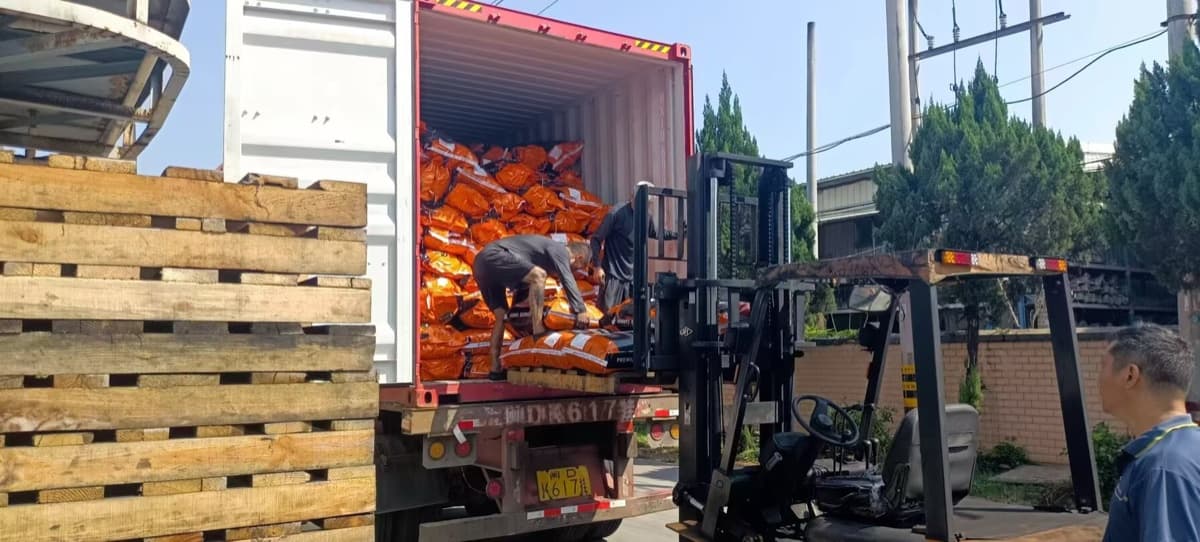
| Packaging & Loading | 1–2 days | Container loading, photos, weight verification |
| China Customs & Port | 2–5 days | Export declaration, container to vessel |
| Ocean Transit | 7–45 days | Depends on destination (see table above) |
| Destination Clearance | 3–7 days | Import customs, inspection (if applicable), delivery |
Total lead time: 4–10 weeks from order placement to warehouse delivery, depending on product availability, destination, and customs efficiency. For repeat orders with established suppliers, the production stage can be shortened to 3–5 days if standard grades are kept in stock.
Payment Terms & Methods
Payment terms reflect the trust level between buyer and supplier. Standard arrangements in the Chinese activated carbon industry:
- T/T 30% deposit + 70% before shipment: The most common arrangement for new customers. You pay 30% upfront to start production, and the balance after receiving loading photos and before the bill of lading is released.
- L/C (Letter of Credit): Provides bank-backed security for both parties. Preferred for orders over $50,000. Your bank guarantees payment upon presentation of conforming documents. Adds 1–3% to your cost (bank fees) but eliminates payment risk.
- T/T 100% against copy of B/L: Some suppliers accept full payment after loading when you receive a scanned copy of the bill of lading. Lower risk for the buyer.
- D/P (Documents against Payment): The bank holds shipping documents until you pay. Less common but provides good security for medium-sized orders.
- Open Account (Net 30/60): Only offered to established customers with a strong track record. Typically requires 6–12 months of successful transactions first.
Required Documentation
Ensure your supplier provides all necessary documents for smooth customs clearance. Standard documentation for activated carbon exports from China:
- Commercial Invoice: Product description, HS code (3802.10.00), quantity, unit price, total value, Incoterms
- Packing List: Net weight, gross weight, number of packages, package dimensions
- Bill of Lading (B/L): Original or telex release, depending on payment terms
- Certificate of Origin (CO): For preferential tariff rates under trade agreements
- Certificate of Analysis (COA): Iodine number, moisture, ash content, particle size, pH, and application-specific parameters
- MSDS/SDS: Material Safety Data Sheet — required by most shipping lines and customs authorities
- Fumigation Certificate: Required for wooden pallet shipments to many countries (ISPM 15 compliance)
For food-grade or certified activated carbon, additional documents may include NSF/ANSI 61 test reports, FDA compliance letters, Halal/Kosher certificates, or third-party quality test reports.
Quality Verification Before Shipping
Never skip quality verification, especially for first orders. A systematic approach:
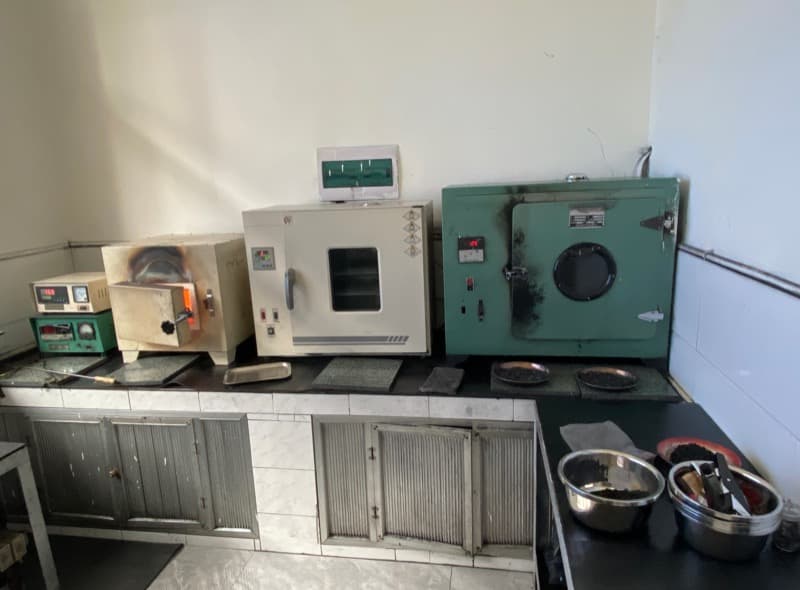
- Request pre-shipment samples: Ask for 1–2 kg samples from the actual production batch (not stock samples). Test them in your lab or a third-party lab.
- Review the COA: Compare iodine number, CTC, moisture, ash, pH, and particle size against your specifications. Look for consistency with sample test results.
- Third-party inspection: For orders over $10,000, consider hiring SGS, Bureau Veritas, or Intertek to inspect at the factory before loading. Cost: $300–$600 per inspection.
- Loading supervision: Request photos of packaging, container loading, and container seal numbers. Some buyers hire local agents to supervise loading.
- Retain samples: Ask the supplier to keep sealed reference samples from each shipment for at least 6 months. This protects both parties in case of quality disputes.
Import Duties & Customs Classification
Activated carbon is classified under HS Code 3802.10 globally ("Activated Carbon"). Import duty rates vary by country:
| Country/Region | Import Duty | Notes |
|---|---|---|
| United States | 4.8% | Standard MFN rate; anti-dumping duties may apply (check current rulings) |
| European Union | 2.1–5.5% | Depends on specific classification and origin |
| India | 7.5–10% | Plus GST; anti-dumping duties on Chinese AC in effect |
| Japan | 3.9% | Standard rate from China |
| South Korea | 8% | Standard rate |
| Brazil | 14% | High tariff; consider Mercosur trade preferences |
| ASEAN countries | 0–5% | ACFTA preferential rates with Form E certificate |
Important: The United States has imposed anti-dumping duties on certain activated carbon products from China in the past. Check the current ITC rulings and consult your customs broker about any additional duties that may apply. For details on export procedures and HS codes, read our China Export Guide.
10 Tips for First-Time Activated Carbon Importers
- Start with a trial order — 500 kg to 1 ton. Test the product in your application before committing to containers.
- Get multiple quotes — Compare at least 3 suppliers. Don't just compare prices; evaluate response time, technical knowledge, and willingness to provide samples.
- Verify the factory — Request factory photos, videos, or arrange a virtual tour. Ask about production capacity, quality control procedures, and export experience.
- Define specifications clearly — Put all parameters in writing: iodine number, CTC, mesh size, moisture, ash, pH, packaging type, and any special requirements.
- Understand the HS code — Activated carbon falls under 3802.10. Confirm the correct subheading with your customs broker to avoid classification disputes.
- Use secure payment methods — L/C for first large orders, or T/T with 30% deposit maximum. Never pay 100% upfront to an unknown supplier.
- Insure your shipment — Marine insurance costs 0.2–0.5% of value but protects against total loss, water damage, or container damage.
- Plan for customs delays — First-time imports often face additional scrutiny. Allow 1–2 extra weeks in your timeline.
- Build a relationship — Chinese business culture values long-term partnerships. Consistent orders and fair treatment lead to priority production, better prices, and flexible terms.
- Keep records — Document every shipment's quality results, delivery time, and any issues. This data is invaluable for supplier evaluation and negotiation.
Frequently Asked Questions
What is the minimum order quantity for activated carbon from China?
Most Chinese activated carbon manufacturers set MOQs between 1–5 metric tons for standard grades. Specialty products (impregnated, acid-washed, custom mesh sizes) may require 5–10 tons minimum. Some suppliers offer trial orders of 500 kg–1 ton at slightly higher per-unit prices, which is ideal for quality verification before committing to full container loads. At Activated Carbon Factory, our standard MOQ is 1 ton for most products, with trial quantities available for qualified buyers.
How much activated carbon fits in a 20ft or 40ft container?
A standard 20ft container holds 18–22 metric tons of granular activated carbon (in 25 kg bags on pallets) or up to 24 tons in 500 kg/1000 kg jumbo bags without pallets. A 40ft container holds 24–26 tons. The exact capacity depends on product density, packaging type, and whether pallets are used. Coconut shell GAC is lighter (bulk density ~480–520 kg/m³) so you get fewer tons per container, while coal-based GAC (bulk density ~500–600 kg/m³) loads heavier. Powdered activated carbon (PAC) in 25 kg bags typically loads 20 tons per 20ft container.
What are the typical shipping times from China to major markets?
Ocean freight transit times from major Chinese ports (Tianjin, Shanghai, Ningbo, Guangzhou) are: 15–20 days to Southeast Asia, 25–35 days to Middle East/India, 30–40 days to Europe, 28–35 days to US West Coast, and 35–45 days to US East Coast/Gulf. Add 7–14 days for production lead time and 3–5 days for customs clearance at destination. Total door-to-door is typically 5–8 weeks for full container loads.
What Incoterms should I use when buying activated carbon from China?
FOB (Free On Board) is most common — you control the freight and insurance from the Chinese port. CIF (Cost Insurance Freight) is convenient if you want the supplier to arrange shipping, but you lose control over carrier selection and may pay a markup. For experienced importers, FOB is usually cheaper. For first-time buyers, CIF simplifies logistics. EXW (Ex Works) gives the lowest product price but you handle everything from the factory gate, which requires a Chinese freight forwarder.
How can I reduce shipping costs for activated carbon imports?
Key strategies: (1) Order full container loads (FCL) instead of LCL — FCL is 30–50% cheaper per ton. (2) Use jumbo bags instead of 25 kg bags to maximize container utilization. (3) Ship from the nearest port to the factory to minimize inland trucking. (4) Consolidate orders — combine multiple product types in one container. (5) Compare freight forwarders — rates vary significantly. (6) Consider seasonal timing — avoid Chinese New Year (Jan/Feb) and peak shipping season (Aug–Oct) when rates spike.
Ready to Source Activated Carbon from China?
Tell us your product requirements, destination port, and target quantity. We'll provide FOB and CIF pricing, container loading plans, and estimated delivery timelines — all within 24 hours.
Get Your Quote & Shipping Plan