
Activated Carbon HS Code 3802 & Import Tariffs 2026: EU Anti-Dumping Duty, US Section 301 & Sourcing Strategies
Import tariffs can add 5–30% to your activated carbon landed cost — or more if you get the HS code wrong. This guide breaks down the exact duty rates by country, explains the US Section 301 tariff situation on Chinese AC, and shows you how manufacturers and importers are structuring purchases to minimize total cost in 2026.
Our warehouse loading operations — handling bulk activated carbon shipments to 50+ countries with full export documentation
1. HS Codes for Activated Carbon
Getting the HS code right is the single most important step in managing your import costs. Misclassification can trigger higher duties, customs delays, or even penalties. Activated carbon and related products fall under HS Chapter 38 (Miscellaneous Chemical Products).
| HS Code | Description | US HTSUS Subheading | US MFN Rate |
|---|---|---|---|
| 3802.10 | Activated carbon | 3802.10.00 | 4.8% |
| 3802.10.0010 | Activated carbon, granular | 3802.10.0010 | 4.8% |
| 3802.10.0050 | Activated carbon, other (including powdered) | 3802.10.0050 | 4.8% |
| 3802.90 | Activated natural mineral products; animal black | 3802.90.10/20 | Free–1.3% |
⚠️ Classification Tip: Activated carbon filters (assembled units with housings) may be classified differently — often under HS 8421 (filtering machinery) with different duty rates. If you're importing bulk activated carbon media, ensure your broker classifies under 3802.10, not as a filter assembly.
From our experience exporting to 50+ countries over 15 years, we've seen classification disputes primarily around two scenarios: (1) impregnated activated carbon sometimes getting classified under different chemical headings, and (2) activated carbon in pre-filled cartridges being classified as filter parts. Always request a binding tariff classification ruling from your customs authority if the product falls in a gray area.
Need activated carbon?
Get Factory-Direct Pricing — No Middlemen
20+ years manufacturing. MOQ 1 ton. Free samples. Reply within 2 hours.
2. Import Duty Rates by Major Market
Duty rates for activated carbon (HS 3802.10) vary significantly by importing country and origin. Below is a comprehensive comparison for 2026, covering MFN rates, preferential rates, and any additional surcharges.
| Importing Country | MFN Rate | China Origin Rate | GSP/FTA Rate | Notes |
|---|---|---|---|---|
| 🇺🇸 United States | 4.8% | 29.8% | N/A | +25% Section 301 on China |
| 🇪🇺 European Union | 3.2% | 3.2% | 0% | GSP+ eligible origins: 0% |
| 🇯🇵 Japan | 3.3% | 3.3% | 0% | RCEP: 0% for ASEAN+China |
| 🇰🇷 South Korea | 8.0% | 0% | 0% | China-Korea FTA: 0% |
| 🇮🇳 India | 10.0% | 10.0% | — | No FTA with China; BIS cert required |
| 🇮🇩 Indonesia | 5.0% | 0% | 0% | ACFTA + RCEP |
| 🇹🇭 Thailand | 5.0% | 0% | 0% | ACFTA: 0% |
| 🇧🇷 Brazil | 14.0% | 14.0% | — | Mercosur CET; no China FTA |
| 🇷🇺 Russia | 5.0% | 5.0% | — | No preferential; payment complexity |
| 🇦🇺 Australia | 5.0% | 0% | 0% | ChAFTA: 0% for China origin |
Sources: USITC HTSUS 2026, EU TARIC, WTO Tariff Database, national customs authorities. Rates for HS 3802.10; actual rates may vary by specific subheading and product classification.
The key takeaway: outside the US, Chinese activated carbon faces relatively low tariffs. In ASEAN and Northeast Asia (Korea, Japan under RCEP), Chinese AC enters at 0% duty. The EU charges just 3.2%. It's the US market — historically China's fastest-growing export destination — where tariffs have created the most disruption.
3. US Section 301 Tariffs on Chinese Activated Carbon
The Timeline
Activated carbon (HS 3802.10) was included in the US Trade Representative's List 3 of Section 301 tariffs targeting Chinese imports:
- September 2018: Initial 10% tariff on $200B of Chinese goods, including activated carbon
- May 2019: Rate increased to 25%, where it has remained through 2026
- Total effective rate: 4.8% MFN + 25% Section 301 = 29.8% ad valorem
The Impact in Numbers
The tariffs have fundamentally reshaped US-China activated carbon trade. Based on ITC TradeMap data (HS 3802, China exports to US):
| Year | China → US Exports (USD) | Change |
|---|---|---|
| 2021 | $26,890K | Baseline |
| 2023 | $26,890K | Flat |
| 2024 | $22,020K | −18% |
| 2025 | $10,174K | −62% |
A 62% collapse in a single year. US buyers didn't stop buying activated carbon — they shifted sourcing to India, Indonesia, and domestic US producers. For context, China's total global AC exports grew 6% to $559M in 2025. The US loss was absorbed by growth in Japan (+$9.2M), Indonesia (+$2.5M), and Thailand (+$2.8M).
💡 Manufacturer's Note: We currently export to 50+ countries. For US-bound orders, we work with importers on FTZ strategies and can provide all documentation needed for tariff engineering — including certificates of origin, detailed product specifications for HS code determination, and compliance documentation. Contact us for US import cost analysis →
4. How Tariffs Reshaped Global Activated Carbon Trade
Winners and Losers
The 2018–2026 tariff era created clear winners and losers in the global activated carbon trade:
📈 Winners
- India: Exports to US surged. Already a major coconut shell AC producer, now filling the China gap
- Indonesia/Philippines: Coconut shell AC demand shift from US buyers seeking non-China sources
- US domestic producers: Calgon Carbon, Cabot Norit invested in capacity expansion
- China-to-ASEAN trade: China redirected exports to tariff-free ASEAN markets (+27% since 2021)
📉 Losers
- US buyers: Higher procurement costs across all AC types, including domestic
- China-to-US exporters: Lost 62% of US business; some shifted to Southeast Asian markets
- US water utilities: PFAS compliance costs compounded by tariff-inflated GAC prices
- Small US importers: Less leverage to negotiate FTZ or exclusion pathways
The "Nearshoring" Effect
A notable trend in 2025–2026 is activated carbon "nearshoring" — US buyers sourcing from Mexico and Canada instead of China. Mexico's AC imports from China have grown steadily (to $6.1M in 2025), suggesting some product may be further processed and re-exported. US Customs has increased scrutiny on potential tariff circumvention through third countries — a risk every importer should be aware of.
China's Market Diversification
Chinese manufacturers (including us) responded to US tariffs by aggressively expanding into other markets. China's 2025 export portfolio shows remarkable diversification: Japan ($69.6M), South Korea ($56.8M), India ($38.2M), Belgium ($34.0M), and Indonesia ($29.3M) now account for far more than the US ever did. The lesson: for buyers in non-US markets, Chinese AC remains the most cost-competitive option with zero or minimal tariffs.
5. Smart Sourcing Strategies to Reduce Import Duties
Whether you're a US buyer facing 29.8% duties on Chinese AC, or an EU buyer looking to optimize the 3.2% MFN rate, these strategies can meaningfully reduce your total landed cost:
Strategy 1: Foreign Trade Zone (FTZ) Utilization
US FTZs allow you to defer duty payment until goods leave the zone for domestic consumption, eliminate duties entirely on re-exported goods, and potentially use "inverted tariff" benefits if the finished product has a lower duty rate than the raw material.
Best for: Importers who re-export a portion of their AC purchases, or who process AC into filter products for export.
Strategy 2: Duty Drawback Programs
If you import activated carbon and later export it (as-is or in finished products), you can recover up to 99% of duties paid through the US duty drawback program. This applies to direct exports as well as substitution drawback (exporting commercially identical domestic AC while retaining imported AC).
Best for: Companies that both import and export, or multinational filter manufacturers with US production.
Strategy 3: Origin Diversification
For US imports, shifting to Indian, Indonesian, or Philippine coconut shell AC avoids the 25% Section 301 surcharge entirely. These origins typically benefit from GSP zero-duty treatment (though US GSP program status should be verified annually). The trade-off is usually higher FOB pricing and smaller production scale compared to Chinese coal-based AC.
Best for: Buyers flexible on carbon type (coconut shell vs. coal-based) or willing to accept slightly higher FOB costs for duty savings.
Strategy 4: Bonded Warehouse & Temporary Import
Import AC into a bonded warehouse and pay duties only when goods are withdrawn for domestic sale. This provides cash flow advantages and allows you to time withdrawals to match actual demand, reducing carrying costs.
Best for: Distributors who maintain inventory for multiple customers, or companies with seasonal demand patterns.
Strategy 5: First Sale Valuation
If you buy through a middleman, US customs duties are typically assessed on the transaction value (what you paid). Under "First Sale" rules, you can use the manufacturer's factory price rather than the middleman's price as the dutiable value — potentially reducing the duty base by 15–30%. This requires clear documentation of two distinct sales.
Best for: Companies buying through trading companies; direct factory purchases are already at first-sale value.
✅ Factory Direct Advantage: As a manufacturer, our FOB price IS the first sale price. Buyers sourcing through trading companies can save 15–30% on the dutiable value by switching to direct factory purchasing. We provide complete transaction documentation for customs valuation purposes. Request factory-direct pricing →
6. Landed Cost Comparison: China vs. Alternative Origins
Let's run the numbers on a real scenario: importing 20 MT of 12×40 mesh coconut shell GAC (iodine number ≥1050) for PFAS water treatment. The following comparison shows total landed cost to a US East Coast port:
| Cost Component | China Origin | India Origin | Indonesia Origin |
|---|---|---|---|
| FOB Price (per MT) | $1,200 | $1,450 | $1,600 |
| Ocean Freight (per MT) | $80 | $95 | $110 |
| CIF Value (per MT) | $1,280 | $1,545 | $1,710 |
| MFN Duty (4.8%) | $61 | $74 | $82 |
| Section 301 (25%) | $320 | $0 | $0 |
| Customs Processing | $15 | $15 | $15 |
| Total Landed Cost (per MT) | $1,676 | $1,634 | $1,807 |
Despite China's significantly lower FOB price ($250/MT cheaper than India), the Section 301 tariff erases that advantage and then some. For US buyers, Indian-origin coconut shell GAC currently offers the lowest landed cost — though with trade-offs in production scale and consistency that should be evaluated through supplier audits.
For non-US destinations, the math is dramatically different. A European buyer importing the same product from China pays: $1,200 FOB + $65 freight + $40 duty (3.2%) = $1,305/MT landed — 20% cheaper than India-origin, 28% cheaper than Indonesia. This is why China remains the dominant supplier for EU, ASEAN, and Northeast Asian markets.
7. Import Documentation Checklist
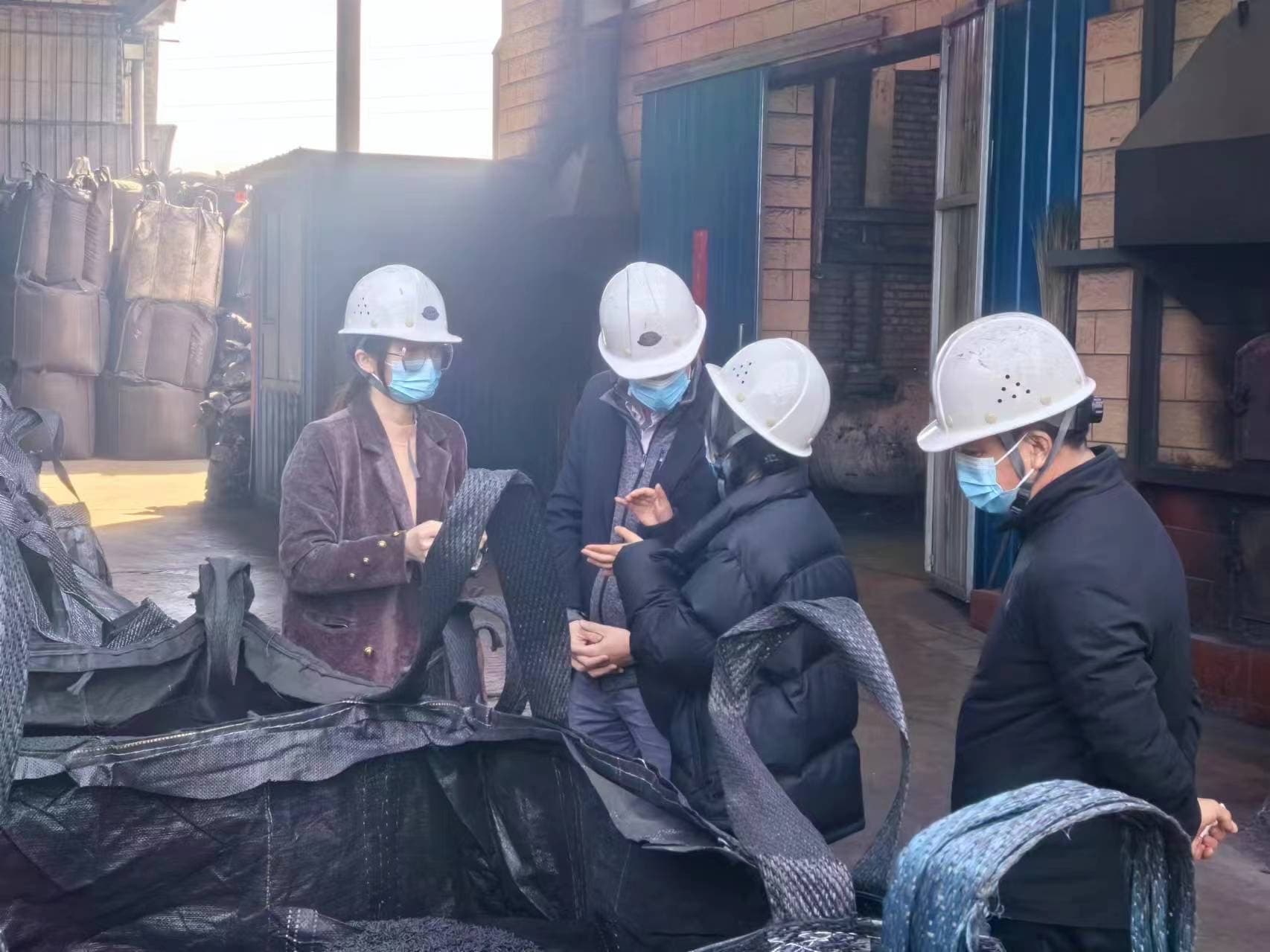
Pre-shipment cargo inspection at our facility — documentation accuracy starts at the factory
Proper documentation is essential for smooth customs clearance and accurate duty assessment. Based on our experience shipping to 50+ countries, here's the complete documentation package buyers should require:
Essential Documents (Required for All Imports)
- ✅ Commercial Invoice — Must show FOB value, currency, Incoterms, detailed product description matching HS code
- ✅ Packing List — Net weight, gross weight, number of packages, package type (25kg bags, big bags, drums)
- ✅ Bill of Lading (B/L) — Original or telex release; container number, seal number, port of loading/discharge
- ✅ Certificate of Origin (CO) — Essential for FTA/GSP duty rate claims; must match invoice details exactly
- ✅ Certificate of Analysis (COA) — Iodine number, moisture, ash content, mesh size, CTC/methylene blue values
- ✅ Material Safety Data Sheet (MSDS/SDS) — Required by port authorities and logistics providers
Application-Specific Documents
- 📋 NSF/ANSI 61 Certificate — Required for drinking water treatment in US/Canada
- 📋 REACH Registration — Required for EU imports ≥1 tonne/year
- 📋 HALAL/KOSHER Certificate — For food & beverage processing applications
- 📋 FDA Registration — For US food-contact and pharmaceutical-grade AC
- 📋 ISO 9001/14001 Certificates — Increasingly required by institutional buyers
- 📋 Fumigation Certificate — For wooden pallet shipments to Australia, EU, and other ISPM-15 countries
📦 What We Provide: Every HojeeCarb shipment includes a complete documentation package — commercial invoice, packing list, COA, MSDS, and certificate of origin. We hold NSF/ANSI 61, ISO 9001, ISO 14001, HALAL, and KOSHER certifications. For EU buyers, we provide REACH-compliant documentation. See our full certification portfolio →
Frequently Asked Questions
What is the HS code for activated carbon?+
What is the US tariff on activated carbon from China in 2026?+
How can I reduce activated carbon import duties?+
Which countries have zero or low tariffs on activated carbon?+
Does activated carbon from China face anti-dumping duties?+
Related Guides
Bulk Activated Carbon Import Guide
Container loading, payment terms, and import logistics for large orders
China Activated Carbon Export Guide
How to source activated carbon from China — factory evaluation, quality control, shipping
Activated Carbon Certification Guide
NSF, ISO, HALAL, KOSHER — which certifications you actually need
Activated Carbon Price Guide 2026
Price ranges by type, factors affecting cost, and bulk pricing strategies
Need Help With Import Tariff Planning?
Our export team provides tariff-optimized quotations with complete documentation packages. Tell us your destination country and we'll calculate the total landed cost — including applicable duties, freight, and any preferential trade agreement benefits.
Request Tariff-Optimized Quote →