
Procurement Guide
Activated Carbon Supplier Audit Checklist
50+ verification points for evaluating activated carbon manufacturers — whether you're qualifying a new supplier or auditing an existing one. Built for procurement managers, quality engineers, and project buyers.
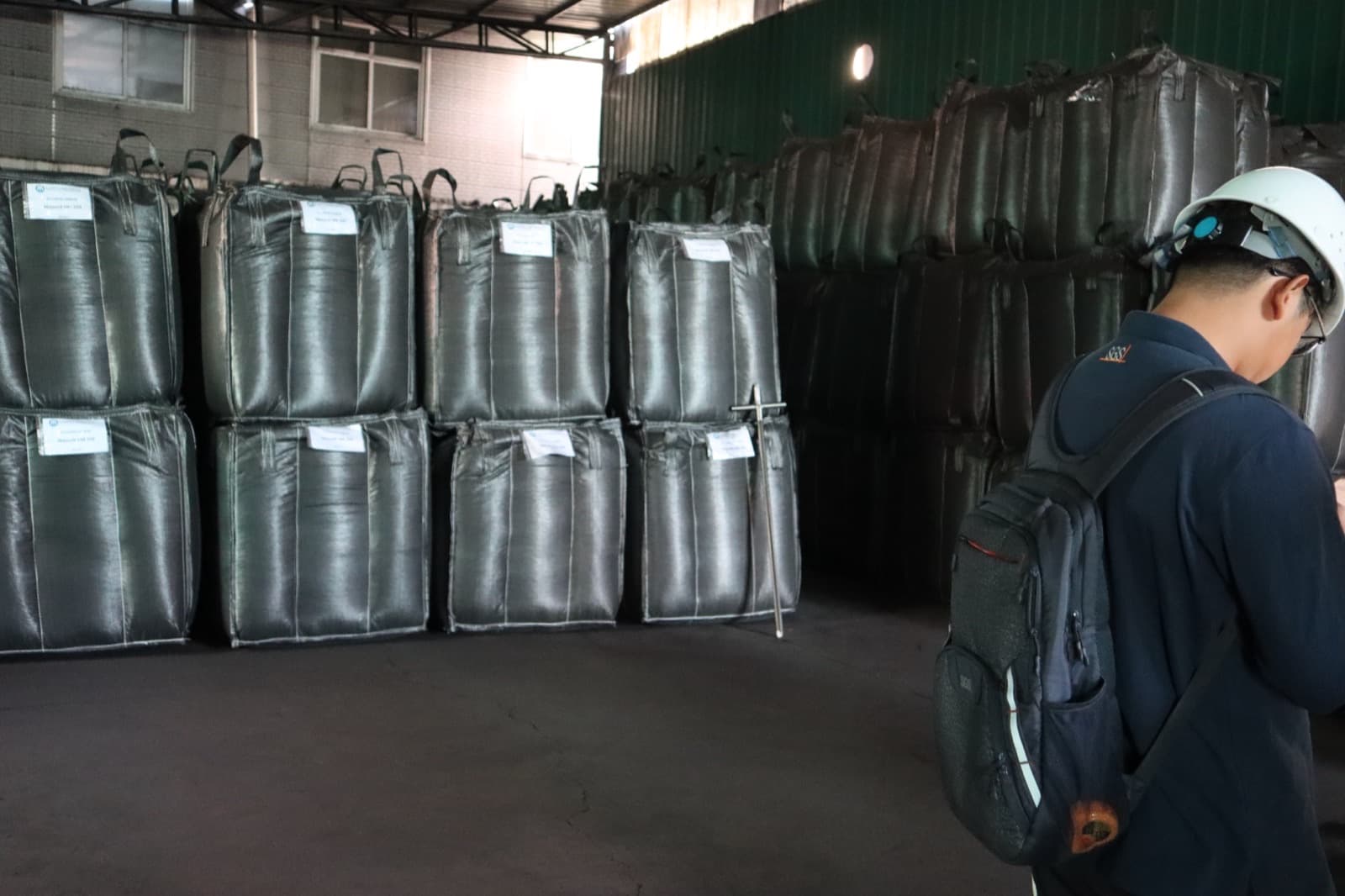
Why Supplier Audits Matter
Activated carbon looks the same from the outside — black granules or powder. But the difference between a reliable supplier and a problematic one can mean contaminated drinking water, failed effluent discharge tests, or gold recovery losses worth millions. A systematic supplier audit protects your operations, your reputation, and your budget.
This checklist is organized into seven categories, ordered by importance. Use it as a scoring framework: rate each item Pass/Fail/N/A and calculate an overall supplier score.
1. Product Quality Verification (Critical)
| # | Audit Item | What to Look For |
|---|---|---|
| 1 | Request samples from current production | Not pre-selected "showcase" samples — random bags from warehouse |
| 2 | Independent lab testing | Send samples to SGS/Intertek for iodine number, hardness, ash, moisture |
| 3 | Compare COA vs independent results | Variance <5% = good. >10% = red flag. >20% = disqualify |
| 4 | Batch-to-batch consistency | Request COAs from last 5 production batches — check standard deviation |
| 5 | Watch a live quality test | During factory visit, ask to see iodine number test on a random bag |
| 6 | Heavy metals testing | For drinking water/food: As, Pb, Cd, Hg, Cr must be below limits |
| 7 | Particle size distribution | Sieve analysis should match spec (<5% oversize/undersize) |
For a detailed breakdown of what each test measures and how to interpret results, see our activated carbon quality testing methods guide.
Need activated carbon?
Get Factory-Direct Pricing — No Middlemen
20+ years manufacturing. MOQ 1 ton. Free samples. Reply within 2 hours.
2. Manufacturing Capability
| # | Audit Item | What to Look For |
|---|---|---|
| 8 | Annual production capacity | ≥3,000 tons/year for GAC; ≥5,000 tons for PAC. Verify with utility bills or production logs |
| 9 | Number of activation kilns | ≥2 kilns minimum — single kiln = single point of failure |
| 10 | Kiln type and condition | Rotary kilns preferred. Check age, maintenance records, temperature control systems |
| 11 | Raw material sourcing | Where do they get coconut shells / coal? Multiple suppliers? Inventory levels? |
| 12 | Raw material storage | ≥2 months inventory on-site. Covered, dry storage. Organized by grade/origin |
| 13 | Process control | Temperature monitoring (continuous vs spot-check), activation time control, steam flow meters |
| 14 | Screening/sizing equipment | Vibrating screens in good condition, regular calibration, dust collection system |
| 15 | Acid washing capability | If you need acid-washed carbon: dedicated acid wash line, wastewater treatment for acid rinse |
3. Quality Management System
| # | Audit Item | What to Look For |
|---|---|---|
| 16 | ISO 9001 certification | Current certificate from accredited body (not expired, not self-declared) |
| 17 | In-house laboratory | Equipped for: iodine, moisture, ash, hardness, particle size, pH, heavy metals |
| 18 | Lab equipment calibration | Current calibration certificates for balances, ovens, sieves, titration equipment |
| 19 | QC testing frequency | Every batch should be tested. Some test only per shift or per day — less reliable |
| 20 | Retain samples | Do they keep retain samples from each batch? For how long? (Should be ≥12 months) |
| 21 | Complaint handling procedure | Documented process for quality complaints, root cause analysis, corrective actions |
| 22 | Traceability | Can trace finished product back to raw material batch, kiln run, and QC test results |
4. Certifications and Compliance
| # | Audit Item | Application |
|---|---|---|
| 23 | NSF/ANSI 61 | Mandatory for US/Canada drinking water |
| 24 | AWWA B604 | GAC quality standard for water utilities |
| 25 | EN 12915 | European standard for GAC in drinking water |
| 26 | FDA compliance | Food-grade applications (decolorization, beverage) |
| 27 | Halal / Kosher | Required by some food & beverage buyers |
| 28 | REACH registration | Required for EU import (>1 ton/year) |
| 29 | ISO 14001 | Environmental management — increasingly required by large buyers |
For a deep dive on certifications, read our certification guide.
5. Logistics and Delivery
| # | Audit Item | What to Look For |
|---|---|---|
| 30 | Lead time | Standard stock: 7–15 days. Custom orders: 15–30 days. >45 days is a concern |
| 31 | Finished goods inventory | Do they keep stock of common grades? How many tons on hand? |
| 32 | Packaging options | 25 kg bags, super sacks, drums, custom labels. Clean, undamaged packaging |
| 33 | Container loading | Proper dunnage, moisture barriers, container inspection before loading |
| 34 | Export experience | Number of countries shipped to, major customers (ask for references) |
| 35 | Pre-shipment inspection | Will they allow third-party inspection (PSI) before container sealing? |
| 36 | Documentation | COA, MSDS, packing list, commercial invoice, Bill of Lading — all accurate and timely |
6. Business Stability
| # | Audit Item | What to Look For |
|---|---|---|
| 37 | Years in business | ≥5 years preferred. Check business registration documents |
| 38 | Factory ownership | Own factory vs trading company? Visit the actual production site |
| 39 | Financial stability | Revenue trends, employee count, investment in new equipment |
| 40 | Customer references | Ask for 3–5 references from your target market/application |
| 41 | Communication quality | Response time, English capability, technical knowledge of sales team |
7. Environmental and Safety
| # | Audit Item | What to Look For |
|---|---|---|
| 42 | Emission controls | Dust collectors, scrubbers on kiln exhaust, compliance with local regulations |
| 43 | Wastewater treatment | For acid-wash operations: proper neutralization and discharge |
| 44 | Worker safety | PPE usage, dust masks, fire safety equipment, emergency procedures |
| 45 | Housekeeping | Clean, organized factory. Messy factory = messy quality control |
Scoring Your Audit
Use this simple scoring framework:
90–100%: Approved supplier — proceed with confidence
75–89%: Conditionally approved — address gaps with corrective action plan
60–74%: Under review — significant improvements needed before ordering
<60%: Not approved — look for alternative suppliers
Weight critical items higher: Product quality (Category 1) should carry 2× weight. A supplier who fails product quality checks should not pass regardless of other scores.
Red Flags to Watch For
- 🚩 Won't allow factory visit — may not actually manufacture
- 🚩 COA numbers always identical — copy-paste, not real testing
- 🚩 No in-house lab — cannot do real-time quality control
- 🚩 Price far below market — likely inferior raw material or under-activated. Use our activated carbon price guide to benchmark fair market rates before negotiating
- 🚩 Claims every certification but can't show documents — verify independently
- 🚩 Only accepts 100% prepayment — high risk for new relationships
- 🚩 No retain samples — no accountability for quality claims
- 🚩 Factory address doesn't match Google Maps satellite — may be a trading company address
Frequently Asked Questions
What certifications should an activated carbon supplier have?
Essential certifications: ISO 9001 (quality management system), ISO 14001 (environmental management — important for chemical manufacturers). Application-specific: NSF/ANSI 61 (drinking water), AWWA B604 (GAC standard), FDA compliance (food-grade), halal/kosher (food & beverage). Ask for actual certificates with expiry dates, not just claims.
How do I verify an activated carbon supplier's test results?
Three ways: (1) Request samples and test them at an independent lab (SGS, Intertek, Bureau Veritas). (2) Ask for third-party test reports alongside the supplier's COA — compare the numbers. (3) During factory audit, observe a live test (iodine number or hardness) on a random production batch. If results differ >10% from COA claims, that's a red flag.
What is the minimum factory size for a reliable activated carbon supplier?
For consistent supply of GAC: annual capacity should be ≥3,000 tons with at least 2 rotary kilns. Single-kiln factories are high risk — one breakdown halts all production. For PAC: ≥5,000 tons/year. Also check raw material storage: a reliable supplier keeps ≥2 months of raw material inventory to buffer supply chain disruptions.
Should I visit the factory before placing a large order?
Yes, for orders exceeding $50,000 or for ongoing supply contracts. A factory visit reveals things no document can: actual production conditions, worker safety practices, raw material quality, warehouse organization, and management professionalism. If you cannot visit personally, hire a third-party inspection firm to conduct a factory audit on your behalf.
What payment terms are standard for activated carbon from China?
Common terms: 30% T/T deposit + 70% against B/L copy (most common for new relationships), L/C at sight (safest for large orders >$100K), 100% T/T before shipment (for small trial orders <$10K). Established relationships may offer 30-60 day open account terms. Avoid 100% prepayment to unknown suppliers.
Ready to Audit Us?
We welcome factory visits and third-party audits. Our ISO-certified manufacturing facility operates with full quality traceability, in-house laboratory testing, and third-party verification through SGS. Request a sample, a COA, or schedule a factory visit.
Contact Us →