
When you receive a COA from an activated carbon supplier, you'll see a list of test results — iodine number, CTC, moisture, ash, hardness, pH, and others. But what do these numbers actually mean? Which ones matter for your application? And how do you know if the values are good, bad, or typical?
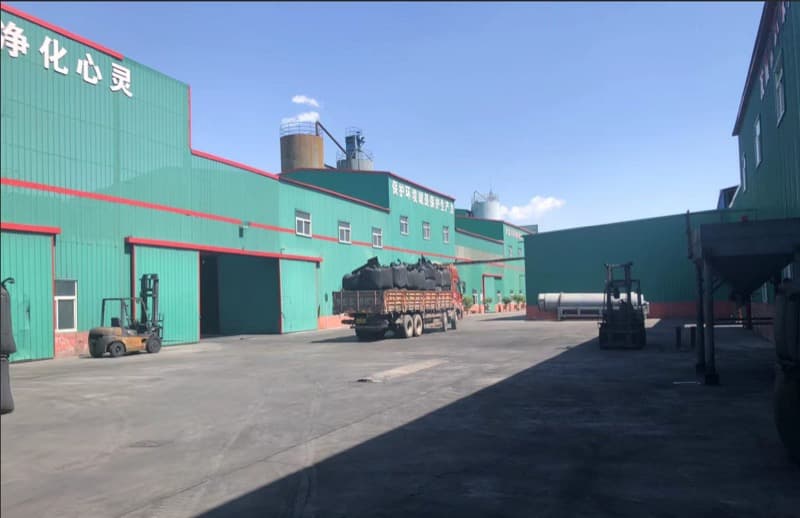
This guide covers the most important quality parameters for activated carbon, the testing methods behind each one, and the values you should expect for different product types.
Quick Reference: Key Quality Parameters
| Parameter | What It Measures | Test Standard | Typical Range |
|---|---|---|---|
| Iodine Number | Micropore volume (liquid phase) | ASTM D4607 | 600–1200 mg/g |
| CTC Value | Gas-phase adsorption capacity | ASTM D3467 | 30–120% |
| BET Surface Area | Total internal surface area | ASTM D6556 | 800–1500 m²/g |
| Hardness | Mechanical strength / attrition resistance | ASTM D3802 | 85–99% |
| Ash Content | Inorganic residue after combustion | ASTM D2866 | 2–15% |
| Moisture | Water content as packed | ASTM D2867 | 2–8% |
| pH | Acidity/alkalinity of water extract | ASTM D3838 | 5–11 |
| Apparent Density | Mass per unit volume (packed) | ASTM D2854 | 350–550 kg/m³ |
Need activated carbon?
Get Factory-Direct Pricing — No Middlemen
20+ years manufacturing. MOQ 1 ton. Free samples. Reply within 2 hours.
Iodine Number
The iodine number is the single most commonly cited quality parameter for activated carbon. It measures the carbon's ability to adsorb iodine molecules from a liquid solution — specifically, the milligrams of iodine adsorbed per gram of carbon when the equilibrium iodine concentration is 0.02 N.
What it really tells you: Iodine molecules are small (diameter ~0.56 nm), so the iodine number primarily reflects micropore volume — the portion of pore structure with diameters below 2 nm. A higher iodine number generally means more micropores and higher capacity for small molecules.
| Carbon Type | Typical Iodine Number | Notes |
|---|---|---|
| Coconut shell GAC | 900–1200 mg/g | Highest micropore volume of any raw material |
| Coal-based GAC | 800–1050 mg/g | Broader pore distribution (micro + mesopores) |
| Wood-based PAC | 800–1200 mg/g | High iodine but also high mesopore volume |
| Pellet carbon (coal) | 600–900 mg/g | Lower due to binder content in extrusion process |
⚠️ Iodine Number Limitations
Iodine number is a useful screening tool but NOT a direct predictor of performance for your specific application. Two carbons with the same iodine number can perform very differently for removing, say, PFAS or chloramine, because those contaminants have different molecular sizes and adsorption mechanisms. For critical applications, always test with your actual process water or gas.
CTC (Carbon Tetrachloride) Value
CTC measures the carbon's capacity to adsorb carbon tetrachloride (CCl₄) vapor, expressed as a weight percentage. A CTC of 60% means 100 grams of carbon adsorbs 60 grams of CCl₄ vapor under test conditions.
Why it matters: CTC is a gas-phase test, making it more relevant than iodine number for air purification, vapor recovery, and gas mask applications. It correlates with the total pore volume available for vapor adsorption. See our complete CTC value guide for a deeper breakdown of grades and applications.
BET Surface Area
BET (Brunauer–Emmett–Teller) surface area measures the total internal surface area of the carbon by adsorbing nitrogen gas at liquid nitrogen temperature (−196°C). The result is expressed in square meters per gram (m²/g).
Perspective: A good activated carbon has 1,000–1,200 m²/g — that means one gram of carbon has an internal surface area equivalent to 2–3 tennis courts. A single teaspoon of activated carbon has the surface area of a football field.
| BET Range | Grade | Typical Products |
|---|---|---|
| 800–1,000 m²/g | Standard | Basic water treatment, general industrial use |
| 1,000–1,200 m²/g | High | Drinking water, premium GAC, most coconut shell products |
| 1,200–1,500 m²/g | Ultra-high | Specialty applications, chemically activated wood carbon, research grade |
BET testing requires expensive equipment (a gas adsorption analyzer) and is not performed on every batch. It's typically available as a type-test or upon specific request. Most routine quality control relies on iodine number as a proxy for surface area.
Hardness / Abrasion Number
Hardness measures how well the carbon resists mechanical breakdown during handling, transport, backwashing, and use in aggressive environments. The test (ASTM D3802) subjects carbon to a steel ball mill for a set time, then measures what percentage remains on a specific sieve.
| Carbon Type | Typical Hardness | Why It Matters |
|---|---|---|
| Coconut shell | 95–99% | Hardest — essential for gold recovery (CIP/CIL), frequent backwashing |
| Bituminous coal | 85–95% | Good — suitable for water treatment, moderate handling |
| Lignite coal | 60–80% | Low — generates fines, not suitable for pressure systems |
| Wood-based | 70–85% | Moderate — acceptable for single-use applications |
For gold recovery, hardness is the #1 specification. The carbon must survive weeks of agitation in abrasive slurry without breaking down. A hardness drop from 97% to 93% can mean 30%+ more carbon consumption per ounce of gold recovered.
Ash Content
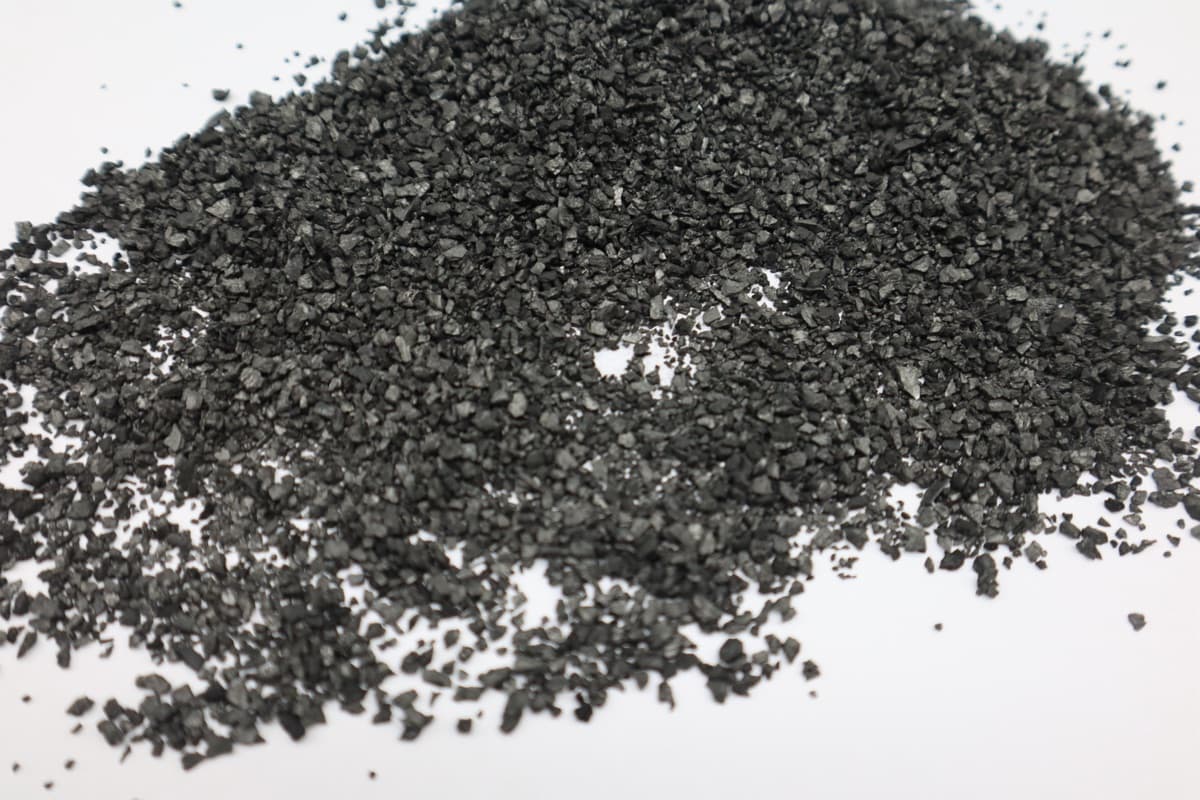
Ash is the inorganic residue left after burning the carbon at 650°C. It consists of minerals naturally present in the raw material — silica, alumina, iron oxide, calcium, potassium, etc.
For drinking water and food-grade applications, lower ash is better. Acid-washed activated carbon has been treated with HCl to dissolve and remove mineral ash, resulting in ≤3% ash content regardless of raw material.
Moisture Content
Moisture is simply the water content of the carbon as shipped. It's measured by drying a sample at 150°C until constant weight.
Why it matters commercially: You're paying per metric ton. If moisture is 8% instead of 3%, you're paying for 50 kg of water per ton instead of 30 kg. On a 20-ton container, the difference is 1 ton of carbon vs. water. Specify maximum moisture in your purchase order — typically ≤5% for GAC and ≤8% for PAC. For a full breakdown of cost drivers and what to budget, see the activated carbon price guide.
pH of Water Extract
This test measures the pH of water that has been in contact with the carbon. It indicates whether the carbon will raise or lower the pH of water passing through it.
For drinking water applications (NSF/ANSI 61), the pH effect must be within acceptable limits. High-pH carbon can be “conditioned” by soaking or backwashing with water until the pH stabilizes, but this takes time and water. Acid-washed carbon avoids this issue.
How to Verify Supplier COA Claims
A factory COA is a self-reported document — the supplier tests their own product. Trust but verify. For a practical checklist of what to check before and after ordering, see how to test activated carbon quality.
Request third-party lab reports
SGS, Intertek, Bureau Veritas, or local accredited labs can test samples independently. Cost: $200–$500 for a standard parameter set. Worth it for orders over $10,000.
Do your own iodine number test
Iodine number testing (ASTM D4607) can be done with basic lab equipment: burette, erlenmeyer flasks, analytical balance, and iodine/sodium thiosulfate solutions. Many water treatment labs have this capability. Compare your results to the COA.
Compare batch-to-batch COAs
Request COAs from the last 5 consecutive batches. If every COA shows exactly 1050 iodine, 3.0% moisture, 5.0% ash — those are target values, not actual test results. Real batch data shows natural variation (e.g., 1020, 1060, 1045, 1055, 1035).
Test in your application
Ultimately, the only test that matters is performance in your actual application. Run bench-scale or pilot tests with samples before committing to a full order. A carbon with lower iodine number might actually outperform one with higher iodine if its pore distribution better matches your target contaminant.
Key Testing Standards Reference
| Standard | Parameter | Description |
|---|---|---|
| ASTM D4607 | Iodine number | Standard method for iodine adsorption from liquid phase |
| ASTM D3467 | CTC activity | Carbon tetrachloride vapor adsorption capacity |
| ASTM D6556 | BET surface area | Total surface area by nitrogen adsorption |
| ASTM D3802 | Ball-pan hardness | Resistance to mechanical breakdown |
| ASTM D2866 | Ash content | Total inorganic residue at 650°C |
| ASTM D2867 | Moisture | Water content by oven drying at 150°C |
| ASTM D3838 | pH | pH of water extract after 1-hour contact |
| ASTM D2854 | Apparent density | Tamped density (weight per unit volume) |
| ASTM D2862 | Particle size | Sieve analysis / particle size distribution |
| AWWA B604 | GAC specification | Industry standard specification for GAC in water treatment |
Bottom Line
Quality testing for activated carbon is well-standardized. The key is knowing which parameters matter most for your application: iodine number for liquid-phase, CTC for gas-phase, hardness for aggressive environments, and ash content for food/water-grade purity. Don't rely solely on supplier COAs — verify independently for critical applications, and always test in your actual process conditions.
Frequently Asked Questions
What are the essential quality tests for activated carbon?
Core tests: iodine number (ASTM D4607), CTC activity (D3467), moisture (D2867), ash (D2866), hardness (D3802), apparent density (D2854), and particle size (D2862). For specialty applications, methylene blue value, pH, and contaminant isotherms may also be needed.
How do I interpret a Certificate of Analysis?
Compare each tested parameter against your specification. Red flags: iodine number below spec, moisture above 5%, ash above spec, hardness below 90%. Request COA from an independent lab for large orders. Ensure test methods match your specified standards.
Can I test activated carbon quality on-site?
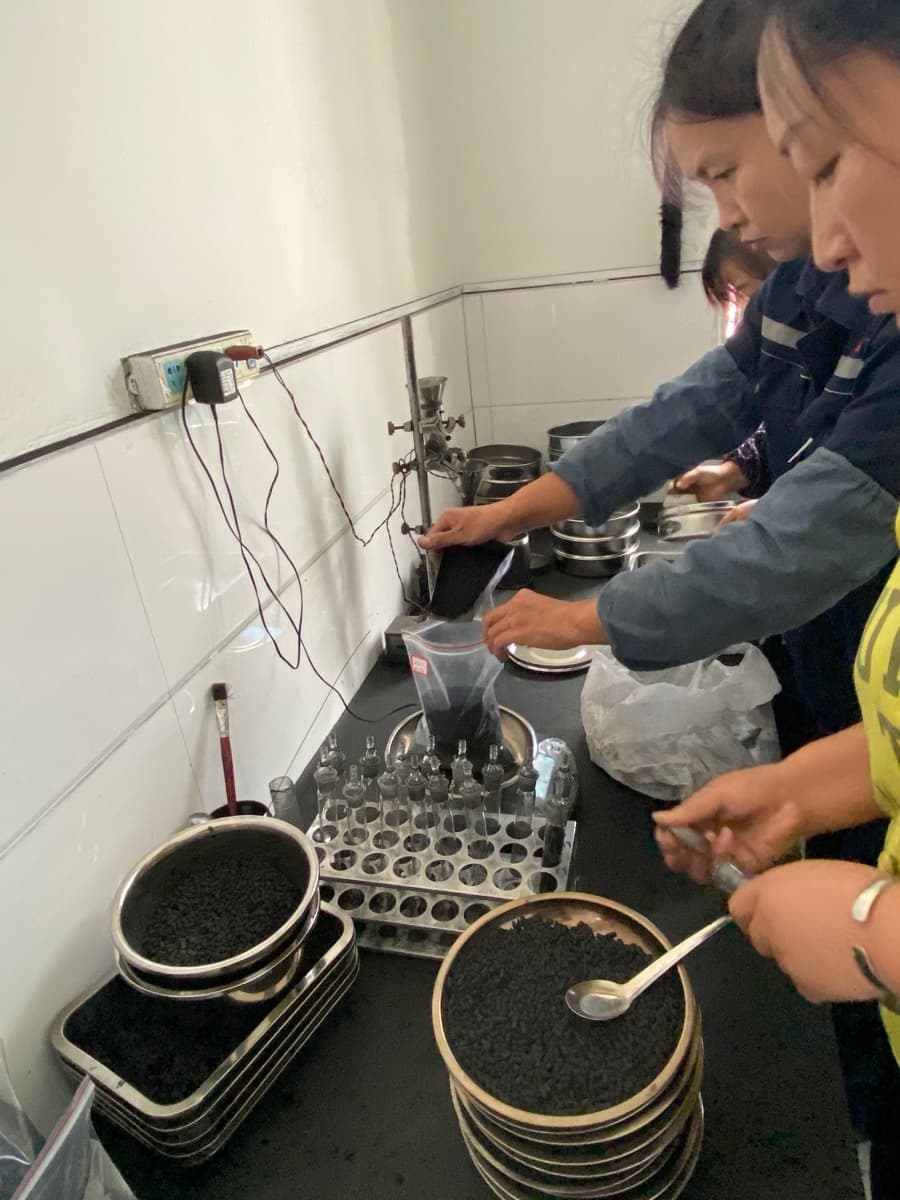
Basic on-site tests: visual inspection (uniformity, no foreign matter), water clarity test (shake in water — cloudy = excess fines), pH test (soak and test with strips), and weight verification. Iodine number and adsorption tests require a basic titration lab setup.
What is the difference between ASTM and JIS testing standards?
ASTM and JIS differ in methodology details. For iodine number, ASTM D4607 and JIS K 1474 use different carbon-to-iodine ratios and procedures. JIS values tend to run 50–100 mg/g higher than ASTM for the same carbon. Always specify which standard you require.
How often should incoming shipments be tested?
Test every shipment — at minimum check moisture and iodine number. For critical applications (drinking water, pharma), test the full spec suite for every batch. For routine industrial use, full testing every 3rd–5th shipment with spot checks is acceptable. Retain samples 12+ months.
Need Tested, Certified Activated Carbon?
Every batch we ship includes a full COA with all key parameters. Third-party testing available upon request. Request samples with COA.
Request Samples & COA