
If you're sourcing activated carbon for air purification, VOC removal, or solvent recovery, you've probably encountered the term “CTC value” on datasheets. CTC stands for Carbon Tetrachloride Activity — a standardized measure of how much vapor-phase adsorbate a carbon can hold. While iodine number dominates water treatment specifications, CTC value is the specification that matters most for gas-phase applications.
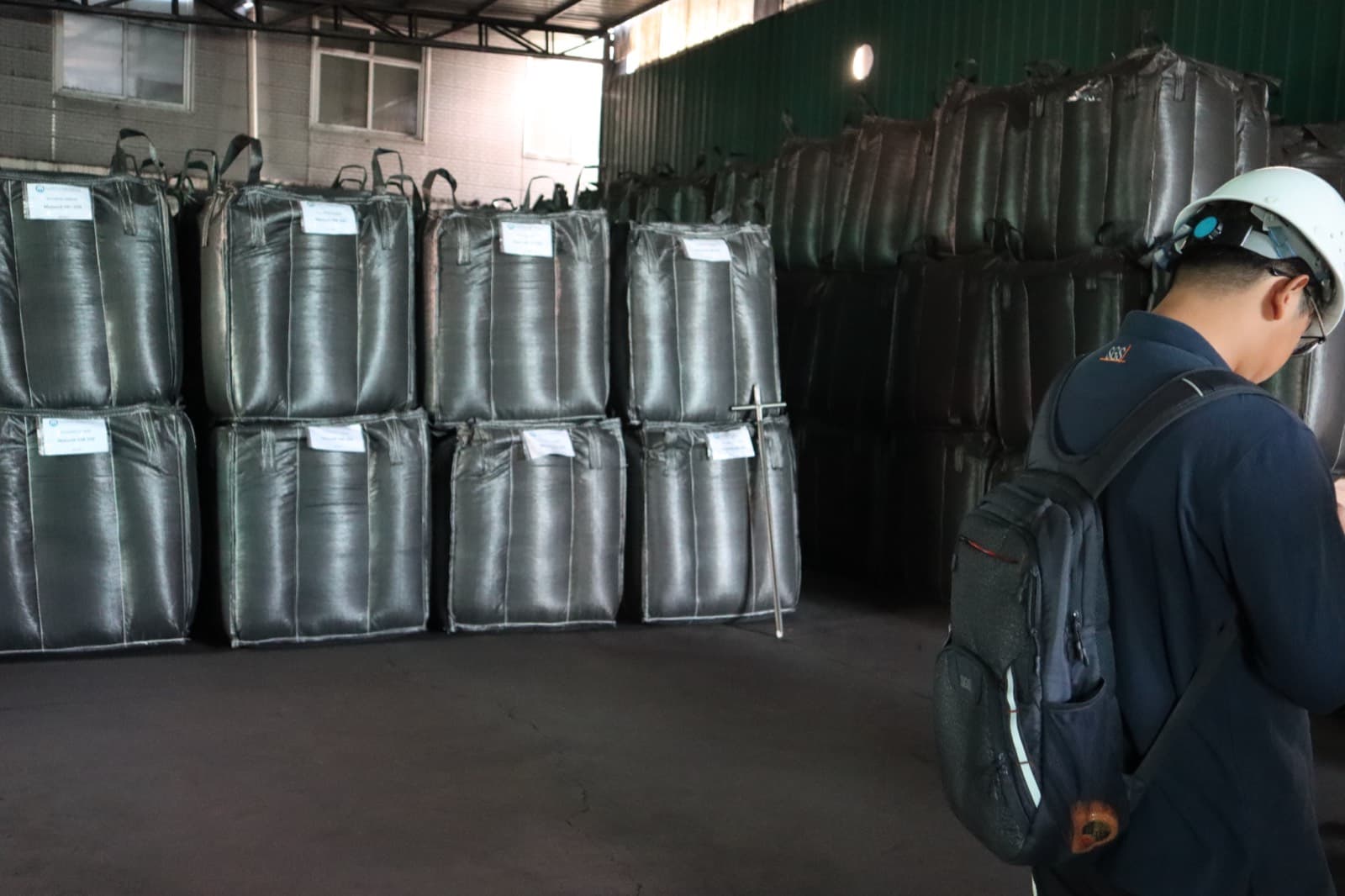
At our production facilities, we test CTC activity on every batch of pellet activated carbon and gas-phase granular carbon before shipment. Over 15+ years of manufacturing, we've seen how CTC value directly correlates with real-world performance in vapor adsorption systems. This guide shares that experience so you can specify the right CTC value for your application and avoid overpaying — or underperforming.
What Is CTC Value in Activated Carbon?
CTC value — formally called Carbon Tetrachloride Activity or Carbon Tetrachloride Number — measures the percentage of carbon tetrachloride (CCl₄) vapor that activated carbon can adsorb relative to its own weight. The test uses CCl₄ as a standardized probe molecule because its molecular diameter (approximately 0.63 nm) is well-suited to characterize the pore volume relevant to gas-phase adsorption.
A CTC value of 60% means that one gram of activated carbon can adsorb 0.6 grams of carbon tetrachloride vapor under standard test conditions. This translates directly into the carbon's total adsorption pore volume — both micropores (less than 2 nm) and small mesopores (2–5 nm) — which determines how effectively the carbon will capture organic vapors, solvents, and volatile organic compounds (VOCs) in gas-phase applications.
Unlike iodine number, which reflects only micropore capacity via liquid-phase testing, CTC value provides a direct measurement of the gas-phase working capacity. This is why experienced engineers and procurement teams specify CTC value — not iodine number — when selecting activated carbon for air treatment, emission control, and VOC removal systems.
Key Takeaway
CTC value measures total pore volume available for vapor-phase adsorption. Higher CTC = more pore volume = greater capacity to capture organic vapors, solvents, and VOCs from gas streams. It's the single most predictive specification for gas-phase activated carbon performance.
Need activated carbon?
Get Factory-Direct Pricing — No Middlemen
20+ years manufacturing. MOQ 1 ton. Free samples. Reply within 2 hours.
How CTC Value Is Tested: ASTM D3467
The standard test method for CTC activity is ASTM D3467 (“Standard Test Method for Carbon Tetrachloride Activity of Activated Carbon”). The Chinese equivalent is GB/T 7702.12. Understanding the test procedure helps you evaluate supplier claims and spot inconsistencies in reported data.
Sample Preparation
A measured quantity of granular or pellet activated carbon (typically 25 mL by volume) is dried at 150°C to remove moisture, then cooled in a desiccator. The dry weight is recorded precisely — this is the baseline for calculating percent adsorption.
Vapor Generation
A stream of dry air is bubbled through liquid carbon tetrachloride at 25°C, creating an air stream saturated with CCl₄ vapor at a known concentration. The flow rate is controlled to ensure consistent vapor delivery.
Adsorption Phase
The CCl₄-saturated air passes upward through the carbon bed. The carbon adsorbs CCl₄ vapor progressively until the bed is fully saturated — indicated by CCl₄ breakthrough at the outlet. The tube is weighed periodically until weight gain stabilizes.
Calculation
CTC activity (%) = (weight of adsorbed CCl₄ ÷ weight of dry carbon) × 100. The result represents the total pore volume accessible to CCl₄ molecules, expressed as a weight percentage.
The ASTM D3467 test is straightforward but requires precise temperature and flow control. In our QC laboratory, we run CTC tests on every production batch of gas-phase carbon. A single test takes approximately 2–3 hours due to the time required for full saturation. For more details on activated carbon testing standards, see our guide to quality testing methods.
Typical CTC Values by Carbon Type
CTC values vary significantly based on raw material, activation method, and degree of activation. Here are the ranges we see in our production and across the industry:
| Carbon Type | CTC Range (%) | Typical | Notes |
|---|---|---|---|
| Coal-Based Pellet (steam) | 50–80% | 60–70% | Most common for gas-phase; excellent hardness |
| Coal-Based GAC (steam) | 45–70% | 55–65% | Versatile; balanced micro/mesopore structure |
| Coconut Shell GAC (steam) | 50–75% | 55–65% | High micropore ratio; very hard |
| Wood-Based GAC | 40–60% | 45–55% | More mesopore; lower density |
| Specialty High-CTC Pellet | 70–100%+ | 80–95% | Heavily activated; for solvent recovery |
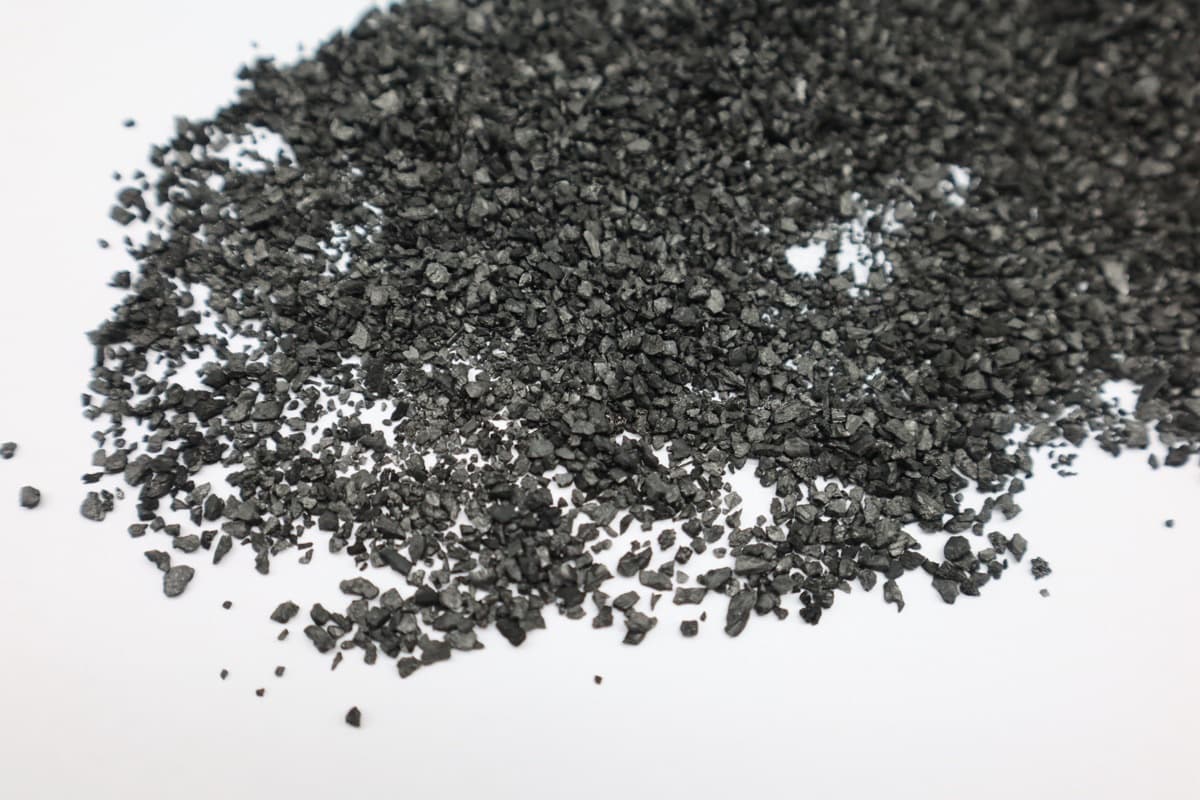
Pellet (extruded) activated carbon dominates gas-phase applications because the extrusion process creates uniform cylindrical pellets with consistent airflow characteristics and low pressure drop. Coal-based pellets achieve the best balance of CTC activity, mechanical hardness, and cost — which is why they account for the majority of gas-phase carbon consumed globally.
CTC Value vs. Iodine Number: When to Use Which
CTC value and iodine number are both adsorption capacity measurements, but they test fundamentally different things. Confusing them leads to poor carbon selection. Here's a clear comparison:
| Parameter | CTC Value | Iodine Number |
|---|---|---|
| Test Phase | Gas phase (vapor) | Liquid phase (aqueous solution) |
| Probe Molecule | CCl₄ (~0.63 nm) | I₂ (~0.56 nm) |
| What It Measures | Total pore volume (micro + small meso) | Micropore volume only |
| Unit | Weight percent (%) | mg/g |
| Test Standard | ASTM D3467 | ASTM D4607 |
| Best For | Air treatment, VOC removal, solvent recovery | Water treatment, liquid-phase purification |
| Typical Good Value | 60%+ for gas-phase | 1000+ mg/g for water treatment |
Practical Rule
Buying carbon for water treatment? Specify iodine number. Buying carbon for air/gas treatment? Specify CTC value. A carbon with excellent iodine number but mediocre CTC may underperform in vapor-phase applications, and vice versa. Always match the test to the application phase.
There is a general positive correlation between CTC value and iodine number — a carbon with high micropore volume will score well on both tests. However, the correlation is not tight enough for substitution. Two carbons with identical iodine numbers of 1050 mg/g can have CTC values of 55% and 70%, respectively, depending on their mesopore structure. For gas-phase applications, that difference translates into roughly 25% more working capacity.
Why CTC Value Is Critical for Gas-Phase Adsorption
Gas-phase adsorption — used in VOC removal, solvent recovery, odor control, and industrial emission treatment — relies on physical adsorption of vapor molecules into the carbon's pore structure. The performance of an adsorption system depends on three factors: total pore volume, pore size distribution, and kinetics (how fast molecules can access the pores). CTC value directly measures the first two.
VOC Removal & Emission Control
For VOC abatement in industrial exhaust streams, CTC value predicts the carbon bed's working capacity — how many kilograms of VOCs can be captured before breakthrough. Higher CTC value means longer service life between change-outs or regeneration cycles, directly reducing operating costs. For most VOC applications, specify a minimum CTC of 55%, with 60–70% preferred for cost-effective operation.
Solvent Recovery
Solvent recovery systems — common in printing, coating, pharmaceutical manufacturing, and chemical processing — demand the highest CTC values. These systems use thermal or steam regeneration to desorb captured solvents for reuse. Higher CTC value means more solvent recovered per adsorption cycle. Specify CTC ≥70% for solvent recovery, with premium grades reaching 80–95%.
Odor Control & Indoor Air Quality
HVAC air filtration and odor control applications use activated carbon to remove low-concentration contaminants from ambient air. While CTC requirements are lower (40–55% is often adequate), higher CTC extends filter life significantly. In commercial buildings, the cost of labor to replace carbon filters often exceeds the carbon cost itself — making higher CTC a smart investment.
Industrial Off-Gas Treatment
Flue gas desulfurization, mercury removal from power plant emissions, and chemical plant off-gas treatment all rely on gas-phase activated carbon. For these applications, CTC value must be balanced against chemical reactivity (for chemisorption applications) and mechanical strength (for moving-bed systems). Typical specifications require CTC ≥50% combined with ball-pan hardness ≥95%.
CTC Value Requirements by Application
| Application | Min. CTC | Recommended | Carbon Form |
|---|---|---|---|
| VOC Removal (Industrial) | 55% | 60–70% | Pellet 3mm / 4mm |
| Solvent Recovery | 70% | 80–95% | Pellet 3mm / 4mm |
| HVAC / Indoor Air | 40% | 50–60% | Pellet or GAC |
| Odor Control | 40% | 45–55% | Pellet or GAC |
| Flue Gas Treatment | 50% | 55–65% | Pellet 4mm / 6mm |
| Automotive Canister | 50% | 55–65% | Pellet 2mm |
| Gas Mask / Respirator | 60% | 65–80% | Coconut shell GAC or pellet |
How to Evaluate CTC Value When Purchasing
CTC value is straightforward to specify, but there are nuances that experienced buyers know to watch for. Here's what we recommend based on working with industrial buyers across 60+ countries:
- •
Specify the test standard — ASTM D3467 and GB/T 7702.12 use slightly different procedures and may yield different results for the same carbon. Always confirm which standard is used and compare like-for-like.
- •
Request batch-specific COA — CTC value should be tested per production batch, not copied from a generic spec sheet. A reputable manufacturer like Hojee provides batch-specific Certificates of Analysis with actual test results.
- •
Cross-check with butane activity — Butane number (ASTM D5742) is a complementary gas-phase test. If a supplier claims CTC 70% but butane activity is only 20 g/100mL, something doesn't add up. Consistent results across multiple tests build confidence.
- •
Consider retentivity, not just activity — CTC activity measures total capacity; CTC retentivity measures what remains after air purging. For applications with intermittent exposure (like automotive canisters), retentivity matters more than activity.
- •
Don't over-specify — Higher CTC costs more due to longer activation time and greater carbon burn-off during production. If your application needs CTC 55%, buying CTC 80% carbon wastes money. Match the spec to your actual performance requirement.
- •
Balance CTC with hardness — Higher activation increases CTC but reduces mechanical strength. For applications with high flow velocities or moving beds, you may need to accept a moderate CTC value to maintain adequate hardness (≥95% ball-pan).
Complementary Specifications to Consider
CTC value is the headline specification for gas-phase carbon, but a complete purchasing specification should include additional parameters:
Hardness (ASTM D3802)
Ball-pan hardness indicates resistance to mechanical degradation during handling, loading, and operation. For fixed-bed systems, ≥90% is acceptable. For moving beds and fluidized systems, specify ≥95%. Note: higher CTC generally means lower hardness — there's always a trade-off.
Moisture Content
Excessive moisture reduces effective CTC capacity because water molecules occupy pore volume. Specify ≤5% moisture for gas-phase carbon. Moisture above 8% indicates improper drying or storage — reject the shipment.
Ash Content
High ash content (mineral residue) can cause catalytic reactions, equipment corrosion, or product contamination. Coal-based pellet carbon typically runs 8–15% ash; for sensitive applications, specify acid-washed grades at ≤5%.
Particle Size / Pellet Diameter
Pellet diameter affects pressure drop and mass transfer kinetics. Smaller pellets (2–3 mm) offer faster kinetics but higher pressure drop. Larger pellets (4–6 mm) are better for deep beds. Match pellet size to your system design.
Apparent Density
Apparent (bulk) density affects the weight of carbon needed to fill a given vessel volume. Lower density usually means higher porosity and higher CTC. Typical range for pellet carbon: 350–550 g/L.
Frequently Asked Questions
What does CTC value measure in activated carbon?
CTC value (Carbon Tetrachloride Activity) measures the percentage of carbon tetrachloride vapor that activated carbon can adsorb by weight under standardized conditions. It indicates the total pore volume available for vapor-phase adsorption, including both micropores and small mesopores. A CTC value of 60% means one gram of carbon adsorbs 0.6 grams of CCl₄ vapor.
What is a good CTC value for activated carbon?
For gas-phase adsorption applications like VOC removal or solvent recovery, a CTC value of 50–70% is considered good. Premium pellet activated carbon typically reaches 60–80%. For less demanding applications like odor control, 40–50% may suffice. The right CTC value depends on your specific application, target pollutants, and required service life.
What is the difference between CTC value and iodine number?
Iodine number measures liquid-phase adsorption capacity (micropores only, using iodine molecules ~0.56 nm). CTC value measures gas-phase adsorption capacity (total pore volume, using CCl₄ vapor molecules ~0.63 nm). For water treatment, iodine number is more relevant. For air purification, VOC removal, and solvent recovery, CTC value is the better performance predictor.
How is CTC value tested?
CTC value is tested per ASTM D3467. Dried activated carbon is placed in a tube and exposed to a stream of air saturated with carbon tetrachloride vapor at 25°C. The carbon adsorbs CCl₄ until saturation. The weight gain as a percentage of original dry weight is reported as the CTC activity value.
Why is CTC value important for pellet activated carbon?
Pellet (extruded) activated carbon is primarily used in gas-phase applications — air purification, VOC control, solvent recovery, and industrial off-gas treatment. CTC value directly predicts performance in these vapor-phase applications because it measures total pore volume available for gas adsorption, making it the single most important specification for pellet carbon selection.
Can CTC value change during storage?
Yes. Exposure to humid air or ambient vapors gradually occupies pore volume and reduces effective CTC capacity. Store activated carbon in sealed, moisture-proof packaging in a clean, dry area. Properly stored carbon maintains its CTC value for years. For carbon stored longer than 12 months, re-test before use.
Making Informed Gas-Phase Carbon Decisions
CTC value is the specification that separates informed gas-phase carbon buyers from those who default to iodine number for everything. By understanding what CTC measures, how the ASTM D3467 test works, and what values to specify for your application, you can source activated carbon that performs optimally in vapor-phase adsorption systems.
Remember the fundamentals: CTC measures total pore volume for gas-phase adsorption, higher CTC means more working capacity but comes at a cost (price and hardness trade-off), and always match the specification to your actual application requirements. Pair CTC with complementary specifications — hardness, moisture, ash, and particle size — for a complete purchasing specification that ensures you get the right carbon for the job.
Explore our full range of activated carbon products, including high-CTC pellet activated carbon for gas-phase applications.
Need Gas-Phase Activated Carbon with Specific CTC Requirements?
Our technical team can recommend the optimal CTC value and carbon type for your specific gas-phase application. We manufacture pellet activated carbon with CTC values from 50% to 95%+ and provide batch-specific COA documentation.