
If you've ever looked at an activated carbon datasheet, you've seen “BET Surface Area: 1,050 m²/g” or something similar. This specification tells you how much internal surface the carbon has available for adsorption — and it's one of the most important numbers for predicting real-world performance. But what exactly does BET surface area measure, how is it determined, and what values should you look for when purchasing activated carbon?
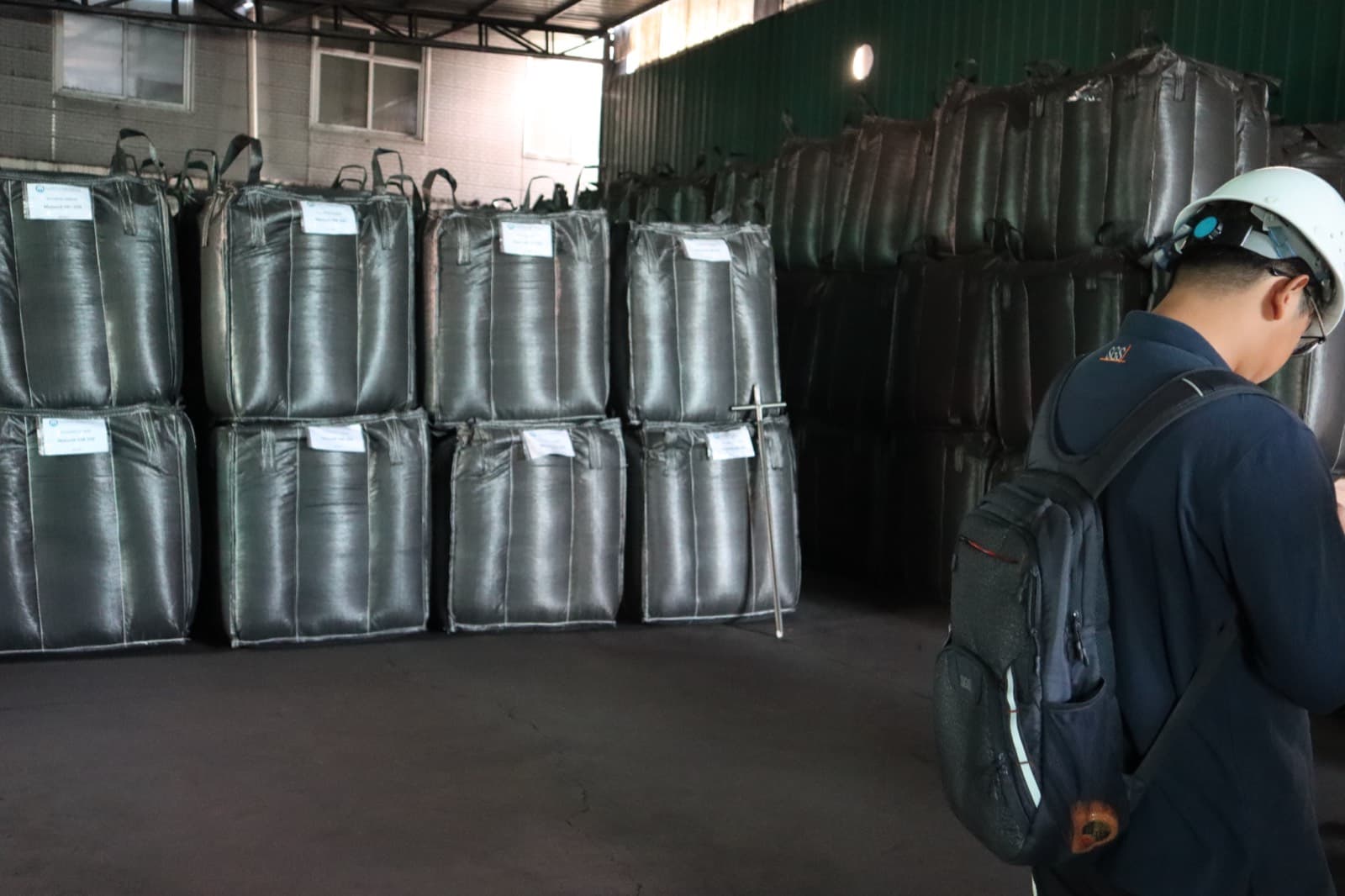
In this complete guide, we break down the science behind BET analysis, explain how the measurement works, provide typical BET surface area ranges for different types of activated carbon, and give you practical guidance on using this specification in your procurement process. Whether you're sourcing carbon for water treatment, air purification, or industrial processes, understanding BET surface area will help you make better purchasing decisions.
What Is BET Surface Area?
BET surface area — named after Stephen Brunauer, Paul Hugh Emmett, and Edward Teller, who published the theory in 1938 — is the total internal and external surface area of a material measured by gas adsorption. For activated carbon, BET surface area is expressed in square meters per gram (m²/g) and represents the total area available for adsorption of molecules from gas or liquid streams.
To put this in perspective: a single gram of high-quality activated carbon can have an internal surface area equivalent to 1–2 tennis courts. This enormous specific surface area is what makes activated carbon such an effective adsorbent. The porous structure created during activation produces an intricate network of micropores (<2 nm), mesopores (2–50 nm), and macropores (>50 nm) that collectively generate this vast surface.
The BET method is considered the gold standard for surface area measurement because it accounts for multilayer gas adsorption on the carbon surface, providing a more accurate representation of total available surface than single-point methods. The testing follows international standards including ISO 9277, ASTM D6556, and GB/T 19587 in China.
Key Takeaway
BET surface area measures the total internal surface area of activated carbon using nitrogen gas adsorption. It captures micropores, mesopores, and part of the macropore structure — giving a more complete picture than iodine number, which primarily indicates micropore volume.
Need activated carbon?
Get Factory-Direct Pricing — No Middlemen
20+ years manufacturing. MOQ 1 ton. Free samples. Reply within 2 hours.
How BET Analysis Works: The Measurement Method
Understanding how BET surface area is measured helps you evaluate test results and communicate effectively with suppliers. The process involves four key stages:
Sample Degassing
The carbon sample (typically 0.1–0.5 g) is heated under vacuum at 150–300 °C for several hours to remove moisture, adsorbed gases, and volatile contaminants from the pore surfaces. This step is critical — incomplete degassing leads to underestimated surface area values. The degassing temperature must be high enough to clean the pores but not so high as to alter the carbon structure.
Nitrogen Adsorption at 77 K
The degassed sample is cooled to 77 K (–196 °C) using liquid nitrogen. Known quantities of nitrogen gas (N₂) are then introduced into the sample tube at progressively increasing relative pressures (P/P₀ from approximately 0.05 to 0.35 for BET analysis). At each pressure point, the instrument measures how much nitrogen adsorbs onto the carbon surface.
BET Equation Application
The adsorption data is plotted according to the BET equation: 1/[W(P₀/P – 1)] = 1/WₘC + (C – 1)/WₘC × (P/P₀), where W is the weight of gas adsorbed, Wₘ is the monolayer capacity, and C is the BET constant related to adsorption energy. A linear plot in the P/P₀ range of 0.05–0.35 yields the monolayer volume.
Surface Area Calculation
The monolayer volume is converted to surface area using the cross-sectional area of a nitrogen molecule (0.162 nm²) and Avogadro's number. The result is the total BET surface area in m²/g. Modern automated analyzers (Micromeritics, Quantachrome, etc.) complete this entire process in 4–8 hours per sample.
Because BET analysis requires specialized instrumentation (a surface area analyzer costing $30,000–$100,000+), it's not a routine quality control test like iodine number testing. Most manufacturers perform BET analysis during product development and periodic quality verification, while using faster proxy tests (iodine number, methylene blue value) for batch-by-batch QC.
BET Surface Area vs. Iodine Number: What's the Difference?
Buyers often see both BET surface area and iodine number on datasheets and wonder how they relate. While there is a general correlation, these two measurements capture different aspects of the carbon's pore structure:
| Property | BET Surface Area | Iodine Number |
|---|---|---|
| What It Measures | Total internal surface area (all pore sizes) | Micropore volume (small pores only) |
| Method | N₂ gas adsorption at 77 K | Liquid-phase iodine adsorption |
| Units | m²/g | mg/g |
| Pore Coverage | Micropores + mesopores + partial macropores | Primarily micropores |
| Test Duration | 4–8 hours | ~45 minutes |
| Equipment Cost | $30,000–$100,000+ | $500–$2,000 |
| Use Case | Product development, detailed characterization | Routine batch QC, quick screening |
The rough rule of thumb is that 1 mg/g iodine number ≈ 1 m²/g BET surface area. So a carbon with an iodine number of 1,050 mg/g might have a BET surface area of approximately 1,000–1,100 m²/g. However, this correlation breaks down for carbons with significant mesopore content (like wood-based phosphoric acid activated carbons), where BET surface area can be significantly higher than iodine number would suggest.
Typical BET Surface Area by Carbon Type
BET surface area varies widely depending on raw material, activation method, and degree of activation. Here are the ranges we see across different activated carbon types:
| Carbon Type | BET Range (m²/g) | Typical | Dominant Pore Structure |
|---|---|---|---|
| Coconut Shell (Steam) | 900–1,300 | 1,000–1,150 | Highly microporous (> 90% micropores) |
| Coal-Based (Steam) | 800–1,200 | 900–1,050 | Mixed micro + mesopores |
| Coal-Based (Chemical) | 600–1,000 | 700–900 | Mesopore dominant |
| Wood-Based (H₃PO₄) | 1,200–2,000 | 1,400–1,800 | High mesopore ratio; very high BET |
| Wood-Based (ZnCl₂) | 800–1,300 | 1,000–1,150 | Mixed with macropore presence |
| Specialty / KOH Activated | 2,000–3,500 | 2,500–3,000 | Ultra-microporous; supercapacitor grade |
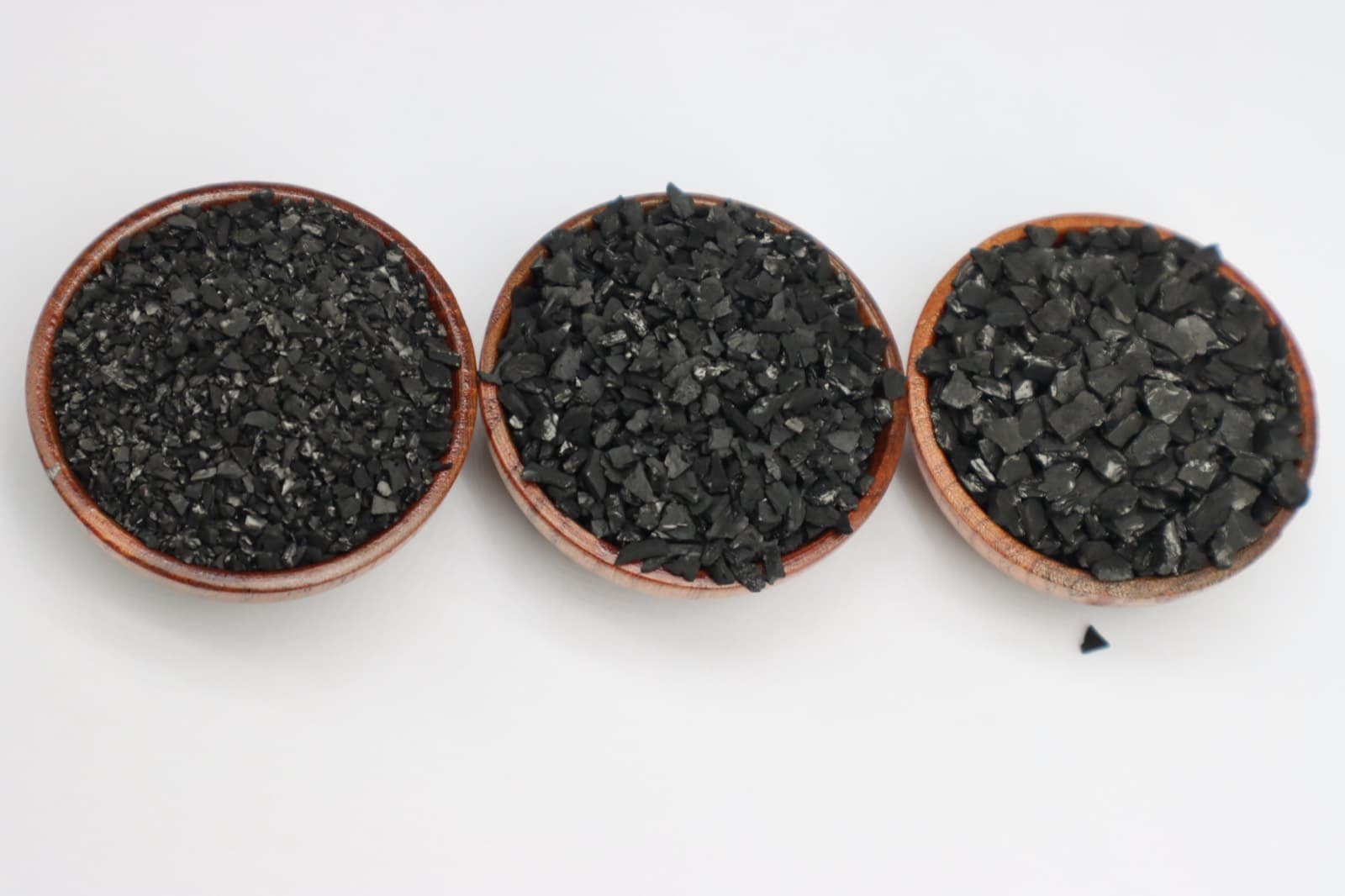
Notice that wood-based phosphoric acid activated carbons can reach remarkably high BET values (1,800+ m²/g) due to their extensive mesopore network. However, this doesn't necessarily mean they outperform coconut shell carbons in all applications — a coconut shell carbon with 1,050 m²/g of concentrated micropore surface will adsorb small molecules like chlorine and VOCs more efficiently than a wood carbon with 1,600 m²/g of mostly mesopore surface.
Why BET Surface Area Matters for Adsorption Performance
The relationship between BET surface area and adsorption capacity is fundamental but not always straightforward. Here's why this specification matters and what nuances to be aware of:
More Surface = More Adsorption Sites
At its simplest, higher BET surface area means more sites where contaminant molecules can physically attach to the carbon surface through van der Waals forces. All else being equal, doubling the surface area roughly doubles the adsorption capacity. This is why activated carbon (500–3,000 m²/g) dramatically outperforms non-activated charcoal (200–400 m²/g) as an adsorbent.
Pore Size Distribution Matters More Than Total Area
This is the critical nuance buyers must understand. Two carbons can have identical BET surface areas but completely different adsorption profiles because their pore size distributions differ. A carbon with 1,100 m²/g concentrated in micropores will excel at small-molecule adsorption (VOCs, chlorine, dissolved organics), while a carbon with 1,100 m²/g spread across mesopores will better handle larger molecules (color bodies, tannins, certain pharmaceuticals).
That's why experienced buyers always evaluate BET surface area alongside pore size distribution data (if available) or proxy indicators like methylene blue value (mesopore indicator) and iodine number (micropore indicator). The combination tells a much more complete story than any single number.
Surface Chemistry Adds Another Layer
The carbon surface isn't chemically uniform. Oxygen-containing functional groups (carboxyl, hydroxyl, carbonyl) create acidic or basic sites that interact differently with various contaminants. A lower-BET carbon with the right surface chemistry can outperform a higher-BET carbon with unfavorable surface properties for specific contaminants. This is particularly relevant for pH-sensitive applications and heavy metal removal.
Practical Rule
Use BET surface area as a starting filter — reject carbons below your minimum threshold. Then evaluate pore size distribution, hardness, ash content, and application-specific performance tests to make your final selection. BET alone never tells the whole story.
BET Surface Area Requirements by Application
Here are practical BET surface area guidelines based on our manufacturing experience and customer feedback across major applications:
| Application | Min. BET (m²/g) | Recommended | Notes |
|---|---|---|---|
| Drinking Water | 850 | 1,000–1,100 | Micropore-dominant for chlorine/VOC removal |
| Industrial Wastewater | 800 | 900–1,100 | Varies by contaminant size; may need mesopores |
| Air / Gas Purification | 1,000 | 1,050–1,200 | Gas-phase adsorption relies on micropores |
| Gold Recovery (CIP/CIL) | 950 | 1,000–1,100 | Balance surface area with hardness |
| Decolorization | 1,000 | 1,200–1,600 | Needs mesopore surface for large color molecules |
| Solvent Recovery | 1,000 | 1,100–1,250 | High micropore volume for working capacity |
| Food & Pharma | 900 | 1,000–1,400 | Depends on purification target molecule size |
Factors That Affect BET Surface Area
Understanding what drives BET surface area helps you evaluate products and make trade-off decisions:
Raw Material
Coconut shell produces the highest micropore-to-mesopore ratio. Coal gives a balanced pore distribution. Wood, with its naturally larger cellular structure, tends to produce more mesopores. The inherent structure of the raw material sets the foundation for final pore development.
Activation Method
Steam activation (physical) generally creates narrower pores and moderate surface areas. Chemical activation (H₃PO₄, ZnCl₂, KOH) can produce significantly higher BET values — KOH activation can exceed 3,000 m²/g — but often at the expense of mechanical strength and with specific pore size distributions.
Degree of Activation (Burn-Off)
Extending activation time increases burn-off percentage, which generally increases surface area up to an optimum point (typically 40–60% burn-off for steam activation). Beyond this, pore walls collapse, reducing surface area and significantly weakening the carbon structure. This is why ultra-high BET carbons often have poor hardness.
Activation Temperature
Higher temperatures (800–1,000 °C for steam activation) increase the rate of pore development. Temperature also influences whether micropores or mesopores are preferentially created. Manufacturers optimize temperature profiles to achieve target pore distributions for specific applications.
How to Use BET Surface Area When Purchasing
Equipped with an understanding of what BET surface area means, here's how to apply this knowledge in your procurement process. These guidelines are based on our experience supplying activated carbon to buyers across water treatment, industrial, and specialty markets:
- •
Set a minimum BET threshold, not a maximum — For most applications, there's a clear minimum BET below which performance is unacceptable. Above that threshold, other factors (pore size distribution, hardness, ash) become more important than chasing higher BET numbers.
- •
Ask for full adsorption isotherm data — Reputable suppliers can provide the nitrogen adsorption/desorption isotherm, not just the BET number. The isotherm shape reveals pore size distribution information that a single BET value cannot capture.
- •
Cross-reference BET with iodine number — If a supplier claims BET of 1,200 m²/g but reports an iodine number of only 800 mg/g, the carbon likely has significant mesopore content. This isn't bad — just make sure it matches your application needs.
- •
Verify testing methodology — Ask which standard was used (ISO 9277 vs. ASTM D6556), the degassing conditions, and the P/P₀ range. Differences in methodology can produce variations of 5–10% in reported BET values for the same carbon.
- •
Be skeptical of extreme BET claims — Standard commercial activated carbons rarely exceed 1,300 m²/g (coconut/coal steam) or 1,800 m²/g (wood-based chemical). Claims of 2,000+ m²/g for conventional products should be independently verified.
- •
Consider the BET-to-hardness trade-off — Higher activation increases BET but decreases mechanical strength. For applications with hydraulic stress (GAC filters, gold recovery circuits), a moderate BET with excellent hardness often outperforms a high-BET carbon that crumbles in service.
BET in the Context of Complete Quality Testing
BET surface area is just one piece of a comprehensive quality testing program. A well-specified activated carbon purchase order should include BET surface area (or its proxy, iodine number), pore size distribution indicators, mechanical properties, chemical purity metrics, and application-specific performance tests. Here's how BET fits into the broader quality picture:
| Quality Parameter | What It Tells You | Relationship to BET |
|---|---|---|
| Iodine Number | Micropore volume (quick test) | Rough 1:1 correlation with BET for microporous carbons |
| Methylene Blue Value | Mesopore capacity | High MB + high BET = significant mesopore surface |
| Hardness | Mechanical durability | Generally inverse — higher BET, lower hardness |
| Ash Content | Inorganic impurities | High ash reduces effective surface area |
| Moisture | Water content | Moisture occupies pore surface, temporarily reducing capacity |
Frequently Asked Questions
What does BET surface area mean in activated carbon?
BET surface area measures the total internal surface area of activated carbon in square meters per gram (m²/g) using nitrogen gas adsorption at 77 K. It is calculated using the Brunauer–Emmett–Teller equation. Higher BET values indicate more available surface for adsorption. Typical activated carbons range from 500 to 1,500 m²/g, with some specialty products exceeding 2,000 m²/g.
What is a good BET surface area for activated carbon?
A 'good' BET surface area depends on your application. For drinking water treatment, 900–1,100 m²/g is standard. Air purification typically requires 1,000–1,200 m²/g. Gold recovery carbons perform well at 1,000–1,100 m²/g. Solvent recovery and specialty gas-phase applications may need 1,200+ m²/g. Always match the specification to your target contaminant and process conditions.
How is BET surface area measured?
BET surface area is measured by nitrogen gas adsorption at 77 K (liquid nitrogen temperature). The carbon sample is first degassed under vacuum at 150–300 °C. Then, known quantities of nitrogen gas are introduced at increasing pressures. The instrument records how much nitrogen adsorbs at each pressure point. The BET equation transforms this data into a total surface area value. Common standards include ISO 9277 and ASTM D6556.
What is the difference between BET surface area and iodine number?
Iodine number measures milligrams of iodine adsorbed per gram of carbon from a liquid solution, primarily indicating micropore volume. BET surface area measures total internal surface area using nitrogen gas adsorption, capturing micropores, mesopores, and some macropores. While there is a rough correlation (1 mg/g iodine ≈ 1 m²/g BET), they are not interchangeable. BET gives a more complete picture of pore structure, while iodine number is a quicker, cheaper quality screening tool.
Can BET surface area change after activation?
Yes. The activation process (steam or chemical) is precisely what creates internal surface area. Over-activation increases surface area but weakens the carbon structure and reduces hardness. Under-activation results in lower surface area but higher mechanical strength. Manufacturers optimize the activation time and temperature to balance surface area with other properties like hardness, ash content, and pore size distribution.
Why do some activated carbons have very high BET but poor adsorption performance?
Because BET surface area alone does not determine adsorption effectiveness. Pore size distribution matters: a carbon with 1,500 m²/g of mostly micropores will fail at removing large color molecules that need mesopores. Surface chemistry (functional groups, pH) also plays a role. Additionally, some ultra-high BET carbons have fragile structures that break down in real-world systems. Always evaluate BET alongside pore size distribution, hardness, and application-specific tests.
Making BET Surface Area Work for Your Purchasing Decisions
BET surface area is the most scientifically rigorous measure of activated carbon's internal structure and adsorption potential. It tells you how much surface is available for contaminant removal — but it's one dimension of a multi-dimensional quality picture.
The smartest approach: define your minimum BET requirement based on application needs, use it to filter products, then evaluate shortlisted options on pore size distribution, mechanical properties, chemical purity, and — ideally — pilot-scale performance testing with your actual process streams.
Don't chase the highest BET number on the market. Instead, find the carbon whose surface area, pore structure, and physical properties best match your specific application. That's how experienced buyers maximize value and minimize risk.
Need Activated Carbon with Verified BET Surface Area?
We supply coconut shell, coal-based, and wood-based activated carbon with documented BET surface area data. Our technical team can help you match the right surface area specification and pore structure to your application. Every shipment includes a detailed Certificate of Analysis.