
“What's the iodine number?” is usually the first question buyers ask about activated carbon. But iodine number is just one of several metrics that describe adsorption capacity — and it doesn't tell the whole story. Understanding what each metric measures, how it's tested, and what it predicts helps you specify the right carbon for your application instead of overpaying for numbers you don't need.
How Activated Carbon Adsorption Works
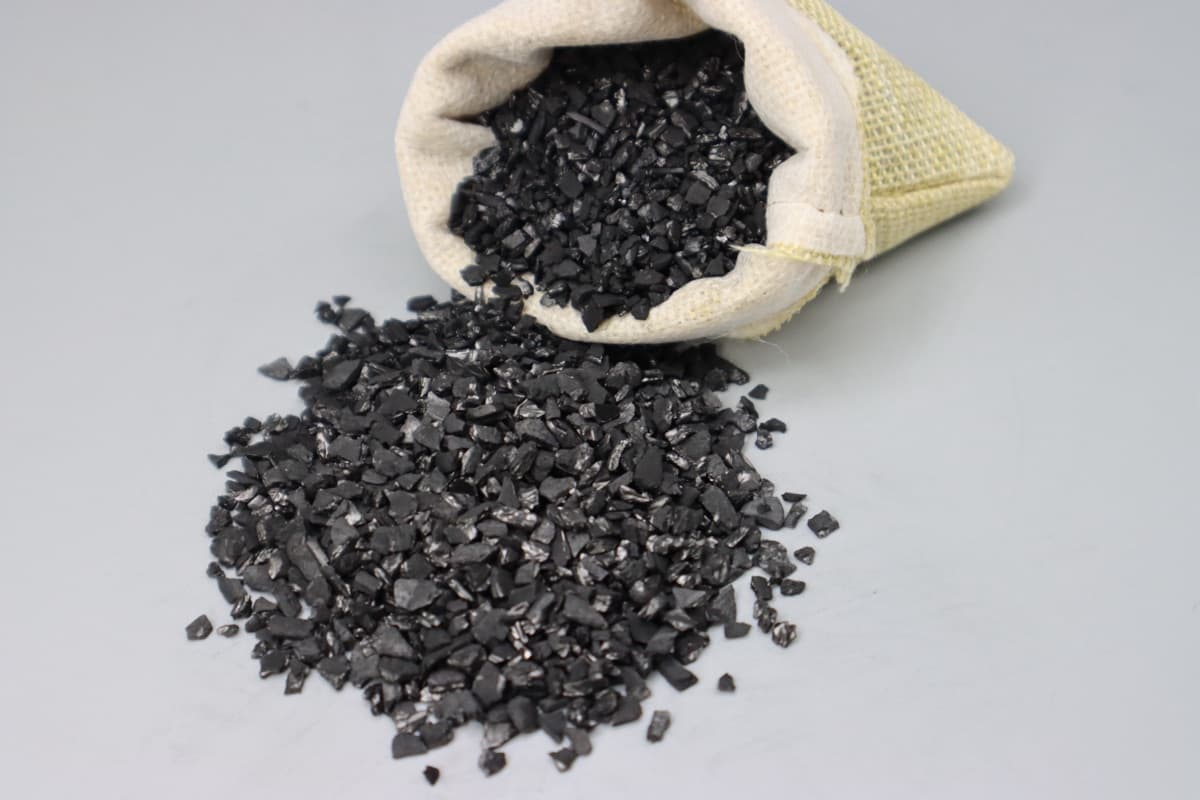
Activated carbon removes contaminants through physical adsorption — molecules in a gas or liquid are attracted to and held on the carbon's internal surface by van der Waals forces. This is different from absorption (where a substance is taken into the bulk of another material) and from chemical reaction.
The key to activated carbon's effectiveness is its enormous internal surface area. A single gram of high-quality coconut shell activated carbon can have 1,000–1,200 m² of surface area — roughly the size of four tennis courts. This surface area exists inside a network of pores classified by diameter:
| Pore Type | Diameter | Function | Best For |
|---|---|---|---|
| Micropores | < 2 nm | Primary adsorption sites | Small molecules — VOCs, chlorine, taste & odor compounds |
| Mesopores | 2–50 nm | Transport channels + adsorption of larger molecules | Color bodies, larger organic molecules, dyes |
| Macropores | > 50 nm | Transport highways into the carbon particle | Allow access to interior pores; important for kinetics |
The pore size distribution — not just total surface area — determines what a carbon can adsorb effectively. This is why different raw materials and activation methods produce carbons suited to different applications.
Need activated carbon?
Get Factory-Direct Pricing — No Middlemen
20+ years manufacturing. MOQ 1 ton. Free samples. Reply within 2 hours.
Iodine Number (ASTM D4607)
Iodine number is the most widely quoted specification in the activated carbon industry. It measures the milligrams of iodine adsorbed per gram of carbon from a standard iodine solution. Because iodine molecules are relatively small (0.27 nm), iodine number primarily indicates micropore volume and correlates with the carbon's ability to adsorb small molecules.
What Iodine Number Tells You:
| Application | Minimum Iodine Number | Typical Carbon Type |
|---|---|---|
| Drinking water (NSF 61) | 900–1050 mg/g | Coconut shell GAC |
| Gold recovery (CIP/CIL) | 1050+ mg/g | Coconut shell 6×12 mesh |
| VOC removal | 800–1000 mg/g | Coal-based GAC or pellet |
| Industrial wastewater | 700–900 mg/g | Coal-based GAC |
| Sugar decolorization | 600–800 mg/g | Wood-based PAC |
Important caveat: iodine number is a single-point measurement. Two carbons with the same iodine number can perform very differently in real applications because they may have different pore size distributions, surface chemistry, or kinetics. Never select carbon based on iodine number alone. For a deeper dive, see our iodine number guide.
BET Surface Area
BET (Brunauer–Emmett–Teller) surface area is measured by nitrogen gas adsorption at 77 K. It provides the most comprehensive picture of total surface area, including micropores, mesopores, and macropores. BET analysis also generates a pore size distribution curve, which is far more informative than a single number.
| Carbon Type | Typical BET (m²/g) | Pore Character |
|---|---|---|
| Coconut shell (steam activated) | 1,000–1,200 | Predominantly microporous |
| Coal-based (steam activated) | 800–1,100 | Mixed micro/mesoporous |
| Wood-based (chemical activated) | 1,200–1,800 | Predominantly mesoporous |
| Coconut shell (KOH super-activated) | 2,000–3,000 | Ultra-microporous (specialty) |
Notice that wood-based carbon often has a higher BET than coconut shell, yet coconut shell outperforms it for small-molecule adsorption. That's because wood-based carbon's surface area is concentrated in mesopores, while coconut shell's is in micropores. BET alone doesn't tell you where the surface area is — you need the pore size distribution data.
When to Request BET Analysis:
CTC Activity (Carbon Tetrachloride Number)
CTC activity measures the percentage of carbon tetrachloride (by weight) that a carbon sample can adsorb from a gas stream. It's the primary specification for gas-phase activated carbon, particularly pellet carbon used in air purification and solvent recovery.
| CTC Value | Grade | Typical Application |
|---|---|---|
| 40–50% | Standard | General odor control, HVAC systems |
| 50–60% | High capacity | VOC removal, solvent recovery |
| 60–80% | Premium | High-concentration VOC, vapor recovery units |
| 80%+ | Super-activated | Specialty gas storage, military-grade protection |
CTC activity correlates with total pore volume (both micro and mesopores). A carbon with high CTC but moderate iodine number has significant mesopore volume — useful for adsorbing larger vapor-phase molecules. For gas-phase applications, always specify CTC rather than relying on iodine number.
Methylene Blue Value
Methylene blue (MB) value measures the milligrams of methylene blue dye adsorbed per gram of carbon. Because methylene blue is a larger molecule (1.2 nm), MB value indicates mesopore and macropore capacity — the opposite end of the pore spectrum from iodine number.
MB value is especially important for sugar decolorization, textile wastewater treatment, and any application where color removal is the primary objective. Wood-based carbons typically have the highest MB values due to their mesopore-rich structure.
Metrics at a Glance: Which Test for Which Application?
| Metric | Measures | Test Standard | Most Relevant For |
|---|---|---|---|
| Iodine number | Micropore capacity | ASTM D4607 | Water treatment, gold recovery, general QC |
| BET surface area | Total surface area + pore distribution | ASTM D6556 | R&D, detailed carbon characterization |
| CTC activity | Total pore volume (gas phase) | ASTM D3467 | Air purification, VOC removal, solvent recovery |
| Methylene blue | Mesopore capacity | Various (no single ASTM) | Decolorization, dye removal, wastewater |
| Molasses number | Macropore capacity | Internal methods | Large-molecule removal, taste & odor |
| Butane activity | Working capacity (gas phase) | ASTM D5228 | Evaporative emission canisters, fuel vapor |
Factors That Affect Adsorption Capacity in Practice
Lab specifications are measured under controlled conditions. In real-world operation, actual adsorption capacity is affected by several factors:
Temperature
Adsorption is exothermic — lower temperatures favor higher capacity. Gas-phase adsorption is particularly temperature-sensitive. A 10°C increase can reduce working capacity by 5–15%.
Humidity / Moisture
Water molecules compete for adsorption sites. In gas-phase applications, relative humidity above 50% significantly reduces VOC adsorption capacity. Pre-drying the gas stream or using hydrophobic carbon helps.
Contaminant Concentration
Higher inlet concentrations generally increase the mass of contaminant adsorbed per gram of carbon (following the adsorption isotherm curve), but also lead to faster breakthrough.
Contact Time (EBCT)
Insufficient contact time means the carbon can't reach equilibrium. For liquid-phase applications, empty bed contact time (EBCT) of 5–20 minutes is typical. Shorter EBCT reduces effective capacity.
Competing Contaminants
Real water and air streams contain multiple contaminants. Strongly adsorbed compounds displace weaker ones, reducing effective capacity for any single target. This is why pilot testing with actual process streams is essential.
pH (Liquid Phase)
pH affects the ionization state of both the contaminant and the carbon surface. Most organic compounds adsorb better at lower pH. Metals and ionic species are more pH-sensitive.
Adsorption Capacity by Raw Material
The raw material and activation method fundamentally determine a carbon's adsorption profile. Here's how the major types compare:
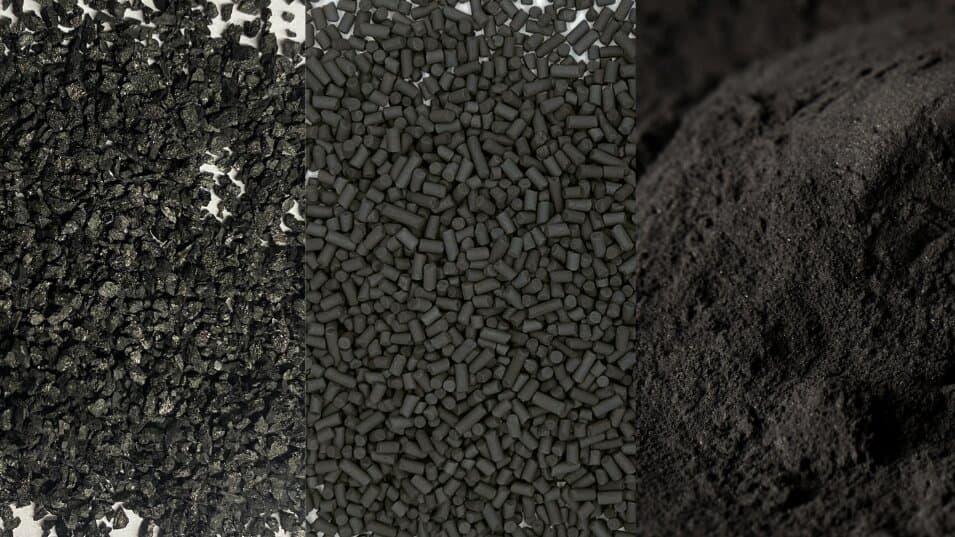
| Property | Coconut Shell | Coal-Based | Wood-Based |
|---|---|---|---|
| BET surface area | 1,000–1,200 m²/g | 800–1,100 m²/g | 1,200–1,800 m²/g |
| Iodine number | 900–1,200 mg/g | 800–1,050 mg/g | 800–1,000 mg/g |
| CTC activity | 50–70% | 45–65% | 40–55% |
| Methylene blue | 120–180 mg/g | 150–220 mg/g | 200–350 mg/g |
| Dominant pore type | Microporous | Mixed micro/meso | Mesoporous |
| Best for | Water purification, gold, gas phase | General water/air treatment | Decolorization, large molecules |
For a detailed comparison of coconut shell vs coal-based carbon, see our comparison guide. To understand how activated carbon differs from biochar, which has much lower adsorption capacity, see our biochar comparison.
How to Specify Adsorption Capacity When Buying
When requesting quotes from activated carbon suppliers, specify the metrics that matter for your application — not just iodine number. Here's a practical framework:
Specification Checklist by Application:
Water Treatment (drinking water, process water)
Iodine number ≥ 900 mg/g, ash ≤ 8%, moisture ≤ 5%, hardness ≥ 95%, particle size per system design
Air / VOC Treatment
CTC activity ≥ 50%, butane activity (if applicable), hardness ≥ 90%, particle size 4×6 or 4×8 pellet
Decolorization (sugar, chemicals)
Methylene blue ≥ 200 mg/g, caramel decolorization index, pH, ash content, particle size (PAC: 90% passing 325 mesh)
Gold Recovery (CIP/CIL)
Iodine ≥ 1050 mg/g, gold adsorption rate (K-value), hardness ≥ 97%, particle size 6×12 mesh, moisture ≤ 5%
Always request a Certificate of Analysis (COA) with each shipment and verify key metrics against your specification. For critical applications, consider requesting third-party testing or conducting your own incoming QC.
Bottom Line
Adsorption capacity isn't a single number — it's a profile. Iodine number tells you about micropores, CTC about total pore volume for gas-phase work, methylene blue about mesopores, and BET gives you the full picture. Match the metric to your application: iodine for water treatment, CTC for air purification, methylene blue for decolorization. And remember that lab numbers are best-case — real-world capacity depends on temperature, humidity, competing contaminants, and contact time.
Frequently Asked Questions
What is the difference between iodine number and BET surface area?
Iodine number measures micropore adsorption capacity using iodine molecules (0.27 nm) and is a quick, practical test. BET surface area uses nitrogen gas adsorption to measure total surface area including all pore sizes. Iodine number is an indirect indicator while BET gives the full picture — a carbon can have high iodine number but moderate BET if it's mostly microporous.
What iodine number is considered good for activated carbon?
For water treatment, 900–1100 mg/g is considered good. Premium coconut shell carbons reach 1200+ mg/g. For air purification, 800–1000 mg/g is typically sufficient. Iodine numbers below 600 mg/g generally indicate low-quality carbon not suitable for demanding applications.
How does CTC number relate to real-world performance?
CTC (Carbon Tetrachloride) number measures total pore volume and is the primary specification for gas-phase activated carbon. A CTC of 60% or higher indicates excellent vapor-phase adsorption capacity. It correlates well with performance in solvent recovery, VOC removal, and air purification.
Can activated carbon adsorption capacity be regenerated?
Yes, spent activated carbon can be thermally regenerated at 700–900°C to restore 85–95% of original capacity. Each cycle causes 5–15% capacity loss due to pore collapse. Thermal regeneration is economical when carbon cost exceeds $1,500/ton and volume exceeds 10 tons per cycle.
Why do different suppliers report different adsorption values for similar products?
Variations occur due to different testing standards (ASTM vs JIS vs GB), testing conditions, sample preparation methods, and natural variability in raw materials. Always compare values tested under the same standard and request COA data from an independent lab when evaluating suppliers.
Need Carbon with Specific Adsorption Specs?
Tell us your application and target contaminants. We'll recommend the right carbon grade and provide a COA with full adsorption metrics.
Request a Quote