
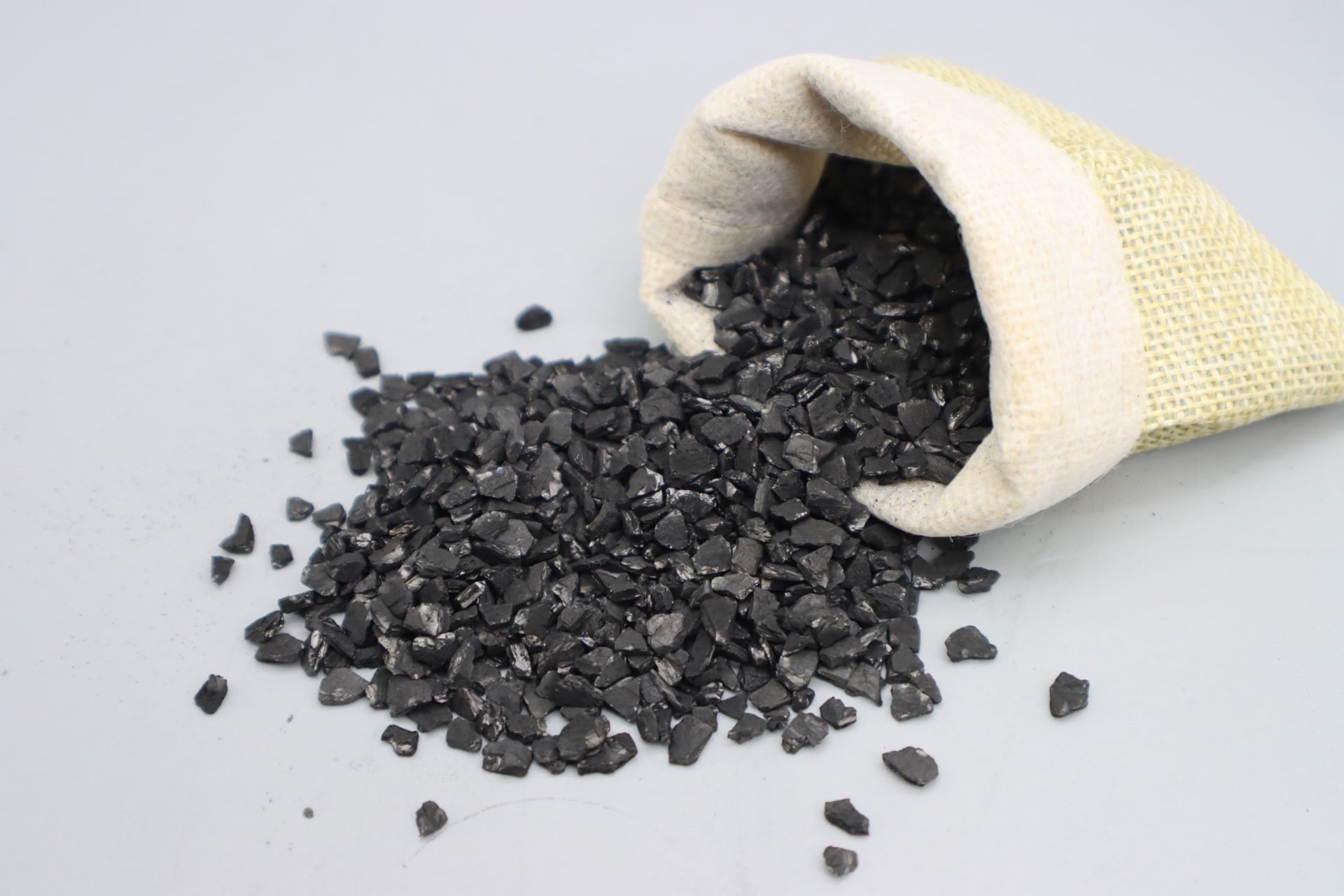
Granular Activated Carbon (GAC)
Versatile granular carbon for continuous-flow filtration systems.
Product Overview
Granular Activated Carbon (GAC) is the most widely used form of activated carbon, designed for continuous-flow fixed-bed adsorption systems. The irregular granular shape provides excellent flow distribution and high contact area, making it ideal for both liquid-phase and gas-phase applications.
Available in both coal-based and coconut shell-based varieties with multiple mesh sizes, our GAC products can be tailored to specific flow rates, contact times, and target contaminants. GAC can be regenerated thermally for multiple reuse cycles, offering long-term cost advantages.
Drawing on more than 20 years of hands-on manufacturing at our Ningxia production base, we control every step of granular carbon production in-house — from raw material selection through steam activation, sieving to precise mesh cuts, and batch-by-batch COA testing. That first-hand experience is why we can hold iodine number, bulk density, hardness, and particle size distribution within tight, repeatable tolerances across large export orders.
Key Applications
- Drinking water filtration
- Wastewater polishing
- Groundwater remediation
- Swimming pool filtration
- Aquarium filtration
- Air & gas purification
- PFAS removal
- Chloramine removal
Available by Raw Material
Coal Based GAC
Cost-effective for large-scale water treatment & industrial filtration. Balanced micropore/mesopore structure.
Iodine: 600–1100 | Ash: <12%
View details →Coconut Shell GAC
Premium micropore structure, highest hardness. Ideal for drinking water, gold recovery, food-grade.
Iodine: 1000–1200 | Ash: <3%
View details →Wood Based GAC
High mesopore volume for superior decolorization. Chemical, pharmaceutical & food industries.
MB: 150–250 | Ash: <5%
View details →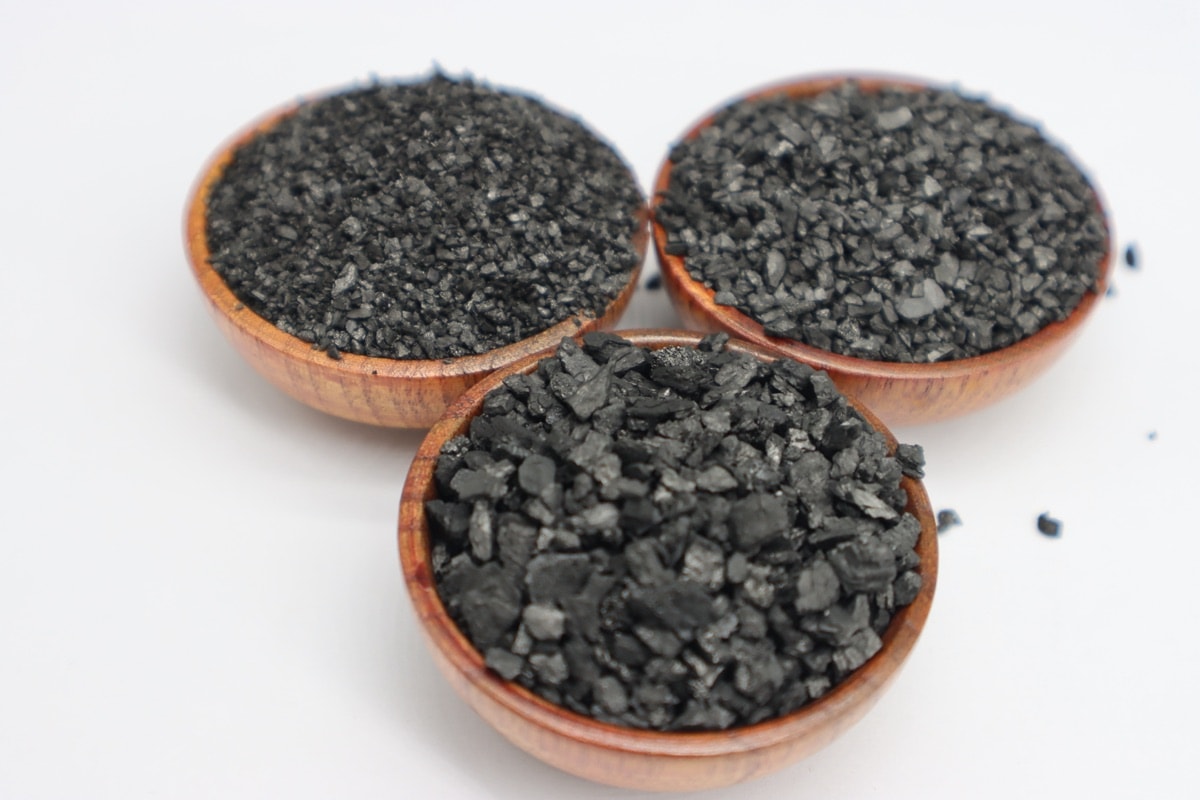
GAC Specifications & Bulk Density
Granular activated carbon specifications vary by raw material and mesh size. The table below lists typical iodine number, bulk density, hardness, and ash content for our coal and coconut shell GAC. Custom particle sizes and specifications are available on request.
| Raw Material | Iodine (mg/g) | Bulk Density (g/cm³) | Hardness | Ash |
|---|---|---|---|---|
| Coal-based GAC | 600–1100 | 0.45–0.55 | > 95% | < 12% |
| Coconut shell GAC | 1000–1200 | 0.48–0.55 | > 98% | < 3% |
GAC Mesh Sizes & Applications
Coarse filtration, gas phase & desulfurization
Learn more →Gold recovery (CIP/CIL) and vapor-phase adsorption
Learn more →Air purification & solvent recovery systems
Learn more →General water treatment & TOC removal
Learn more →Potable & wastewater fine filtration
Learn more →Fine polishing & dechlorination
Learn more →Bulk density is a key spec for GAC: it determines packing volume, backwash expansion, and shipping weight. Coconut shell GAC offers the highest hardness and lowest ash for drinking water and gold recovery, while coal-based GAC is the cost-effective choice for large-scale industrial fixed-bed filters.
Technical Specifications
| Iodine Number | 800 – 1200 mg/g |
| Surface Area | 900 – 1300 m²/g |
| Mesh Size | 4×8, 8×16, 8×30, 12×40 |
| Hardness | > 95% |
| Ash Content | < 10% |
| Moisture | < 5% |
| Bulk Density | 0.40 – 0.55 g/cm³ |
| Effective Size | 0.6 – 2.4 mm |
| Uniformity Coeff. | < 1.9 |
Response within 24 hours
Granular by Material
Other Forms
Why Choose Hojee
Factory Direct
No middlemen. Direct from our 3 production bases. Best prices guaranteed.
Quality Tested
Every batch tested with full COA. ISO 9001 certified. SGS/BV third-party testing.
Custom Specs
Custom particle size, iodine value, packaging, and branding. MOQ 1 ton.
Fast Delivery
7-10 days standard. Expert logistics team handles all export documentation.
Packaging Options
PP woven bags
Standard export, palletized
Jumbo bags
Bulk with pallet, forklift ready
Super sacks
Large-scale industrial
OEM packaging
Your brand, free design
Frequently Asked Questions
What is granular activated carbon (GAC)?
What mesh size should I choose?
What is the bulk density of granular activated carbon?
How often should GAC be replaced?
Can GAC be regenerated?
Coal vs coconut shell GAC?
What is the MOQ and delivery time?
What payment terms do you accept?
Related Reading
Technical Guide
GAC vs PAC: Which Activated Carbon Is Right for You?
A technical comparison of granular and powdered carbon — applications, cost, and performance.
Technical Guide
GAC System Design for Water Treatment
Engineering guide covering bed depth, contact time, backwash, and system sizing for GAC filters.
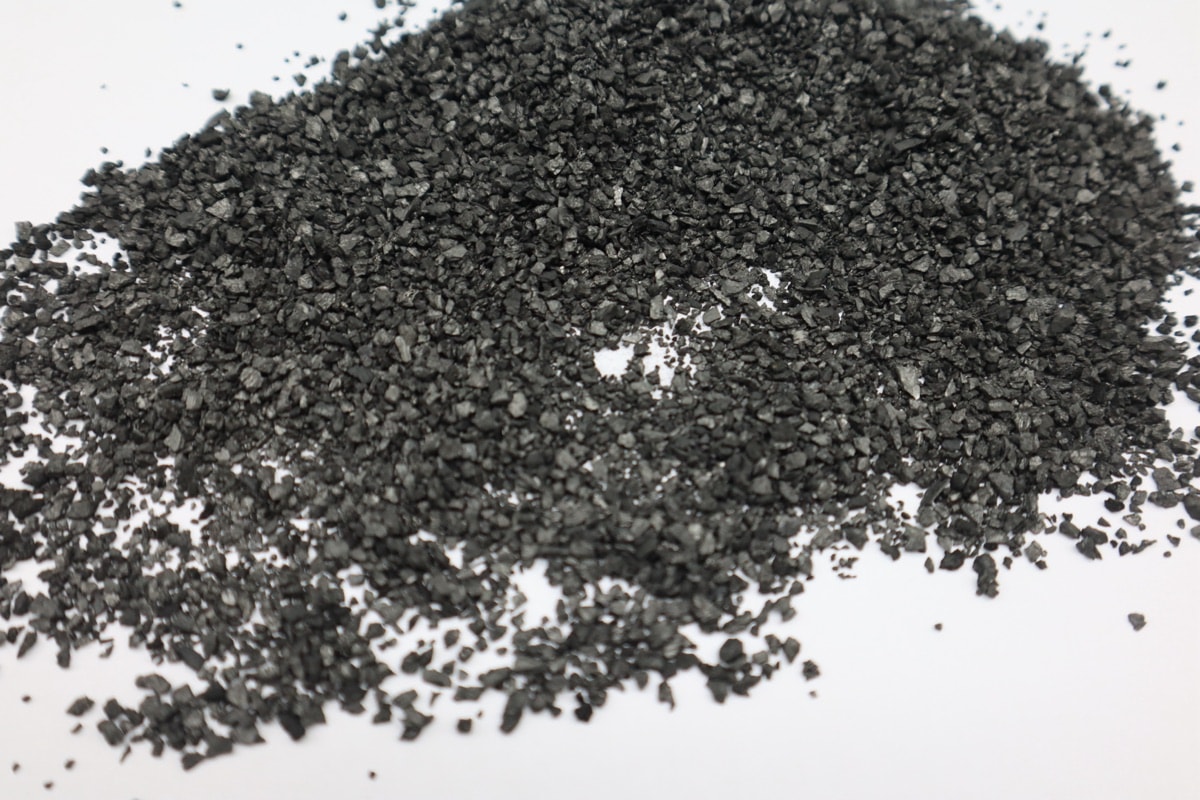
Need a Custom Mesh Size?
Available in coal and coconut shell-based varieties. Custom mesh sizes and specifications on request.
Get Custom Quote