
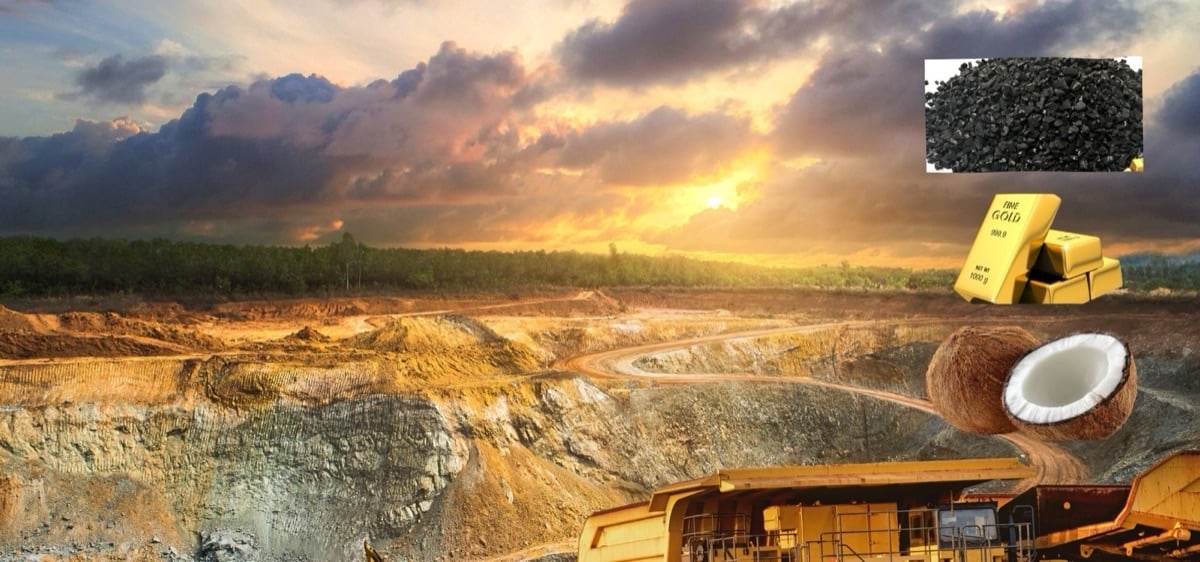
Gold Recovery
Premium coconut shell carbon engineered for CIL, CIP, and heap leach gold extraction.
Gold recovery demands activated carbon with exceptional hardness, high activity, and batch-to-batch consistency. Coconut shell carbon is the industry standard — its dense micropore structure and mechanical strength deliver 15–25 kg Au/ton loading and survive repeated elution and reactivation. Our grades run in CIL, CIP, and heap leach circuits across mines in Africa, Australia, and South America.
Applications
Specialized Gold Recovery Solutions
Dedicated deep-dive pages for specific stages of the gold circuit.
CIP / CIL / CIC Circuits
Carbon-in-pulp vs leach vs column — how to choose, gold loading, and the right grade per circuit
Elution & Desorption
High-hardness carbon for Zadra & AARL stripping — hardness ≥98%, low attrition, stable reactivation
Gold Recovery Carbon by Country
Local guidance for major gold-producing regions — recommended specs, nearest ports, lead times, and the circuit realities that shape carbon selection in each market.
Ghana
Ashanti & Western belts (Obuasi, Tarkwa) run large 6–8 stage CIP trains — hardness is the make-or-break spec.
Tanzania
Lake Victoria greenstone ores (Geita, Bulyanhulu) carry preg-robbing organics — high-activity CIL carbon protects recovery.
Sudan
Red Sea Hills / Nubian Shield CIL, heap leach & artisanal tailings retreatment — hard, low-fines carbon is critical for carbon columns.
Burkina Faso
Birimian greenstone CIL plants (Essakane, Houndé, Mana, Bissa) run high carbon inventories — ultra-hard carbon minimizes attrition and gold-room losses.
More Gold-Producing Countries
Trusted by gold miners in 30+ countries — see if yours is covered
Our coconut shell gold-recovery carbon ships to mines across Africa, the Americas, and Asia. We’re adding dedicated sourcing guides for more regions every month. Explore all the markets we supply — or ask us about yours.
Browse all countries we supply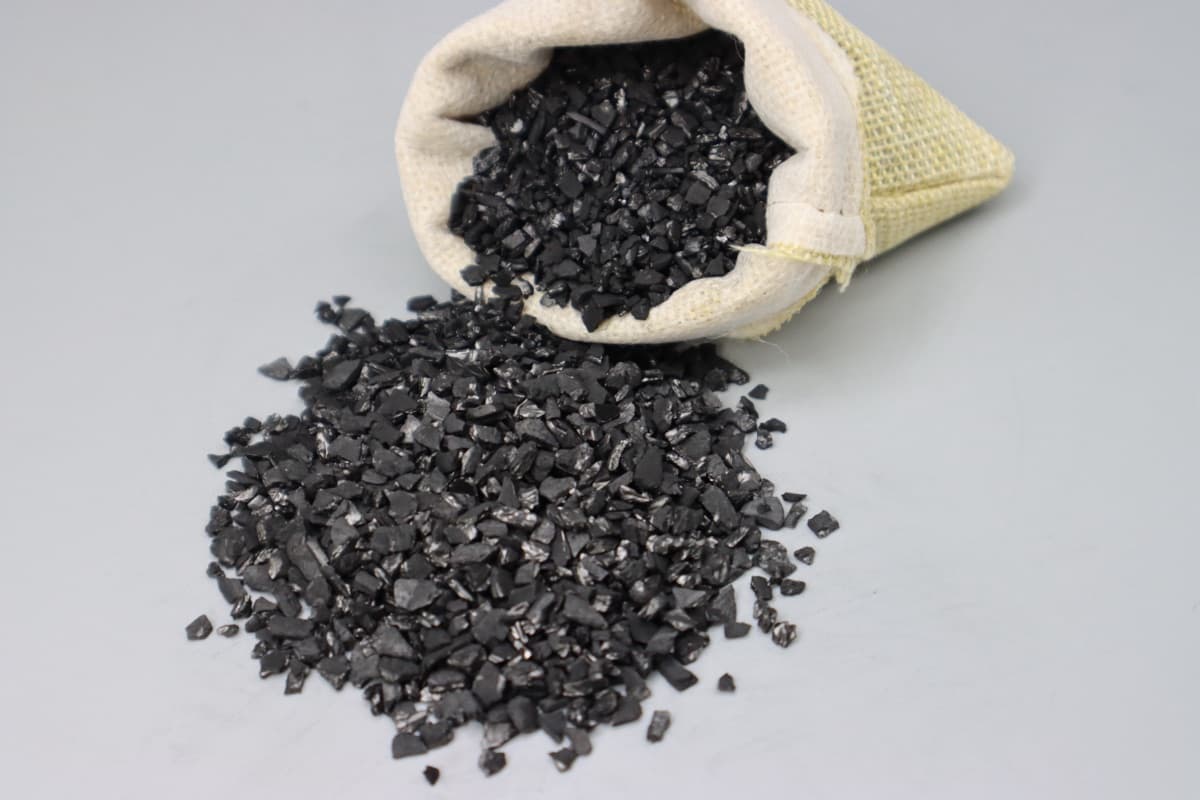
What Gold Operations Demand
In a cyanide circuit, the wrong carbon costs you gold and money. These are the four factors mines evaluate.
Hardness & Attrition
Carbon cycles through pumping, screening, and reactivation. Low hardness means fines, gold-bearing carbon lost to tailings, and higher make-up cost. Premium grades hold ≥98% hardness.
Gold Loading Capacity
Higher activity (iodine ≥1050 mg/g) means more Au adsorbed per ton of carbon and fewer stages. Directly drives circuit efficiency and inventory size.
Reactivation Survival
Carbon is thermally regenerated at 650–750 °C dozens of times. Dense coconut shell carbon withstands 50–100+ cycles with minimal capacity decay.
Consistency (COA)
Inflated specs are common in this market. Every lot must ship with a verifiable COA — iodine, hardness, mesh, moisture — matched by third-party testing.
How It Works
In a cyanide leach, gold dissolves as the aurocyanide complex Au(CN)₂⁻. Activated carbon adsorbs this complex onto its internal surface — coconut shell carbon's micropore structure is ideally sized for it, giving high loading and fast kinetics. Loaded carbon is screened out, then stripped (eluted) with hot caustic-cyanide solution to release the gold into a concentrated eluate for electrowinning. The barren carbon is thermally reactivated and returned to the circuit. Hardness determines how many of these cycles the carbon survives before replacement.
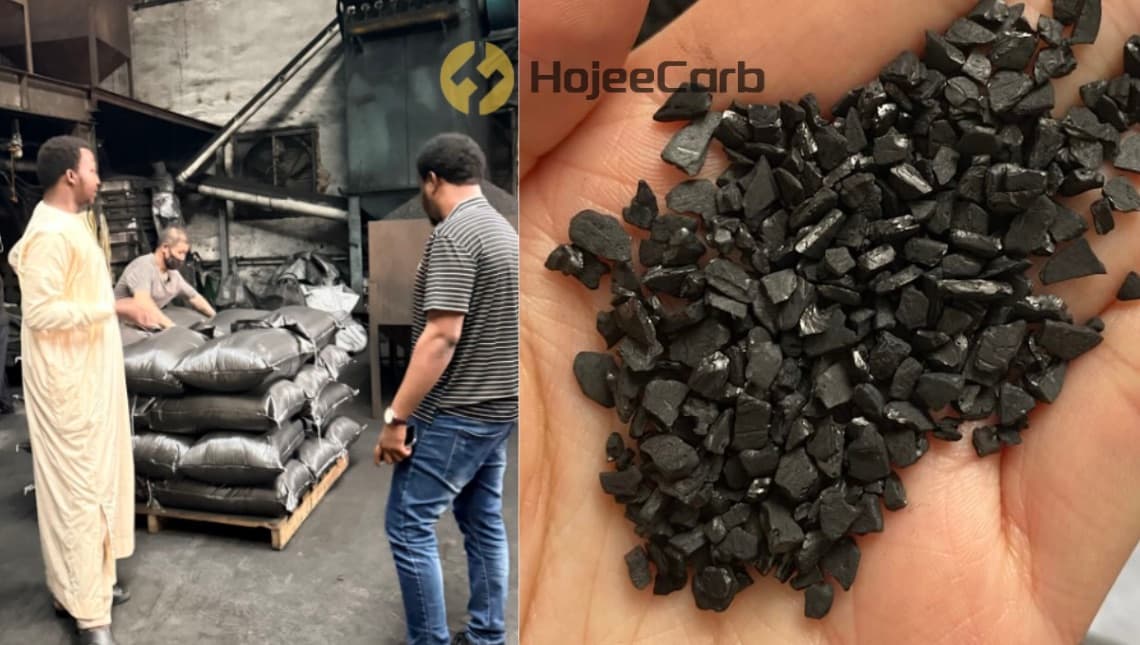
Carbon Adsorption Cycle
Carbon hardness determines how many full cycles it survives before make-up replacement.
Circuit Selection & Design
The adsorption circuit and carbon grade should match your ore and throughput.
CIL — Carbon-in-Leach
Carbon added during leaching; adsorption and leaching happen together. Best for ores with preg-robbing carbon or when tank space is limited. Faster, uses more carbon.
CIP — Carbon-in-Pulp
Carbon added after leaching is complete. Achieves higher gold loading per ton of carbon; suits clean, fast-leaching ores. Lower carbon inventory.
Heap Leach + Columns
Pregnant solution flows through carbon columns (CIC). Lower-grade, large-tonnage operations. Requires hard, low-fines carbon to limit head loss.
Elution: Zadra vs AARL
Zadra is simpler, runs 48–72 hr; AARL is faster (12–24 hr) with a pre-soak step and higher recovery. Carbon must tolerate both hot-caustic cycles.
Carbon Selection Guide
| Circuit / Duty | Recommended Grade | Iodine No. | Hardness |
|---|---|---|---|
| CIL / CIP high-grade | Premium coconut 6×12 | ≥1050 mg/g | ≥98% |
| CIP standard | Standard coconut 6×12 | ≥1000 mg/g | ≥95% |
| Heap leach columns (CIC) | Coconut 6×12 / 8×16 | ≥1000 mg/g | ≥97% |
| Carbon-hard/abrasive ore | Premium coconut 6×12 | ≥1050 mg/g | ≥98% |
Send us your current COA and circuit type — we'll match or exceed your spec and send samples for column testing.
Request SamplesBest-Selling Specifications
| Parameter | Standard Grade | Premium Grade | Super Premium |
|---|---|---|---|
| Iodine Number | ≥1000 mg/g | ≥1050 mg/g | ≥1100 mg/g |
| Hardness | ≥99% | ≥98.5% | ≥98% |
| Mesh Size | 6×12 | 6×12 | 6×12 |
| Moisture | ≤5% | ≤5% | ≤5% |
| Ash Content | ≤3% | ≤3% | ≤3% |
Special specifications can be custom-produced on request — iodine number, hardness, and mesh size tailored to your circuit.
Quality & Certifications
Recommended Products
These are the grades we recommend most often for this application. Several other carbon types can also perform well — the best choice depends on your specific feed conditions, targets, and budget. Contact us for a tailored recommendation based on your process.
Gold Recovery Carbon (GRC Series)
CIL/CIP operations — max hardness & activity
Coconut Shell GAC
Heap leach, general gold adsorption
Field Performance
Typical operating ranges for coconut shell gold recovery carbon.
Case: West African CIL operation
A West African CIL operation running premium 6×12 coconut carbon at iodine 1050 mg/g held gold loading above 20 kg Au/ton over 60+ reactivation cycles, with make-up carbon under 4% per cycle.
Recent Gold Recovery Projects
Real bulk shipments of coconut shell CIL/CIP carbon — verified specs, third-party loading supervision, delivered worldwide.
 🇪🇹 Ethiopia56 Tons
56t Coconut 6×12 Gold Recovery Carbon
Passed a strict on-site pre-shipment loading supervision — dimension, moisture and temperature checks cleared before container sealing.
Read full case → 🇪🇬 Egypt28 Tons
28t Coconut Gold Recovery Carbon
Bulk FCL shipment to a repeat North African gold mining client, delivered with full batch COA and SGS verification option.
Read full case →Frequently Asked Questions
What activated carbon specs are needed for gold recovery?
Coconut shell carbon with iodine ≥1000 mg/g, hardness ≥95%, mesh 6×12, moisture ≤5%, ash ≤5%. Premium grades reach iodine ≥1050 mg/g and hardness ≥98% for maximum gold loading of 15–25 kg Au/ton.
What is the difference between CIP and CIL?
In Carbon-in-Pulp (CIP), carbon is added after leaching to adsorb dissolved gold. In Carbon-in-Leach (CIL), carbon is added with the cyanide leach, combining both steps. CIL is faster but uses more carbon; CIP achieves higher loading per ton of carbon.
How many times can gold carbon be reactivated?
High-quality coconut shell carbon typically survives 50–100+ thermal reactivation cycles at 650–750 °C before significant decay. Each cycle loses roughly 3–5% to attrition and burnoff; ≥98% hardness grades minimize this.
Why does hardness matter so much?
Carbon is pumped, screened and reactivated repeatedly. Soft carbon generates fines that carry gold into tailings and raise make-up cost. Every 1% of hardness meaningfully affects your carbon budget over a year.
Can you match my current COA?
Yes. Send your current specification (iodine, hardness, mesh, CTC) and we match or exceed it, with a batch COA and optional third-party SGS verification before shipment.
What is the MOQ and lead time?
Minimum order is 1 ton, FCL pricing for bulk. Standard grades ship in 7–15 days; free samples are available for lab and column testing before you commit.
Optimize Your Gold Recovery?
Request samples and technical data sheets for your specific operation.
Request SamplesGold Recovery Carbon — Complete Guide
Technical Guide
Activated Carbon in Gold Mining: CIP vs CIL Process
Technical comparison of carbon-in-pulp and carbon-in-leach gold recovery methods with selection criteria.
Specifications
Gold Carbon Specs: 6×12 Mesh, Iodine 1050+, Hardness 97%+
What each COA parameter means for your operation — and how to spot inflated specs.
Process Guide
Zadra vs AARL Elution: Full Comparison
48–72 hr Zadra vs 12–24 hr AARL — costs, recovery rates, and when to upgrade.
Reactivation
Gold Carbon Reactivation: 50–100 Cycles at 650–750°C
Kiln specs, capacity decay curve, make-up rates, and when to replace your carbon inventory.
Deep Dive
Gold Cyanide Recovery: Adsorption, Elution & Reactivation
Au(CN)₂⁻ adsorption chemistry, loading capacity, and carbon loss management.
Sourcing Guide
How to Source Coconut Shell Carbon for Gold Recovery
Specs, testing protocols, and supplier selection criteria from a factory.
Comparison Guide
Jacobi (PICAGOLD) vs HojeeCarb — Gold Recovery Carbon
Size uniformity, water clarity, float rate, ash, hardness, and K/R gold loading compared side by side.
Comparison Guide
VinaSorb vs HojeeCarb — Gold Recovery Carbon
Iodine, CTC, ash, hardness, and gold loading performance compared for CIL/CIP buyers.