
Sourcing Guide
How to Source Coconut Shell Activated Carbon for Gold Recovery
We ship gold-grade coconut shell carbon to mines across Africa, South America, and Southeast Asia. This guide covers the specs you need, how to test before buying, where the supply comes from, and what to watch out for when choosing a supplier.
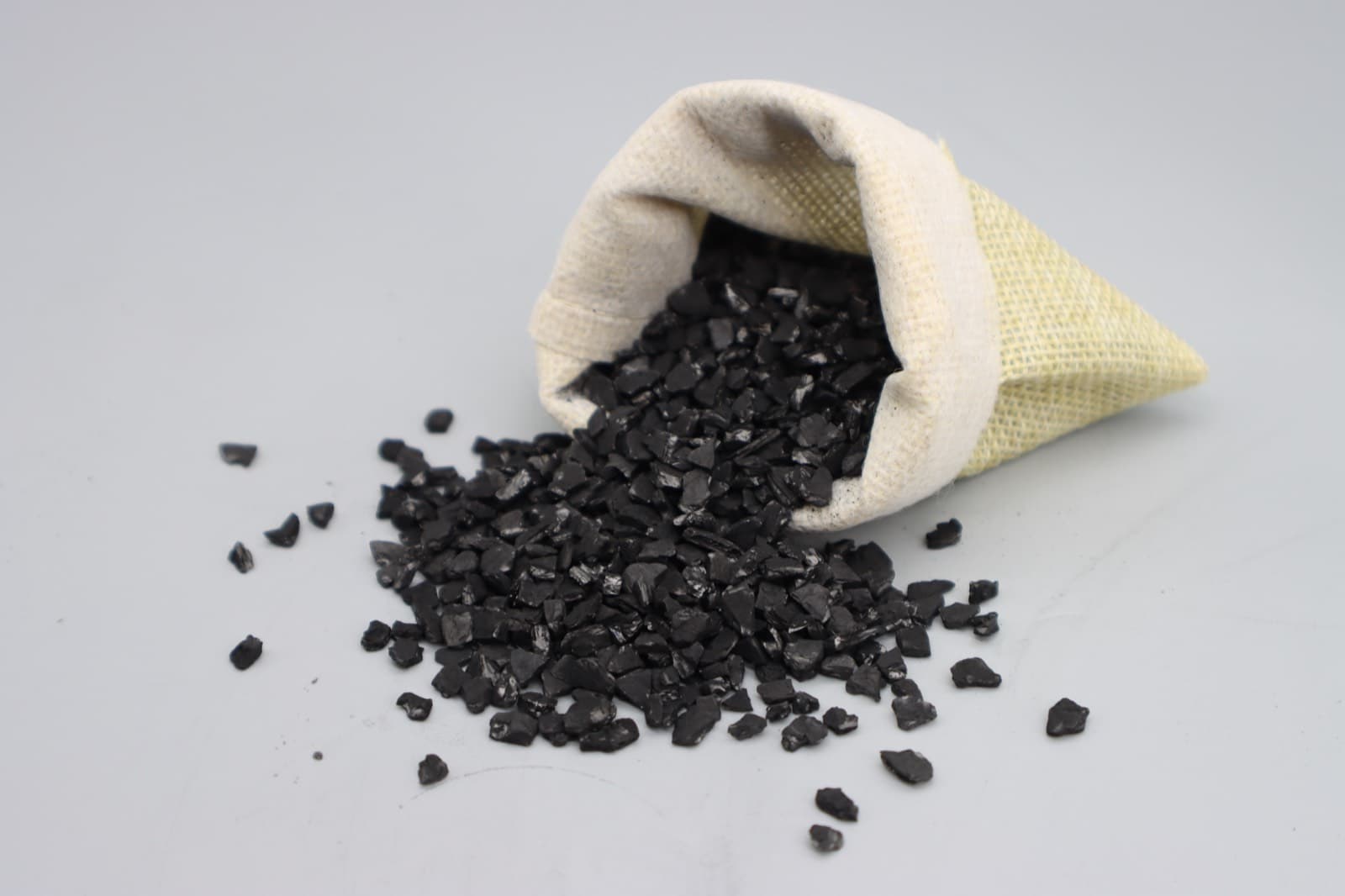
At a Glance
Preferred raw material:
Coconut shell (steam-activated)
Key spec — Hardness:
≥95% ball-pan (premium ≥98%)
Key spec — Iodine number:
≥1050 mg/g (premium ≥1100)
Common mesh sizes:
6×12 or 6×16
FOB China price range:
$1,200–2,200/MT
Top origins:
China, Sri Lanka, Philippines, Indonesia
Why Coconut Shell for Gold Recovery?
Gold CIP/CIL/CIC circuits are brutal on carbon. The material gets pumped between tanks, screened, stripped at high temperature, and reactivated in a kiln — over and over. Coconut shell carbon handles this better than coal-based alternatives for two reasons:
- Hardness. Coconut shell carbon typically achieves 95–99% ball-pan hardness. Coal-based grades sit around 85–92%. Harder carbon means fewer fines, and fines carry adsorbed gold straight into your tailings.
- Micropore structure. The Au(CN)₂⁻ complex adsorbs into micropores. Coconut shell has a naturally higher micropore ratio than coal, which translates to better gold loading capacity and faster kinetics.
For a detailed comparison, see our coconut shell activated carbon guide.
Need activated carbon?
Get Factory-Direct Pricing — No Middlemen
20+ years manufacturing. MOQ 1 ton. Free samples. Reply within 2 hours.
Specifications That Matter
Not every coconut shell carbon is gold-grade. Here are the specs we recommend for CIP/CIL operations, and why each one matters:
| Parameter | Standard | Premium | Why It Matters |
|---|---|---|---|
| Ball-pan hardness | ≥95% | ≥98% | Directly controls carbon loss and gold-in-tailings |
| Iodine number | ≥1050 mg/g | ≥1100 mg/g | Indicates micropore volume → gold loading capacity |
| Mesh size | 6×12 | 6×16 | Must match your screen aperture; finer = faster kinetics |
| Ash content | ≤3% | ≤2% | Ash blocks pores and reduces adsorption capacity |
| Moisture | ≤5% | ≤3% | Affects shipping cost and dosing accuracy |
| Gold adsorption rate (k) | ≥3.0 | ≥3.5 | The single best predictor of in-plant performance |
| Apparent density | 0.48–0.54 g/mL | 0.50–0.54 g/mL | Affects settling and screening behavior |
The gold adsorption rate (k-value) is the spec most buyers overlook. It directly measures how fast carbon picks up gold from a cyanide solution — and it's the number that actually predicts plant performance. We test every batch for k-value. For more on iodine number testing, see our iodine number guide.
How to Test Carbon Quality Before Buying
Never commit to a large order based on a supplier's COA alone. Here's the process our engineers recommend:
- Request a 5–10 kg sample from the actual production batch, not a hand-picked lab sample.
- Send to an independent lab for iodine number (ASTM D4607), ball-pan hardness (ASTM D3802), ash content, moisture, and apparent density.
- Run a gold adsorption rate test (k-value) — this is the most telling test. It uses a standard gold cyanide solution and measures uptake kinetics over 4 hours.
- Compare results to the COA. If iodine or hardness is more than 5% below the COA values, that's a red flag.
- Run a plant trial with 1–2 MT before scaling up to full supply.
If you need help setting up testing, we can arrange third-party lab analysis and provide reference samples. For a broader look at quality testing, see our supplier audit checklist.
Need samples for testing? We can ship 5–10 kg of gold-grade coconut shell carbon with full COA and independent lab report. Get in touch and let us know your specs.
Supply Origins: China vs Sri Lanka vs Philippines
Most gold-grade coconut shell carbon comes from three regions. Each has trade-offs:
| Origin | Strengths | Weaknesses | Price Level |
|---|---|---|---|
| China | Largest capacity, competitive pricing, fast turnaround | Raw shell imported (Philippines, Indonesia); quality varies by factory | $$ |
| Sri Lanka | Local shell supply, established reputation (Haycarb heritage) | Higher cost, limited capacity, longer lead times | $$$ |
| Philippines / Indonesia | Abundant raw shell, growing manufacturing base | Fewer factories with gold-grade capability, less consistent QC | $$ |
China now produces the majority of gold-grade coconut shell carbon globally. The key is finding the right factory — one with rotary kilns sized for gold-grade activation, in-house k-value testing, and experience shipping to mining operations. For pricing context, check our activated carbon price guide.
Common Sourcing Mistakes
We see the same errors from mining procurement teams regularly:
- Buying on price alone. A $200/MT saving on carbon can cost $50,000+ in lost gold recovery over a year if hardness or k-value is subpar.
- Skipping the k-value test. Iodine and hardness are necessary but not sufficient. Two carbons with identical iodine numbers can have very different gold adsorption rates.
- Wrong mesh size. Ordering 8×30 (water treatment grade) instead of 6×12 or 6×16 (gold grade). The carbon won't retain on your screens.
- No factory audit. Photos and certificates can be borrowed. Visit the factory or hire a third-party inspector before committing to 20+ MT orders.
- Single-source dependency. Qualify at least two suppliers. Supply disruptions happen — kiln maintenance, raw shell shortages, shipping delays.
Working with a Manufacturer on Custom Specs
If your operation has specific requirements — a particular mesh distribution, tighter ash limits, or a minimum k-value — work directly with the manufacturer rather than a trading company. Here's what that process looks like with us:
- Share your current carbon specs and any performance data from your plant.
- Our engineers review and suggest adjustments based on your ore type and circuit design.
- We produce a trial batch (typically 2–5 MT) to your custom spec.
- You test in-plant and provide feedback.
- We lock in the spec for ongoing production.
This approach works best for operations consuming 20+ MT per year. For more on the wholesale process, see our wholesale sourcing guide.
Frequently Asked Questions
Why is coconut shell carbon preferred over coal-based carbon for gold recovery?
Coconut shell carbon has a harder, denser structure (95–99% ball-pan hardness vs 85–92% for coal) which means less breakage in CIP/CIL circuits. It also has a higher proportion of micropores, which are the right size for Au(CN)₂⁻ adsorption. Less breakage = less gold lost in fines going to tailings.
What iodine number should I specify for gold recovery carbon?
Minimum 1050 mg/g for standard operations. Premium operations specify 1100+ mg/g. Iodine number correlates with micropore volume, which directly affects gold loading capacity. Below 1000 mg/g, you'll see measurably slower adsorption kinetics and lower equilibrium loading.
How do I test carbon quality before placing a bulk order?
Request a 5–10 kg sample and test: iodine number (ASTM D4607), ball-pan hardness (ASTM D3802), moisture, ash content, and gold adsorption rate (k-value). The k-value test is the most important — it directly measures how fast the carbon picks up gold from a standard cyanide solution. Run the test at an independent lab, not the supplier's lab.
What is a fair price for gold-grade coconut shell activated carbon?
FOB China pricing for gold-grade coconut shell carbon (iodine ≥1050, hardness ≥95%) typically ranges $3,200–3,800/MT depending on exact specs and order volume. Premium grades (iodine ≥1100, hardness ≥98%) run $3,500–4,500/MT. Sri Lankan origin is typically 15–25% more expensive. Always compare on a per-spec basis, not just price per ton.
What are the most common sourcing mistakes for gold mining carbon?
Buying on price alone without verifying specs independently, accepting supplier COAs without third-party testing, not specifying gold adsorption rate (k-value) in the purchase order, ordering the wrong mesh size for your screen configuration, and not auditing the factory before committing to large volumes. Any of these can cost more in lost gold recovery than the savings on carbon price.
Looking for Gold-Grade Coconut Shell Carbon?
We manufacture coconut shell activated carbon specifically for gold CIP/CIL operations — 6×12 and 6×16 mesh, iodine ≥1050 mg/g, hardness ≥95%, with k-value testing on every batch. We can also produce to your custom spec. Samples and independent lab reports available.
Request Quote & Samples →