
When you request a quote for activated carbon, the first specification you'll see is the iodine number. “Iodine Value: 1050 mg/g” appears on every datasheet, and it's often the primary metric buyers use to compare products. But what does this number actually tell you, and more importantly, what iodine value do you need for your specific application?
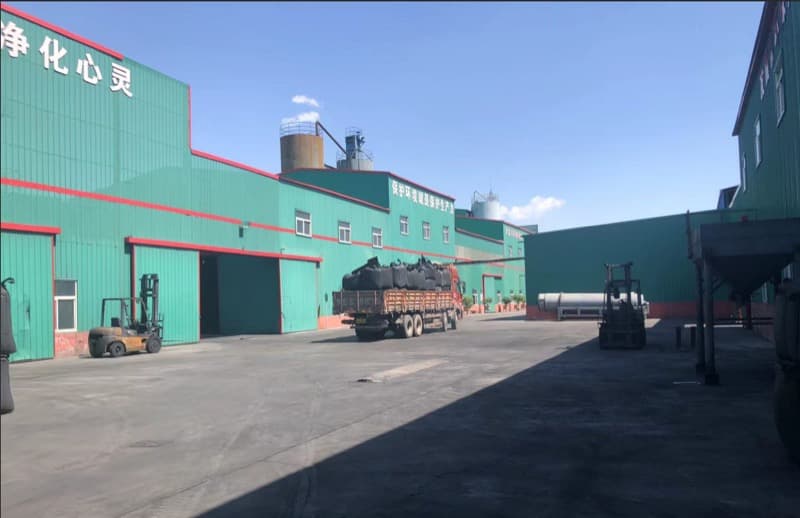
At our production facility in Fujian province, we test every batch of activated carbon before shipment — coconut shell, coal-based, and wood-based products all go through our QC lab. After analyzing tens of thousands of samples over 15+ years, we've developed a practical understanding of what iodine number means for real-world performance. This guide shares that knowledge to help you make informed purchasing decisions.
What Iodine Number Actually Measures
The iodine number (also called iodine value or iodine adsorption number) quantifies how much iodine activated carbon can adsorb from a standardized aqueous solution. The result is expressed in milligrams of iodine per gram of carbon (mg/g). Testing follows established standards: ASTM D4607 in North America, JIS K 1474 in Japan, and GB/T 12496.8 in China.
Iodine molecules are relatively small (approximately 0.56 nm diameter), so they primarily adsorb into micropores — pores with diameters less than 2 nm. This makes iodine number a reliable indicator of micropore volume and, by extension, total internal surface area. The general correlation is roughly 1 mg/g iodine ≈ 1 m²/g of BET surface area, though this relationship isn't perfectly linear at extreme values.
Key Takeaway
Higher iodine number = more micropores = more internal surface area = better adsorption capacity for small molecules like chlorine, VOCs, and dissolved organics. However, iodine number does not indicate mesopore or macropore capacity, which matters for larger molecules like color bodies and certain industrial contaminants.
How the ASTM D4607 Test Works
Understanding the test procedure helps you evaluate whether a supplier's reported values are credible. The ASTM D4607 method is well-standardized and difficult to manipulate when performed correctly. For a full overview of all the quality tests used to evaluate activated carbon — including CTC, BET, methylene blue, and hardness — see our activated carbon quality testing methods guide.
Sample Preparation
Granular carbon is pulverized and dried. Three separate weights (typically 1.0g, 1.5g, and 2.0g) are prepared to plot the adsorption isotherm and ensure accuracy.
Contact Phase
Each sample is wetted with 10 mL of 5% HCl, then mixed with 100 mL of 0.1 N iodine solution. The mixture is shaken vigorously for exactly 30 seconds.
Filtration & Titration
The mixture is filtered immediately. 50 mL of filtrate is titrated with sodium thiosulfate using a starch indicator until the blue-black color disappears.
Calculation
Results from all three weights are plotted on log-log paper. The iodine number is the X/M value at a standardized residual iodine concentration of 0.02 N, making results comparable across laboratories.
The complete test takes approximately 45 minutes per sample. In our QC lab, we run 20–30 iodine number tests daily during production. The standardized methodology means that significant discrepancies between supplier claims and independent lab results indicate quality issues, not measurement variability.
Typical Iodine Values by Carbon Type
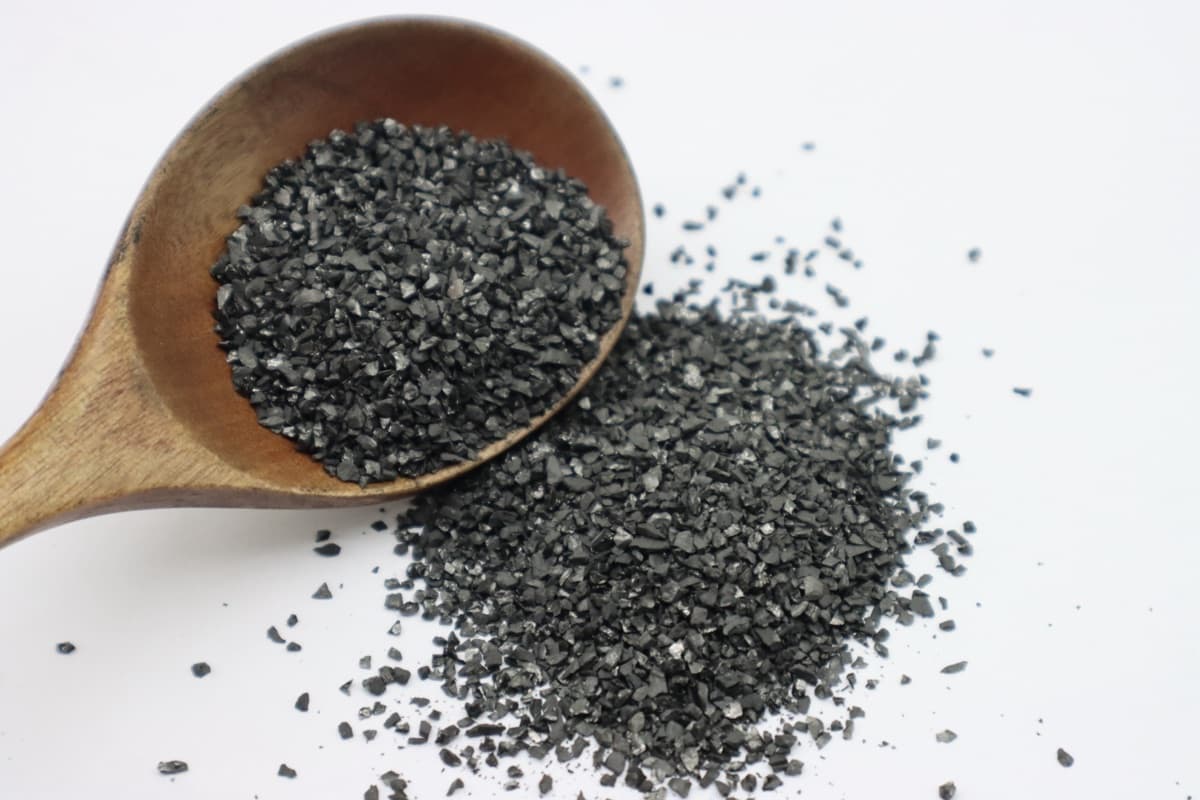
Iodine numbers vary significantly based on raw material, activation method, and degree of activation. Here are the ranges we see in production and from competitive benchmarking:
| Carbon Type | Range (mg/g) | Typical | Characteristics |
|---|---|---|---|
| Coconut Shell (steam) | 900–1300 | 1000–1100 | Highest micropore ratio; ideal for gold & water |
| Coal-Based (steam) | 800–1100 | 900–1000 | Balanced micro + mesopore distribution |
| Coal-Based (chemical) | 600–900 | 700–800 | More mesopore dominant |
| Wood-Based (H₃PO₄) | 1200–1800 | 1400–1600 | Very high iodine but mesopore heavy; PAC form |
| Wood-Based (ZnCl₂) | 800–1200 | 900–1050 | High surface area with macropore presence |
Iodine Number Requirements by Application
Different applications have different iodine number requirements. Here's what we recommend based on our experience supplying activated carbon to various industries:
Water Treatment Applications
For granular activated carbon (GAC) in drinking water treatment, we recommend a minimum iodine number of 900 mg/g, with 1000+ mg/g preferred for municipal systems. This ensures adequate capacity for chlorine, taste, odor, and dissolved organic removal. For industrial wastewater, requirements vary based on contaminant type — VOC removal typically needs 950+ mg/g, while color removal may work with 800+ mg/g due to the larger molecular size of color bodies.
| Water Application | Min. Iodine | Recommended |
|---|---|---|
| Municipal Drinking Water | 900 mg/g | 1000–1100 mg/g |
| Groundwater Remediation | 950 mg/g | 1000–1100 mg/g |
| Industrial Wastewater (VOCs) | 950 mg/g | 1000+ mg/g |
| Decolorization | 800 mg/g | 900–1000 mg/g |
| PFAS Removal | 1000 mg/g | 1050–1150 mg/g |
Air & Gas Treatment
Air purification applications generally require higher iodine numbers because gas-phase adsorption relies heavily on micropore capacity. For pellet activated carbon in air filtration, we recommend 1000+ mg/g minimum. Solvent recovery systems typically specify 1050–1150 mg/g to maximize working capacity and extend regeneration cycles.
Gold Recovery
Gold recovery carbon for CIP/CIL processes requires iodine numbers of 1000–1100 mg/g. However, gold adsorption performance depends more on activity (measured by the gold K-value) and hardness than on iodine number alone. A carbon with 1050 mg/g iodine but poor hardness will underperform in the aggressive CIL environment compared to a harder carbon at 1000 mg/g.
Food & Pharmaceutical
Food-grade and pharmaceutical applications typically require powdered activated carbon (PAC) with iodine numbers of 900–1200 mg/g, depending on the specific purification target. Sugar decolorization often uses wood-based PAC at 1000–1200 mg/g, while pharmaceutical purification may require acid-washed grades at 1000+ mg/g to minimize ash content and ensure product purity.
When Iodine Number Isn't Enough
While iodine number is valuable, it's not the only specification that matters. Here are situations where you need to look beyond iodine value:
Large Molecule Adsorption
For color bodies, tannins, and large organic molecules, molasses number or methylene blue adsorption better indicates mesopore capacity. A carbon with high iodine but low molasses number will underperform for decolorization.
Mechanical Strength
In applications with hydraulic stress (GAC filters, gold recovery), hardness and abrasion resistance matter as much as adsorption capacity. Ball-pan hardness (ASTM D3802) should be 95%+ for demanding applications.
Specific Contaminant Removal
For targeted applications like H₂S removal or mercury capture, impregnated carbons with chemical additives outperform high-iodine virgin carbons. The impregnant provides chemisorption capacity that iodine number doesn't measure.
Catalytic Applications
Catalytic carbon for chloramine removal requires specific surface chemistry, not just high iodine number. The catalytic activity test is more relevant than iodine value for these applications.
Practical Purchasing Guidelines
Based on our experience working with buyers across industries, here are practical tips for using iodine number in your purchasing decisions. For current benchmark pricing by carbon type and iodine grade, see our activated carbon price guide.
- •
Request COA with each shipment — Iodine number should be tested per batch, not quoted from a generic datasheet. Reputable suppliers provide Certificates of Analysis with actual test results.
- •
Verify with independent testing — For large orders or new suppliers, send samples to an independent lab. Discrepancies greater than 5% from claimed values warrant investigation.
- •
Don't overpay for unnecessary iodine — If your application requires 900 mg/g, buying 1100 mg/g carbon wastes money. Match the specification to your actual needs.
- •
Consider total cost of ownership — A slightly higher iodine number may extend service life and reduce change-out frequency, offsetting the higher unit cost.
- •
Pilot test when possible — Real-world performance depends on your specific water chemistry or gas composition. Pilot testing with actual process streams provides better data than specification comparisons.
Making Informed Decisions
Iodine number is a valuable quality indicator that correlates with micropore volume and small-molecule adsorption capacity. It's the right starting point for comparing activated carbon products, but it shouldn't be the only factor in your purchasing decision.
Match the iodine number to your application requirements, verify supplier claims with independent testing, and consider complementary specifications like hardness, ash content, and mesopore capacity when relevant. This approach ensures you get the right carbon for your needs without overpaying for unnecessary performance.
Our Manufacturing Facility
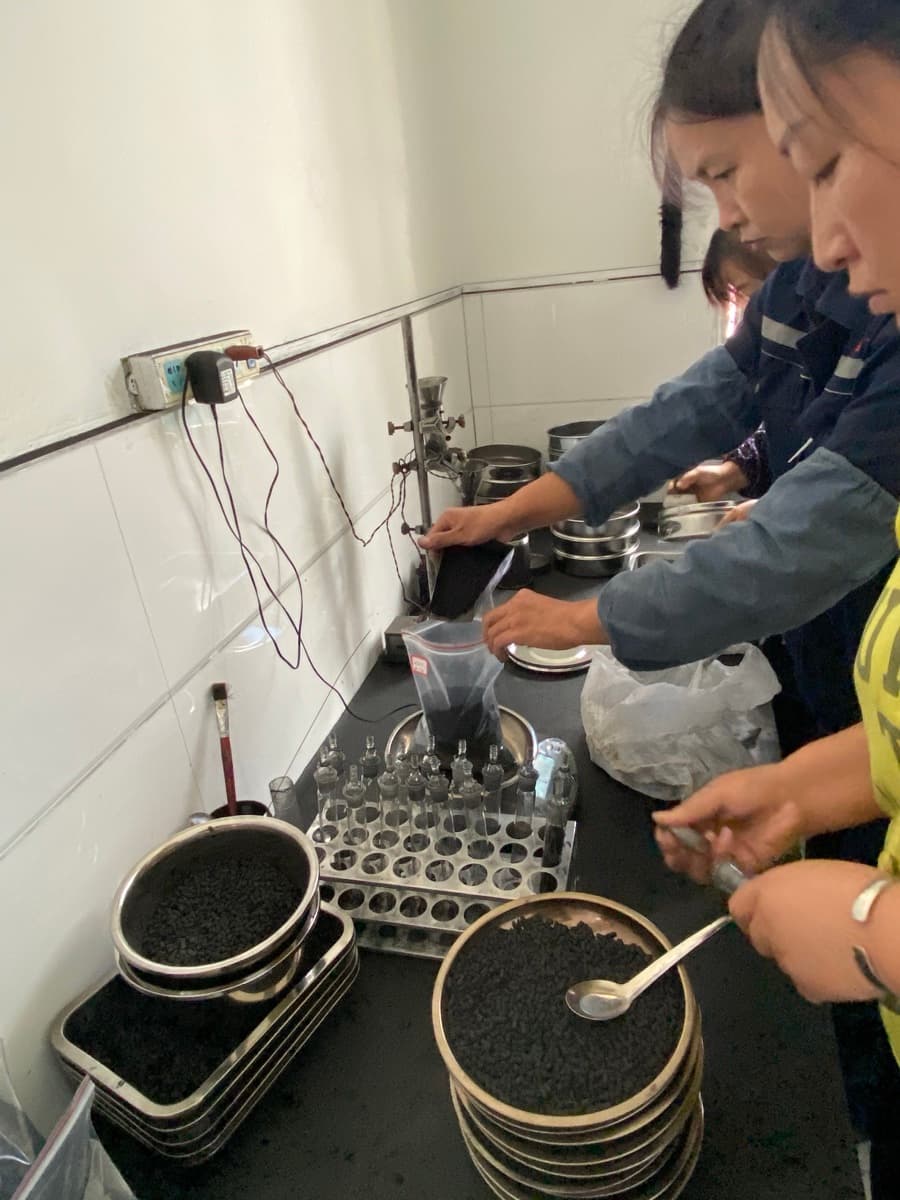
At our production facility, every batch of activated carbon is tested for iodine number, moisture content, ash content, and hardness before shipment. Our in-house laboratory ensures the specifications on your COA are accurate and verifiable — giving you confidence in the carbon you receive.
Frequently Asked Questions
What does iodine number actually measure?
Iodine number measures milligrams of iodine adsorbed per gram of carbon from a standardized solution. Since iodine molecules are small (0.27 nm), this test primarily indicates micropore volume and the carbon's capacity to adsorb small molecules. It's the most widely used quality test.
What iodine number should I specify for water treatment?
For municipal drinking water, specify ≥900 mg/g minimum, with 1000–1100 mg/g preferred. For industrial wastewater, 800+ mg/g is acceptable. Premium coconut shell for high-purity applications should be 1100+ mg/g. Always pair with other specs like hardness and ash.
Is higher iodine number always better?
Not necessarily. Some applications need mesopores for larger molecules. A carbon with iodine 1200 but low methylene blue value would underperform in decolorization versus one with iodine 900 and high MB. Match the pore structure to your target contaminant.
How is iodine number tested?
Main standards are ASTM D4607 and JIS K 1474. Both involve mixing carbon with iodine solution, filtering, and titrating residual iodine. Differences exist in dosage, contact time, and concentration. Results aren't directly comparable between methods — always confirm which standard was used.
Can iodine number decrease during storage?
Yes, exposure to moisture and ambient VOCs reduces available capacity. Store in sealed, moisture-proof packaging in a clean, dry environment. Properly stored carbon maintains its iodine number for years. Test before using carbon stored over 12 months.
Need Help Selecting the Right Carbon?
Our technical team can recommend the optimal iodine number and carbon type for your specific application. We provide detailed COA documentation and can arrange pilot samples for testing.
Ready to Source Activated Carbon?
Get competitive FOB pricing from our factory. Full certifications (NSF-61, ISO 9001, Halal, Kosher). Samples available.