
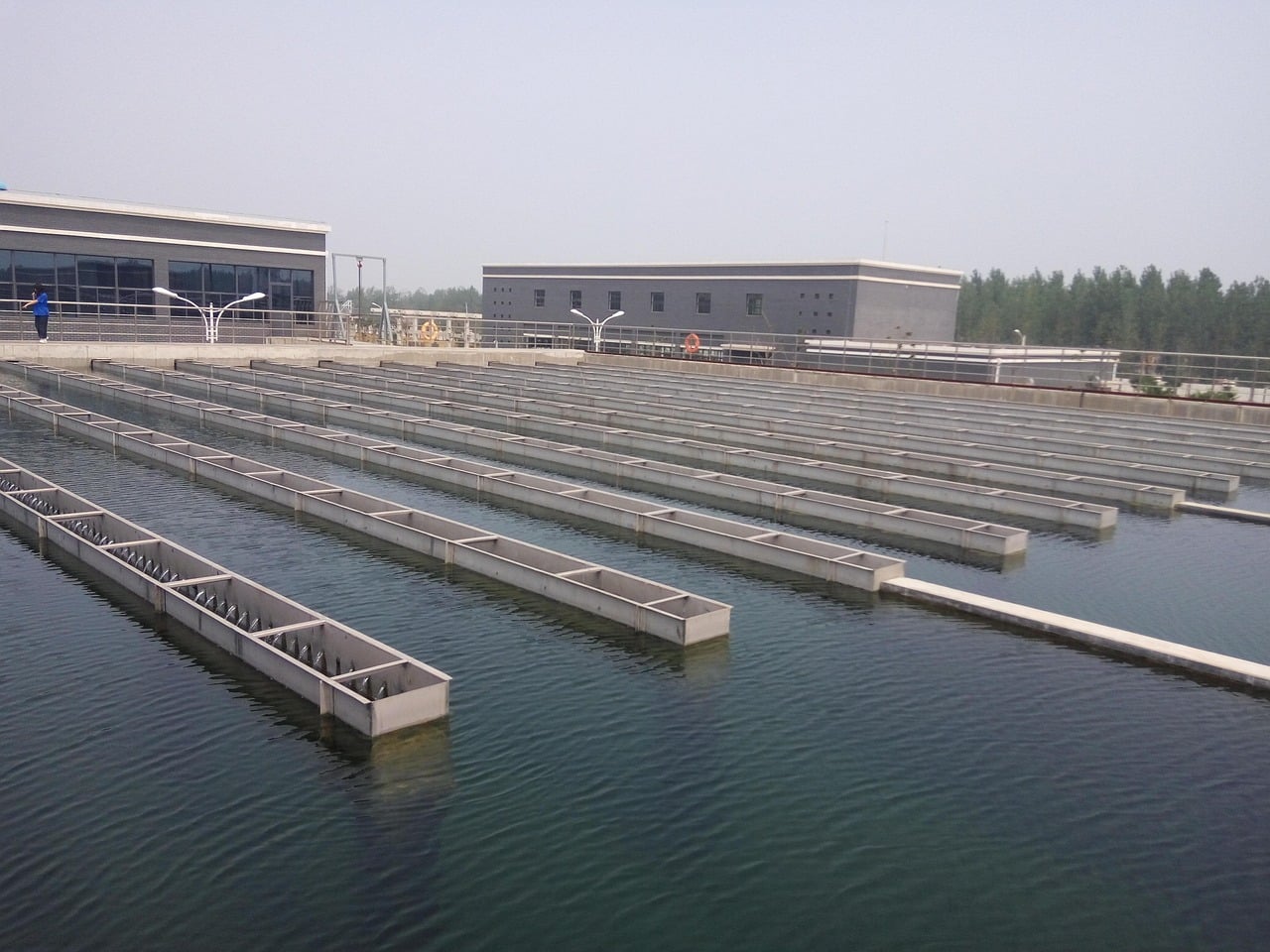
Water Treatment
Industry-leading activated carbon for drinking water, process water, and wastewater treatment.
Activated carbon is the gold standard for water treatment. One gram offers over 1,000 m² of surface area — enough to strip chlorine, VOCs, taste, odor, and hundreds of organic contaminants from municipal and industrial water. It works from million-gallon-per-day city plants down to compact industrial polishers, meeting EPA, EU, and WHO drinking-water standards.
Contaminants Removed
Specialized Water Treatment Solutions
Dedicated deep-dive pages for specific contaminants and duties.
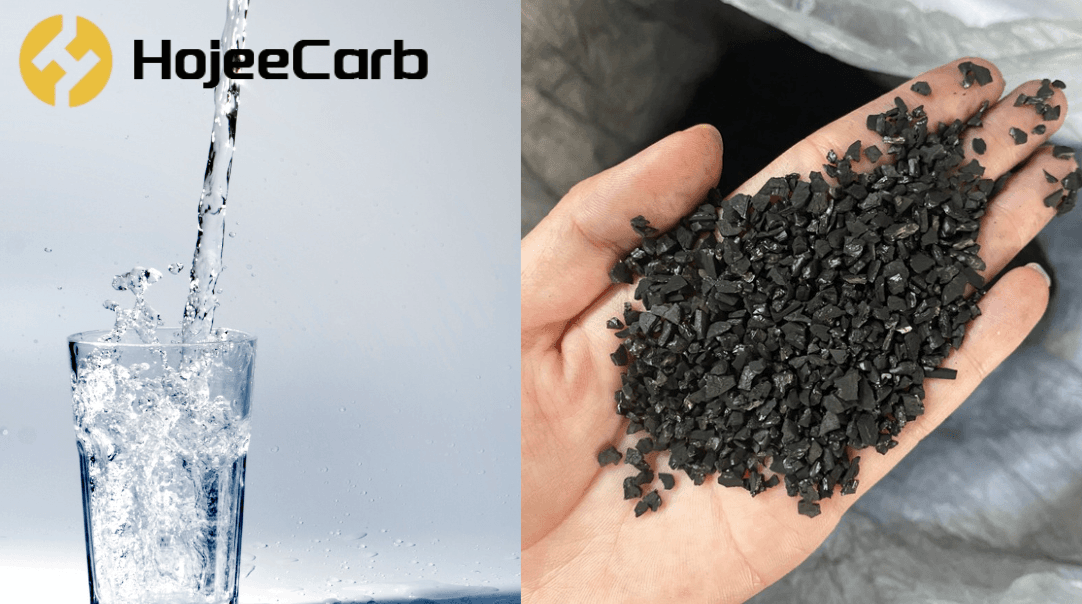
Municipal Drinking Water
Coal & coconut-shell GAC for chlorine, taste & odor, TOC and disinfection by-product control — EBCT design & media selection
View Solution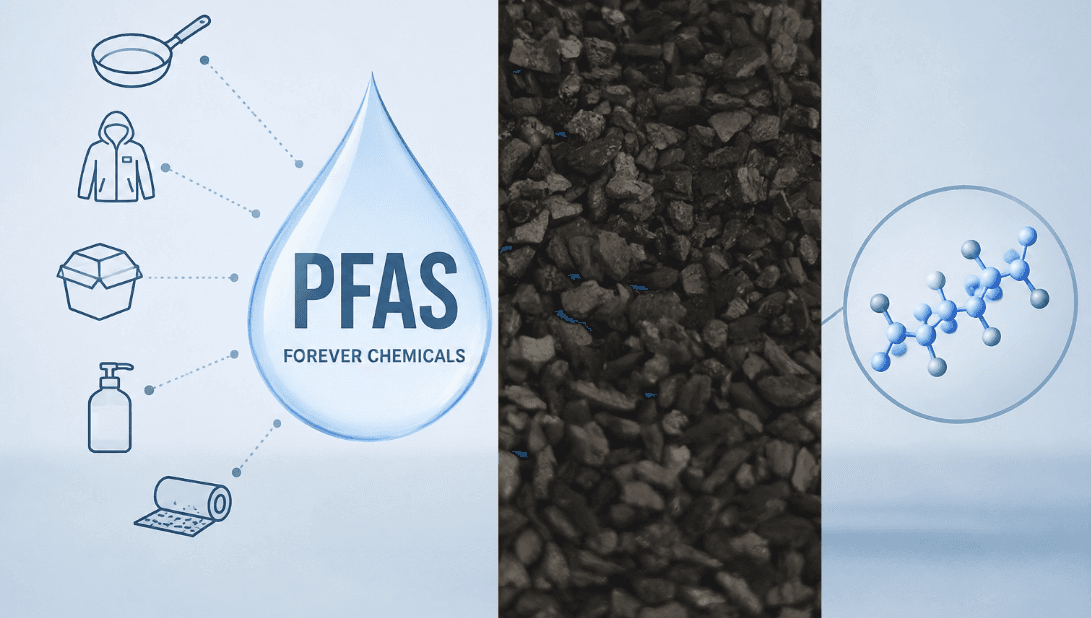
PFAS Removal
GAC for PFOA/PFOS to parts-per-trillion — EBCT design, bed life & breakthrough monitoring
View Solution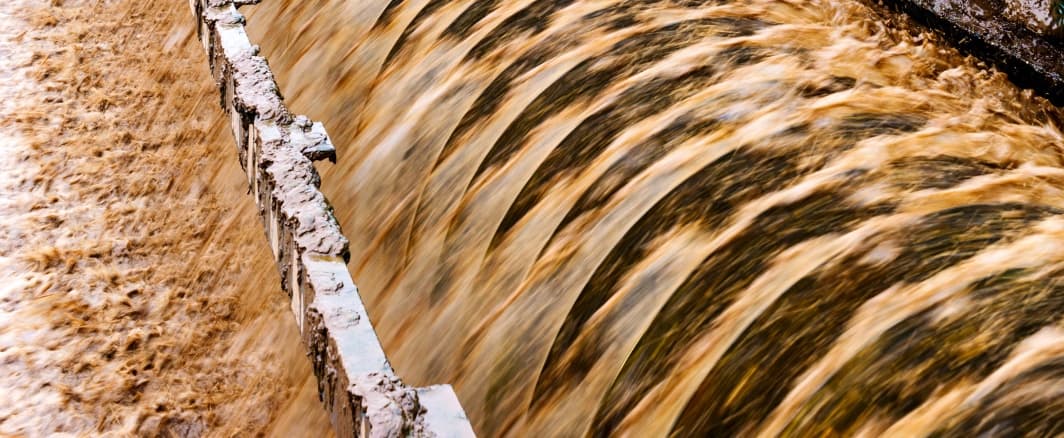
Wastewater Treatment
GAC for industrial & municipal effluent — COD/BOD reduction, color and heavy-metal removal, tertiary polishing
View SolutionCommon Water Treatment Challenges
The right carbon depends on the problem you're solving. These are the four engineers bring to us most.
Chlorine & Chloramine
Chloramine is more stable than chlorine and harder to remove — it needs catalytic carbon and longer contact time before RO, ion exchange, or bottling.
PFAS (Forever Chemicals)
Now regulated at parts-per-trillion. GAC is a proven barrier, but bed life is shorter and demands careful EBCT design and breakthrough monitoring.
Taste, Odor & TOC
Geosmin and MIB from algae blooms cause musty complaints; TOC forms disinfection by-products. Both are controlled with well-designed GAC contactors.
VOCs & Solvents
Groundwater near industrial sites carries benzene, TCE, or MTBE. GAC adsorbs them well when pore-size distribution matches the target molecule.
How It Works
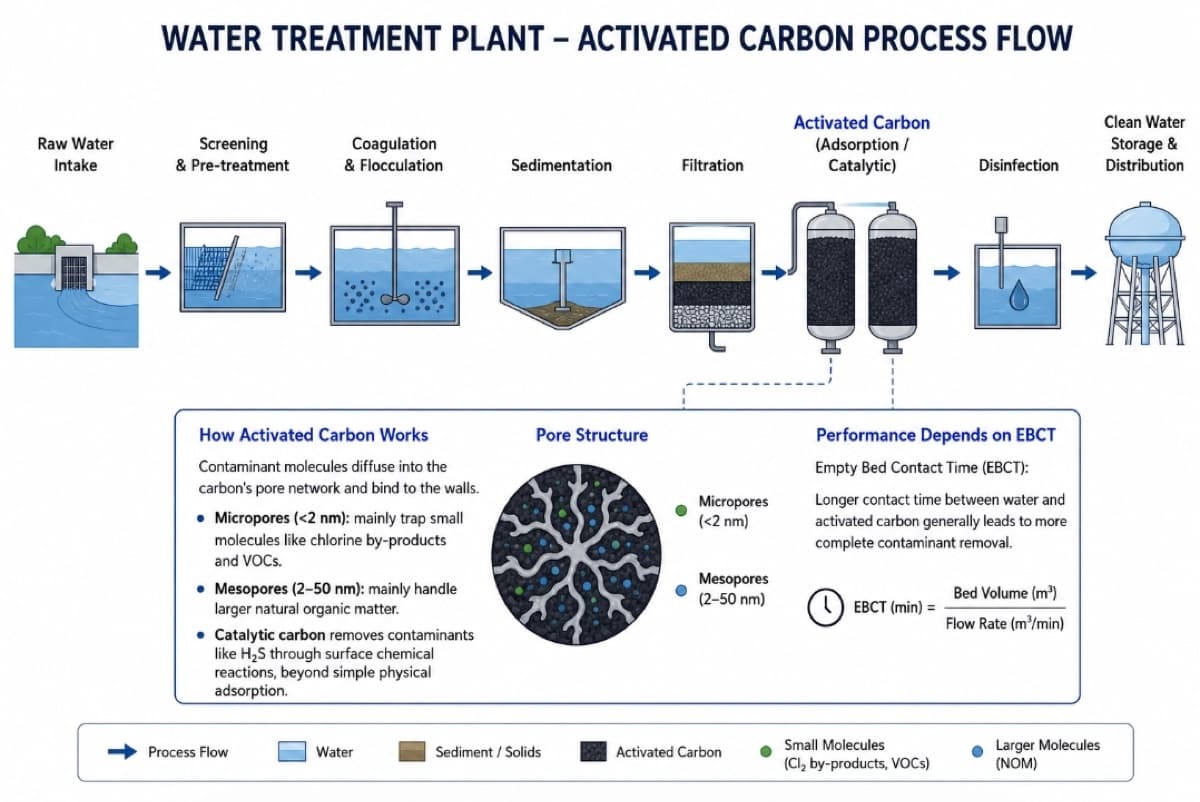
Contaminant molecules diffuse into the carbon's pore network and bind to the walls. Micropores (<2 nm) trap small molecules like chlorine by-products and VOCs; mesopores (2–50 nm) handle larger natural organic matter. Catalytic carbon adds a second mechanism — it chemically reduces chloramine and H₂S at the surface rather than just adsorbing them. Field performance comes down to empty bed contact time (EBCT): more contact, more complete removal.
GAC Treatment Process
Lead-lag configuration — the lag vessel guarantees effluent quality while the lead is exhausted to full capacity.
System Design & Configuration
Engineering matters more than carbon grade alone. The four key decisions:
EBCT
Bed volume ÷ flow rate. Taste/odor 7–10 min; chloramine 3–6 min; VOC/PFAS 10–20 min. Undersized EBCT causes early breakthrough.
Fixed vs Moving Bed
Fixed beds suit steady municipal flows and are simplest. Moving/pulsed beds allow carbon change-out without shutdown for high-load duty.
Lead-Lag
Two contactors in series: exhaust the lead fully while the lag guarantees effluent quality. Maximizes carbon utilization.
Backwash & Bed Depth
1.5–3 m depth, L:D ≥ 1.5 to avoid channeling. Hard carbon (hardness ≥ 95%) minimizes fines.
Carbon Selection Guide
| Treatment Duty | Recommended Carbon | Iodine No. | EBCT |
|---|---|---|---|
| Taste & odor | Coconut shell GAC 8×30 | ≥1000 mg/g | 7–10 min |
| Chloramine removal | Catalytic coal GAC 12×40 | ≥900 mg/g | 3–6 min |
| VOC / solvent | Coal-based GAC 8×30 | ≥900 mg/g | 10–15 min |
| PFAS removal | Bituminous coal GAC 12×40 | ≥1000 mg/g | 10–20 min |
| Wastewater polish | Coal-based GAC 4×8 | ≥800 mg/g | 15–30 min |
Not sure which grade fits your water analysis? Send us your flow rate and target contaminants.
Get a RecommendationTechnical Specifications
| Parameter | Drinking Water | Industrial |
|---|---|---|
| Iodine Number | ≥1000 mg/g | ≥800 mg/g |
| Mesh Size | 8×30 or 12×40 | 4×8 or 8×30 |
| Hardness | ≥95% | ≥90% |
| Ash Content | ≤5% | ≤10% |
Quality & Certifications
Recommended Products
These are the grades we recommend most often for this application. Several other carbon types can also perform well — the best choice depends on your specific water quality, contaminants, and flow rate. Contact us for a tailored recommendation based on your process.
Coconut Shell GAC
Chlorine removal, drinking water (iodine ≥1000)
Coal-Based GAC
Municipal treatment, large-scale applications
Field Performance
Typical operating ranges from municipal and industrial GAC installations.
Case: Municipal taste & odor plant, 20,000 m³/day
A 20,000 m³/day municipal plant switched to coconut-shell GAC at 8-min EBCT — zero taste complaints for a full 18-month cycle, carbon usage ~0.08 kg per m³ treated.
Recent Water Treatment Projects
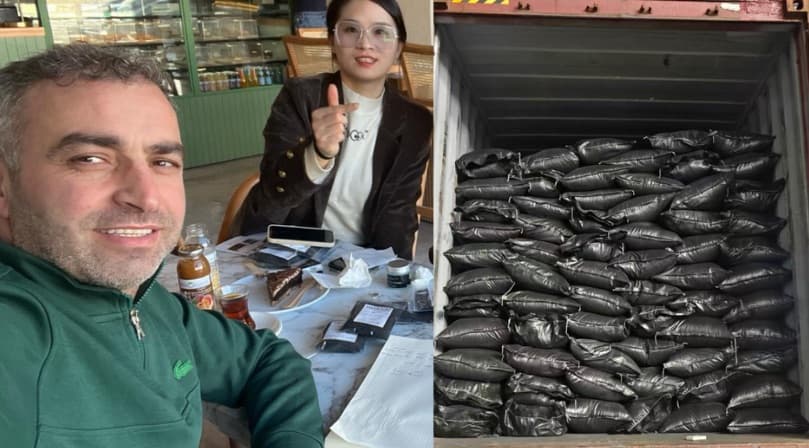
Real bulk shipments of activated carbon for municipal and industrial water treatment — verified specs, delivered worldwide.
 🇸🇦 Saudi ArabiaFCL Shipment
Coal-Based GAC 8×30 for Municipal Drinking Water
Supplied coal GAC for a municipal drinking-water treatment line — specs matched to handle chlorine and organics removal under Gulf climate conditions, packed in PE-lined jumbo bags.
Read full case →🇻🇳 Southeast Asia28 Tons28t Coconut Shell GAC for Municipal Taste & Odor
Cleared taste-and-odor complaints for a municipal drinking-water plant — zero complaints for a full 18-month cycle after switching to our coconut shell GAC.
Read full case →Frequently Asked Questions
What type of activated carbon is best for water treatment?
For drinking water, coconut shell GAC with iodine number ≥1000 mg/g is the industry standard for chlorine, VOC, and taste/odor removal. For industrial wastewater with higher loads, coal-based GAC offers better mesopore distribution for larger organic molecules.
What EBCT is required for water treatment?
It depends on the contaminant: taste and odor 7–10 min, chloramine 3–6 min, VOC or PFAS 10–20 min. EBCT equals bed volume divided by flow rate; insufficient EBCT is the most common cause of early breakthrough.
Can activated carbon remove PFAS from water?
Yes. GAC is a proven barrier for PFOA and PFOS and can reach effluent below regulatory limits with 10–20 min EBCT and regular breakthrough monitoring. Bituminous coal GAC with iodine ≥1000 mg/g is commonly specified.
Which carbon is best for chloramine removal?
Chloramine is more stable than free chlorine and needs catalytic coal-based GAC, which chemically reduces it at the carbon surface. A contact time of 3–6 minutes is typically sufficient.
How often should the carbon be replaced?
GAC bed life typically runs 6–24 months depending on water quality, contaminant load, flow rate, and EBCT. Monitoring effluent quality and breakthrough curves determines the optimal change-out point.
What is the MOQ and lead time?
Minimum order is 1 ton, with FCL (full container load) pricing for bulk orders. Standard grades ship in 7–15 days; free samples are available for lab evaluation before you commit.
Water Treatment Project?
Send us your water analysis and flow rate for a tailored carbon recommendation.
Get a QuoteWater Treatment Carbon — Complete Guide
Complete Guide
Activated Carbon for Water Treatment: 7 Applications & How to Choose
Drinking water, wastewater, pools, municipal — specs, dosing rates, and selection criteria for every water duty.
PFAS
PFAS Removal with Activated Carbon: Complete Guide
EPA-compliant GAC solutions for PFOA/PFOS — coconut vs coal-based, EBCT design, and breakthrough monitoring.
Municipal
Municipal Water Purification: Bulk Sourcing & System Design
GAC contactor design, NSF/ANSI 61 certification, EBCT calculations, and cost optimization for city water plants.
Drinking Water
Activated Carbon for Drinking Water: Selection Guide
GAC vs PAC, coconut shell vs coal-based, NSF 61 compliance, dosage rates, and system design for potable water.
Wastewater
Activated Carbon for Wastewater Treatment: GAC & PAC Selection
COD/BOD removal, textile and pharma effluent polishing, dosage rates, and system design for industrial wastewater.
Case Study
56 Tons Coal GAC Shipped to Saudi Arabia for Municipal Water
Coal-based 8×30 GAC, 950 iodine number, Gulf-climate packaging, SASO/SABER conformity — delivered.