
We've been manufacturing activated carbon for 15+ years, and the most common question we hear is: "Which carbon do I need for my water treatment system?" The answer is always the same: activated carbon works — the real question is which type, pore structure, and specs match your specific contaminants. This guide walks you through 7 real-world applications we've solved, with the exact carbon specs and dosing rates for each one.
GAC pressure vessels in a municipal water treatment plant — the most common configuration for continuous activated carbon filtration.
Here are the 7 major water treatment applications where activated carbon delivers proven results. For each application, we specify the recommended carbon type, key parameters, and typical dosing — so you can move from “which carbon do I need?” to a purchase specification in one read.
Quick Reference: 7 Applications at a Glance
| # | Application | Carbon Type | Key Spec | Typical Life |
|---|---|---|---|---|
| 1 | Municipal Drinking Water | Coconut shell GAC 8×30 | Iodine ≥1050 | 12–24 months |
| 2 | Industrial Wastewater | Coal-based GAC/PAC | MB ≥180 mg/g | 6–12 months |
| 3 | PFAS/PFOA Removal | Bituminous coal GAC | BV ≥15,000 | 6–18 months |
| 4 | Groundwater Remediation | Coconut shell GAC 8×30 | Iodine ≥1050, CTC ≥60% | 12–36 months |
| 5 | Swimming Pool & Spa | Coconut shell GAC 8×30 | Iodine ≥1000, pH neutral | 12–18 months |
| 6 | Aquaculture & Fish Farming | Coconut shell GAC 4×8 | Low ash ≤3%, food grade | 6–12 months |
| 7 | Condensate Polishing (Power) | Coconut shell GAC 12×40 | Hardness ≥97, ash ≤3% | 18–36 months |
1. Municipal Drinking Water Purification
Granular Activated Carbon (GAC) is the EPA-recommended technology for municipal drinking water treatment. According to the EPA's 2024 Drinking Water Treatment Technology Review, GAC removes chlorine, chloramines, trihalomethanes (THMs), taste and odor compounds (geosmin, MIB), and natural organic matter (NOM) that forms disinfection byproducts. It's the largest single application for activated carbon globally — over 80% of U.S. municipal water systems use GAC filtration.
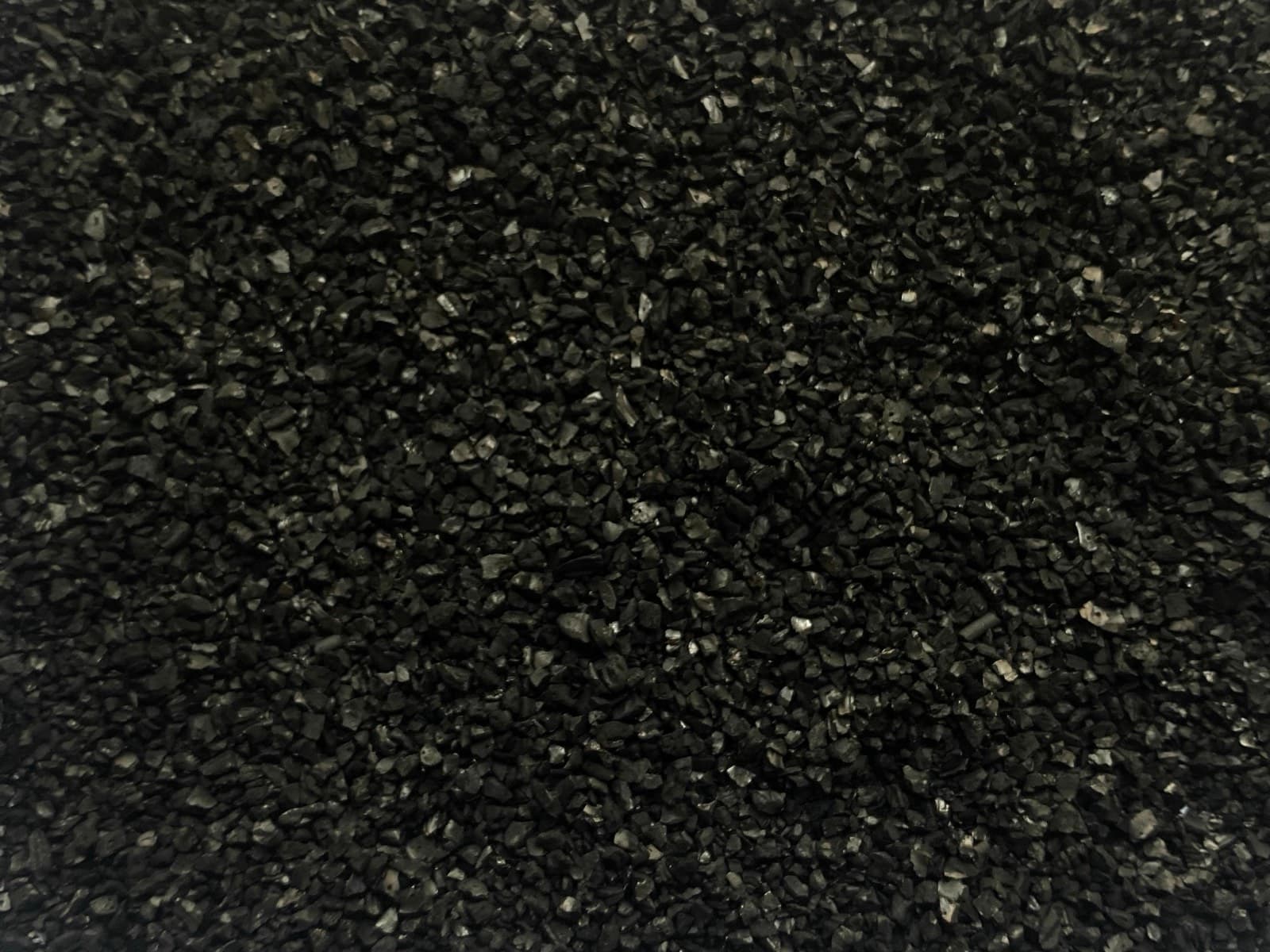
What is GAC for drinking water? Granular Activated Carbon (GAC) is a porous, solid form of carbon (typically 0.5–4mm granules) that adsorbs dissolved contaminants through physical and chemical bonding. In municipal systems, GAC is packed into pressure vessels or gravity filters where water flows through at 5–15 gallons per minute per square foot, allowing 10–15 minutes of contact time for contaminant removal.
Recommended Specs
Why coconut shell wins here: Municipal drinking water contaminants are predominantly small molecules — chlorine (71 g/mol), THMs (120–250 g/mol), geosmin (182 g/mol). These fit perfectly into the micropore structure that coconut shell carbon develops naturally during steam activation. The result is higher capacity per gram and longer bed life compared to coal-based alternatives for these specific targets.
Based on our 15+ years of supplying municipal plants, a typical 100,000 m³/day system needs 50–80 tons of GAC in lead-lag configuration. Our premium coconut shell 8×30 is priced at $1,200–1,600/ton FOB (2026 market rate). Initial carbon charge: $60,000–128,000. With 18-month average bed life and thermal reactivation, annualized cost drops to $0.002–0.004/m³ treated — making GAC one of the most cost-effective barriers for THM and chlorine removal.
2. Industrial Wastewater Treatment
Industrial wastewater requires custom carbon selection because contaminant profiles vary by industry. According to Grand View Research (2025), industrial wastewater treatment is the second-largest activated carbon market segment, growing at 8.2% CAGR. Textile dyes, petrochemicals, pharmaceutical residues, food processing organics, and phenols each demand different pore structures and carbon forms.
| Industry | Target Contaminants | Best Carbon | Key Parameter |
|---|---|---|---|
| Textile & Dyeing | Reactive dyes, color | Wood-based PAC or coal GAC | MB ≥200 mg/g |
| Petrochemical | BTEX, PAHs, phenol | Coconut shell GAC 8×30 | Iodine ≥1000 |
| Pharmaceutical | APIs, hormones, antibiotics | Coconut shell GAC 12×40 | BET ≥1000 m²/g |
| Food & Beverage | COD, color, odor | Wood-based PAC (food grade) | MB ≥150, ash ≤5% |
| Electronics/Semiconductor | TOC, ultrapure water polishing | Coconut shell GAC (acid-washed) | Ash ≤2%, no leachables |
The key insight: For industrial wastewater, iodine number alone is misleading. A textile plant needs mesopores to capture large dye molecules (MW 500–1500 g/mol) — methylene blue number and molasses decolorization index are better predictors. A petrochemical plant removing benzene (78 g/mol) needs micropores — iodine number is the right metric there.
We typically recommend bench-scale isotherm testing with your actual wastewater before committing to a carbon type. We provide this service free for projects over 5 tons — send us a 20L sample and your discharge limits, and we will test 3–4 candidate carbons against your water matrix.
Need activated carbon for water treatment?
Get Factory-Direct Pricing — No Middlemen
20+ years manufacturing. MOQ 1 ton. Free samples. Reply within 2 hours.
3. PFAS & PFOA Removal (Emerging Contaminant)
Per- and polyfluoroalkyl substances (PFAS) are the most urgent water quality issue facing utilities today. According to the EPA's 2024 Final Rule on PFOA and PFOS, utilities must achieve 4 ppt maximum contaminant level (MCL) by 2029. The EPA recognizes three Best Available Technologies (BATs): granular activated carbon (GAC), ion exchange, and reverse osmosis. GAC is often the most cost-effective, with typical capital costs of $0.50–1.50/gallon treated capacity.
PFAS-Specific Carbon Selection
The short-chain PFAS problem: Compounds like PFBS, PFBA, and GenX break through much faster (3,000–8,000 bed volumes) because they are smaller and more hydrophilic. If your water has significant short-chain PFAS, consider a hybrid approach: anion exchange resin as the primary barrier with GAC as polishing. We cover this in detail in our dedicated PFAS removal guide.
4. Groundwater Remediation (VOCs & Chlorinated Solvents)
Groundwater contamination from industrial sites, dry cleaners, and underground storage tanks creates long-term remediation projects where activated carbon is the workhorse technology. Target contaminants include trichloroethylene (TCE), perchloroethylene (PCE), MTBE, benzene, and 1,4-dioxane.
Recommended Configuration
Typical bed life for TCE/PCE removal at 50–200 ppb influent: 12–24 months for the lead vessel, 24–36 months for the lag vessel (which sees lower concentrations). A 50 GPM remediation system needs approximately 2,000–3,000 lbs (1–1.5 tons) of GAC per vessel.
5. Swimming Pool & Spa Water Treatment
Commercial pools and spas use activated carbon to remove chloramines (the “chlorine smell” that is actually combined chlorine), body oils, lotions, and organic contaminants that cause cloudy water and irritate skin. Residential pool owners increasingly add GAC filters to reduce chemical usage and improve water clarity.
Pool-Specific Requirements
A typical commercial pool (50,000 gallons, 100 GPM circulation) needs a 200–300 lb GAC filter. Residential pools (20,000 gallons) work well with 50–100 lb cartridge filters. The carbon removes chloramines more effectively than shocking, reduces eye/skin irritation, and extends the life of pool equipment by reducing corrosive chlorine exposure.
6. Aquaculture & Fish Farming Water Treatment
Recirculating aquaculture systems (RAS) rely on activated carbon to remove dissolved organics, chlorine/chloramines (toxic to fish), phenols, and medications after treatment cycles. Water quality in aquaculture is non-negotiable — even trace contaminants can stress fish and reduce growth rates.
Aquaculture Carbon Specs
Typical dosing: 1–2 lbs of GAC per 100 gallons of system volume. Replace every 6–12 months depending on stocking density and feeding rates. For hatcheries and high-value species (sturgeon, grouper, ornamental fish), we recommend quarterly replacement to maintain optimal water quality.
7. Condensate Polishing in Power Plants
Power plants using steam turbines require ultrapure condensate water to prevent boiler scaling and turbine corrosion. Activated carbon polishing beds remove trace organics, oil contamination from turbine seals, and ionic impurities that slip past ion exchange resins. This is a demanding application where carbon quality directly impacts plant availability.
Power Plant Condensate Specs
A 500 MW coal-fired plant typically uses 10–20 tons of GAC in condensate polishing beds. The carbon must be exceptionally clean — any leachables (ash, metals, organics) contaminate the ultrapure water and defeat the purpose. We supply acid-washed, triple-rinsed coconut shell GAC specifically for this application, with full extractables testing per ASTM D5742.
How to Choose: Decision Framework
Choosing the right activated carbon comes down to matching pore structure to contaminant size, then optimizing for your operational constraints (capital cost, space, maintenance). Here is the decision tree we walk clients through:
Step 1: Identify Your Contaminants
Get a water analysis. Know what you are removing and to what level. This drives everything else.
Step 2: Match Contaminant Size to Pore Structure
- →Small molecules (chlorine, VOCs, THMs) → Coconut shell (micropore-rich)
- →Medium molecules (PFAS, pesticides, pharmaceuticals) → Coal-based (balanced pores)
- →Large molecules (dyes, tannins, color) → Wood-based (mesopore-dominant)
Step 3: Choose GAC vs PAC
Continuous treatment + high volume → GAC. Seasonal/emergency + low capital → PAC.
Step 4: Specify Key Parameters
Iodine number (micropores), methylene blue (mesopores), hardness (durability), ash (purity), mesh size (flow/kinetics).
Step 5: Test Before You Buy
Run bench-scale isotherms with 2–3 candidate carbons using your actual water. We provide this free for projects over 5 tons.
Frequently Asked Questions
What types of activated carbon are used in water treatment?
The main types are Granular Activated Carbon (GAC) for fixed-bed filtration systems, Powdered Activated Carbon (PAC) for batch dosing, and Pelletized Activated Carbon for specific flow-through applications. Raw materials include coconut shell (best for micropollutants), coal-based (versatile, cost-effective), and wood-based (ideal for decolorization).
How long does activated carbon last in a water treatment system?
GAC in municipal drinking water systems typically lasts 12–24 months. Industrial wastewater applications may require replacement every 6–12 months due to higher contaminant loads. PFAS removal systems see 6–18 months depending on concentration and competing organics. Regular monitoring of effluent quality determines actual replacement timing.
Is coconut shell or coal-based carbon better for water treatment?
Coconut shell carbon excels at removing small molecules (chlorine, VOCs, THMs) due to its micropore-dominant structure and is preferred for drinking water. Coal-based carbon has a broader pore distribution making it better for larger molecules, color removal, and PFAS. The best choice depends on your specific contaminants.
How much activated carbon do I need for water treatment?
For GAC systems: Bed Volume = Flow Rate × EBCT (Empty Bed Contact Time, typically 10–20 minutes). Carbon Weight = Bed Volume × Bulk Density (450–550 kg/m³). For PAC dosing: typically 5–30 mg/L depending on application. Contact us with your flow rate and water analysis for a precise calculation.
Can activated carbon remove PFAS from water?
Yes. GAC is one of the EPA-recognized Best Available Technologies for PFAS removal. Bituminous coal-based GAC outperforms coconut shell for PFAS due to its mesopore advantage. Typical bed life is 10,000–25,000 bed volumes for long-chain PFAS (PFOA/PFOS). Short-chain PFAS requires more frequent replacement or a hybrid GAC + ion exchange approach.
What is the difference between GAC and PAC in water treatment?
GAC (Granular, 0.5–4mm) is used in fixed-bed filters with continuous flow — lower operating cost, reusable, and consistent performance. PAC (Powdered, <75μm) is dosed directly into water — lower capital cost, flexible dosing, but single-use and higher per-unit treatment cost. GAC suits continuous treatment; PAC suits seasonal or emergency use.
Need Help Selecting Carbon for Your Water Treatment Project?
Send us your water analysis and treatment objectives. We will recommend the right carbon type, run free bench-scale testing, and provide a detailed quote.
Get Free Carbon Recommendation