
Activated Carbon for Municipal Drinking Water
Granular activated carbon is the workhorse of drinking-water treatment plants — stripping chlorine, taste, odor, natural organic matter and disinfection by-products before water reaches the tap. We supply coal-based and coconut-shell GAC in water-treatment grades, factory-direct, with batch COA.
The Duty
What Drinking-Water Plants Ask Carbon To Do
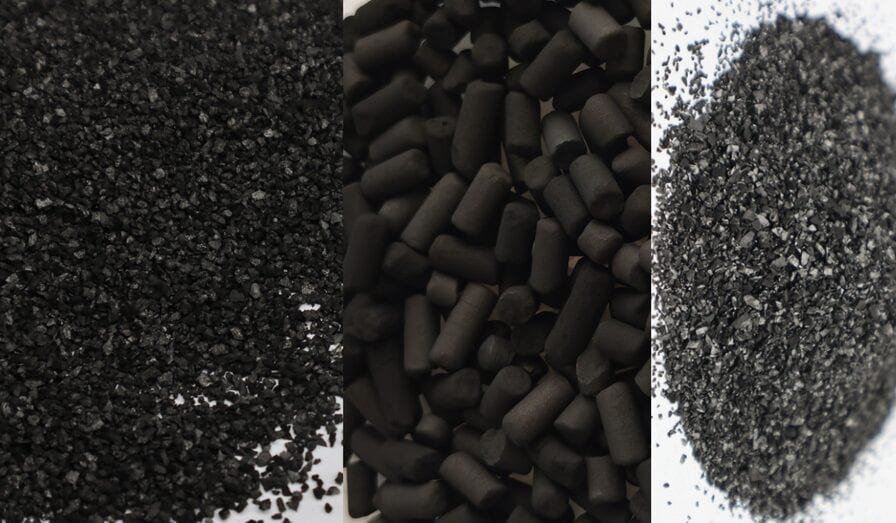
Municipal drinking-water utilities use granular activated carbon (GAC) at the filtration or polishing stage to remove contaminants that coagulation and sand filtration leave behind: free and combined chlorine, geosmin and MIB (the earthy/musty taste-and-odor compounds), natural organic matter (measured as TOC), pesticides, and disinfection by-product precursors that would otherwise form THMs and HAAs. Carbon dechlorination also protects downstream membranes and UV systems. Coal-based GAC gives broad-spectrum organics removal and long bed life; coconut-shell GAC offers a harder, low-dust, high-iodine media favored for premium potable water.
How It Works
How GAC Cleans Drinking Water
The vast internal pore surface (≥900 m²/g) traps dissolved organic molecules — taste & odor compounds, pesticides, NOM — by physical adsorption as water percolates through the bed.
Carbon reacts with free chlorine and chloramine at the surface, reducing them to chloride — protecting membranes, resins and UV units, and removing the chlorinous taste before distribution.
By removing NOM before final chlorination, GAC lowers the formation of regulated trihalomethanes (THMs) and haloacetic acids (HAAs), helping utilities meet drinking-water limits.
What We Remove
Contaminants Removed From Potable Water
Water-treatment-grade GAC targets the taste, odor, organic and disinfection-related contaminants common to municipal supplies.
| Contaminant | Source | Effect | Removability |
|---|---|---|---|
| Free chlorine / chloramine | Disinfection residual | Taste, membrane damage | Excellent |
| Geosmin & MIB | Algae, cyanobacteria | Earthy/musty taste & odor | Excellent |
| Natural organic matter (TOC) | Decayed vegetation | DBP precursor, color | Good–Excellent |
| THM / HAA precursors | NOM + chlorine | Regulated by-products | Good |
| Pesticides & herbicides | Agricultural runoff | Health limits | Good |
Carbon Selection
Which GAC We Recommend for Drinking Water
Media choice depends on the dominant duty (dechlorination vs organics), water quality target and vessel design. Both grades are available in standard mesh sizes.
| Duty | Recommended Carbon | Iodine No. | Mesh |
|---|---|---|---|
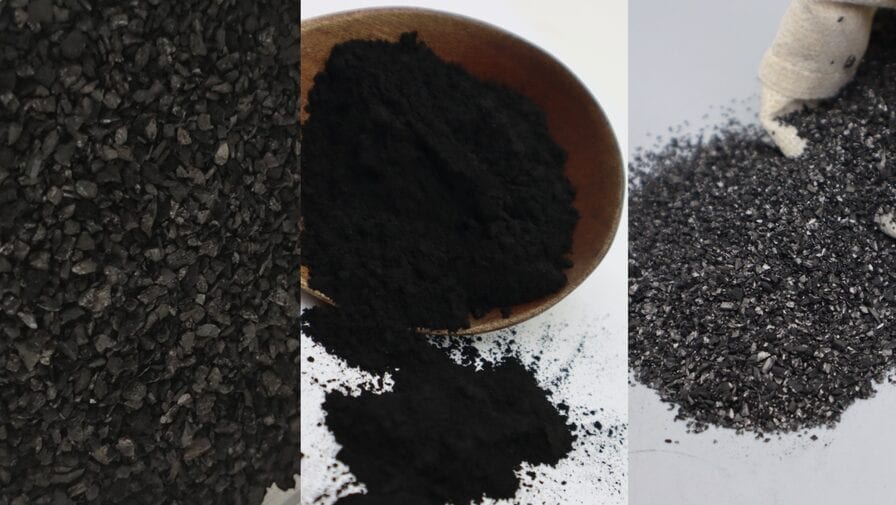
| Broad organics + taste/odor | Coal-based GAC 8×30 / 12×40 | ≥900 mg/g | 8×30, 12×40 |
| Premium potable / low dust | Coconut-shell GAC 8×30 | ≥1000 mg/g | 8×30 |
| Dechlorination (RO/UF pre-treat) | Coconut-shell GAC 12×40 | ≥1000 mg/g | 12×40 |
| Emergency dosing / spills | Powdered activated carbon (PAC) | ≥900 mg/g | 200 mesh |
Not sure which grade fits your plant? Send us your flow rate, target contaminants and vessel details.
Send Us Your Water DataWholesale & Bulk Pricing
Drinking-Water GAC Price Guide (Factory-Direct)
Indicative factory-direct pricing for water-treatment-grade GAC. Final quotation depends on iodine number, mesh, order volume and destination port. MOQ 1 ton; LCL adds roughly $200/ton.
| Grade | Iodine No. | Mesh | Indicative FCL Price (USD/ton) |
|---|---|---|---|
| Coconut-shell GAC | ≥1000 mg/g | 8×30, 12×40 | $2,900–4,500 |
| Coal-based GAC | ≥900 mg/g | 8×30, 12×40 | Request quote |
| Powdered activated carbon (PAC) | ≥900 mg/g | 200 mesh | Request quote |
Prices are indicative FCL, factory-direct from China, and exclude ocean freight and import duties. Contact us for an exact quotation to your port.
Need an exact price to your port? Send your grade, volume and destination.
Request a QuoteSystem Design
Designing a Drinking-Water GAC Contactor
EBCT 5–15 min
Empty-bed contact time drives organics removal. Taste & odor polishing may run 5–10 min; TOC and DBP-precursor control typically needs 10–15 min or deeper beds.
Backwashable Beds
Gravity or pressure GAC filters are periodically backwashed to remove trapped solids and reclassify the bed. Hard, low-attrition media (coconut GAC) resists breakdown over many cycles.
GAC as Filter-Adsorber
Replacing sand with GAC in existing rapid filters adds adsorption without new vessels — a low-capex upgrade for utilities facing new taste/odor or DBP limits.
Reactivation & Change-out
Spent GAC is reactivated or replaced on a scheduled basis; TOC/chlorine breakthrough monitoring sets the cycle. We supply fresh replacement media with consistent batch specs.
Field Performance
Trusted By Municipal Utilities
 Case Study
Case: Coal-based GAC shipped to Saudi Arabia for municipal water
A Saudi municipal water utility sourced coal-based granular activated carbon direct from our factory for chlorine and organics removal ahead of distribution. Batch COA on iodine number, hardness and mesh distribution met the plant's specification, and the shipment was delivered in bulk within the agreed lead time.
Read the full case studyMunicipal Drinking Water — Frequently Asked Questions
What activated carbon is used for municipal drinking water?
Water-treatment-grade granular activated carbon (GAC) — coal-based for broad organics and long bed life, or coconut-shell for premium, low-dust potable water. Iodine number is typically 900–1000 mg/g. Powdered carbon (PAC) is used for seasonal taste/odor or spill dosing.
How does activated carbon remove chlorine from drinking water?
Carbon catalytically reduces free chlorine and chloramine to chloride at its surface, removing the chlorinous taste and protecting downstream membranes, resins and UV systems. A properly sized GAC bed brings residual chlorine below 0.1 mg/L.
Does GAC remove disinfection by-products (THMs/HAAs)?
GAC removes the natural organic matter (NOM) that reacts with chlorine to form THMs and HAAs. By adsorbing these precursors before final disinfection, it lowers regulated by-product formation and helps utilities meet drinking-water limits.
Coal-based or coconut-shell GAC for drinking water?
Coal-based GAC gives broad-spectrum organics removal and cost-effective long bed life. Coconut-shell GAC is harder, lower in dust and higher in iodine — preferred for premium potable water and RO/UF pre-treatment. We supply both in standard mesh sizes.
What EBCT should a drinking-water GAC filter use?
Empty-bed contact time of 5–15 minutes is typical. Taste & odor polishing may run 5–10 minutes; TOC and DBP-precursor control usually needs 10–15 minutes or deeper beds. We can advise sizing from your flow rate and water quality target.
What is the MOQ and lead time?
Minimum order is 1 ton, with FCL pricing for bulk. Standard water-treatment grades ship in 7–15 days with batch COA, and free samples are available for evaluation before you commit.
Upgrading a Drinking-Water Plant? Let's Spec Your GAC.
Send us your flow rate, target contaminants (chlorine, taste & odor, TOC) and vessel details. Our technical team responds within 24 hours with a tailored GAC recommendation and factory-direct quotation.
Request a Drinking-Water GAC Quote