
Quick Answer
Granular activated carbon removes free chlorine through catalytic reduction — chlorine reacts with the carbon surface and is converted to chloride ions. An 8×30 mesh coconut shell or coal-based GAC bed with 2–5 minutes empty bed contact time (EBCT) reduces 2–4 mg/L free chlorine to below 0.1 mg/L. For chloramine removal, EBCT of 5–10 minutes is required. Coconut shell spec: hardness ≥98%, moisture ≤5%, ash ≤3%. Bulk pricing from China: $700–1,100/MT FOB, MOQ 5 MT, 20GP ≈ 15 MT.
How Activated Carbon Removes Chlorine
Most people assume activated carbon removes chlorine by adsorbing it the same way it traps VOCs. That's only half the story. For free chlorine, the dominant mechanism is catalytic reduction: chlorine molecules (Cl₂ or HOCl) react directly with the carbon surface and are chemically converted to harmless chloride ions (Cl⁻). This reaction is fast and essentially irreversible at normal operating conditions.
The result: a correctly sized GAC bed doesn't "fill up" with chlorine the way a VOC bed does. It degrades gradually over years as the reactive surface sites wear down, not in weeks or months. Industry practice documented by the American Water Works Association (AWWA) puts GAC dechlorination bed life at 3–7 years at typical municipal chlorine doses (0.5–3 mg/L), with physical degradation — not chlorine capacity — as the limiting factor.
Chloramine removal follows a different path — combined chlorine (NH₂Cl) is not as reactive with carbon surfaces and requires longer contact time. This is why chloramine systems need more carbon or deeper beds than free-chlorine systems. The US EPA notes that over 20% of US water utilities now use chloramine instead of free chlorine as a secondary disinfectant — worth checking before you size a bed on free-chlorine assumptions.
Where Dechlorination GAC Is Used
| Application | Chlorine Source | Typical GAC Grade |
|---|---|---|
| Municipal drinking water treatment | Free Cl₂ / HOCl, 0.5–3 mg/L | Coal GAC 8×30 or 12×40 |
| Bottled water & beverage production | Free Cl₂, ≤1 mg/L | Coconut GAC 8×30, NSF 61 |
| Semiconductor / electronics ultrapure water | Free Cl₂ + chloramine | Coconut GAC 12×40, acid-washed |
| Pharmaceutical process water (USP) | Free Cl₂ / chloramine | Coconut GAC 8×30, low ash |
| Food processing & dairy | Free Cl₂, 0.2–2 mg/L | Coconut GAC 8×30, food-grade |
| Industrial boiler / cooling tower make-up | Free Cl₂ + chloramine | Coal GAC 8×30 or catalytic carbon |
GAC Bed Design for Dechlorination — EBCT & Bed Depth
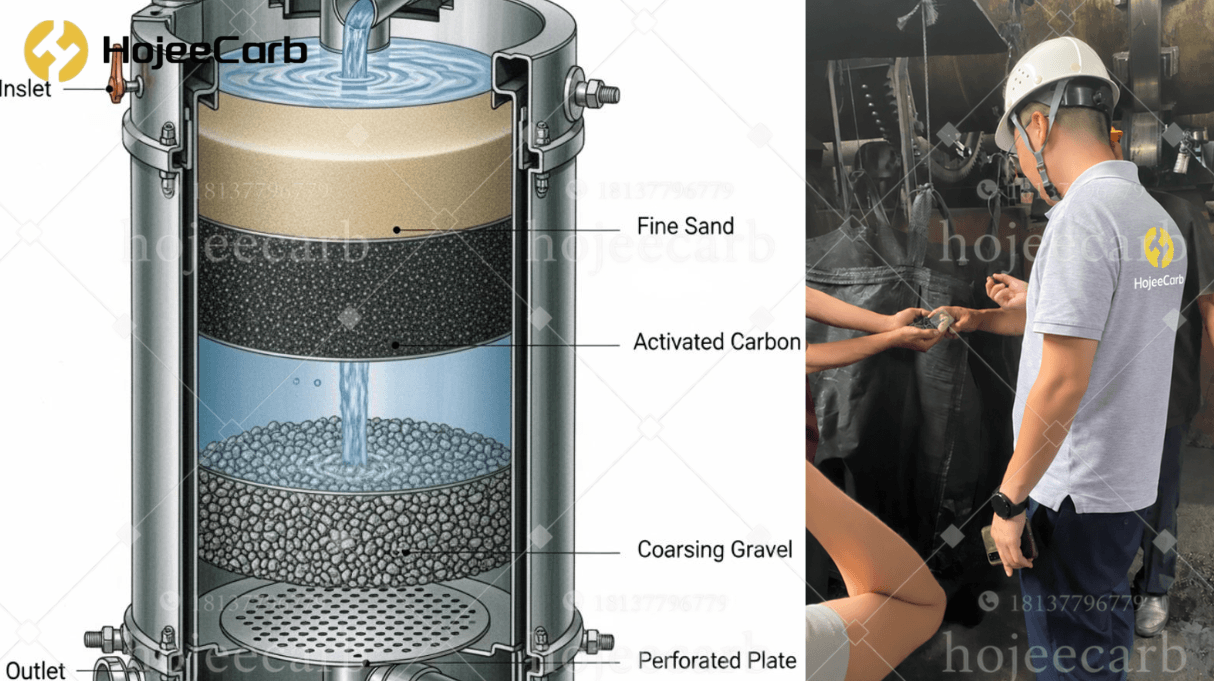
Empty bed contact time (EBCT) is the key design parameter for dechlorination. It is calculated as: EBCT (min) = bed volume (L) ÷ flow rate (L/min).
| Target | Minimum EBCT | Notes |
|---|---|---|
| Free chlorine removal (<0.1 mg/L outlet) | 2–3 min | Standard for municipal / industrial |
| Free chlorine (ultrapure / pharma) | 3–5 min | Safety margin for critical processes |
| Chloramine removal (<0.1 mg/L outlet) | 5–10 min | Use catalytic carbon for best results |
| Combined Cl₂ + VOC removal | 10–15 min | Dual-purpose adsorption + catalytic bed |
A surface loading rate of 5–15 m/hr is typical. Bed depth usually runs 900–1,500 mm per vessel. For large municipal systems, two vessels in series are common — one can be taken offline for backwash or media replacement without interrupting supply.
Get Factory-Direct Pricing
Request a quote from our team — coal-based, coconut shell, or specialty activated carbon delivered worldwide.
Coconut Shell vs Coal Activated Carbon for Dechlorination
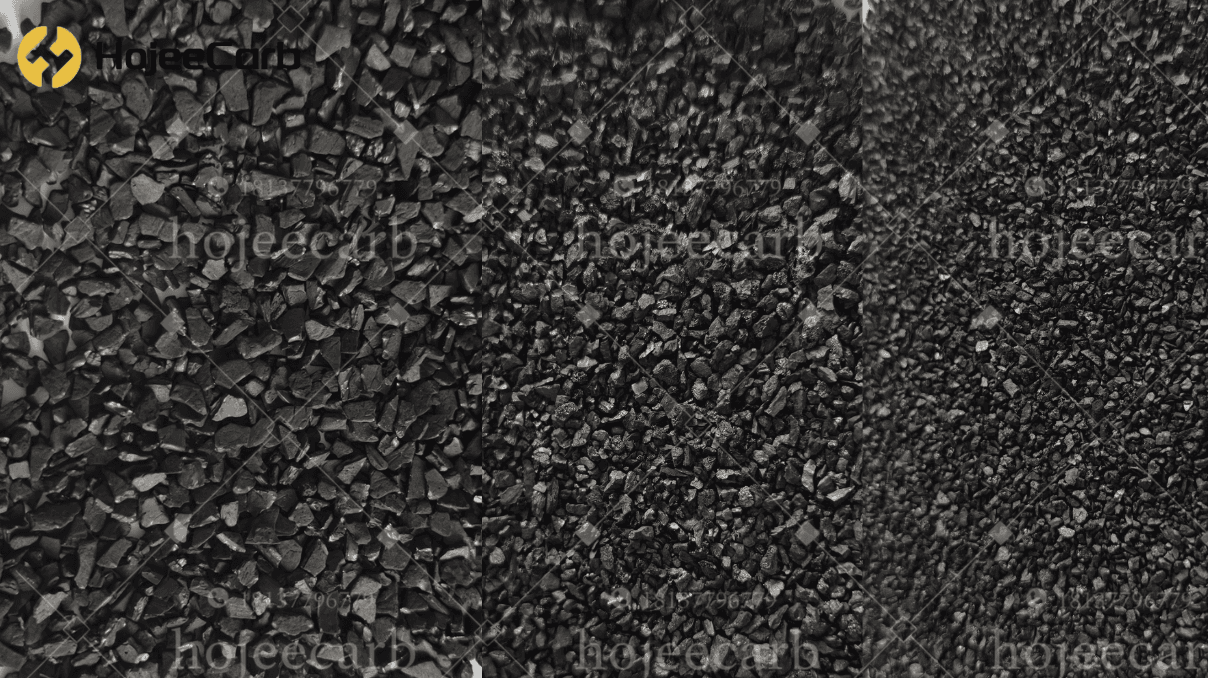
Both coconut shell and coal-based GAC are effective for chlorine removal. The choice depends on application requirements and budget.
| Parameter | Coconut Shell GAC | Coal-Based GAC |
|---|---|---|
| Iodine number | 1,000–1,100 mg/g | 800–1,000 mg/g |
| Hardness | ≥98% | ≥90% |
| Ash content | ≤3% | ≤8% |
| Chlorine removal | Excellent | Excellent |
| Chloramine removal | Good | Good (catalytic grade: better) |
| Best for | Food, pharma, bottled water, electronics | Municipal, industrial pre-treatment |
| FOB China price | $900–1,100/MT | $700–900/MT |
For drinking water and food-grade applications, coconut shell GAC is the preferred choice — higher hardness means less fines in the bed over time, and lower ash reduces leaching risk. For municipal and industrial pre-treatment where standards are less stringent, coal-based GAC delivers the same dechlorination performance at lower cost.
For a deeper comparison, see our coconut shell vs coal activated carbon guide.
How to Source Dechlorination GAC from China
China manufactures over 60% of the world's activated carbon. Factory-direct sourcing eliminates the distributor margin and typically delivers equivalent or better quality at 30–50% lower cost than Western-branded GAC.
Key specs to confirm before ordering:
- Raw material: coconut shell or coal — specify based on application
- Mesh size: 8×30 (standard) or 12×40 (finer, for ultrapure/pharma)
- Iodine number: ≥800 mg/g (general); ≥1,000 mg/g (food/pharma) — tested per ASTM D4607
- Hardness: ≥98% (coconut), ≥90% (coal)
- Moisture: ≤5%; Ash: ≤3% (coconut) / ≤8% (coal)
- NSF/ANSI 61 or food-grade certification — required for potable water contact
- Packaging: 25 kg woven bags or 500 kg jumbo bags
Standard MOQ is 5 MT for production orders. A 20GP container holds approximately 15 MT of coconut shell GAC (25 kg bags). Lead time is 15–25 days from order confirmation. Browse our granular activated carbon product page for full specs, or see the bulk ordering guide for the full sourcing process.
FAQ
Does activated carbon remove chlorine from water?
Yes. Granular activated carbon (GAC) removes free chlorine through a catalytic reduction reaction — not just adsorption. Chlorine molecules react with the carbon surface and are converted to chloride ions. A properly sized GAC bed reduces free chlorine from 2–4 mg/L to below 0.1 mg/L in a single pass.
Can activated carbon remove chloramine as well as chlorine?
Yes, but chloramine removal is slower than free chlorine removal and requires a longer contact time. Chloramine (combined chlorine) requires a minimum empty bed contact time (EBCT) of 5–10 minutes, versus 1–2 minutes for free chlorine. Catalytic activated carbon grades outperform standard GAC for chloramine removal.
What mesh size of activated carbon is best for dechlorination?
8×30 mesh (0.6–2.4 mm) is the industry standard for dechlorination filter beds. It balances surface area for chlorine reaction, pressure drop, and backwash efficiency. For high-flow industrial systems with strict pressure drop limits, 4×8 mesh (2.4–4.8 mm) is used.
Coconut shell vs coal activated carbon for dechlorination — which is better?
Both work well. Coconut shell GAC has a micropore-dominant structure and higher hardness (≥98%), producing less fines in the bed over time — preferred for drinking water and food/beverage lines. Coal-based GAC has a broader pore distribution and lower cost (~30–40% cheaper), making it the standard choice for municipal water treatment and industrial pre-treatment.
How long does a GAC dechlorination bed last before replacement?
A GAC bed used solely for dechlorination typically lasts 3–5 years before chlorine breakthrough, because the catalytic reaction is not reversible and the carbon does not exhaust in the same way as adsorption. The limiting factor is physical degradation and fines accumulation, not chlorine capacity. Annual backwash and periodic sampling are recommended to track performance.
Related guides
Need bulk activated carbon for dechlorination?
Tell us your flow rate, chlorine level, and application — we'll specify the right grade and send a quotation within 24 hours.
Request a Quote