
“Should I use coconut shell or coal-based?” is the single most common question we get from buyers. It's also the question with the most nuanced answer, because the right choice depends on your specific application, budget, and performance requirements.
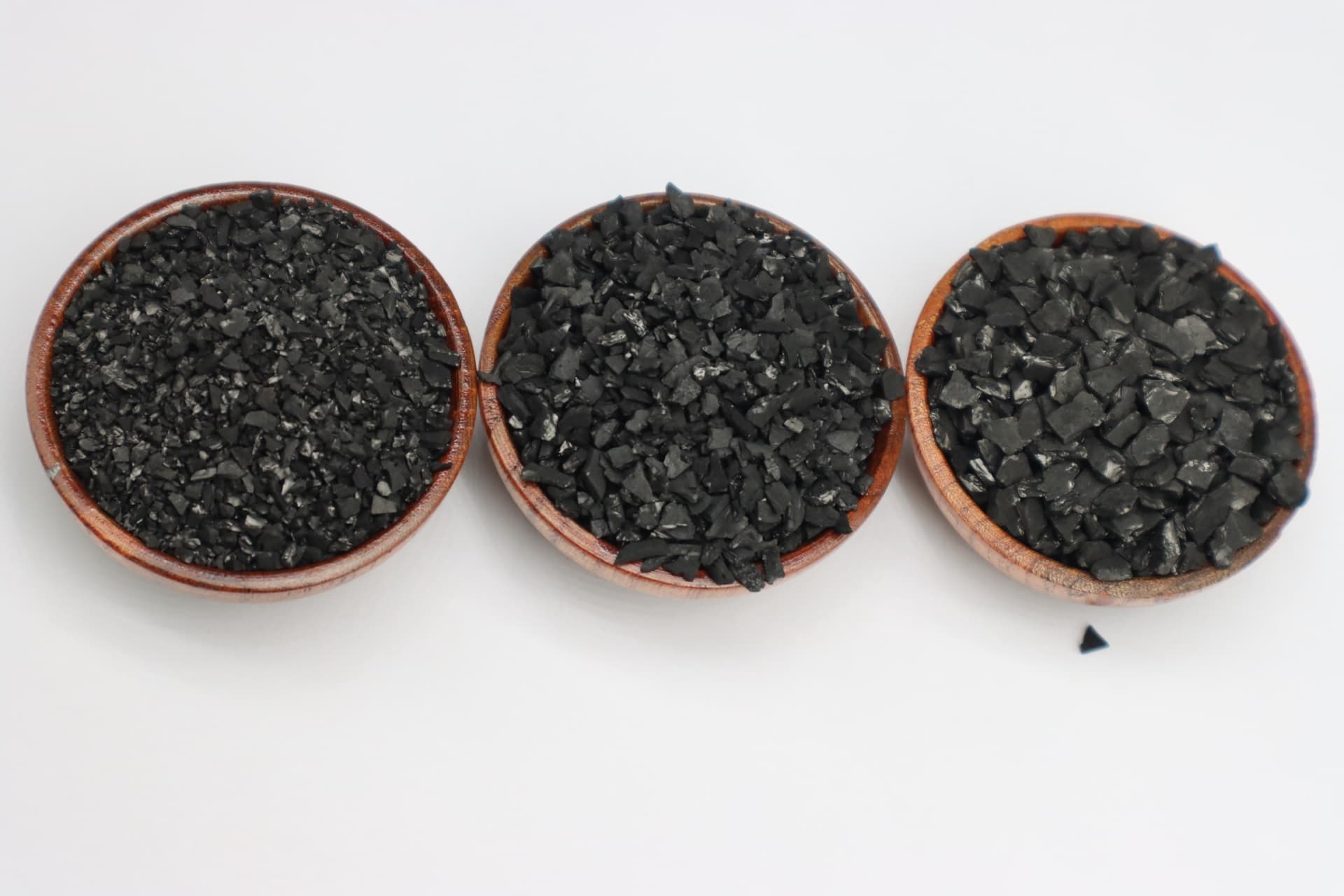
We manufacture both coconut shell and coal-based activated carbon, so we don't have a dog in this fight. What we have is a lot of data from real applications and honest feedback about where each excels and where it falls short.
Head-to-Head Property Comparison
Let's start with the numbers. This table compares typical properties for commercial-grade granular activated carbon (8×30 mesh) from each raw material:
| Property | Coconut Shell | Coal-Based |
|---|---|---|
| Raw Material | Coconut shell charcoal | Bituminous coal / anthracite |
| Activation Method | Steam (physical) | Steam (physical) |
| Iodine Number | 900–1200 mg/g | 800–1100 mg/g |
| BET Surface Area | 1000–1300 m²/g | 850–1100 m²/g |
| Pore Structure | Micropore dominant (>85% micropores) | Mixed pore (mesopore-rich) |
| Hardness | 95–99% (very hard) | 85–95% |
| Ash Content | 2–5% (very low) | 8–15% |
| Apparent Density | 0.48–0.55 g/mL | 0.45–0.55 g/mL |
| Moisture | ≤ 5% | ≤ 5% |
| pH | 9–11 (alkaline) | 6–8 (near neutral to slight alkaline) |
| Renewable Resource | Yes — coconut is renewable | No — coal is a fossil resource |
| FOB Price (8×30 GAC) | $2,900–$4,500/ton | $450–$1,550/ton |
Why Pore Structure Is the Real Difference
Forget the marketing claims. The fundamental difference between coconut shell and coal-based carbon is the pore size distribution. Everything else — performance, best-fit applications, cost per unit of work — flows from this one structural difference.
Coconut Shell: Micropore Champion
Over 85% of the pore volume in coconut shell carbon is in micropores (<2 nm). This makes it exceptional at capturing small molecules: chlorine, chloramine, VOCs, THMs, taste/odor compounds, PFAS, and dissolved gold. The tight, uniform pore structure also explains the high hardness — fewer large voids means a stronger granule that resists abrasion.
Coal-Based: Mesopore Advantage
Coal-based carbon has a broader pore distribution with significant mesopore (2–50 nm) and some macropore (>50 nm) development. This gives it two advantages: it can adsorb larger molecules that don't fit into micropores, and the mesopores serve as “transport highways” that speed up the overall adsorption kinetics. For high-flow applications or large-molecule contaminants, this matters.
The practical implication: if your target contaminant is a small molecule, coconut shell will almost always outperform coal-based on a capacity basis. If you're dealing with larger organic molecules, color compounds, or need fast kinetics in a high-flow system, coal-based is often the better choice.
When to Use Coconut Shell Activated Carbon
Coconut shell carbon is the premium choice for applications that demand high purity, maximum micropore capacity, or long service life:
Drinking Water Treatment
Low ash content means minimal leachables into treated water. High micropore volume gives excellent capacity for chlorine, THMs, and taste/odor compounds. NSF 61 certification is readily available. This is the standard choice for point-of-use water filters.
The combination of high hardness (resists attrition in agitated tanks), high micropore volume (captures gold cyanide complex), and low ash (minimizes preg-robbing) makes coconut shell the only serious option for gold recovery.
PFAS Removal
PFOS and PFOA are relatively small molecules that adsorb preferentially in micropores. Coconut shell GAC consistently outperforms coal-based for PFAS removal in both capacity and breakthrough time.
Food & Pharmaceutical Processing
Where product purity is paramount, coconut shell's low ash and low leachable minerals make it the safe choice. It meets food-grade requirements with minimal post-treatment.
Aquarium & Reef Tank Filtration
Low phosphate leaching and high micropore capacity for organic compounds make coconut shell ideal for aquarium use where water chemistry stability is critical.
When to Use Coal-Based Activated Carbon
Coal-based carbon is the cost-effective workhorse for applications where volume matters more than purity, or where mesopore capacity is needed:
Municipal Water Treatment (Large Scale)
When you're filling 100+ m³ contactors, the 30–50% price difference between coconut shell and coal-based becomes significant. Coal-based GAC at 950–1050 iodine provides excellent chlorine and organic removal performance for large systems where absolute purity is less critical.
Industrial Wastewater
Wastewater often contains a mix of large and small organic molecules. Coal-based carbon's broader pore distribution handles this mixed contamination better than coconut shell's micropore-heavy structure. And when the carbon is spent and disposed of rather than regenerated, the lower per-ton cost matters.
Air Purification & VOC Control
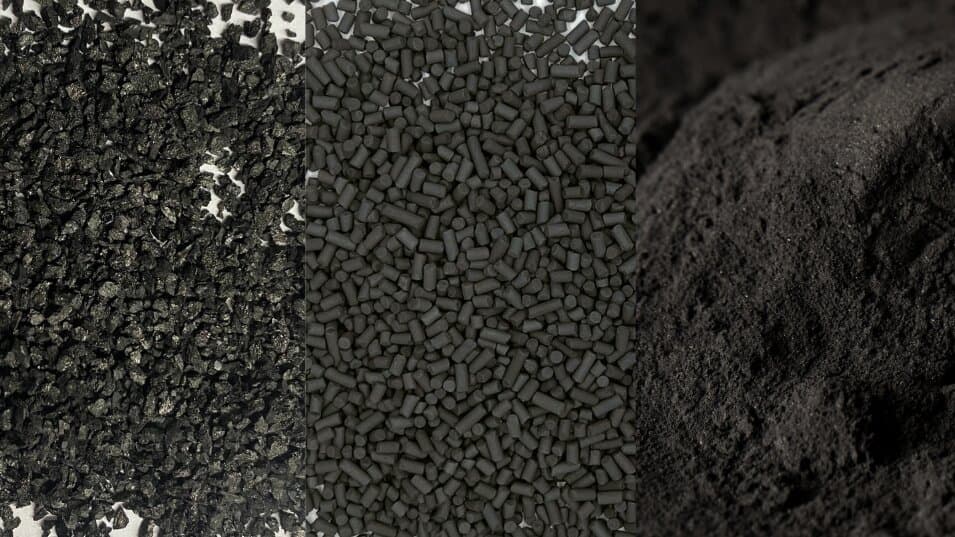
Coal-based pellet carbon (extruded, 3–4 mm diameter) dominates the air treatment market. The pellet form provides low pressure drop, and the CTC number (not iodine) is the key performance metric for gas-phase applications.
Solvent Recovery
Coal-based pellet carbon is standard for solvent recovery systems. It can be thermally regenerated hundreds of times, and its lower initial cost reduces the capital investment.
Color & Odor Removal from Industrial Process Streams
Where the target is large organic molecules (dyes, tannins, humic acids), coal-based carbon's mesopore development gives it an edge over coconut shell.
Need coconut shell or coal-based carbon?
Get Factory-Direct Pricing — No Middlemen
20+ years manufacturing. MOQ 1 ton. Free samples. Reply within 2 hours.
True Cost Comparison: Price vs. Performance
Comparing only per-ton price is misleading. The real metric is cost per unit of work done — how much contaminant does each dollar of carbon remove?
| Cost Factor | Coconut Shell | Coal-Based |
|---|---|---|
| Purchase Price (8×30 GAC) | $2,900–$4,500/ton | $450–$1,550/ton |
| Service Life (water treatment) | 12–24 months typical | 8–18 months typical |
| Regeneration Cycles | 3–5 cycles (high hardness) | 2–4 cycles (more attrition loss) |
| Attrition Loss per Cycle | 3–7% | 8–15% |
| Effective Lifecycle Cost | Often lower for 3+ year horizon | Lower upfront, higher over lifecycle |
| Best Value For | High-purity, long-service, regenerable systems | High-volume, single-use, cost-sensitive applications |
Real Example: Water Treatment Plant
A 50,000 m³/day water treatment plant evaluated both options for their GAC contactors (120 m³ total bed volume). Coal-based GAC saved $36,000 on initial fill. But coconut shell lasted 20 months between changeouts vs. 14 months for coal-based, and survived 4 regeneration cycles vs. 3. Over a 5-year period, the coconut shell option was $22,000 cheaper in total carbon cost — plus less downtime for changeouts.
Quick Decision Framework
Use this simple framework to make your initial selection, then validate with bench-scale testing:
Choose Coconut Shell When:
- ✓Target contaminants are small molecules (MW < 300)
- ✓Product purity is critical (drinking water, food-grade, pharma)
- ✓Carbon will be regenerated and reused multiple times
- ✓Abrasion resistance matters (agitated systems, high flow rates)
- ✓Low ash / low leachables is a requirement
- ✓Sustainability / renewable sourcing is valued
Choose Coal-Based When:
- ✓Target contaminants include larger molecules (MW > 300)
- ✓Budget is the primary constraint
- ✓Carbon is single-use (disposed after exhaustion)
- ✓You need pellet form for air treatment / low pressure drop
- ✓Application is industrial wastewater with mixed contaminants
- ✓Volume is very large and the application is not food/pharma grade
Common Misconceptions
“Coconut shell is always better because it's natural.”
Being “natural” or renewable doesn't make it better for every application. Coal-based carbon genuinely outperforms coconut shell for large-molecule adsorption, color removal, and air-phase applications. Choose based on chemistry, not marketing.
“Higher iodine = better carbon, regardless of type.”
Iodine number measures micropore capacity. A 1100 iodine coal-based carbon doesn't have the same micropore distribution as a 1100 iodine coconut shell carbon. The pore size distribution matters more than the single headline number. Always ask for full BET analysis when comparing products across raw material types.
“Coal-based is low quality.”
This is simply wrong. High-quality coal-based carbon (Ningxia Taixi anthracite, for example) is a precision-engineered product used in critical water treatment and air purification systems worldwide. Quality depends on the manufacturer and specs, not the raw material alone.
Bottom Line
Coconut shell and coal-based are complementary products, not competing ones. The best activated carbon program uses the right raw material for each specific application within the operation. Some of our largest clients buy both types from us — coconut shell for their drinking water products and coal-based for their industrial wastewater systems.
If you're unsure which is right for your application, send us your parameters. We'll recommend the honest best fit — even if that means the cheaper option.
Frequently Asked Questions
Which is better for water treatment?
For drinking water, coconut shell is generally preferred — higher micropore volume, lower ash, higher hardness, and easier NSF certification. For industrial wastewater with larger organic molecules, coal-based may be more cost-effective due to broader pore distribution.
Why is coconut shell more expensive?
Limited raw material supply, higher production temperatures, lower carbonization yield (25–30% vs 40–50%), dependency on tropical sourcing, and premium market positioning. The price premium typically ranges 30–80% over equivalent coal-based carbon.
Can coal-based carbon match coconut shell quality?
Coal-based can achieve comparable iodine numbers (1000+ mg/g) but cannot match coconut shell's micropore ratio, hardness, or low ash. Each has structural advantages from its raw material. Coal excels in broader pore applications; coconut shell excels in micropore-dependent ones.
How do I decide between them for my application?
Choose coconut shell for: drinking water, gold recovery, food/pharma, aquarium, and micropore-dependent applications. Choose coal-based for: industrial wastewater, decolorization, general-purpose adsorption, and cost-primary applications.
Do they have different environmental impacts?
Coconut shell uses agricultural waste (byproduct of coconut processing) — more sustainable. Coal-based uses fossil resources. However, coconut shell involves transport from tropical regions. Both can be regenerated and reused to reduce environmental impact.
Not Sure Which Carbon Is Right?
Describe your application and we'll recommend the best raw material type, provide samples of both, and help you run a side-by-side comparison.
Get a Product Recommendation