
Activated carbon has been used in aquarium filtration for decades, and for good reason. It removes dissolved organic compounds, tannins, chlorine, medications, and odors that mechanical and biological filtration can't touch. Whether you're running a 10-gallon freshwater tank or a 200-gallon reef system, activated carbon can dramatically improve water quality and clarity.
What Activated Carbon Removes (and Doesn't Remove)
| Removes ✅ | Does NOT Remove ❌ |
|---|---|
| Chlorine and chloramine | Ammonia (NH₃/NH₄⁺) |
| Dissolved organic compounds (DOCs) | Nitrite (NO₂⁻) |
| Tannins (yellow/brown water color) | Nitrate (NO₃⁻) |
| Medications (after treatment is complete) | Phosphate (PO₄³⁻) |
| Odors | Dissolved salts / hardness minerals |
| Phenols and other organic toxins | Beneficial bacteria |
| Some heavy metals | Suspended particles (use mechanical filter) |
Understanding this distinction is important. Activated carbon is chemical filtration — it handles dissolved contaminants. You still need mechanical filtration (sponge, floss) for particles and biological filtration (biomedia) for the nitrogen cycle. Carbon supplements these; it doesn't replace them.
Need activated carbon?
Get Factory-Direct Pricing — No Middlemen
20+ years manufacturing. MOQ 1 ton. Free samples. Reply within 2 hours.
Which Activated Carbon for Aquariums?
Not all activated carbon is suitable for aquarium use. Here's what to look for:
Coconut Shell Carbon (Best Choice)
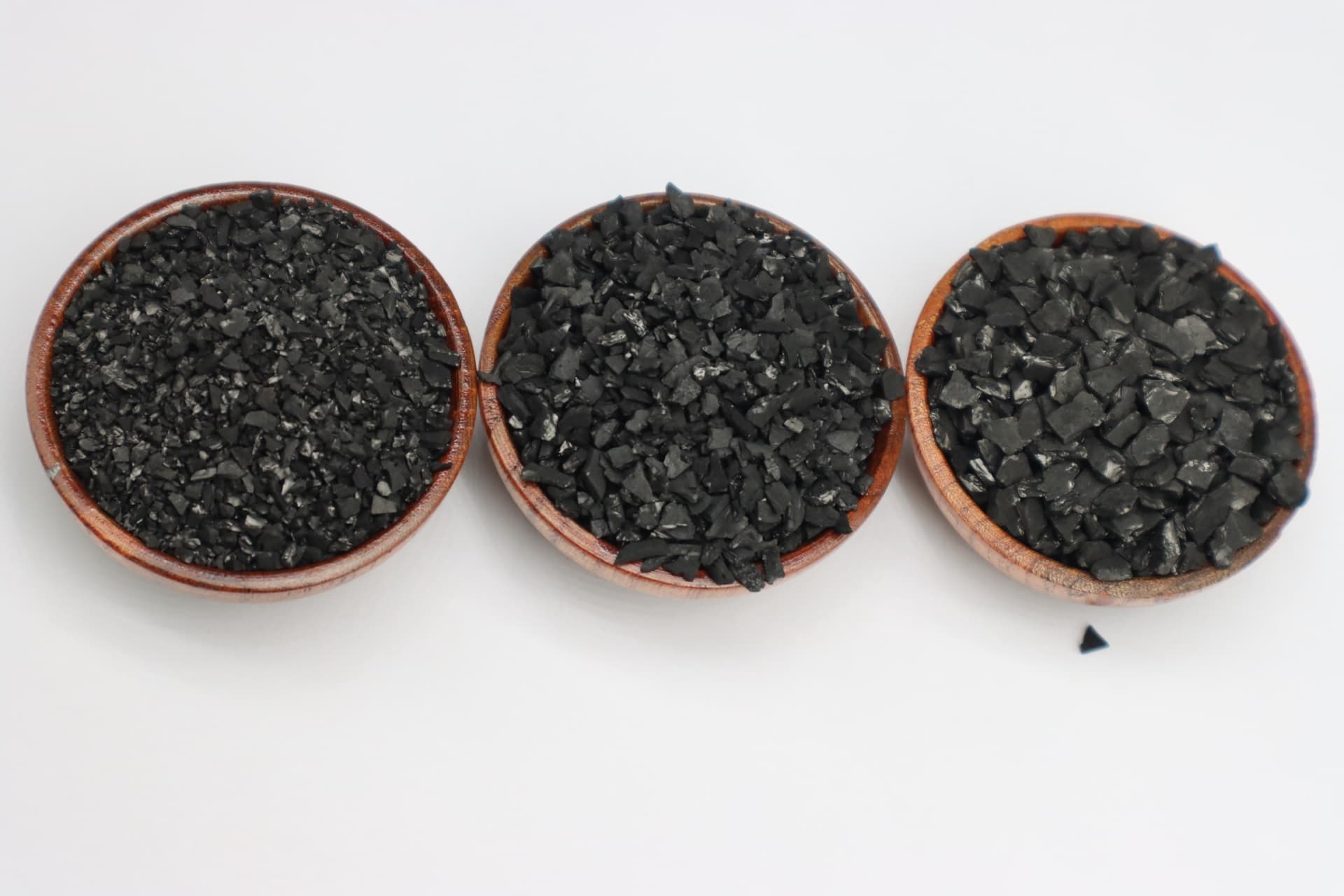
Coconut shell activated carbon is the gold standard for aquariums. It has the highest micropore volume (which excels at removing small organic molecules), lowest ash content (less leaching of minerals), and won't significantly affect pH. Use granular form, 8×30 or 12×40 mesh.
Bituminous Coal Carbon (Budget Option)
Coal-based carbon works but has higher ash content, which can cause a temporary pH spike and slight phosphate release. If you use coal-based carbon, rinse it thoroughly before adding to your tank — rinse until the water runs clear.
Wood-Based Carbon (Avoid)
Wood-based carbon is typically powdered (PAC) and has high ash content. It's not suitable for aquariums — too fine to contain in a filter bag, and the ash can significantly alter water chemistry.
Pellet Carbon (Avoid for Aquariums)
Pellet carbon is designed for air purification with low pressure drop. In aquarium filters, the larger pellet size provides less surface contact with water. Stick with granular.
Ideal Specs for Aquarium Carbon:
How Much Carbon to Use
The standard dosage guideline:
| Tank Type | Dosage | Notes |
|---|---|---|
| Freshwater community | 2 tablespoons per 40 liters (10 gal) | Standard maintenance dose |
| Planted freshwater | Use sparingly or skip | Carbon can remove liquid fertilizers and CO₂ |
| Reef / Marine | 2–4 tablespoons per 40 liters | Removes yellowing DOCs, improves light penetration for corals |
| Medication removal | Double the normal dose | Run for 24–48 hours after completing medication treatment |
| Emergency (toxin exposure) | Maximum practical amount | Add as much as your filter can hold and do a large water change simultaneously |
Where to Place Carbon in Your Filter
Activated carbon should go after mechanical filtration and before (or alongside) biological media in your filter flow path. For more on how carbon fits into a complete filter setup, see our guide to granular activated carbon filters:
Filter Flow Order:
Placing carbon after mechanical media prevents particles from clogging the carbon pores and reducing effectiveness.
Always place carbon in a fine mesh bag (nylon or polyester) to prevent granules from escaping into your tank. Rinse the bag of carbon under tap water for 30 seconds before placing it in your filter to remove dust.
When to Replace Aquarium Carbon
This is the #1 question aquarists ask. The answer depends on your bioload and water conditions, but here are practical guidelines:
⚠️ Does Spent Carbon Leach Contaminants Back?
This is a common myth. Under normal aquarium conditions, spent activated carbon does NOT release adsorbed contaminants back into the water. Desorption requires extreme conditions (high temperature or steam). However, spent carbon no longer provides any filtration benefit, so replacing it on schedule ensures consistent water quality.
5 Common Mistakes with Aquarium Carbon
Using carbon during medication
Activated carbon will remove most aquarium medications before they can work. Remove carbon before dosing. Only add it back after treatment is complete to clear residual medication.
Not rinsing before use
All activated carbon has fine dust from production and handling. If you don't rinse it, the dust clouds your water for hours. Rinse until water runs clear.
Using industrial-grade carbon
Industrial carbon may contain higher levels of phosphate, heavy metals, or other contaminants that are harmless in water treatment plants but problematic in a closed aquarium system. Use aquarium-grade or food-grade carbon.
Using it continuously in planted tanks
Carbon removes liquid fertilizers (trace elements, iron, potassium) and can strip dissolved CO₂. In heavily planted tanks, use carbon only for specific purposes (tannin removal, post-medication) rather than continuously.
Trying to “reactivate” spent carbon
You cannot reactivate carbon at home. Reactivation requires 800–1000°C in a steam or inert atmosphere. Baking it in your oven doesn't work — it just burns off some surface material without restoring pore structure. Buy fresh carbon; it's inexpensive.
Freshwater vs. Saltwater Considerations
| Factor | Freshwater | Saltwater / Reef |
|---|---|---|
| Primary benefit | Remove tannins, chlorine, odors | Remove yellowing DOCs for light penetration |
| Carbon quality | Standard coconut shell GAC works fine | Use acid-washed, low-phosphate carbon only |
| Phosphate concern | Lower concern (less algae sensitive) | Critical — phosphate leaching triggers nuisance algae |
| Replacement frequency | Every 3–4 weeks | Every 2–3 weeks |
| Alternative | Purigen (regenerable resin) | ROX 0.8 carbon, GFO for phosphate |
Cost: Aquarium Brand vs. Bulk Carbon
Aquarium-branded activated carbon is typically repackaged industrial carbon with a significant markup. A popular aquarium brand sells 200g for $12–$15. The same quality coconut shell GAC (iodine 1050+, acid-washed) from a manufacturer costs $1,500–$2,000/MT — that's roughly $0.30–$0.40 for 200g. See our activated carbon price guide for a full breakdown of current market rates by grade and origin.
If you run multiple tanks, operate an aquarium store, or maintain commercial aquarium installations, buying in bulk (25kg or 500kg bags) saves 90%+ compared to retail aquarium brands. Just ensure the carbon meets aquarium-grade specs: low ash, low phosphate, neutral pH, coconut shell origin. Our guide on how to choose an activated carbon supplier covers what to verify before placing a bulk order.
Bottom Line
Activated carbon is a simple, effective addition to any aquarium filtration system. Use coconut shell GAC (8×30 or 12×40 mesh), rinse before use, place after mechanical filtration, and replace every 3–4 weeks. For reef tanks, insist on acid-washed, low-phosphate carbon. Don't use it during medication treatment.
Frequently Asked Questions
How long does activated carbon last in an aquarium filter?
Activated carbon typically remains effective for 2–4 weeks in an aquarium. In heavily stocked tanks or those with driftwood releasing tannins, replacement may be needed every 1–2 weeks. Monitor water clarity and color — when yellowing returns, replace the carbon.
Does activated carbon remove beneficial bacteria in aquariums?
No, activated carbon does not remove beneficial nitrifying bacteria. These bacteria colonize filter media surfaces and are too large to be adsorbed into carbon pores. Carbon removes dissolved organic compounds, medications, chlorine, tannins, and odors — all dissolved molecules, not living organisms.
Should I use activated carbon during fish medication treatment?
No, remove activated carbon before adding medication. Carbon will adsorb most fish medications, rendering them ineffective. After treatment is complete, add fresh carbon to remove residual medication before returning to normal filtration.
What mesh size is best for aquarium use?
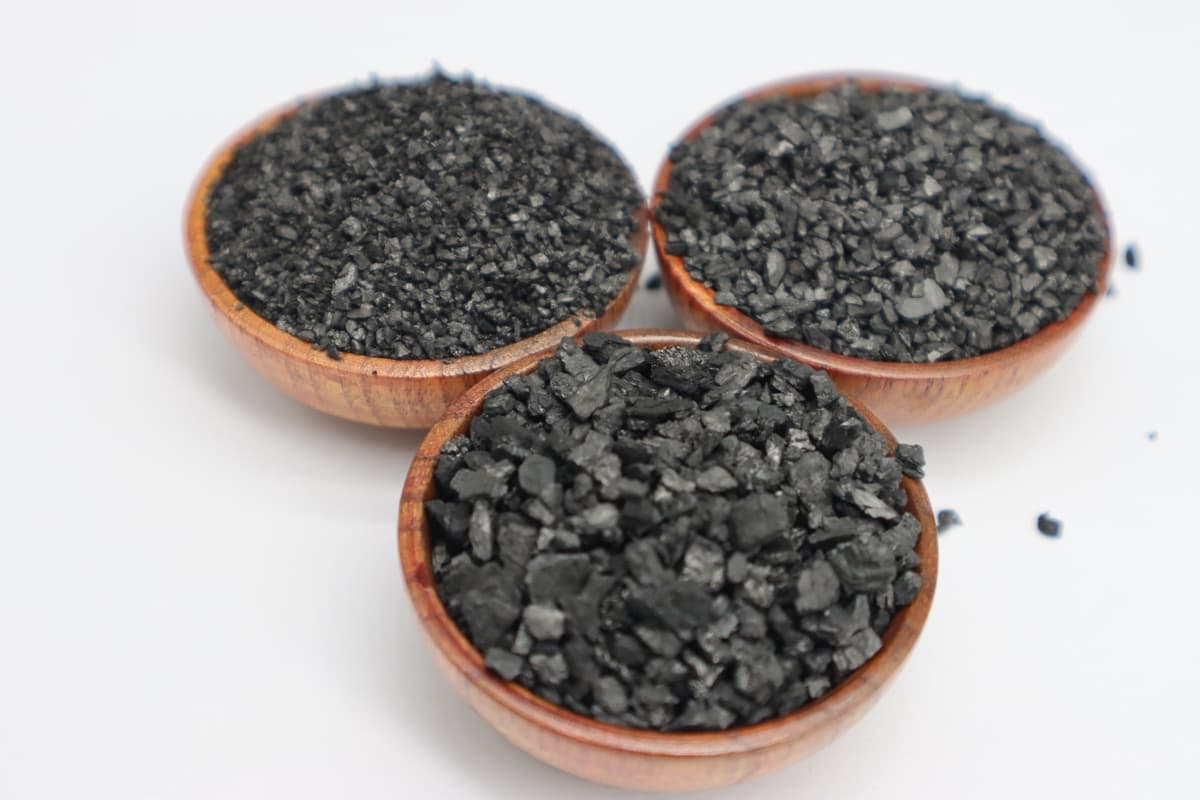
For aquariums, 8×30 mesh (0.6–2.4 mm) or 6×12 mesh (1.7–3.4 mm) works best. Finer mesh provides more contact but restricts flow, while coarser carbon allows better flow with less efficiency. Avoid powdered carbon as it can cloud water and harm fish gills.
Is coconut shell or coal-based carbon better for aquariums?
Coconut shell is preferred because it has higher micropore volume, lower ash content (less impact on water chemistry), higher hardness (less dusting), and doesn't release phosphates. Coal-based carbon can leach phosphates, potentially promoting algae growth.
Need Aquarium-Grade Carbon in Bulk?
We supply acid-washed coconut shell GAC for aquarium retailers, public aquariums, and fish farm operators. MOQ from 500 kg.
Request Bulk Pricing