
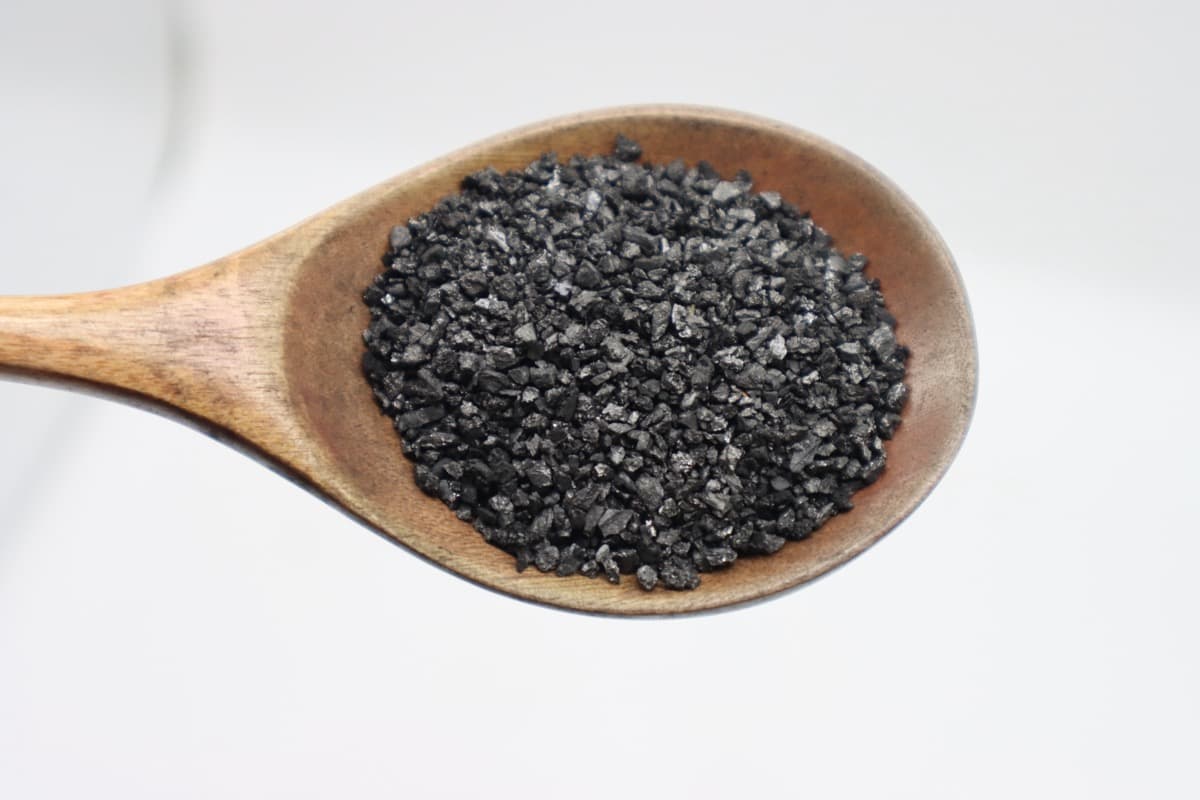
Need activated carbon?
Get Factory-Direct Pricing — No Middlemen
20+ years manufacturing. MOQ 1 ton. Free samples. Reply within 2 hours.
In This Guide
What Is a Granular Activated Carbon Filter?
A granular activated carbon (GAC) filter uses loose granules of activated carbon — typically 0.5 to 4 mm in diameter — as the filtration medium to remove organic contaminants, chlorine, taste, odor, and increasingly PFAS (per- and polyfluoroalkyl substances) from water and air streams.
Unlike carbon block filters that use compressed carbon powder, GAC filters allow water or air to flow through and around individual granules. This design offers distinct advantages: lower pressure drop, higher flow capacity, the ability to backwash and extend media life, and scalability from small point-of-use cartridges to massive municipal treatment vessels holding 20,000+ kg of carbon.
The global activated carbon market — valued at $4.19 billion in 2026 and projected to reach $5.5 billion by 2032 (CAGR 4.2%) — is driven primarily by GAC demand. Water treatment alone accounts for 42.5% of total market value, and the recent EPA PFAS drinking water regulations have triggered an unprecedented surge in GAC procurement across North America.
As a manufacturer producing 25,000+ tons of activated carbon annually across three facilities, we've seen GAC filter media orders increase by over 60% in the past 18 months — largely driven by PFAS compliance projects.
Types of GAC Filter Media: Which Carbon Is Right for Your System?
Not all GAC is created equal. The raw material, activation process, and resulting pore structure determine which contaminants a GAC filter can effectively remove. Here's what you need to know:
Coconut Shell GAC
Coconut shell activated carbon produces the highest micropore volume of any commercial GAC. This makes it the gold standard for drinking water dechlorination, THM removal, and small-molecule organic contaminant adsorption.
- Iodine number: 1,000–1,200 mg/g
- Surface area: 1,050–1,200 m²/g
- Hardness: 95–98% (lowest fines generation)
- Best for: Potable water, point-of-use filters, aquariums, food-grade applications
- Limitation: Higher cost per kg; supply chain currently strained due to Southeast Asia coconut shell shortages
Bituminous Coal-Based GAC
Coal-based GAC from bituminous coal offers a broader pore size distribution — a mix of micropores, mesopores, and macropores — making it more versatile for complex water matrices.
- Iodine number: 800–1,100 mg/g
- Surface area: 900–1,100 m²/g
- Hardness: 85–95%
- Best for: PFAS removal, industrial wastewater, municipal water treatment, high-flow systems
- Advantage: More cost-effective at scale; better PFAS adsorption capacity than coconut shell in many studies
Wood-Based GAC
Wood-based carbon has high mesopore and macropore volume, making it effective for large-molecule removal — color, tannins, and high-molecular-weight organics.
- Iodine number: 600–900 mg/g
- Surface area: 800–1,000 m²/g
- Hardness: 70–85% (softer, more friable)
- Best for: Decolorization, sugar refining, pharmaceutical purification
GAC Filter Media Comparison Table
| Property | Coconut Shell | Bituminous Coal | Wood-Based |
|---|---|---|---|
| Iodine Number (mg/g) | 1,000–1,200 | 800–1,100 | 600–900 |
| BET Surface Area (m²/g) | 1,050–1,200 | 900–1,100 | 800–1,000 |
| Hardness (%) | 95–98 | 85–95 | 70–85 |
| Ash Content (%) | 2–5 | 8–15 | 3–8 |
| Pore Distribution | Mostly micropores | Mixed micro/meso/macro | Mostly meso/macropores |
| PFAS Removal | Good (long-chain) | Excellent (all-chain) | Fair |
| Chlorine Removal | Excellent | Very Good | Good |
| Cost (FOB China) | $1,200–1,800/MT | $800–1,400/MT | $900–1,500/MT |
| Backwash Durability | Excellent | Very Good | Fair |
GAC Filter Mesh Size Selection Guide
Mesh size determines the particle diameter of GAC granules, which directly impacts filtration efficiency, flow rate, pressure drop, and bed life. Choosing the wrong mesh size is one of the most common — and costly — mistakes in GAC filter design.
| Mesh Size | Particle Diameter | Typical Application | Head Loss | Removal Efficiency |
|---|---|---|---|---|
| 8×16 | 1.0–2.4 mm | Large municipal systems, deep-bed filters | Low | Good |
| 8×30 | 0.6–2.4 mm | Most common for water treatment, industrial | Moderate | Very Good |
| 12×40 | 0.4–1.7 mm | Drinking water, PFAS removal, POU/POE | Higher | Excellent |
| 20×50 | 0.3–0.8 mm | Cartridge filters, specialty applications | High | Excellent |
Decision Framework: Choosing Your Mesh Size
Use this decision tree to select the right GAC mesh size:
- What's your flow rate? — High flow (>100 GPM) → 8×16 or 8×30. Low-medium flow → 12×40.
- What's your target contaminant? — PFAS or trace organics → 12×40 (more surface contact). Chlorine/taste/odor → 8×30 is sufficient.
- Can you backwash? — If not (cartridge system), use 20×50. If yes, 8×30 or 12×40.
- What's your pressure budget? — Limited pressure → larger mesh (8×16, 8×30).
For a detailed breakdown of activated carbon mesh sizes and their specifications, see our dedicated guide.
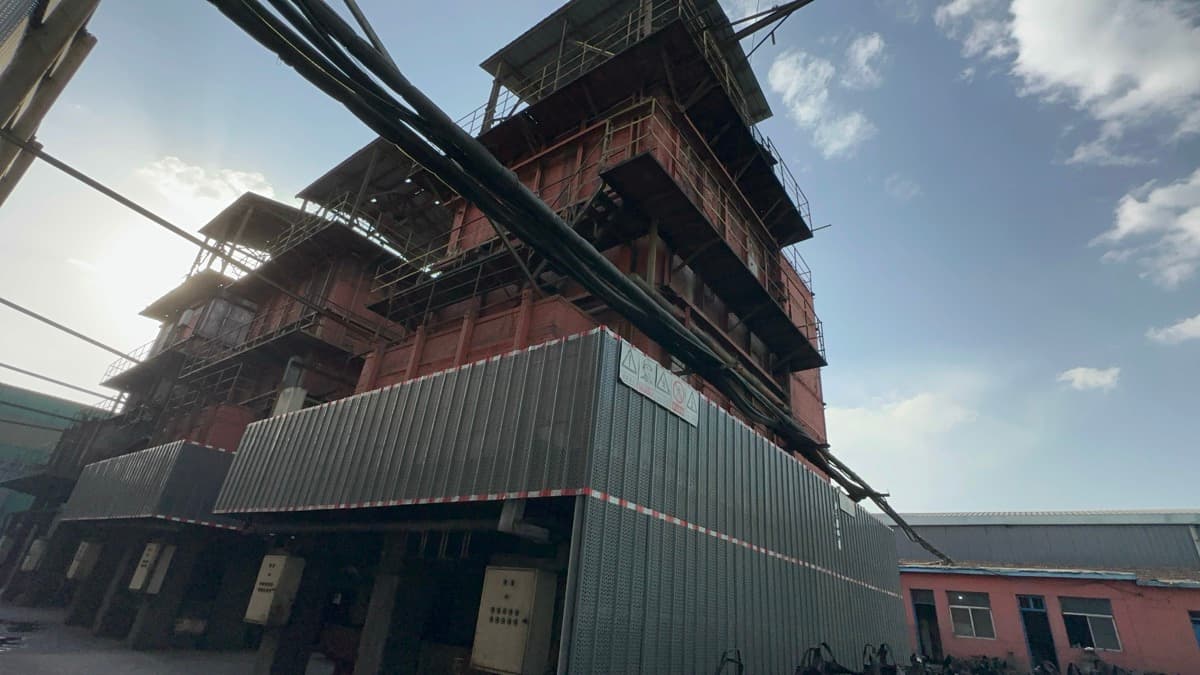
Our activation furnace facility where GAC filter media undergoes steam activation at 900–1,000°C to develop the pore structure critical for filtration performance.
GAC Filter Applications & Use Cases
Municipal Drinking Water Treatment
GAC filters are the backbone of modern activated carbon water treatment. Installed as post-filtration adsorbers or as filter-adsorbers (combining particle removal with adsorption), GAC systems remove:
- Chlorine and chloramines (taste/odor control)
- Disinfection byproducts (THMs, HAAs)
- Pesticides and herbicides
- PFAS (per- and polyfluoroalkyl substances)
- Volatile organic compounds (VOCs)
- Geosmin and MIB (earthy/musty taste compounds)
The EPA's PFAS drinking water standards — setting maximum contaminant levels (MCLs) at 4 ppt for PFOA and PFOS — have made GAC filtration mandatory for hundreds of water utilities across the United States. Calgon Carbon's recent $100 million Ohio expansion and American Water's multi-state GAC supply contract reflect the scale of this demand surge.
Industrial Wastewater Treatment
Industrial facilities use GAC filters for compliance with discharge permits. Common applications include:
- COD and BOD reduction in chemical plant effluent
- Pharmaceutical compound removal from hospital and pharma wastewater
- Dye and color removal in textile industry
- Oil and grease polishing in refinery wastewater
- VOC removal from contaminated groundwater
Air Purification & Gas Treatment
In air and gas treatment, GAC filters adsorb volatile organic compounds, odors, mercury, and other gaseous pollutants. Key applications include:
- Indoor air purification systems
- Odor control at wastewater treatment plants
- Biogas purification (H₂S and siloxane removal)
- Mercury removal from flue gas
- VOC emission control in manufacturing
Specialty Applications
- Aquarium water purification
- Point-of-use (POU) drinking water filters
- Gold recovery in mining operations
- Swimming pool and spa water treatment
- Condensate polishing in power plants
GAC Filter System Design: EBCT, Bed Depth & Vessel Sizing
Properly designing a GAC filter system is critical for performance and cost efficiency. The three key design parameters are Empty Bed Contact Time (EBCT), bed depth, and hydraulic loading rate.
Empty Bed Contact Time (EBCT)
EBCT is the most important design parameter for GAC filters. It represents the time water would spend in the filter bed if the bed were empty — calculated as bed volume divided by flow rate:
EBCT (min) = Bed Volume (gallons) ÷ Flow Rate (GPM)
| Contaminant | Recommended EBCT | Notes |
|---|---|---|
| Chlorine / Taste & Odor | 5–10 min | Most forgiving; coconut GAC preferred |
| THMs / HAAs | 7.5–15 min | Coal-based or coconut; depends on DBP mix |
| VOCs (TCE, PCE) | 7.5–15 min | High-iodine coconut GAC optimal |
| PFAS (PFOA/PFOS) | 10–20 min | Bituminous coal GAC; 12×40 mesh preferred |
| Short-chain PFAS | 15–30 min | Consider GAC + IX resin hybrid approach |
| Pesticides / SOCs | 15–30 min | Longer EBCT for complex molecules |
| Geosmin / MIB | 10–15 min | Seasonal dosing may be needed |
Bed Depth & Hydraulic Loading Rate
- Minimum bed depth: 3 feet (0.9 m) for most applications; 4–6 feet for PFAS
- Hydraulic loading rate: 2–5 GPM/ft² for gravity filters; up to 8 GPM/ft² for pressure vessels
- L/D ratio: Bed depth-to-diameter ratio of 1.5:1 to 3:1 is typical
- Freeboard: Allow 50% expansion space above the bed for backwashing
Sizing Example
Design Scenario: Municipal PFAS Removal
- Flow rate: 500 GPM
- Target: PFAS < 4 ppt (EPA MCL)
- Required EBCT: 15 minutes
- Bed volume needed: 500 × 15 = 7,500 gallons = ~28.4 m³
- At 4 GPM/ft² loading: vessel diameter ≈ 12.6 ft → use two 10-ft diameter vessels in lead-lag
- Carbon weight: ~28,400 L × 0.48 kg/L apparent density ≈ 13,600 kg (30,000 lbs)
- Estimated annual carbon cost: $10,900–$19,000 (depending on media life and coal vs. coconut)
For a comprehensive guide to GAC system design for water treatment, including lead-lag configuration and pilot testing, see our dedicated technical resource.
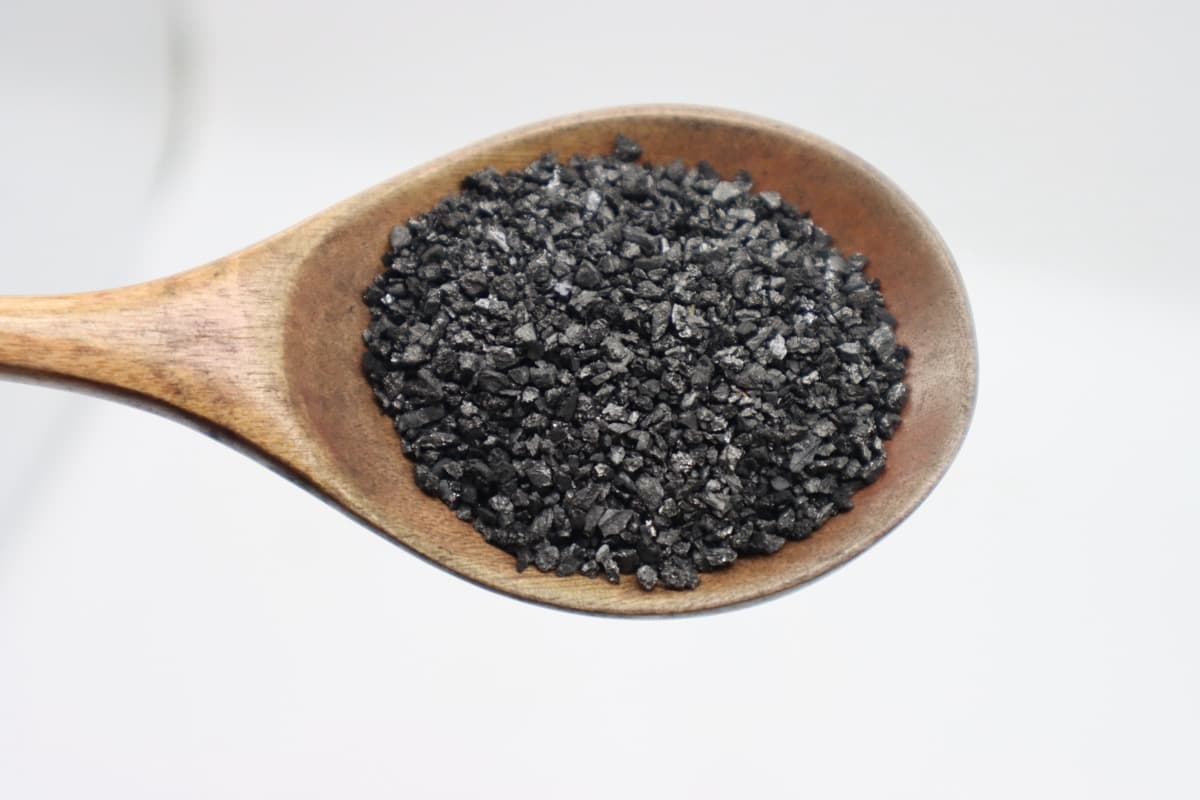
Bituminous coal-based GAC 12×40 mesh — the most widely used filter media for PFAS and contaminant removal in municipal water treatment.
GAC Filters for PFAS Removal: What You Need to Know in 2026
PFAS treatment is the single biggest driver of GAC demand in 2026. The EPA's final PFAS drinking water standards require water utilities to reduce PFOA and PFOS to 4 parts per trillion (ppt) — a level so low that it requires highly optimized GAC systems.
Why GAC Works for PFAS
PFAS molecules adsorb onto activated carbon through hydrophobic interactions between the fluorinated carbon chain and the carbon surface. Longer-chain PFAS (C8+) adsorb more strongly than short-chain compounds, which is why GAC is most effective for PFOA and PFOS.
GAC vs. Ion Exchange for PFAS
| Factor | GAC Filtration | Ion Exchange (IX) |
|---|---|---|
| Long-chain PFAS removal | Excellent (>90%) | Excellent (>95%) |
| Short-chain PFAS removal | Moderate (50–80%) | Very Good (80–95%) |
| Capital cost | Lower | Moderate |
| Operating cost | Moderate (replacement) | Higher (resin + regeneration) |
| Co-contaminant removal | Yes (VOCs, taste, odor) | PFAS-specific only |
| Proven track record | Decades of data | Emerging (fewer full-scale) |
| Waste disposal | Spent carbon (can be reactivated) | Regenerant brine (disposal challenge) |
Industry trend: Many utilities are adopting GAC + IX hybrid systems — GAC as the primary treatment (removing long-chain PFAS + co-contaminants) with IX resin as polishing for short-chain PFAS. This approach optimizes both cost and performance. Rice University's recent research even shows that spent GAC loaded with PFAS can be repurposed for lithium extraction from brine — potentially turning a disposal liability into a revenue stream.
For more on activated carbon's role in PFAS treatment, see our comprehensive PFAS removal guide.
GAC Filter Cost Analysis & Sourcing
Understanding the true cost of GAC filtration requires looking beyond media price to total cost of ownership. For a comprehensive overview of activated carbon pricing by type, grade, and order volume, see our activated carbon price guide. Here's a realistic breakdown:
GAC Media Pricing (FOB China, 2026)
| GAC Type | Mesh Size | Price Range (USD/MT) | Min. Order |
|---|---|---|---|
| Coconut Shell | 8×30 | $1,300–1,700 | 1 MT |
| Coconut Shell | 12×40 | $1,400–1,800 | 1 MT |
| Bituminous Coal | 8×30 | $800–1,200 | 1 MT |
| Bituminous Coal | 12×40 | $900–1,400 | 1 MT |
| Wood-Based | 8×30 | $900–1,300 | 1 MT |
* Prices as of March 2026. Coconut shell prices trending upward due to Southeast Asia supply chain constraints. Request current pricing for exact quotes.
Total Cost of Ownership Factors
- Media cost: 30–50% of total lifecycle cost
- Shipping & logistics: Container freight from China ($3,000–5,000 per 20-ft container, ~18–20 MT capacity)
- Vessel & infrastructure: $50,000–$500,000+ depending on system size
- Installation & commissioning: 5–15% of equipment cost
- Replacement labor: $2,000–10,000 per change-out
- Spent carbon disposal/reactivation: $0.20–0.50/lb for thermal reactivation; $0.10–0.30/lb for landfill
- Monitoring & testing: Ongoing effluent analysis ($500–2,000/month)
Cost Optimization Strategies
- Source directly from manufacturers — Cut 15–30% vs. distributors. Our clients in North America and Europe typically save $200–400/MT by ordering directly from China.
- Use lead-lag vessel configuration — Maximizes carbon utilization by running lead bed to exhaustion while lag bed provides polishing.
- Consider thermal reactivation — Reactivated GAC costs 40–60% less than virgin carbon and retains 90%+ of original capacity.
- Right-size your mesh — Don't default to 12×40 if 8×30 meets your treatment objectives. The coarser mesh lasts longer between backwashes.
- Negotiate annual supply contracts — Lock in pricing and ensure supply continuity, especially critical given current coconut shell carbon market tightness.
GAC Filter Replacement & Maintenance
When to Replace GAC Filter Media
GAC doesn't fail suddenly — it gradually loses adsorption capacity as pore sites fill with contaminants. Replacement timing depends on monitoring:
- Effluent breakthrough: When target contaminant exceeds 70–80% of your treatment goal in the lead vessel, it's time to replace (or rotate to lag position)
- Iodine number depletion: When remaining iodine value drops below 50% of virgin carbon specification
- Chlorine breakthrough: For dechlorination, detectable residual in the effluent (>0.1 mg/L)
- PFAS breakthrough: Effluent PFAS approaching 50% of MCL triggers lead bed replacement
Backwashing Best Practices
- Frequency: Every 1–4 weeks depending on suspended solids loading
- Expansion: 20–50% bed expansion; 30% is typical for 8×30 mesh
- Duration: 10–15 minutes at proper flow rate
- Air scour: Recommended before backwash for deep beds (8×16, 8×20) at 3–5 scfm/ft²
- Surface wash: Optional but extends media life by preventing mudballing
Storage & Handling
For proper storage of bulk GAC before installation, see our activated carbon packaging and storage guide. Key points: keep sealed, dry, avoid organic vapor exposure, and use within 2 years of manufacture.
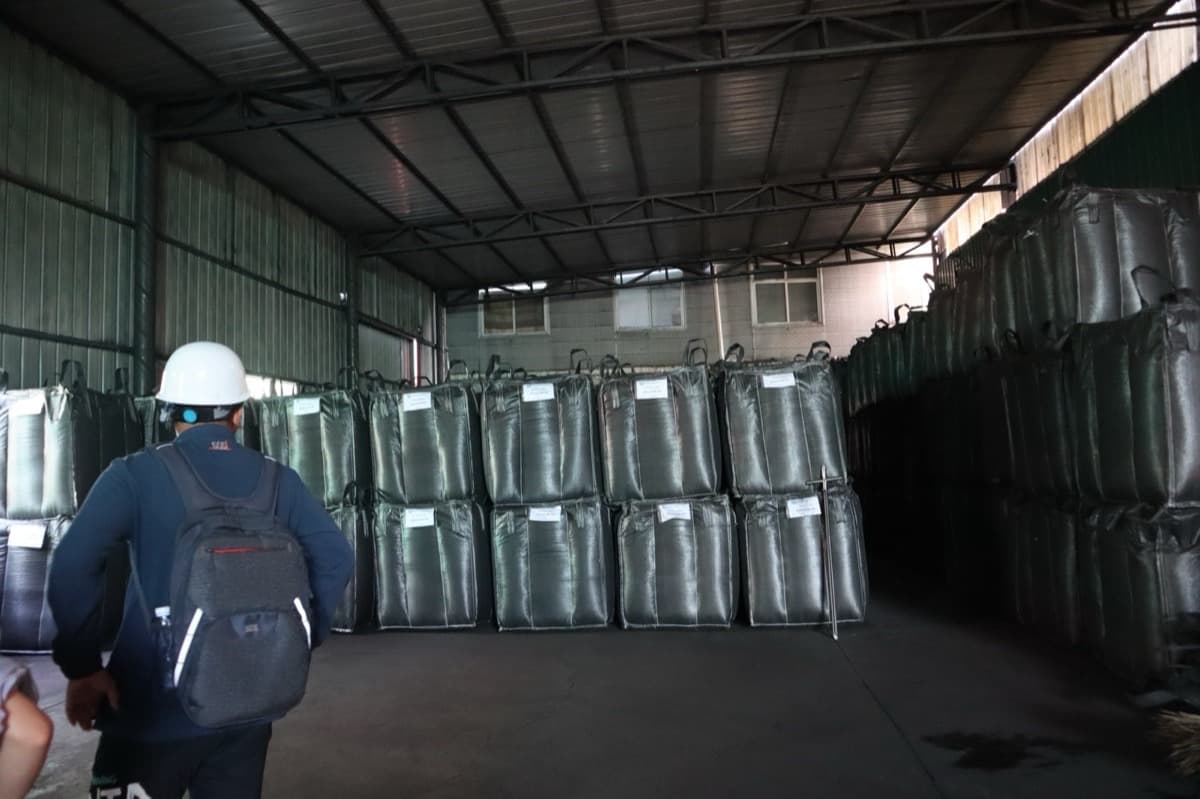
Our warehouse facility with packaged GAC filter media ready for container loading and export to 50+ countries.
Frequently Asked Questions
What mesh size of granular activated carbon is best for water filtration?
For drinking water filtration, 8x30 and 12x40 mesh are the most common sizes. 12x40 provides more surface contact and better removal of trace contaminants like PFAS, but has higher head loss. 8x30 is better for high-flow applications and deep-bed filters. 8x16 and 8x20 are used in large municipal systems where backwash efficiency and low head loss are priorities.
How long does GAC filter media last before replacement?
GAC filter media lifespan varies significantly by application: 1–3 years for dechlorination, 6–18 months for specific contaminant removal (PFAS, VOCs, pesticides), and 2–5 years for taste and odor control. Lifespan depends on influent water quality, flow rate, EBCT, and the contaminants being targeted. Regular effluent testing is the only reliable way to determine when replacement is needed.
Is coconut shell or coal-based GAC better for filters?
Coconut shell GAC excels in drinking water dechlorination and small-molecule removal (VOCs, THMs) due to its higher micropore volume. Coal-based GAC (bituminous) is preferred for PFAS removal, industrial wastewater, and applications requiring broader pore distribution. Coal-based GAC is also more cost-effective for large-scale systems. Many water treatment plants use coal-based 8x30 or 12x40 as the default filter media.
What is the recommended EBCT for a granular activated carbon filter?
Recommended EBCT depends on the target contaminant: 5–10 minutes for chlorine and taste/odor removal, 10–20 minutes for PFAS (PFOA/PFOS), 7.5–15 minutes for VOCs and SOCs, and 15–30 minutes for pesticides and complex organics. Higher EBCT generally improves removal efficiency but requires more carbon volume and larger vessels.
Can granular activated carbon filters remove PFAS from drinking water?
Yes. GAC filtration is one of the EPA-approved Best Available Technologies (BATs) for PFAS removal. Bituminous coal-based GAC with high surface area (>1,000 m²/g) typically achieves >90% removal of long-chain PFAS (PFOA, PFOS) at 10–20 minute EBCT. Short-chain PFAS (PFBS, PFHxS) are harder to remove and may require longer contact times or complementary treatment with ion exchange resin.
Source GAC Filter Media Directly From the Manufacturer
Whether you need 1 ton for pilot testing or 500+ tons for a municipal PFAS project, we supply the full range of GAC filter media — coconut shell, bituminous coal, and wood-based — in all standard mesh sizes. Factory-direct pricing, batch COA with every shipment, and technical support from our engineering team.