
Need activated carbon?
Get Factory-Direct Pricing — No Middlemen
20+ years manufacturing. MOQ 1 ton. Free samples. Reply within 2 hours.
In This Guide
The Mercury Emission Problem
Mercury is one of the most toxic heavy metals released by coal-fired power plants. When coal is burned, trace mercury in the coal (typically 0.01–1 ppm) is released into the flue gas in three forms:
- Elemental mercury (Hg⁰): Gaseous, insoluble, not captured by conventional pollution control devices. This is the form that's hardest to control and the primary reason activated carbon injection exists.
- Oxidized mercury (Hg²⁺): Water-soluble, partially captured by wet scrubbers (FGD systems). Easier to remove.
- Particulate-bound mercury (Hgp): Attached to fly ash particles, captured by electrostatic precipitators (ESPs) and baghouses.
The challenge: 30–70% of mercury in flue gas is elemental (Hg⁰), depending on coal type. Subbituminous and lignite coals produce even higher proportions of Hg⁰ because they contain less chlorine to naturally oxidize the mercury. This elemental mercury passes through conventional pollution control equipment and is released into the atmosphere, where it bioaccumulates in fish and poses serious public health risks.
Activated carbon injection (ACI) has emerged as the dominant technology for controlling mercury emissions from coal-fired power plants, with the US DOE demonstrating that ACI systems can achieve >90% mercury removal across most coal types and plant configurations.
How Activated Carbon Injection Removes Mercury
ACI systems work by injecting finely ground powdered activated carbon (PAC) into the flue gas duct between the air preheater and the particulate control device (ESP or baghouse). The process involves three stages:
Stage 1: Injection & Dispersion
PAC is pneumatically conveyed from a storage silo and injected through lances or nozzles into the flue gas duct. Uniform dispersion is critical — the carbon must be evenly distributed across the duct cross-section to maximize contact with mercury-laden gas. Typical injection rates range from 1–10 lb/MMacf (pounds per million actual cubic feet) of flue gas.
Stage 2: Mercury Adsorption
As the PAC particles travel with the flue gas (residence time typically 1–3 seconds in-duct, longer if a baghouse is downstream), mercury adsorption occurs through multiple mechanisms:
- Oxidized mercury (Hg²⁺): Directly adsorbs onto the carbon surface via physical adsorption (van der Waals forces). High surface area and micropore volume favor this mechanism.
- Elemental mercury (Hg⁰) with brominated carbon: Bromine on the carbon surface oxidizes Hg⁰ to HgBr₂, which is then strongly adsorbed. This is the key advantage of brominated activated carbon — it converts difficult-to-capture Hg⁰ into a readily-captured form.
- Elemental mercury (Hg⁰) with untreated carbon: Some Hg⁰ adsorbs through physical mechanisms, but rates are much slower and removal efficiency is lower (30–70% vs 85–95% for brominated).
Stage 3: Collection
The mercury-laden PAC particles are captured along with fly ash by the downstream particulate control device — either an ESP or a fabric filter baghouse. Baghouses provide significantly better mercury removal because:
- The carbon-laden filter cake provides additional contact time (seconds to minutes vs. milliseconds in an ESP)
- Mercury continues to adsorb as gas passes through the filter cake
- Typical mercury removal: 90–99% with baghouse vs. 60–85% with ESP (using the same sorbent)
Types of Activated Carbon for Mercury Control
| Carbon Type | Hg Removal Rate | Best For | Cost (FOB) | Key Specification |
|---|---|---|---|---|
| Untreated PAC | 30–70% | Bituminous coal plants with baghouse; high-chlorine coals | $0.70–$1.00/lb | Iodine ≥600; 90% <325 mesh |
| Brominated PAC (BAC) | 85–95% | Sub-bituminous/lignite coal plants; ESP-only configurations | $1.00–$1.50/lb | Br content 5–15%; 90% <44μm |
| Halogenated PAC | 80–95% | Alternative to BAC; plants with fly ash sales concerns | $1.10–$1.60/lb | Halogen content 5–12% |
| Treated PAC (sulfur-impregnated) | 70–90% | Non-coal mercury sources (waste incinerators, cement kilns) | $1.20–$1.80/lb | S content 5–15% |
| Mingled sorbent (PAC +ite mineral) | 70–85% | Facilities concerned about fly ash quality for concrete | $0.90–$1.30/lb | Proprietary mineral blend |
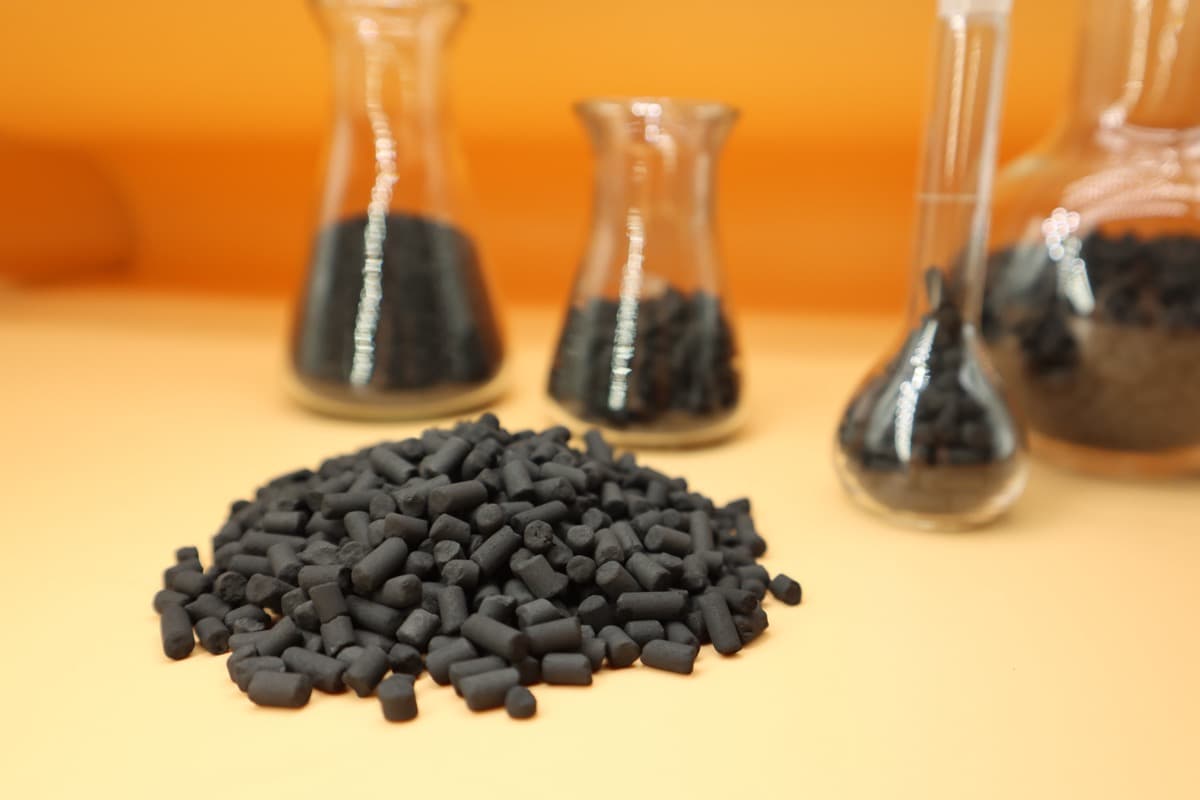
Pelletized activated carbon — our 4mm pellet grade is used in fixed-bed mercury removal and flue gas treatment applications
Why Brominated Carbon Dominates
Over 70% of ACI systems in the US now use brominated activated carbon (BAC). The reason is straightforward: most US coal-fired capacity burns subbituminous or lignite coal (particularly from the Powder River Basin), which produces flue gas with low chlorine content. Without sufficient chlorine to naturally oxidize Hg⁰, untreated PAC struggles to achieve >50% removal. BAC solves this by providing the halogen needed for mercury oxidation directly on the carbon surface.
Cost-effectiveness tells the story: although BAC costs about $0.30–$0.50/lb more than untreated PAC, it requires 50–70% less sorbent to achieve the same mercury removal level. For a 500 MW plant, this translates to net savings of $500,000–$2 million annually.
Mercury Regulations: MATS and Global Standards
United States: MATS (Mercury and Air Toxics Standards)
The EPA's MATS rule, finalized in 2012 and fully enforced since 2016, is the primary driver of activated carbon demand for mercury control in the US. Key requirements:
| Coal Type | Mercury Limit | Alternative Limit |
|---|---|---|
| Bituminous coal (existing units) | 1.2 lb/TBtu | ≤0.003 lb/GWh |
| Subbituminous coal (existing units) | 1.2 lb/TBtu | ≤0.003 lb/GWh |
| Lignite coal (existing units) | 4.0 lb/TBtu | ≤0.003 lb/GWh |
| New units (all coal types) | 0.003 lb/GWh | — |
| IGCC units | 0.003 lb/GWh | — |
2026 update: The EPA's revised MATS rule tightens monitoring requirements and addresses startup/shutdown emissions. China and India are both implementing MATS-equivalent standards, with revised flue gas emission standards (China's GB 13223 and India's updated NAAQS) creating significant new demand for mercury-grade activated carbon in Asia's coal power fleet.
European Union
The Industrial Emissions Directive (IED) and Best Available Techniques (BAT) Reference Documents set mercury limits of 1–4 μg/Nm³ for coal-fired plants, effectively requiring ACI or equivalent technology. The EU's updated BAT conclusions (2021) further tightened these limits.
Global Minamata Convention
The Minamata Convention on Mercury, ratified by 140+ countries, requires signatories to control and reduce mercury emissions from coal-fired power plants. This is driving ACI adoption in developing countries, particularly in Southeast Asia and Africa, where new coal capacity is still being built.
ACI System Design & Operation
System Components
A typical ACI system consists of:
- Storage silo: Stores PAC in bulk (20–100 ton capacity typical). Must be equipped with level sensors, dust collection, and moisture control.
- Metering system: Precision feeders (gravimetric or volumetric) control the injection rate. Gravimetric feeders offer better accuracy (±1–2% vs. ±5–10% for volumetric).
- Pneumatic conveying: Dilute-phase conveying transports PAC from the silo to injection lances. Conveying air velocity 60–80 ft/s.
- Injection lances: Multiple lances (4–12 per duct) with nozzle tips distribute PAC evenly across the duct cross-section.
- Control system: Automated feed rate adjustment based on CEM (continuous emission monitoring) mercury readings, load, and coal feed rate.
Critical Design Parameters
| Parameter | Typical Range | Impact |
|---|---|---|
| Injection rate | 1–10 lb/MMacf | Higher rate = more removal, but diminishing returns above 5 lb/MMacf |
| Flue gas temperature | 250–400°F optimal | Above 400°F, adsorption efficiency drops sharply; below 250°F, acid condensation risk |
| Residence time (duct) | 1–3 seconds | Longer residence time improves removal; limited by duct geometry |
| Particulate collector type | ESP or baghouse | Baghouse provides 2–5× the effective contact time vs. ESP |
| Coal chlorine content | Varies by coal rank | High Cl (>500 ppm) = untreated PAC may suffice; low Cl = BAC needed |
| SO₃ concentration | <5 ppm preferred | SO₃ competes for adsorption sites; consider upstream SO₃ control if high |
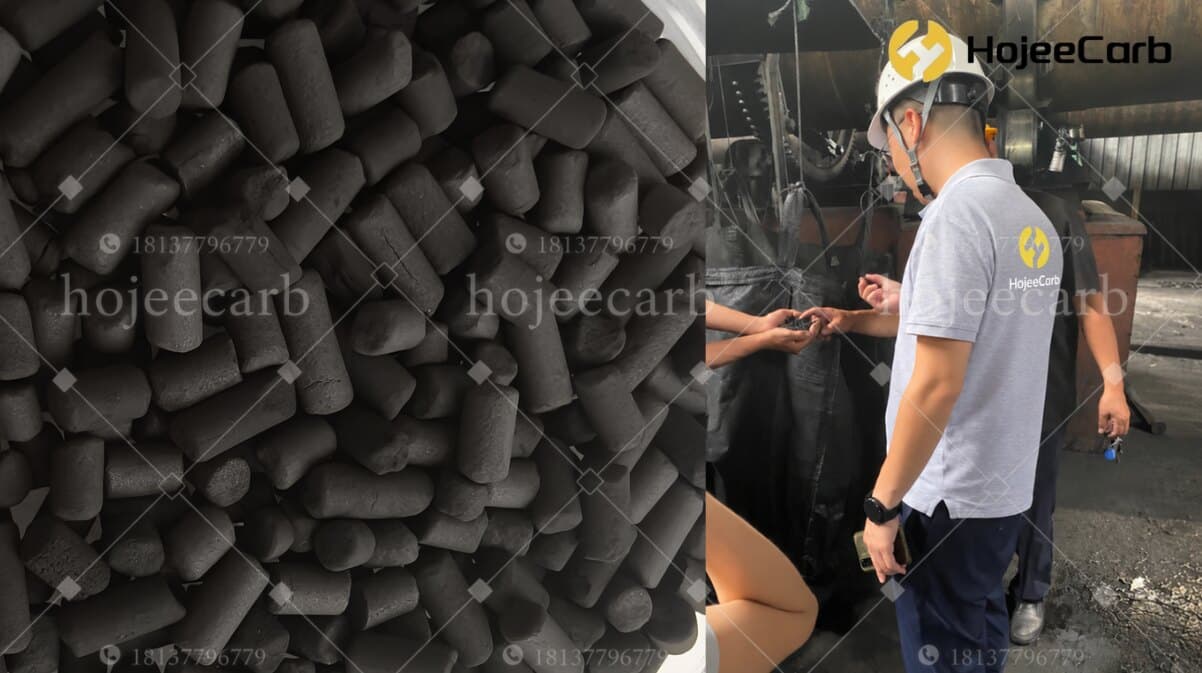
Quality control at our production facility — every batch of mercury-grade carbon is inspected for pellet integrity, hardness and impregnation consistency before shipment
Cost Analysis: ACI Mercury Control Economics
Capital Costs
ACI systems are one of the lowest-capital mercury control options available:
- Small unit (<200 MW): $500,000–$2 million installed
- Medium unit (200–500 MW): $1.5–$4 million installed
- Large unit (>500 MW): $3–$8 million installed
These figures include the silo, feeders, conveying, injection lances, and control system. Compare this to alternative technologies like multi-pollutant scrubbers ($50–$200 million) or SCR catalysts ($100+ million), and the cost advantage of ACI becomes clear.
Operating Costs
Sorbent cost is the dominant operating expense. For a reference 500 MW bituminous coal plant:
| Scenario | Sorbent Type | Injection Rate | Annual Sorbent Cost | Hg Removal |
|---|---|---|---|---|
| Bituminous + baghouse | Untreated PAC | 2 lb/MMacf | $800K–$1.2M | 70–85% |
| Bituminous + ESP | BAC | 3 lb/MMacf | $1.5M–$2.5M | 80–90% |
| PRB sub-bit + baghouse | BAC | 1.5 lb/MMacf | $1.2M–$1.8M | 90–95% |
| PRB sub-bit + ESP | BAC | 5 lb/MMacf | $3M–$5M | 70–85% |
Levelized Cost of Mercury Removal
According to the US DOE, the 20-year levelized incremental cost of 90% mercury removal using ACI ranges from $3,000–$70,000 per pound of mercury removed, with most plants falling in the $5,000–$15,000/lb range. This is well below the EPA's estimated benefit of mercury reduction, which values avoided health impacts at $10,000–$100,000+ per pound.
The Fly Ash Impact Factor
One often-overlooked cost consideration: carbon-contaminated fly ash may not be marketable for concrete production. Plants that sell fly ash (valued at $30–$60/ton) face a dual cost:
- Lost fly ash revenue
- Additional disposal cost for unsaleable ash
Solutions include: installing a separate polishing baghouse downstream of the ESP to capture carbon-laden ash separately, using concrete-compatible sorbents (mineral blends), or timing injection to maintain fly ash LOI (loss on ignition) below the 6% threshold for ASTM C618 compliance.
Carbon Selection Decision Tree for Mercury Control
Choosing the right activated carbon for your mercury control application depends on several plant-specific factors. Use this decision framework:
Step 1: Determine Your Coal Type
- Bituminous (eastern US, high chlorine): Untreated PAC often sufficient, especially with a baghouse. Start with 2–3 lb/MMacf and adjust based on CEM data.
- Subbituminous / PRB (western US, low chlorine): Brominated PAC is almost always required. The low chlorine content means Hg⁰ is the dominant species, and untreated carbon cannot efficiently oxidize it.
- Lignite: Brominated PAC required. Higher injection rates may be needed due to higher inherent mercury levels and unfavorable flue gas chemistry.
Step 2: Identify Your Particulate Control Device
- Baghouse only: Best case for ACI. Longer contact time allows lower injection rates. Even untreated PAC can achieve >80% removal on some bituminous coals.
- ESP only: Higher injection rates needed. BAC strongly recommended. Consider adding a polishing baghouse for the most challenging configurations.
- ESP + wet scrubber (FGD): FGD captures some Hg²⁺; ACI targets remaining Hg⁰. Inject upstream of ESP.
- ESP + SCR: SCR catalyst oxidizes some Hg⁰ to Hg²⁺, which is then captured in downstream wet FGD. May reduce ACI requirements significantly.
Step 3: Consider Fly Ash Disposition
- Fly ash is disposed (not sold): Standard PAC or BAC injection is fine. No concern about carbon contamination.
- Fly ash is sold for concrete: Need to maintain LOI <6%. Options: low-rate injection, mineral sorbents, separate collection baghouse, or concrete-compatible sorbent products.
Step 4: Specify Carbon Requirements
For your PAC purchase specification, request these parameters from your supplier:
| Parameter | Untreated PAC | Brominated PAC |
|---|---|---|
| Iodine number | ≥600 mg/g | ≥500 mg/g (lower due to bromine loading) |
| Particle size (d90) | <75 μm (200 mesh) | <44 μm (325 mesh) |
| Moisture | <15% | <15% |
| Bromine content | N/A | 5–15% by weight |
| Apparent density | 0.35–0.55 g/cc | 0.40–0.60 g/cc |
| Carbon base material | Lignite or bituminous coal | Lignite or bituminous coal |
Beyond Flue Gas: Activated Carbon for Mercury in Water
While ACI is the primary application for mercury-grade activated carbon, GAC and PAC are also used to remove mercury from water sources:
- Industrial wastewater: Mining, chemical processing, and chlor-alkali plant effluents. GAC beds or PAC dosing can reduce mercury to <0.001 mg/L.
- Drinking water: Mercury MCL is 0.002 mg/L. GAC filters in municipal water treatment systems effectively remove dissolved mercury.
- Mercury-contaminated groundwater: Sulfur-impregnated GAC achieves 94–99.5% mercury removal, as demonstrated in recent research published in MDPI Water journal.
For water-phase mercury removal, sulfur-impregnated activated carbon is the preferred choice. The sulfur reacts with mercury to form stable, insoluble HgS, achieving removal efficiencies exceeding 99% even at low initial concentrations.
2026 Market Outlook: Mercury-Grade Carbon Demand
Several factors are shaping the mercury-grade activated carbon market in 2026:
- China & India MATS-equivalent standards: Both countries are tightening coal plant mercury limits, creating significant new demand. China alone operates over 1,000 GW of coal capacity — even partial ACI adoption represents a massive market.
- PAC pricing pressure: Coal-based PAC remains at $600–$950/MT FOB for standard grades, with Chinese production capacity keeping prices competitive. Brominated grades carry a 40–60% premium.
- Technology premium widening: High-performance mercury sorbents (brominated, halogenated, mineral-enhanced) command growing premiums as plants optimize for both performance and fly ash quality. The 2026 industry report from Grand View Research estimates the specialty sorbent segment growing at 6.5% CAGR vs. 4.0% for the overall market.
- Supply chain stability: Unlike coconut shell GAC facing raw material shortages, coal-based PAC production — concentrated in China and the US — benefits from stable, abundant feedstock. Arq, Inc.'s GAC expansion challenges (reported by Seeking Alpha, March 2026) highlight execution risk but don't affect PAC supply fundamentals.
Frequently Asked Questions
How does activated carbon remove mercury from flue gas?
Activated carbon removes mercury from flue gas through a combination of physical adsorption and chemical reaction. When powdered activated carbon (PAC) is injected into the flue gas duct upstream of a particulate control device (ESP or baghouse), mercury species in the gas phase adsorb onto the carbon surface. Oxidized mercury (Hg²⁺) adsorbs readily via physical adsorption. Elemental mercury (Hg⁰) requires chemical enhancement — brominated or halogenated carbon creates halogen-mercury compounds on the carbon surface, achieving 90%+ removal rates.
What is brominated activated carbon and why is it more effective?
Brominated activated carbon (BAC) is powdered activated carbon that has been treated with 5–15% bromine by weight. The bromine reacts with elemental mercury (Hg⁰) in the flue gas to form HgBr₂, which is then readily adsorbed onto the carbon surface. BAC typically achieves 85–95% mercury removal compared to 30–70% for untreated PAC, making it essential for plants burning low-chlorine coals (subbituminous, lignite) where natural oxidation of mercury is limited.
How much does activated carbon injection cost for mercury control?
ACI costs vary widely based on plant size, coal type, and required removal rate. Typical ranges: sorbent cost $0.70–$1.00/lb for untreated PAC, $1.00–$1.50/lb for brominated PAC. Annual operating costs for a 500 MW plant range from $1–5 million. The 20-year levelized cost ranges from $3,000–$70,000 per pound of mercury removed. Plants with existing baghouses achieve lower costs than those with ESPs due to longer sorbent-gas contact time.
What are the MATS requirements for mercury emissions?
The US EPA Mercury and Air Toxics Standards (MATS) require existing coal-fired power plants to limit mercury emissions to 1.2 lb/TBtu for bituminous coal units and 4.0 lb/TBtu for lignite units, or alternatively achieve emission rates ≤0.003 lb/GWh. Similar regulations exist in the EU (Industrial Emissions Directive), China (GB 13223-2011), and India. These standards effectively mandate some form of mercury control technology at most coal-fired facilities.
Can mercury-laden spent activated carbon be recycled?
Mercury-laden spent PAC from ACI systems is typically captured in the fly ash by ESPs or baghouses. If mercury concentrations in the fly ash exceed regulatory thresholds, the ash may be classified as hazardous waste requiring special disposal. Some facilities use separate collection systems (e.g., downstream polishing baghouses) to keep mercury-laden carbon separate from marketable fly ash. Thermal desorption for mercury recovery is technically feasible but not widely practiced due to cost. Research from Rice University has shown potential for repurposing PFAS-laden GAC — similar innovations for mercury-laden carbon are being explored.
Need Mercury-Grade Activated Carbon?
We manufacture both untreated and specialty PAC for mercury control applications — from standard lignite-based powder to custom brominated and halogenated grades. Our 3 production bases deliver 25,000+ MT annual capacity with consistent quality and competitive pricing.
Tell us your coal type, particulate control configuration, and target mercury removal rate — we'll recommend the optimal sorbent grade and provide a bulk quotation.
Request Mercury Sorbent Quotation →Related Articles
- Powdered Activated Carbon (PAC): Applications & Buying Guide
- Impregnated Activated Carbon: Types, Applications & Selection Guide
- Activated Carbon for VOC Removal
- Activated Carbon for Odor Control
- Coal-Based Activated Carbon: Properties & Selection Guide
- Carbon Filter: How Activated Carbon Filtration Works
- Flue Gas Treatment Applications →