
Industrial odor control is not just a matter of community relations — it is a regulatory requirement. Facilities that generate hydrogen sulfide (H₂S), mercaptans, ammonia, volatile organic compounds (VOCs), and other malodorous emissions face increasingly strict air quality standards, nuisance complaints, and potential fines. Activated carbon adsorption has been the go-to odor control technology for decades because it works across a broad range of compounds, operates passively without chemicals or energy-intensive processes, and delivers consistent removal efficiencies above 99% when properly designed.
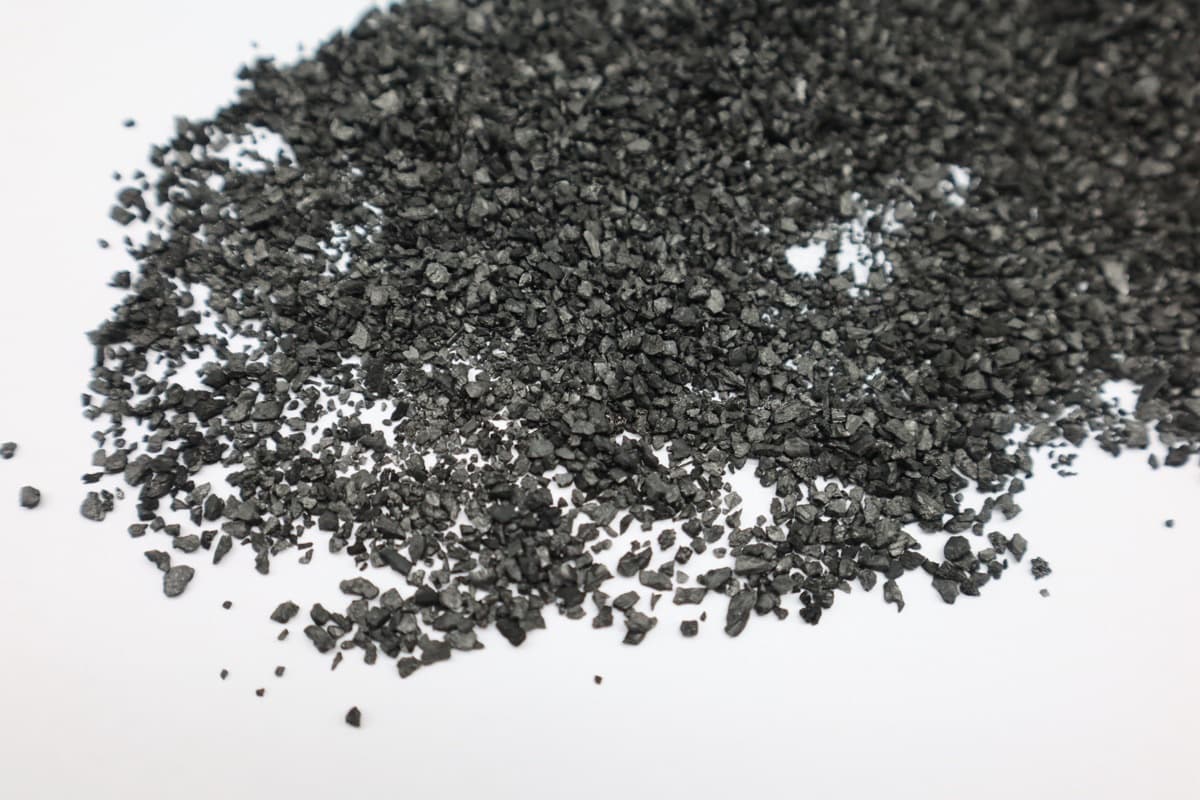
Industrial grade granular activated carbon — the workhorse media for odor control systems in wastewater, chemical, and food processing facilities.
As a manufacturer with 15+ years of experience producing activated carbon for air purification and odor control applications, we supply GAC, pelletized carbon, and impregnated carbon to odor control system integrators and end users across North America, Europe, the Middle East, and Asia-Pacific. This guide covers the science of odor adsorption, how to match carbon type to your specific odor challenge, system design parameters, performance benchmarks, and total cost of ownership.
How Activated Carbon Removes Odors
Activated carbon eliminates odors through two distinct mechanisms, and understanding the difference is critical for selecting the right carbon for your application:
The pore structure of activated carbon determines which odor molecules it captures most effectively. Micropores (<2 nm) adsorb small molecules like H₂S and ammonia. Mesopores (2–50 nm) handle larger VOCs and mercaptans. Macropores (>50 nm) serve as transport channels that allow gas molecules to reach the interior adsorption sites. A well-designed odor control carbon needs all three pore types — which is why coal-based activated carbon with its naturally broad pore distribution is the most common choice for multi-compound odor applications.
Need activated carbon?
Get Factory-Direct Pricing — No Middlemen
20+ years manufacturing. MOQ 1 ton. Free samples. Reply within 2 hours.
Common Odor Compounds & Carbon Type Recommendations
Different odor compounds require different carbon strategies. The table below maps the most common industrial and municipal odor compounds to their sources and the recommended carbon type:
| Compound | Odor Character | Common Sources | Recommended Carbon |
|---|---|---|---|
| Hydrogen sulfide (H₂S) | Rotten eggs | WWTP, landfill, biogas, refineries | KOH or NaOH impregnated |
| Mercaptans (thiols) | Skunk, garlic, decayed cabbage | Pulp mills, refineries, natural gas | KOH impregnated or virgin GAC |
| Ammonia (NH₃) | Sharp, pungent | WWTP, composting, livestock, fertilizer | H₂SO₄ or H₃PO₄ impregnated |
| VOCs (toluene, xylene, etc.) | Solvent-like, sweet | Chemical plants, painting, printing | Virgin coal-based GAC |
| Amines (trimethylamine) | Fishy, decaying | Fish processing, rendering, WWTP | H₂SO₄ impregnated |
| Organic sulfides (DMS, DMDS) | Decayed vegetables | WWTP, food processing, pulp mills | Virgin GAC or KOH impregnated |
| Formaldehyde (HCHO) | Sharp, irritating | Manufacturing, resins, plywood | KMnO₄ impregnated |
Industrial & Municipal Odor Control Applications
Wastewater Treatment Plants (WWTP)
Wastewater facilities are the single largest market for activated carbon odor control. Odor-generating areas include headworks (screening and grit removal), primary clarifiers, aeration basins, sludge thickening, anaerobic digesters, and biosolids dewatering. H₂S is the primary target compound, typically ranging from 5–100 ppm in covered headworks exhaust, with mercaptans and organic sulfides as secondary contributors.
Most WWTP odor control systems use KOH-impregnated pelletized carbon in single-stage or two-stage vessels. The impregnated carbon provides H₂S capacity of 15–25% by weight — roughly 10× the capacity of virgin carbon. For facilities with mixed odor profiles (H₂S plus VOCs from industrial discharges), a two-stage system with impregnated carbon in the first stage and virgin coal-based GAC in the second stage provides comprehensive treatment.
Chemical Manufacturing
Chemical plants generate odorous emissions from process vents, reactor exhausts, storage tank breathing losses, and fugitive emissions. The compound mix varies widely — solvents, organic acids, aldehydes, amines, and sulfur compounds are all common. Virgin coal-based GAC with high mesh size (4×8 or 4×10) is the standard choice for broad-spectrum VOC and odor removal from chemical process vents. For specific compounds like formaldehyde or SO₂, impregnated carbons provide targeted removal.
Food Processing & Rendering
Rendering plants, pet food manufacturing, fish processing, and cooking operations produce some of the most challenging odor profiles — complex mixtures of organic acids, amines, aldehydes, and sulfur compounds at high concentrations. These applications typically require multi-stage carbon systems with high EBCT (3–5 seconds) and frequent carbon changeout. Pelletized carbon is preferred over granular in food processing because it offers lower pressure drop at the high face velocities needed for large exhaust volumes.
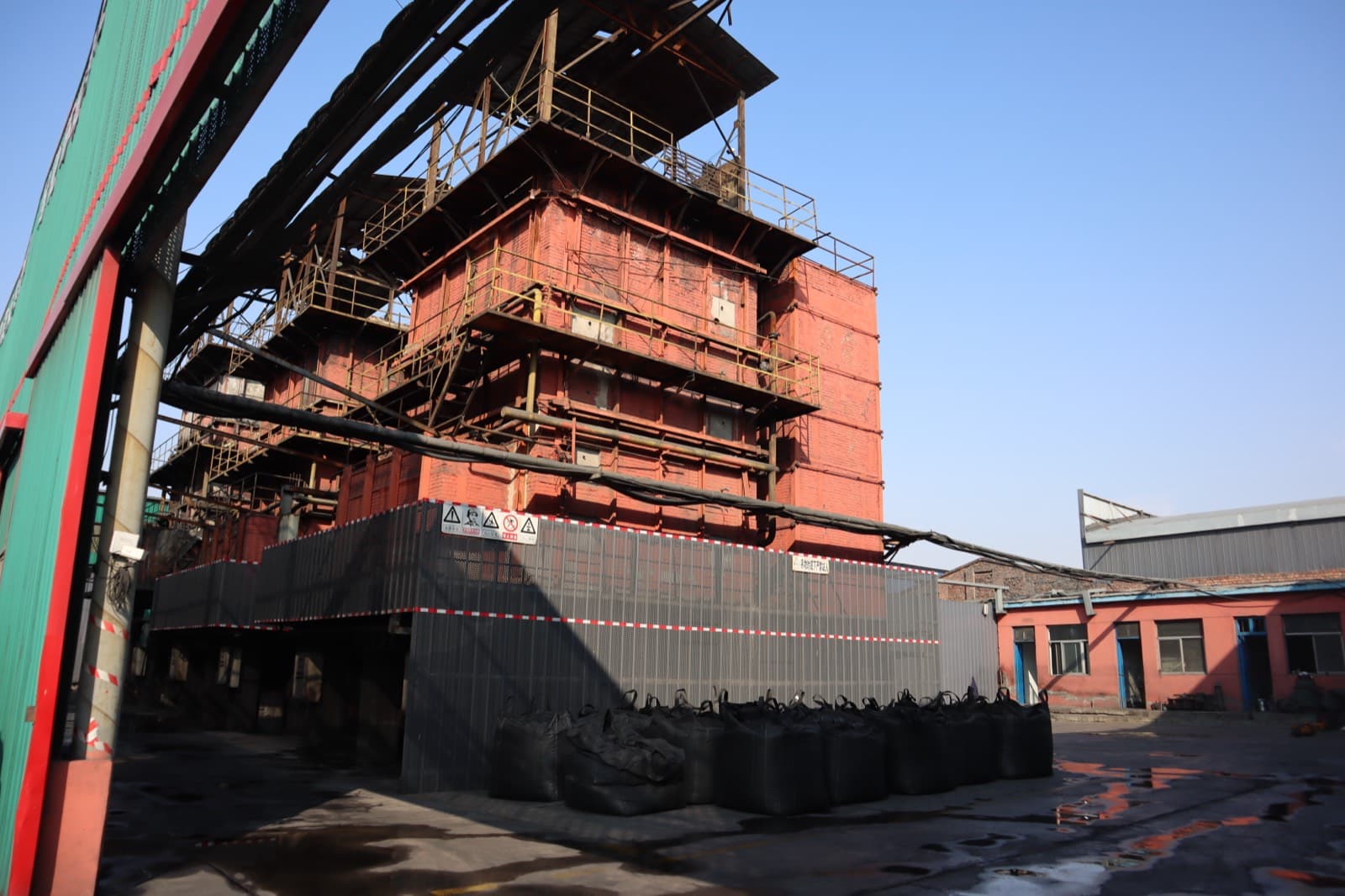
Our activated carbon production workshop — manufacturing GAC and pelletized carbon optimized for industrial odor control systems.
Composting Facilities
Composting operations generate H₂S, ammonia, VOCs, and organic acids — often simultaneously. The challenge is that ammonia requires acid-impregnated carbon while H₂S requires alkaline-impregnated carbon. The solution is a two-stage system: H₂SO₄-impregnated carbon in the first bed for ammonia, followed by KOH-impregnated carbon in the second bed for H₂S and mercaptans. Some facilities add a third virgin carbon polishing stage for residual VOCs.
Oil & Gas: Biogas & Landfill Gas Treatment
Biogas from anaerobic digesters and landfill gas contain 100–10,000 ppm H₂S that must be removed before combustion in engines, turbines, or fuel cells. While iron sponge and biological scrubbers handle bulk H₂S removal, activated carbon serves as the final polishing step to protect downstream equipment and meet emission limits. Impregnated pelletized activated carbon is the standard media for biogas H₂S polishing, typically reducing concentrations from 50–200 ppm to below 1 ppm.
Carbon Selection Guide: GAC vs Pelletized vs Impregnated
Choosing the right carbon form and impregnation is the most important decision in odor control system design. Here is how the three main options compare:
| Property | Virgin GAC (4×8) | Pelletized Carbon (4 mm) | Impregnated (KOH/NaOH) |
|---|---|---|---|
| H₂S capacity | 1–3% w/w | 1–3% w/w | 15–25% w/w |
| VOC capacity | High (broad spectrum) | Moderate | Reduced (impregnant occupies pores) |
| Pressure drop | Moderate | Low (uniform shape) | Low to moderate |
| Dust/fines | Moderate | Very low | Low |
| Cost (FOB China) | $800–1,200/MT | $900–1,400/MT | $1,500–2,500/MT |
| Best for | VOCs, organic odors, broad spectrum | High-airflow systems, low ΔP needed | H₂S, mercaptans, acid gases |
Impregnation Types and Target Compounds
System Design Considerations
Proper system design is the difference between a carbon bed that lasts 3 years and one that fails in 6 months. These are the critical parameters:
Critical Design Parameters
Performance Data: Removal Efficiency by Compound
The following performance data is based on field measurements from our clients' installations and published engineering literature. Actual performance depends on inlet concentration, humidity, temperature, and system design:
| Compound | Carbon Type | Inlet Range | Removal Efficiency | Capacity (% w/w) |
|---|---|---|---|---|
| H₂S | KOH impregnated | 5–100 ppm | >99.5% | 15–25% |
| H₂S | Virgin GAC | 5–50 ppm | 90–95% | 1–3% |
| Mercaptans | KOH impregnated | 1–20 ppm | >99% | 8–15% |
| Ammonia | H₂SO₄ impregnated | 10–100 ppm | >95% | 5–12% |
| Toluene | Virgin GAC | 10–500 ppm | >99% | 15–25% |
| Trimethylamine | H₂SO₄ impregnated | 1–50 ppm | >98% | 8–15% |
| Formaldehyde | KMnO₄ impregnated | 0.5–10 ppm | >95% | 3–8% |
Cost Analysis: Activated Carbon Odor Control Systems
Understanding the full cost picture helps facility managers compare activated carbon against alternative technologies like biofilters, chemical scrubbers, and thermal oxidizers. Here is a realistic cost breakdown for a 10,000 CFM odor control system:
| Cost Component | Estimated Range | Notes |
|---|---|---|
| Capital (vessel, ductwork, fan) | $50K–$150K | Single or dual vessel, 2.0 sec EBCT |
| Initial carbon fill | $15K–$40K | 5,000–10,000 lbs depending on carbon type |
| Carbon replacement (annual) | $10K–$35K/yr | Depends on loading; impregnated lasts longer for H₂S |
| Electricity (fan) | $3K–$8K/yr | 10–25 HP fan, continuous operation |
| Monitoring & maintenance | $2K–$5K/yr | H₂S monitors, pressure gauges, inspections |
| Cost per CFM (installed) | $5–$15/CFM | Lowest of any odor control technology |
| Annual operating cost | $15K–$48K/yr | $1.50–$4.80 per CFM annually |
Cost comparison: Chemical scrubbers cost $10–$25/CFM installed with higher operating costs (chemical consumption). Biofilters cost $15–$30/CFM with large footprint requirements. Thermal oxidizers cost $25–$75/CFM with significant fuel costs. Activated carbon systems offer the lowest capital cost and simplest operation — no chemicals, no water, no moving parts beyond the fan.
Sourcing Activated Carbon for Odor Control
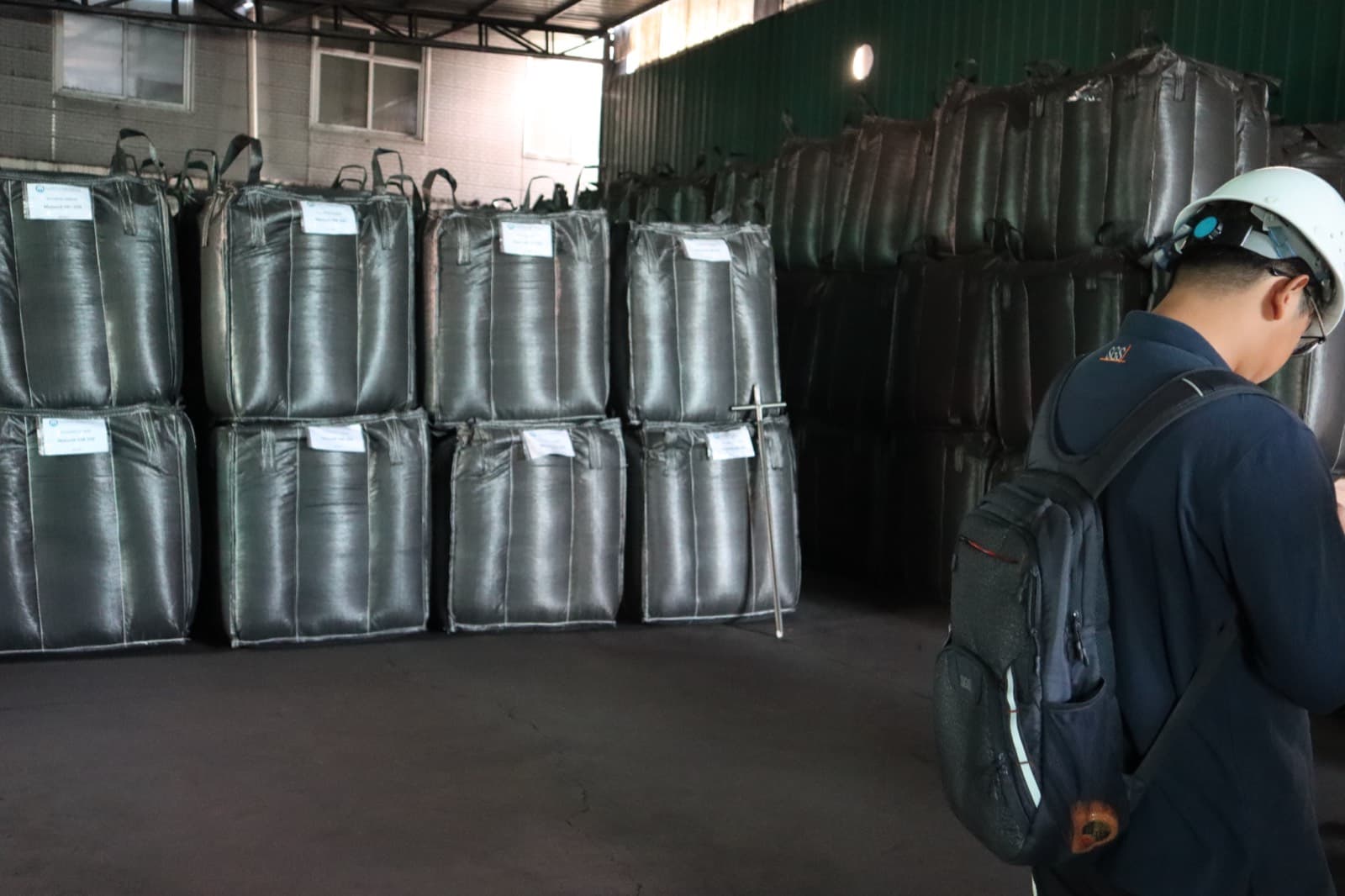
Quality control inspection — every batch of odor control carbon undergoes H₂S breakthrough testing and specification verification before shipment.
With 15+ years of manufacturing experience and three production bases, we produce the full range of activated carbon products for odor control applications — virgin coal-based GAC, pelletized carbon, coconut shell carbon, and custom-impregnated products (KOH, NaOH, H₂SO₄, H₃PO₄, KMnO₄). Our odor control carbon is used in wastewater treatment plants, chemical facilities, food processing operations, and biogas upgrading systems across 40+ countries.
What sets our odor control carbon apart:
Frequently Asked Questions: Odor Control & Activated Carbon
What type of activated carbon is best for odor control?
It depends on the target compound. For H₂S and mercaptans, KOH- or NaOH-impregnated pelletized carbon is most effective, achieving capacities of 15–25% by weight. For broad VOC and organic odors, virgin coal-based GAC (4×8 or 4×10 mesh) with iodine number ≥900 mg/g provides the best balance of capacity and airflow. For ammonia and amine odors, H₂SO₄- or H₃PO₄-impregnated carbon is required since standard carbon has minimal ammonia capacity.
How long does activated carbon last in an odor control system?
Carbon bed life varies widely depending on contaminant concentration, airflow rate, humidity, and carbon type. In a typical wastewater headworks application treating 5–20 ppm H₂S, impregnated carbon lasts 2–4 years. For VOC-heavy applications like chemical manufacturing vents, virgin GAC may last 6–18 months. Systems with very high loading (rendering plants, composting) may require changeout every 6–12 months. Monitoring outlet concentrations is the most reliable way to predict changeout timing.
What is the difference between impregnated and virgin activated carbon for odor removal?
Virgin (non-impregnated) activated carbon removes odors through physical adsorption — Van der Waals forces attract odor molecules into the carbon pore structure. Impregnated carbon adds a chemical reagent (KOH, NaOH, H₂SO₄, or KMnO₄) to the carbon surface that reacts with specific target compounds, converting them to non-odorous salts. Impregnated carbon has much higher capacity for specific compounds (e.g., 20% H₂S capacity vs 1–3% for virgin carbon) but is more expensive and less effective for broad-spectrum odor removal.
How do you size an activated carbon odor control system?
System sizing starts with three parameters: airflow rate (CFM), target contaminant concentrations, and required removal efficiency. From there, calculate the empty bed contact time (EBCT) — typically 1.5–3.0 seconds for most odor applications. Multiply EBCT by airflow to get bed volume. Face velocity should be 50–100 fpm for granular carbon beds. For a 10,000 CFM system at 2.0 seconds EBCT, you need approximately 333 cubic feet of carbon (about 10,000 lbs of GAC). Always include 20–30% safety factor for concentration spikes.
Can activated carbon remove all types of odors?
Activated carbon is effective against most organic odors and many inorganic compounds, but it has limitations. It excels at removing H₂S, mercaptans, organic sulfides, VOCs, and aromatic compounds. With chemical impregnation, it effectively removes ammonia, amines, SO₂, and formaldehyde. However, carbon is less effective for very light gases like methane and carbon monoxide, and its capacity for low-molecular-weight aldehydes is limited without impregnation. For complex odor mixtures, multi-stage systems combining impregnated and virgin carbon beds provide the broadest removal spectrum.
Need Activated Carbon for Odor Control?
Request samples of our virgin GAC, pelletized carbon, or custom-impregnated products for your odor control application. We provide technical data sheets, H₂S capacity reports, and system design support.
Request Odor Control Carbon Samples →Related Articles & Products
- Activated Carbon for Air Purification: Complete Systems Guide →
- Activated Carbon for VOC Removal: Industrial Air Treatment Guide →
- GAC vs PAC: Which Is Right for Your Application? →
- Activated Carbon Mesh Size Explained: 4×8, 8×30, 12×40 & More →
- Coal-Based Activated Carbon Products →
- Pellet Activated Carbon Products →