
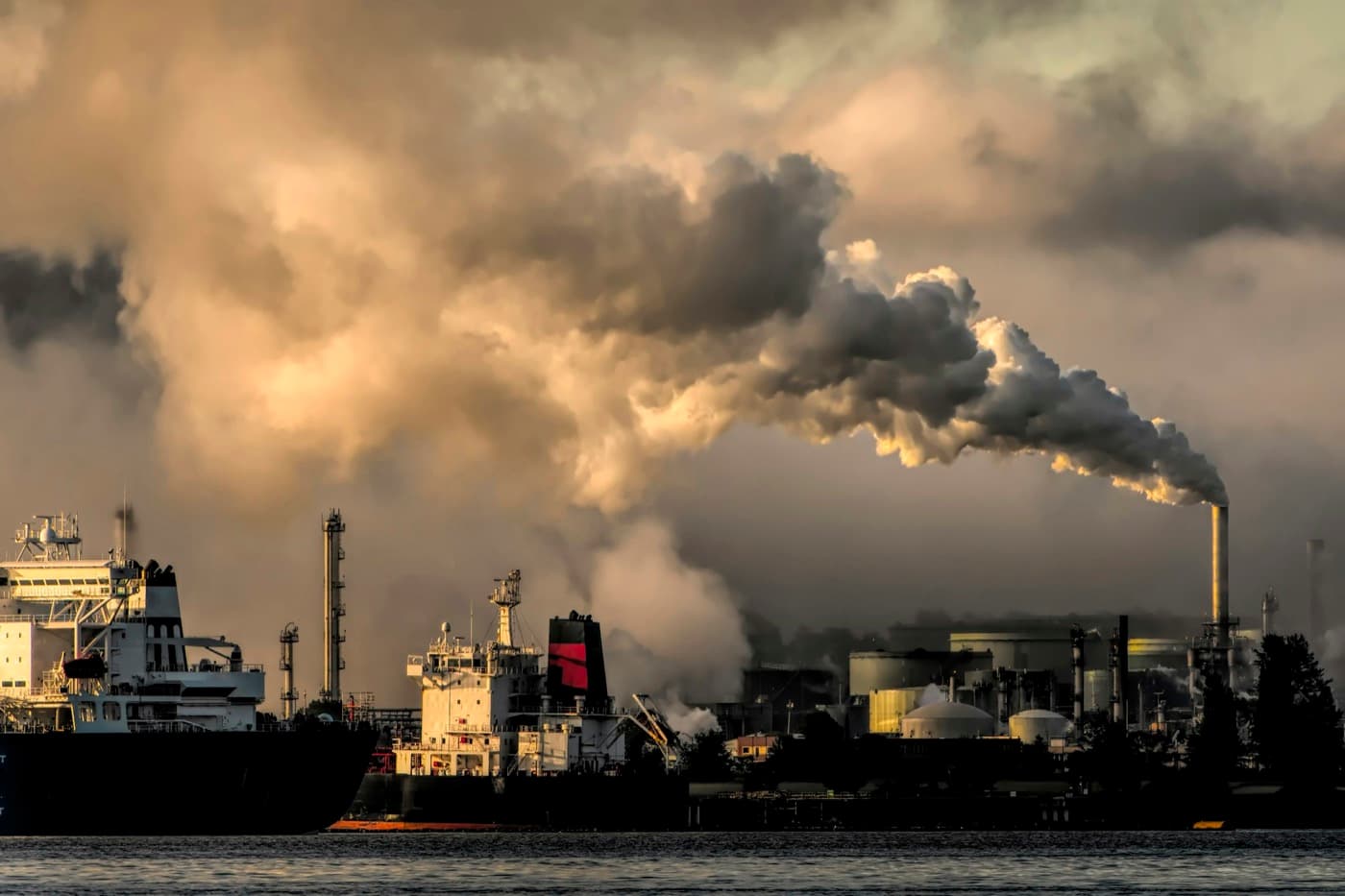
Volatile organic compounds (VOCs) — including solvents, hydrocarbons, aldehydes, and aromatic compounds — are emitted by manufacturing processes, chemical plants, printing operations, painting facilities, and dozens of other industrial sources. Left untreated, these emissions contribute to ground-level ozone formation, pose serious health risks to workers and surrounding communities, and violate increasingly strict environmental regulations across every major economy.
Activated carbon adsorption is the most widely deployed technology for VOC control, handling everything from trace-level indoor air quality concerns to high-concentration industrial solvent recovery. This guide covers the science behind VOC adsorption, how to select the right carbon type, system design principles, solvent recovery economics, and the regulatory landscape driving adoption.
What Are VOCs and Why Do They Matter?
VOCs are organic chemicals with high vapor pressure at room temperature — they evaporate readily and enter the atmosphere as gases. The US EPA defines VOCs as any compound of carbon (excluding CO, CO₂, carbonic acid, metallic carbides, and ammonium carbonate) that participates in atmospheric photochemical reactions. The EU and China use slightly different definitions, but the regulated compounds overlap significantly.
Common industrial VOCs fall into several categories:
VOC emissions are regulated under the US Clean Air Act (CAA) and its National Emission Standards for Hazardous Air Pollutants (NESHAP), the EU Industrial Emissions Directive (IED 2010/75/EU), and China's GB 31571 (petrochemical) and GB 31572 (synthetic resin) standards. Non-compliance can result in fines exceeding $100,000 per day, production shutdowns, and criminal liability for facility managers.
Need activated carbon?
Get Factory-Direct Pricing — No Middlemen
20+ years manufacturing. MOQ 1 ton. Free samples. Reply within 2 hours.
How Activated Carbon Removes VOCs
Activated carbon captures VOC molecules through physical adsorption — Van der Waals forces attract organic molecules to the vast internal surface of the carbon. With surface areas of 800–1,500 m²/g, a single kilogram of activated carbon provides the equivalent surface area of several football fields. VOC molecules travel through the carbon bed, diffuse into the pore network, and adhere to the internal surface until the available sites are exhausted.
The effectiveness of VOC adsorption depends on several interrelated factors:
| Factor | Effect on Adsorption | Practical Implication |
|---|---|---|
| Molecular weight | Higher MW = stronger adsorption | Toluene (92 g/mol) adsorbs better than acetone (58 g/mol) |
| Boiling point | Higher BP = easier to capture | Xylene (BP 144°C) is captured more readily than methanol (BP 65°C) |
| Concentration | Higher inlet = higher loading capacity | Carbon works best at 100–10,000 ppm; below 10 ppm, efficiency drops |
| Temperature | Lower temp = better adsorption | Cool exhaust below 40°C before the carbon bed when possible |
| Humidity | High RH competes for adsorption sites | Keep RH below 50%; above 70%, water displaces VOCs significantly |
| Polarity | Non-polar VOCs adsorb better on standard carbon | Polar VOCs (alcohols, amines) may need specialty or impregnated carbon |
Understanding these factors is critical for predicting carbon consumption rates and designing systems that meet emission limits consistently. For a deeper dive into testing methods that verify these performance characteristics, see our quality testing methods guide.
Selecting the Right Carbon Type for VOC Removal
Not all activated carbon performs equally for VOC applications. The raw material, activation method, and physical form determine adsorption capacity, pressure drop, and regeneration behavior. The CTC (carbon tetrachloride) value is the single most important specification for VOC applications — it measures gas-phase adsorption capacity directly.
| Carbon Type | CTC Value | Best For | Key Advantage |
|---|---|---|---|
| Coal-based GAC | 50–80% | Broad-spectrum VOCs, solvent recovery | Balanced pore distribution, excellent regenerability, lowest cost per kg |
| Coconut shell GAC | 55–70% | Light VOCs (formaldehyde, benzene), trace removal | Highest micropore volume, hardest carbon, lowest dust |
| Honeycomb carbon | 30–50% | High-volume, low-concentration streams | Ultra-low pressure drop, modular installation, easy replacement |
For most industrial VOC applications, coal-based GAC or pellet carbon offers the best balance of capacity, cost, and regenerability. Coconut shell carbon excels in applications requiring very low outlet concentrations (sub-ppm) due to its superior micropore structure. For a detailed comparison of carbon types, see our GAC vs PAC guide.
System Design for VOC Removal
The choice of adsorption system depends on VOC concentration, air volume, whether solvent recovery is needed, and available footprint. Three main configurations dominate industrial VOC treatment:
Fixed-Bed Adsorbers
The most common configuration for VOC removal. Contaminated air passes through a packed bed of granular or pellet activated carbon. Typical bed depths range from 0.3 to 1.0 meters, with face velocities of 0.3–0.5 m/s. Most systems use two beds in series (lead-lag configuration) — when the lead bed is exhausted, it becomes the lag bed and a fresh bed takes the lead position. This ensures continuous operation and provides a safety margin against breakthrough.
Fixed-bed systems handle inlet concentrations from 50 to 10,000 ppm and achieve 95–99% removal efficiency. For solvent recovery applications, the beds are regenerated in place using low-pressure steam (3–5 psig), and the desorbed solvent is condensed and recovered. For guidance on selecting carbon filter media and housing configurations, see our carbon filter guide.
Rotary Concentrators (Zeolite/Carbon Wheels)
For high-volume, low-concentration streams (1,000–100,000+ m³/h at 20–200 ppm), rotary concentrators are more economical than fixed beds. A slowly rotating wheel containing activated carbon or zeolite adsorbs VOCs from the main air stream, then a small hot air stream (1/10th the volume) desorbs the concentrated VOCs. The concentrated stream (now at 10–20× the original concentration) is sent to a thermal oxidizer or condenser. This approach reduces the size and fuel cost of downstream destruction equipment dramatically.
Fluidized-Bed Adsorbers
In fluidized-bed systems, the contaminated air flows upward through the carbon at sufficient velocity to suspend the particles. This eliminates channeling problems common in fixed beds and provides excellent mass transfer. Fluidized beds are used in continuous solvent recovery operations where the carbon is circulated between adsorption and desorption zones. They handle high dust loads better than fixed beds but require harder carbon (ball-pan hardness >95%) to withstand attrition.
Industrial Applications
Paint and Coating Operations
Automotive paint shops, furniture finishing lines, and industrial coating operations emit toluene, xylene, MEK, ethyl acetate, and other solvents at concentrations of 100–5,000 ppm. Fixed-bed carbon adsorbers with steam regeneration are the standard treatment technology, achieving >95% removal while recovering valuable solvents. A typical automotive paint shop processes 50,000–200,000 m³/h of exhaust air and consumes 5–20 tonnes of activated carbon per adsorber vessel.
Printing Industry
Gravure and flexographic printing use large volumes of solvents — primarily toluene, ethyl acetate, and isopropanol. Solvent recovery with activated carbon is standard practice in gravure printing, where recovery rates of 95–98% make the system pay for itself within 2–3 years. The recovered solvent is purified by distillation and reused directly in the printing process.
Petrochemical and Chemical Manufacturing
Refineries, chemical plants, and tank farms emit BTEX compounds, light hydrocarbons, and chlorinated solvents from process vents, storage tanks, and fugitive sources. Activated carbon vapor recovery units (VRUs) at loading terminals capture gasoline vapors displaced during tank truck and railcar loading, achieving >98% recovery. These systems typically use two carbon beds alternating between adsorption and vacuum regeneration cycles.
Pharmaceutical Manufacturing
Pharmaceutical plants use a wide range of solvents — methanol, ethanol, dichloromethane, acetone, THF, and ethyl acetate — in synthesis, extraction, and formulation. Emission limits are often stricter than general industry due to the potency of active pharmaceutical ingredients (APIs). Carbon adsorption systems in pharma typically use high-CTC pellet carbon (>80%) and include nitrogen purge regeneration to prevent solvent oxidation.
Semiconductor Fabrication
Semiconductor fabs emit a complex mixture of VOCs from photoresist application, etching, and cleaning processes — including PGMEA, NMP, IPA, and various fluorinated compounds. Outlet requirements are extremely stringent (often <1 ppm total VOC). High-quality coconut shell activated carbon with iodine numbers above 1,100 mg/g is preferred for these ultra-clean applications.
Solvent Recovery with Activated Carbon
When VOC concentrations are high enough (typically >500 ppm) and the solvent has commercial value, activated carbon adsorption becomes a profit center rather than just a compliance cost. The basic solvent recovery cycle works as follows:
The economics of solvent recovery are compelling. A printing plant recovering 500 kg/day of toluene (valued at ~$1.00/kg) saves $180,000/year in raw solvent costs alone, plus avoided disposal fees and emission penalties. Carbon life in recovery service is typically 3–5 years before replacement is needed, as the repeated thermal cycling gradually degrades pore structure. Using high-hardness pellet carbon (ball-pan hardness >95%) extends service life significantly.
Regulatory Context for VOC Emissions
VOC regulations are tightening globally. Understanding the applicable standards is essential for system design and carbon specification:
| Region | Key Regulation | Typical Limits |
|---|---|---|
| United States | Clean Air Act, NESHAP, MACT standards | 20–50 ppm total VOC for most MACT categories; 98% destruction/removal for HAPs |
| European Union | IED 2010/75/EU, Solvent Emissions Directive | 20–75 mg C/Nm³ depending on solvent consumption; fugitive emission limits of 5–15% |
| China | GB 31571, GB 31572, GB 37822 | 20–60 mg/m³ for organized emissions; 2–10 mg/m³ at fence line |
| Japan / Korea | Air Pollution Control Act / Clean Air Conservation Act | Substance-specific limits; benzene <1 ppm at many facilities |
China's VOC regulations have tightened dramatically since 2020, with GB 37822-2019 establishing comprehensive fugitive emission standards across all industries. This has driven massive demand for activated carbon adsorption systems, particularly in the Yangtze River Delta and Pearl River Delta industrial regions. Many Chinese facilities are now required to achieve <30 mg/m³ total non-methane VOC in stack emissions.
Activated Carbon vs. Other VOC Control Technologies
Activated carbon adsorption is one of several VOC control technologies. The right choice depends on concentration, flow rate, whether recovery is needed, and operating budget:
| Technology | Best Concentration Range | Recovery? | Key Limitation |
|---|---|---|---|
| Activated carbon adsorption | 50–10,000 ppm | Yes | Carbon replacement cost; humidity sensitivity |
| Regenerative thermal oxidizer (RTO) | 100–2,000 ppm | No (destroys VOCs) | High capital cost; natural gas consumption; not for chlorinated VOCs |
| Regenerative catalytic oxidizer (RCO) | 100–1,500 ppm | No | Catalyst poisoning by silicones, halogens, heavy metals |
| Catalytic oxidation | 50–1,000 ppm | No | Lower operating temp than RTO but catalyst replacement is expensive |
| Condensation | >5,000 ppm | Yes | Only effective at very high concentrations; high energy for refrigeration |
Activated carbon's unique advantage is solvent recovery — no other technology returns the captured VOCs as a reusable product. For applications where the solvent has value (printing, coating, pharmaceutical), carbon adsorption often has the lowest total cost of ownership. For very high flow rates with low concentrations, a hybrid approach — carbon concentrator wheel feeding an RTO — combines the best of both technologies.
For more context on how activated carbon compares in air treatment broadly, see our air purification guide.
Bottom Line
Activated carbon adsorption is the most versatile and widely proven technology for industrial VOC control. It handles the broadest range of organic compounds, works across concentrations from trace levels to percent range, and is the only technology that enables economical solvent recovery. The keys to a successful installation are selecting the right carbon type (match CTC value and pore structure to your specific VOCs), designing the system correctly (adequate bed depth, proper face velocity, humidity control), and establishing a reliable regeneration or replacement schedule.
With VOC regulations tightening across every major market — and enforcement becoming more rigorous — investing in a properly designed carbon adsorption system is both an environmental obligation and a sound business decision. The solvent recovery economics alone can deliver payback periods of 1–3 years for high-concentration applications. For current carbon costs by type and volume, see our activated carbon price guide.
Frequently Asked Questions
What types of VOCs can activated carbon remove?
Activated carbon effectively removes toluene, xylene, benzene, MEK, acetone, ethyl acetate, trichloroethylene, and petroleum vapors. It's less effective for very low MW compounds (methane, ethane) and very polar molecules (formaldehyde, methanol) unless impregnated carbon is used.
How do you size an activated carbon bed for VOC removal?
Sizing requires inlet VOC concentration, airflow rate, target outlet level, and temperature. Standard design uses 2–4 seconds EBCT for concentrations under 1,000 ppm. Working capacity is typically 10–20% of carbon weight. Use isotherm data with 2–3x safety factors.
Can spent carbon from VOC removal be regenerated?
Yes, commonly regenerated on-site using steam or hot nitrogen desorption, which also enables solvent recovery. For low-concentration applications, thermal swing adsorption (TSA) with two beds in alternating adsorption/regeneration mode is standard.
What is the difference between GAC and columnar carbon for VOC removal?
Columnar (pelletized) carbon provides lower pressure drop, more uniform flow, and higher mechanical strength — preferred for deep beds. GAC offers higher surface area per volume and faster kinetics but creates more dust and higher pressure drop. For industrial systems, columnar is the default.
Does humidity affect activated carbon VOC removal?
Yes, relative humidity above 50% significantly reduces VOC adsorption capacity as water molecules compete for sites. At 80% RH, capacity can drop 30–50%. Dehumidification before the carbon bed is recommended. Hydrophobic carbon types can partially compensate.
Need Activated Carbon for VOC Treatment?
Tell us about your VOC challenge — compound types, concentrations, air flow rate, and target outlet levels. We'll recommend the optimal carbon type and provide a competitive quotation.
Get a Recommendation & Quote