
Let's skip the Wikipedia intro. If you're reading this, you probably already know what activated carbon is. What you actually need is straight talk about coconut shell activated carbon — the premium grade stuff — and whether it's the right fit for your project.
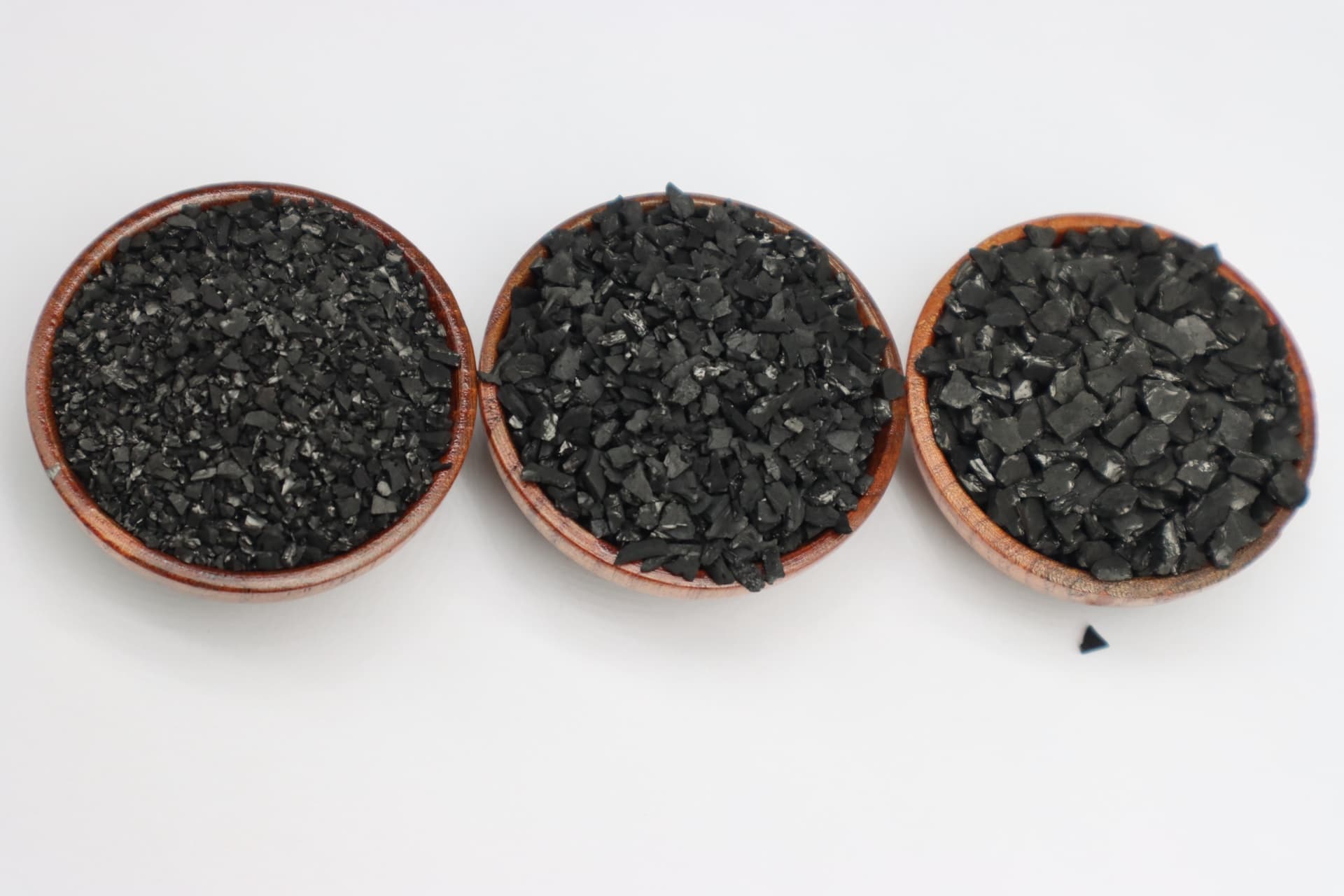
We've been manufacturing coconut shell carbon at our Nan'an, Fujian facility since 2008. Roughly 25,000 metric tons a year, exported to 50+ countries. So the perspective here isn't academic — it's from the production floor, the QC lab, and hundreds of customer negotiations. Take what's useful, skip what isn't.
What Makes Coconut Shell Carbon “Premium”?
Short answer: micropore dominance. Coconut shell produces activated carbon with an exceptionally high proportion of micropores (pore diameter < 2 nm), which is exactly what you want for adsorbing small molecules — chlorine, VOCs, trihalomethanes, dissolved gold cyanide complexes. The pore size distribution is almost ideal for liquid-phase applications.
Compared to coal-based or wood-based alternatives, coconut shell carbon is also significantly harder. We're talking ball-pan hardness numbers above 97% — meaning less breakage in backwash cycles, longer bed life, lower carbon replacement costs. In applications like municipal water treatment where the carbon sits in a filter bed for 12–24 months, that hardness translates directly to money saved.
The other thing people overlook: low ash content. Coconut shell is a remarkably clean raw material. Our standard product runs under 3% ash — compare that to 8–15% on a typical coal-based carbon. Less ash means fewer impurities leaching into your treated water. For drinking water and food-grade applications, that matters a lot.
Need activated carbon?
Get Factory-Direct Pricing — No Middlemen
20+ years manufacturing. MOQ 1 ton. Free samples. Reply within 2 hours.
Key Technical Parameters — What to Actually Look For
Every supplier will throw a datasheet at you. Here's what the numbers actually mean, and where the “good enough” line sits for most applications:
| Parameter | Typical Range | What It Tells You |
|---|---|---|
| Iodine Number | 1000–1200 mg/g | Proxy for total surface area and micropore volume. Below 900? Walk away. The sweet spot for water treatment is 1050+. |
| BET Surface Area | 900–1100 m²/g | Total internal surface area. Higher isn't always better — what matters is the distribution between micro/meso/macropores for your target contaminant. |
| Ash Content | < 5% (ours: 2–3%) | Lower = cleaner. Critical for drinking water and food-grade applications. Some competitors hide behind “acid-washed” to compensate for naturally high ash. |
| Moisture | < 5% | You're buying carbon, not water. Anything above 5% at delivery means sloppy packaging or storage. Reject it. |
| Hardness | > 95% | Ball-pan hardness. Determines how long the carbon survives in backwash cycles. Coconut shell inherently excels here. |
| CTC / Butane Activity | 50–70% | Relevant mostly for gas-phase applications. If you're doing air purification, this number matters more than iodine. |
One thing I'll add from experience: don't just trust the datasheet. We've seen competitors claim 1100 iodine numbers on paper but ship product that tests at 850. Always request a pre-shipment sample and get it tested by an independent lab (SGS, Intertek, or your own facility). It costs $200–400 and can save you from a six-figure mistake.
Where Coconut Shell Carbon Really Shines
1. Drinking Water Purification
This is the bread and butter. Municipal water plants, point-of-use filters, home filtration systems — coconut shell GAC (granular activated carbon) is the industry standard. The micropore structure nails chlorine removal, and the low ash content means it passes NSF/ANSI 61 certification without heroic acid-washing. We ship about 40% of our coconut shell production into water treatment applications. It's also the go-to choice for aquarium filtration, where low dust and food-safe properties matter.
2. Gold Recovery (CIL/CIP)
Gold mining operations are the second-largest market for coconut shell carbon. In carbon-in-leach (CIL) and carbon-in-pulp (CIP) processes, the carbon needs to adsorb gold cyanide complexes and survive the mechanical abuse of stirred tanks. You need high iodine value (1050+ minimum), extreme hardness (>97%), and specific mesh sizes — usually 6×12 or 8×16 mesh. We've supplied several mines in West Africa and Central Asia with our gold-grade coconut shell carbon, and the reactivation cycles have been solid — 40+ cycles before replacement on average.
3. Air Purification & Gas Phase
For VOC removal, odor control, and solvent recovery, coconut shell carbon is popular in pelletized form (4mm diameter is standard). The key spec here shifts from iodine number to CTC value and butane activity — you want 60%+ CTC for meaningful gas-phase performance. Common setups include activated carbon filter beds in HVAC systems, industrial fume scrubbers, and automotive cabin filters.
4. Food & Beverage Decolorization
Sugar refining, edible oil decolorization, brewing — these applications demand food-grade certification (FDA 21 CFR or EU equivalent) and ultra-low ash. Powdered coconut shell carbon works best here, dosed at 0.5–2% by weight depending on the feedstock. The low heavy metal content of coconut shell raw material is a genuine advantage over coal-based alternatives in this space.
Coconut Shell vs Coal vs Wood: The Honest Comparison
Here's the comparison nobody wants to give you because the answer is “it depends.” But we'll give you the real tradeoffs:
| Property | Coconut Shell | Coal-Based | Wood-Based |
|---|---|---|---|
| Iodine Number | 1000–1200 | 800–1100 | 800–1000 |
| Hardness | ★★★★★ (>97%) | ★★★★ (90–95%) | ★★ (85–90%) |
| Ash Content | 2–5% | 8–15% | 3–5% |
| Pore Structure | Micropore dominant | Micro + mesopore | Macropore dominant |
| Best For | Water, gold, food | Industrial water, gas | Decolor, pharma |
| Price (FOB China) | $2,900–4,500/MT | $600–1,400/MT | $800–1,500/MT |
| Renewability | Renewable (agri waste) | Non-renewable | Partially renewable |
Here's the honest take: if your application is industrial wastewater with high organic loads and you don't need food-grade purity, coal-based carbon at $800/MT will outperform coconut shell at $1,800/MT on a cost-per-treatment basis. The mesopore structure of coal-based carbon actually handles larger organic molecules better.
But for drinking water, gold mining, food processing, and any application where low ash and high hardness matter? Coconut shell is objectively the right choice. Don't let someone sell you the cheaper option when the application demands premium material.
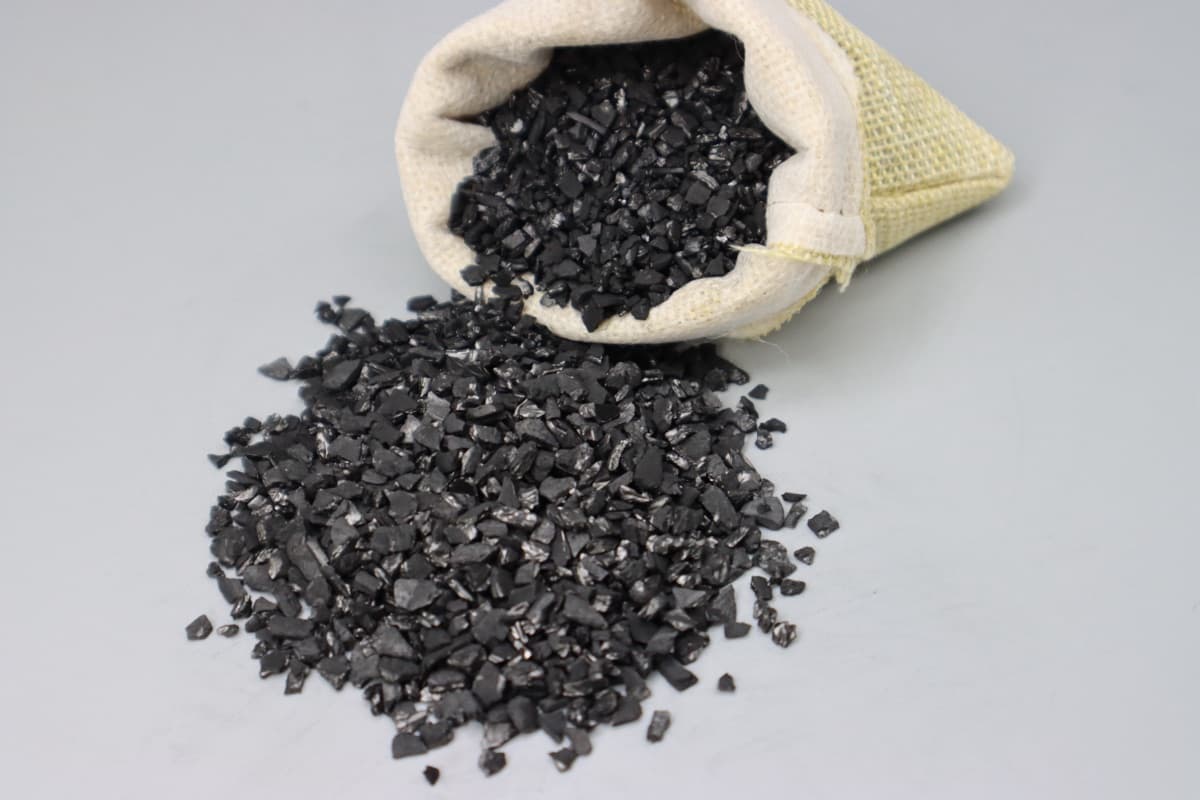
Pricing — What to Actually Expect in 2026
Let's talk numbers. As of early 2026, FOB China pricing for coconut shell activated carbon looks like this. For a broader view of pricing across all carbon types, see our activated carbon price guide.
- Standard water treatment grade (8×30 mesh, iodine 950–1050): $1,450–1,950/MT
- High-grade water/food grade (iodine 1050–1150, NSF 61 certified): $2,200–2,600/MT
- Gold recovery grade (6×12 mesh, iodine 1050+, hardness >97%): $3,200–3,800/MT
- Powdered (PAC) (200–325 mesh, for decolorization): $1,450–1,950/MT
These are bulk prices — 20-foot container loads (15–18 MT). Smaller orders (1–5 MT trial shipments) typically carry a 15–25% premium, which is normal. If someone quotes you significantly below these ranges, ask hard questions about the raw material source. There's a lot of coconut shell carbon on the market that's actually blended with palm shell or even coal char to hit a lower price point.
What Drives Price Fluctuation?
- Raw coconut shell prices — heavily influenced by copra market in Philippines, Indonesia, and Sri Lanka. A bad harvest year can push shell prices up 20–30%.
- Energy costs — activation is energy-intensive. Natural gas price swings hit production costs directly.
- Freight rates — container shipping from Xiamen to, say, Mombasa fluctuates wildly. In 2021-2022, freight alone added $80–120/MT. It's normalized since, but it's a variable to watch.
- Specifications — higher iodine value = higher activation temperature = more energy = higher cost. Gold grade costs 30–40% more than standard water grade.
How to Choose a Supplier (Without Getting Burned)
Sourcing activated carbon from China isn't complicated, but it is full of traps for the uninitiated. Here's my checklist after 15 years in the game:
Certifications That Actually Matter
- →ISO 9001 — table stakes. If they don't have this, don't bother.
- →NSF/ANSI 61 — mandatory for drinking water applications in the US and many other markets. Getting this certification is expensive and takes 6–12 months. If a supplier has it, they're serious.
- →HALAL / KOSHER — needed for food-grade applications in certain markets. We carry both.
- →SGS / Intertek verification — third-party factory audits. Ask for the audit report, not just the certificate. Certificates can be photoshopped; audit reports with photos and findings are much harder to fake.
Red Flags to Watch For
- ✗Supplier can't provide COA (Certificate of Analysis) for each production batch
- ✗No factory visit allowed — or factory address doesn't match business registration
- ✗Prices 30%+ below market average with no credible explanation
- ✗Offers every type of activated carbon plus air filters, water pumps, and chemical reagents — they're a trader, not a manufacturer
- ✗Won't send a free 1 kg sample for lab testing before ordering
MOQ & Lead Time — What's Normal
Most manufacturers (us included) work with a minimum order of 1 MT for trial orders and 15–18 MT (one 20' container) for regular orders. Lead time from order confirmation to port is typically 15–25 days for stock sizes, 30–45 days for custom specifications.
Payment terms for new customers are usually 30% T/T deposit + 70% against B/L copy. After 3–5 successful shipments, most suppliers will offer more flexible terms. Letters of Credit (L/C) are standard for orders above $50,000.
Why We Built Hojee the Way We Did
I'll be transparent: this is the part where we talk about ourselves. But it's relevant because we built the company specifically to address the problems outlined above.
- Three production bases — Ningxia and Shanxi for coal-based, Fujian for coconut shell and wood-based. We're not outsourcing to unknown subcontractors.
- In-house QC lab — every batch tested before shipping. We provide detailed COA including iodine number, surface area, ash, moisture, pH, and particle size distribution.
- Fujian port advantage — our coconut shell facility is 90 minutes from Xiamen port. Coconut shell raw material comes in from Indonesia and the Philippines through the same port. Short logistics chain = lower cost, faster delivery.
- View our full coconut shell activated carbon product range with detailed specifications.
Bottom Line
Coconut shell activated carbon isn't always the right answer. But when it is — drinking water, gold recovery, food processing, any application requiring high purity and mechanical toughness — there's no substitute. Don't cheap out on raw material quality because someone quoted you $900/MT on Alibaba. And don't over-spec either — if coal-based carbon does the job, use coal-based carbon.
The activated carbon market in 2026 is projected to hit $7.2 billion globally. With tightening environmental regulations (EPA PFAS rules, EU drinking water directive), demand for high-quality coconut shell carbon is only going up. Secure a reliable supply chain now, before the next price spike.
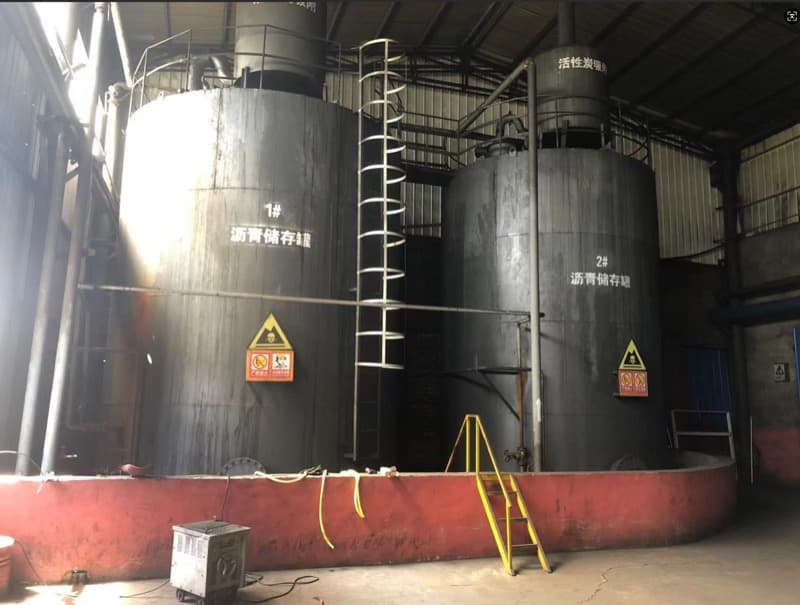
Our Manufacturing Facility
Our coconut shell activated carbon is produced at our modern facility featuring advanced steam activation kilns and comprehensive quality testing. From raw shell carbonization to final product packaging, every step is monitored to deliver consistent iodine numbers above 1000 mg/g and hardness exceeding 95%.
Frequently Asked Questions
What makes coconut shell carbon different from other types?
It has the highest micropore volume, highest hardness (>95%), lowest ash (<3%), highest density, and lowest dust generation of any activated carbon type. These properties come from coconut shell's unique cellular structure and steam activation.
What are the main applications?
Drinking water purification, gold recovery (CIP/CIL), air purification, gas masks, aquarium filtration, food/beverage processing, pharmaceutical manufacturing, solvent recovery, and electronic-grade water treatment. Its microporous structure makes it premium for small molecule removal.
What specifications should I look for?
Key specs: iodine number 900–1200+ mg/g, CTC 50–80%, moisture <5%, ash <3–5%, hardness >95%, apparent density 0.48–0.55 g/mL. For water treatment, require NSF 61 certification. Always request a COA with test method references.
Where is coconut shell activated carbon produced?
Major producers: Indonesia (largest), Philippines, India, Sri Lanka, Vietnam, and Thailand. China produces some in Hainan and Fujian but mostly imports raw charcoal from Southeast Asia. Indonesia and Philippines account for over 60% of global production.
How is coconut shell activated carbon manufactured?
Three stages: carbonization (400–600°C in limited oxygen to create charcoal), steam activation (800–1000°C in rotary kiln to develop pores), and post-processing (washing, drying, screening, quality testing). The process takes 4–8 hours from raw shell to finished product.