
Activated carbon and biochar share a common ancestor — both start as organic biomass that gets heated in a low-oxygen environment. But that's where the similarity ends. The production parameters, resulting properties, and intended applications are so different that treating them as interchangeable products can lead to wasted money, failed projects, and regulatory headaches.
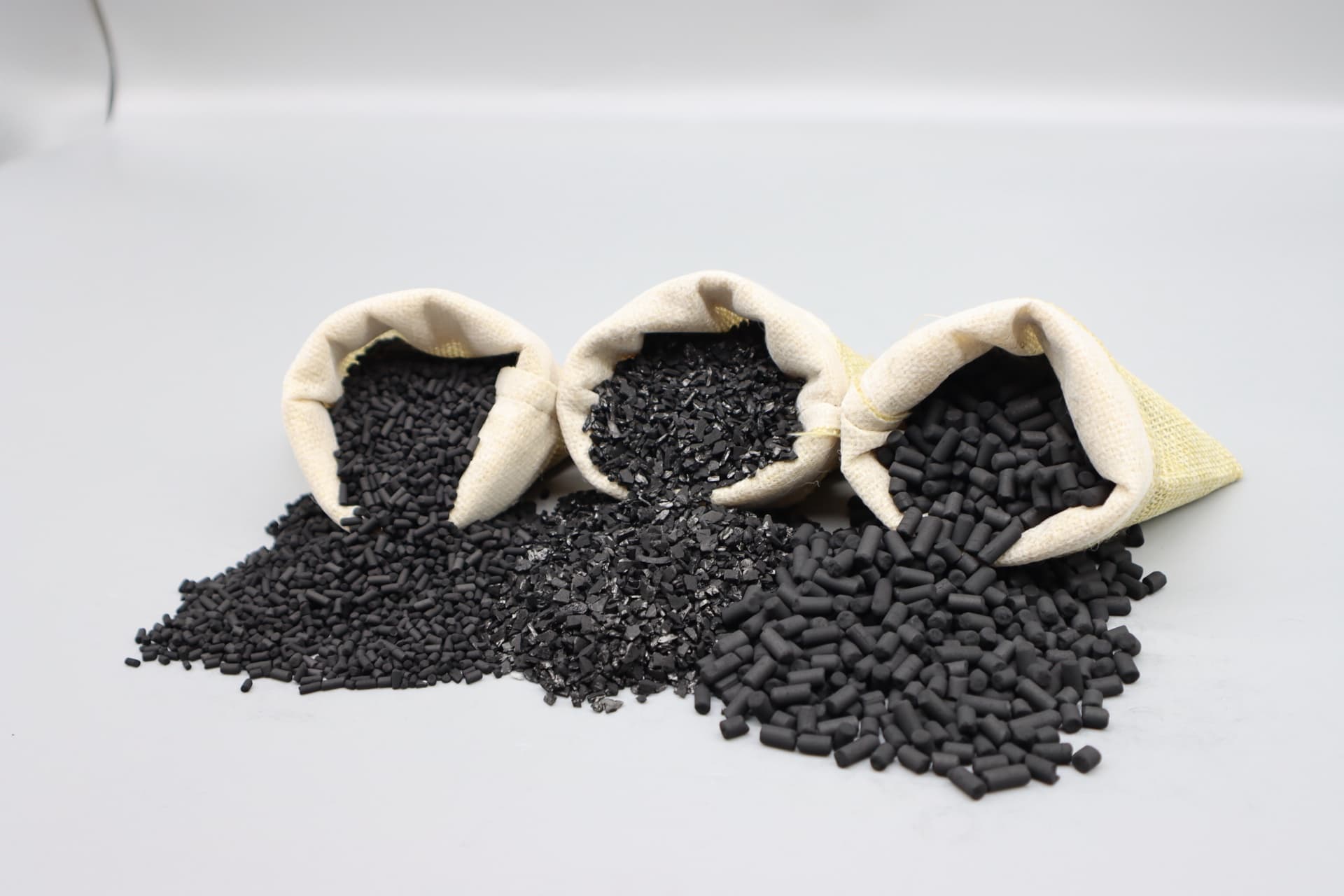
As an activated carbon manufacturer, we regularly field questions from buyers who wonder whether biochar could serve as a cheaper substitute. The short answer: it depends entirely on the application. This guide breaks down the real differences so you can make an informed decision.
What Is Activated Carbon?
Activated carbon is a highly porous adsorbent material produced by carbonizing organic raw materials (coconut shell, coal, wood) at 600–900 °C, followed by a critical activation step — either physical activation using steam or CO₂ at 800–1000 °C, or chemical activation using agents like phosphoric acid or zinc chloride. This activation process is what separates activated carbon from every other form of charcoal.
During activation, the internal pore network is dramatically expanded. Tar deposits and disorganized carbon are selectively burned away, creating a vast labyrinth of micropores (<2 nm), mesopores (2–50 nm), and macropores (>50 nm). The result is a material with a BET surface area typically between 800 and 1,500 m²/g — meaning a single gram of activated carbon can have the internal surface area of several tennis courts.
Key Properties of Activated Carbon
→ BET surface area: 800–1,500 m²/g (up to 3,000 m²/g for specialty grades)
→ Total pore volume: 0.4–0.8 cm³/g
→ Micropore-dominant structure optimized for molecular adsorption
→ Iodine number: 800–1,200+ mg/g
→ Production temperature: 800–1,000 °C (activation stage)
→ Primary function: adsorption of contaminants from liquids and gases
Need activated carbon?
Get Factory-Direct Pricing — No Middlemen
20+ years manufacturing. MOQ 1 ton. Free samples. Reply within 2 hours.
What Is Biochar?
Biochar is a carbon-rich solid produced by pyrolyzing biomass (agricultural waste, wood chips, manure, crop residues) at temperatures typically between 300 and 700 °C in a low-oxygen or oxygen-free environment. Unlike activated carbon, biochar does not undergo a separate activation step. The pyrolysis itself is the entire production process.
The primary purpose of biochar is not adsorption — it's soil improvement and carbon sequestration. When added to soil, biochar improves water retention, increases cation exchange capacity (CEC), provides habitat for beneficial microorganisms, and locks carbon in a stable form that resists decomposition for hundreds to thousands of years. This makes biochar a key tool in climate change mitigation strategies.
Key Properties of Biochar
→ BET surface area: 1–500 m²/g (highly variable depending on feedstock and temperature)
→ Total pore volume: 0.01–0.3 cm³/g
→ Macropore-dominant structure suited for water/nutrient retention
→ Carbon content: 50–90% (stable, recalcitrant carbon)
→ Production temperature: 300–700 °C (pyrolysis only)
→ Primary function: soil amendment, carbon sequestration, composting
Key Differences: Activated Carbon vs Biochar
The differences between these two materials go far beyond surface area. They're engineered for different jobs, tested against different standards, and priced in different markets. Here's the full comparison:
| Property | Activated Carbon | Biochar |
|---|---|---|
| Production Process | Carbonization + activation (steam/chemical) | Pyrolysis only (no activation) |
| Production Temperature | 800–1,000 °C (activation stage) | 300–700 °C |
| BET Surface Area | 800–1,500 m²/g | 1–500 m²/g |
| Total Pore Volume | 0.4–0.8 cm³/g | 0.01–0.3 cm³/g |
| Dominant Pore Type | Micropores (<2 nm) | Macropores (>50 nm) |
| Raw Materials | Coconut shell, coal, wood, peat | Agricultural waste, wood chips, manure, crop residues |
| Iodine Number | 800–1,200+ mg/g | Typically <200 mg/g (not a standard metric) |
| Primary Use | Contaminant adsorption (water, air, industrial) | Soil amendment, carbon sequestration |
| Quality Standards | ASTM, AWWA, NSF 61, EN 12915 | IBI Biochar Standards, EBC (European Biochar Certificate) |
| Price Range | $800–$2,500/ton (FOB) | $200–$800/ton |
| Regeneration | Thermally regenerable (multiple cycles) | Generally not regenerated |
The most critical difference is the activation step. Without activation, biochar retains much of its original tar content and has a fraction of the surface area. This is by design — biochar doesn't need 1,000 m²/g of surface area to improve soil. But it also means biochar lacks the adsorption capacity needed for serious contaminant removal.
When to Use Activated Carbon
Activated carbon is the right choice whenever the primary goal is removing specific contaminants from water, air, or process streams. Its engineered pore structure and massive surface area make it irreplaceable for:
Removal of chlorine, chloramine, THMs, PFAS, pesticides, and taste/odor compounds. Activated carbon is the backbone of municipal and point-of-use water purification systems worldwide. NSF 61 certified grades ensure safety for potable water contact.
Air Purification & VOC Control
Industrial emission control, solvent recovery, odor abatement, and indoor air quality systems all rely on activated carbon's ability to capture volatile organic compounds from gas streams. Coal-based pellet carbon is the standard for gas-phase applications.
Gold Recovery (CIP/CIL)
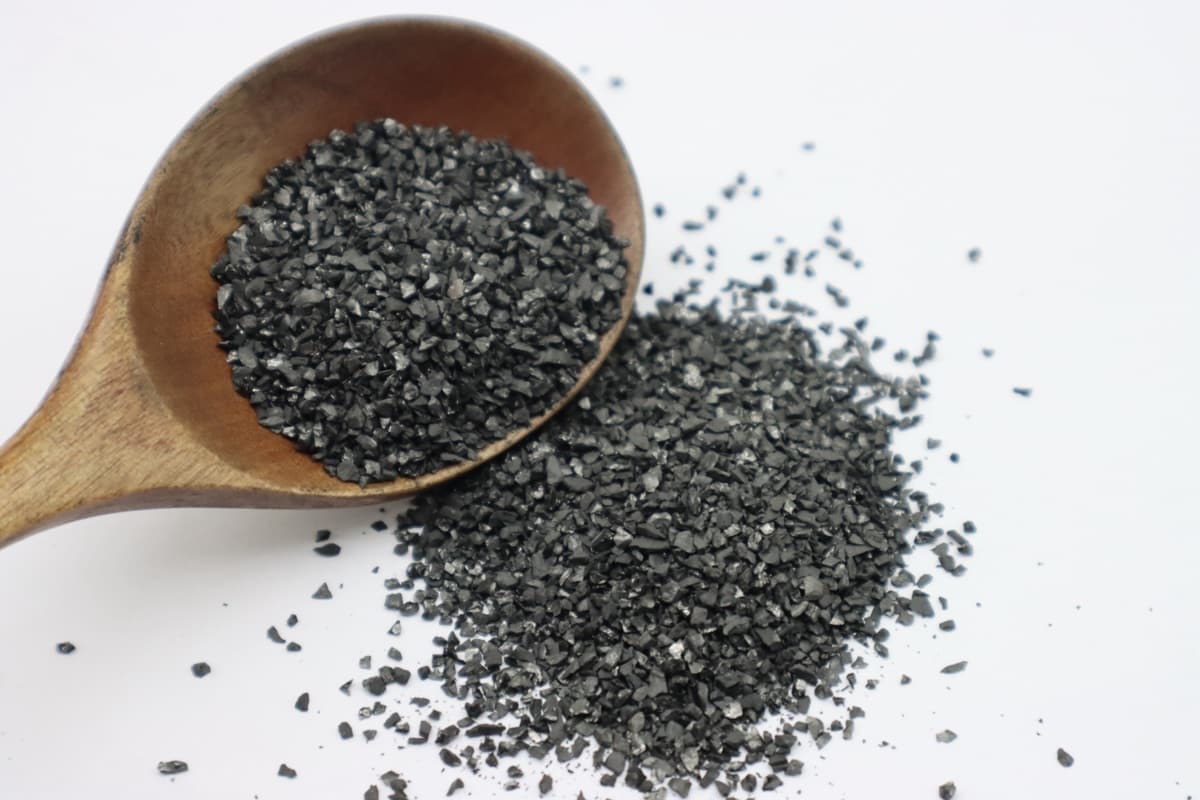
Gold cyanide complex adsorption requires high micropore volume, extreme hardness, and low ash content. Coconut shell activated carbon is the only viable option for gold mining — biochar would fail catastrophically in this application due to insufficient surface area and poor mechanical strength.
Food & Beverage Processing
Sugar decolorization, edible oil purification, wine and spirits filtration, and pharmaceutical processing all require food-grade activated carbon with certified low ash, low leachables, and high adsorption capacity. Wood-based powdered activated carbon is the standard for decolorization applications.
Industrial Wastewater
COD reduction, color removal, and trace contaminant polishing in industrial effluent require the high adsorption capacity that only activated carbon provides. Coal-based activated carbon is often the cost-effective choice for large-volume wastewater treatment.
When to Use Biochar
Biochar excels in applications where the goal is not molecular adsorption but rather physical soil improvement, biological habitat creation, or long-term carbon storage:
Soil Amendment & Agriculture
Biochar's macroporous structure retains water and nutrients in the root zone, increases cation exchange capacity (CEC) by 20–40%, and provides habitat for beneficial mycorrhizal fungi and bacteria. Studies show biochar can increase crop yields by 10–30% in degraded soils, particularly in tropical regions with highly weathered, nutrient-poor soils.
Carbon Sequestration
Biochar locks atmospheric carbon into a stable solid form that persists in soil for centuries. Each ton of biochar sequesters approximately 2.5–3.0 tons of CO₂ equivalent. This makes biochar production one of the few carbon-negative technologies available today, and it's increasingly used in carbon credit programs.
Composting Enhancement
Adding 5–15% biochar to compost piles reduces nitrogen loss (ammonia volatilization) by up to 60%, accelerates decomposition, and reduces odor. The finished compost-biochar blend is a superior soil amendment compared to either material alone.
Stormwater Management
Biochar is increasingly used in bioretention cells, rain gardens, and green infrastructure for stormwater filtration. Its water-holding capacity and ability to retain nutrients (nitrogen, phosphorus) make it effective for reducing stormwater runoff pollution — though it should not be confused with the precision contaminant removal that activated carbon provides.
Animal Husbandry
Biochar is used as a feed additive (at 1–2% of diet) to improve gut health in livestock, as bedding material to reduce ammonia emissions, and in manure management to capture nutrients and reduce odor.
Can Biochar Replace Activated Carbon?
This is the question we hear most often, and the answer is nuanced. For non-critical, low-concentration applications, biochar can provide some adsorption capacity at a lower cost. But for any application where reliable, quantifiable contaminant removal is required, biochar is not a viable substitute.
Why Biochar Falls Short for Critical Applications
→ Surface area gap: Even the best biochar rarely exceeds 400–500 m²/g, while standard activated carbon starts at 800 m²/g. For contaminant adsorption, surface area directly correlates with capacity.
→ Wrong pore size: Biochar is macropore-dominant. Most dissolved contaminants (chlorine, VOCs, PFAS, pharmaceuticals) are small molecules that require micropores for effective capture. Biochar's large pores simply can't hold these molecules.
→ Inconsistent quality: Biochar properties vary enormously depending on feedstock, pyrolysis temperature, and residence time. Activated carbon is manufactured to precise specifications (iodine number, CTC, methylene blue, ash content) with batch-to-batch consistency.
→ No regulatory certification: Activated carbon for drinking water must meet NSF 61, AWWA B604, or equivalent standards. Biochar has no equivalent certification pathway for potable water treatment.
→ Potential contaminants: Low-temperature pyrolysis can leave PAHs (polycyclic aromatic hydrocarbons) and other tar residues in biochar. Activated carbon's high-temperature activation burns these off.
The bottom line: using biochar where activated carbon is needed is like using a kitchen sponge where you need a HEPA filter. They're both porous materials, but they're engineered for completely different levels of performance.
Hybrid Approaches: The Best of Both Worlds
Rather than choosing one or the other, some innovative applications combine both materials or use modified versions to capture the benefits of each:
Biochar as Pre-Treatment
In water treatment systems with high organic loading, biochar can serve as a low-cost pre-filter to remove suspended solids, some color, and larger organic molecules before the water reaches the activated carbon bed. This extends the service life of the more expensive activated carbon by reducing the contaminant load it needs to handle. Some municipal systems report 30–50% longer activated carbon bed life when using biochar pre-treatment.
Activated Biochar
“Activated biochar” is biochar that undergoes a subsequent activation step (steam or chemical) to develop its pore structure further. This creates a material with properties somewhere between standard biochar and commercial activated carbon — typically 400–800 m²/g surface area. While it doesn't match the performance of purpose-built activated carbon from coconut shell or coal, activated biochar can be cost-effective for less demanding applications like stormwater polishing or agricultural drainage treatment.
Biochar-Enhanced Activated Carbon Systems
In constructed wetlands and biofiltration systems, biochar can be blended with activated carbon to create a media that provides both biological treatment (biochar supports microbial growth) and chemical adsorption (activated carbon captures dissolved contaminants). This approach is gaining traction in decentralized wastewater treatment and emerging contaminant removal.
Cost Comparison: Activated Carbon vs Biochar
Price is often the primary driver behind the “can I use biochar instead?” question. Here's an honest look at the economics:
| Cost Factor | Activated Carbon | Biochar |
|---|---|---|
| Purchase Price | $800–$2,500/ton (FOB) | $200–$800/ton |
| Adsorption Capacity | 3–10× higher per kg | Baseline |
| Cost per Unit of Adsorption | Often lower (more work per dollar) | Higher (need more material) |
| Regeneration | Yes — extends effective life 3–5× | No — single use |
| Carbon Credit Value | None | $50–$150/ton CO₂e (offsets purchase cost) |
The Hidden Cost of Substitution
A water treatment plant in Southeast Asia attempted to replace activated carbon with biochar to save on media costs. The biochar was 60% cheaper per ton, but they needed 5× the volume to achieve similar (still inferior) removal rates. The larger vessels, increased backwash water, and more frequent media replacement resulted in a total system cost 40% higher than the original activated carbon design. The lesson: per-ton price is meaningless without considering adsorption capacity per dollar.
The Bottom Line
Activated carbon and biochar are not competing products — they're complementary materials designed for fundamentally different purposes. Activated carbon is a precision-engineered adsorbent for removing specific contaminants from water, air, and industrial processes. Biochar is a soil amendment and carbon sequestration tool that happens to have some adsorption properties.
Use activated carbon when you need reliable, quantifiable contaminant removal — especially for water treatment, air purification, gold recovery, or food-grade processing. Use biochar when your goal is soil improvement, carbon sequestration, or composting enhancement. And consider hybrid approaches when you want the benefits of both.
If you're evaluating whether activated carbon or biochar is right for your specific application, we're happy to provide an honest assessment — even if the answer is that biochar is the better fit for your needs.
Frequently Asked Questions
What is the main difference between activated carbon and biochar?
Activated carbon undergoes controlled activation (steam or chemical) at 700–1000°C creating 800–1500 m²/g surface area. Biochar is produced by simple pyrolysis at 300–700°C resulting in 100–400 m²/g. Activated carbon is optimized for adsorption; biochar is primarily a soil amendment.
Can biochar substitute for activated carbon?
For demanding applications (water treatment, air purification, gold recovery), no — biochar's surface area is too low. For low-concentration, slow-flow applications like stormwater filtration and soil remediation, biochar can be a cost-effective alternative.
Which is more environmentally friendly?
Biochar has a lower carbon footprint (less energy, no activation) and sequesters carbon in soil. Activated carbon is more energy-intensive but enables pollution control protecting environmental and human health. Both can be produced from waste biomass.
Is biochar cheaper than activated carbon?
Yes, typically $200–$600/ton versus $800–$3,000/ton. The lower cost reflects simpler manufacturing. However, because biochar has much lower adsorption capacity, cost per unit of contaminant removed may actually favor activated carbon for demanding applications.
Can biochar be activated to make activated carbon?
Yes, physical activation (steam at 800–1000°C) or chemical activation (KOH, H₃PO₄, ZnCl₂) can convert biochar into activated carbon with 1000+ m²/g surface area. This is essentially how wood-based activated carbon is manufactured — biochar is an intermediate step.
Need Help Choosing the Right Material?
Tell us about your application and we'll recommend whether activated carbon, biochar, or a hybrid approach is the best fit. We'll provide technical specs, samples, and honest pricing.
Get a Free Consultation