
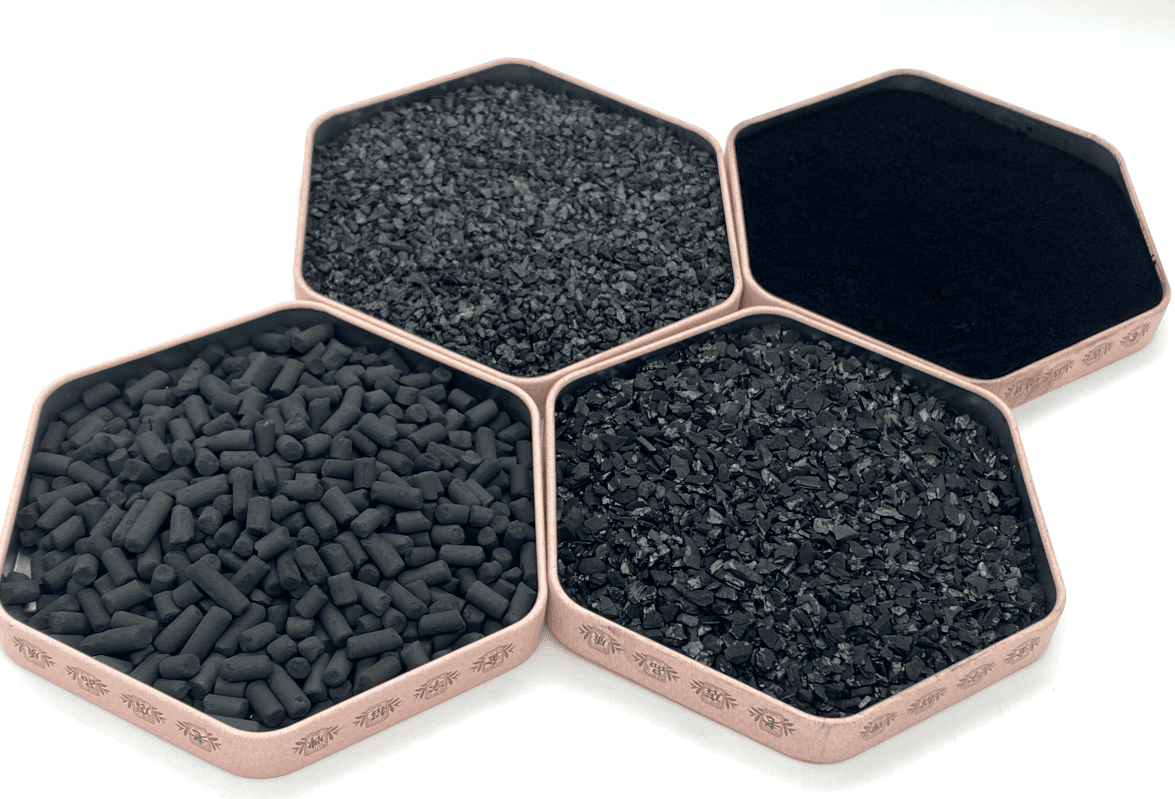
Municipal water utilities around the world have shifted from free chlorine to chloramine disinfection — and that change has created a serious problem for standard activated carbon filters. Regular granular activated carbon (GAC) removes free chlorine rapidly. Against chloramines, it is nearly helpless at practical contact times.
Catalytic carbon was developed specifically to address this gap. By modifying the surface chemistry of activated carbon through a controlled high-temperature gas-phase process, manufacturers create a material that can chemically decompose chloramines, hydrogen sulfide (H₂S), and dissolved oxygen — rather than merely adsorbing them. The result is a filter media that outperforms standard GAC by orders of magnitude for specific contaminants, while retaining full adsorption capability for everything else.
As a activated carbon manufacturer, we work with buyers across municipal water treatment, residential filtration, and industrial water systems who need to understand exactly when catalytic carbon justifies its higher price — and when standard GAC is perfectly adequate.
What Is Catalytic Carbon?
Catalytic carbon is activated carbon that has been subjected to a high-temperature gas-phase surface modification process during or after activation. The key word is catalytic — this carbon doesn't just adsorb contaminants, it acts as a catalyst to chemically decompose them.
The manufacturing process starts with a standard activated carbon base — typically coconut shell or coal-based GAC — which undergoes the usual carbonization and steam or CO₂ activation. The differentiating step is a subsequent high-temperature treatment in a controlled gas atmosphere (often CO₂, steam, or ammonia at temperatures above 900°C). This process selectively modifies the surface functional groups on the carbon, increasing the density of basic surface oxides and reducing acidic oxygen groups.
Critical Distinction: What Catalytic Carbon Is NOT
→ NOT impregnated: Catalytic carbon does not have chemicals added to it. The catalytic activity comes from modified surface chemistry of the carbon itself.
→ NOT chemically treated: No KMnO₄, silver, acid, or other agents are loaded onto the surface. This means no risk of leaching additives into treated water.
→ NOT just high-iodine GAC: Surface area (iodine number) does not determine catalytic activity. A carbon with 1,200 mg/g iodine number may have minimal catalytic activity; a 950 mg/g catalytic carbon may vastly outperform it for chloramine removal.
The modified surface chemistry allows catalytic carbon to decompose chloramine (NH₂Cl) through a surface-mediated redox reaction, producing harmless nitrogen gas, chloride ions, and water. The carbon surface acts as an electron transfer catalyst — it participates in the reaction but is not consumed. This is fundamentally different from adsorption, where molecules are held on the surface until the capacity is exhausted.
Because the catalytic mechanism doesn't deplete carbon sites in the same way adsorption does, catalytic carbon can have a longer effective service life for chloramine removal compared to standard GAC used in the same application — though it still requires replacement when its adsorption capacity for other contaminants is exhausted.
Need activated carbon?
Get Factory-Direct Pricing — No Middlemen
20+ years manufacturing. MOQ 1 ton. Free samples. Reply within 2 hours.
Catalytic Carbon vs Regular Activated Carbon: Full Comparison
The following table covers the critical parameters that distinguish catalytic carbon from standard granular activated carbon (GAC):
| Parameter | Catalytic Carbon | Regular GAC |
|---|---|---|
| Manufacturing Process | Carbonization + steam/CO₂ activation + high-temp gas-phase surface modification | Carbonization + steam or CO₂ activation only |
| Surface Chemistry | Basic surface oxides dominant; reduced acidic groups | Mix of acidic and basic surface oxides; depends on raw material |
| Chloramine Removal | Excellent — catalytic decomposition at 2–5 min EBCT | Poor — requires 20–30 min EBCT |
| Free Chlorine Removal | Excellent (same as regular GAC) | Excellent |
| H₂S Removal | Excellent — catalytic oxidation without impregnation | Limited — primarily physical adsorption |
| VOC / Organic Adsorption | Excellent (equivalent to regular GAC) | Excellent |
| Iodine Number | 900–1,100 mg/g (typical) | 800–1,200+ mg/g |
| Hardness (Ball-Pan) | >90% (coconut shell base) | 85–98% depending on base material |
| Price Premium | 40–80% higher than equivalent GAC | Baseline |
| Typical Lifespan (Water) | Longer for chloramine removal; similar for VOC | Shorter if chloramine is the target contaminant |
| NSF 61 / Drinking Water Certification | Available (no added chemicals to certify) | Available |
Core Applications of Catalytic Carbon
Catalytic carbon is not a universal upgrade over standard GAC — it excels specifically where its surface chemistry provides a catalytic advantage. The three primary applications where it outperforms regular activated carbon are:

1. Chloramine Removal from Municipal Drinking Water
This is the primary use case that drives most catalytic carbon purchases. Chloramine (monochloramine, NH₂Cl) is used by over 30% of US water utilities as a secondary disinfectant — it persists longer in distribution systems than free chlorine but doesn't form as many trihalomethane (THM) disinfection byproducts.
The problem is that regular GAC removes chloramines at an extremely slow rate. The reaction between chloramine and standard carbon surface follows a different mechanism than free chlorine removal, requiring much longer contact time. In practical filtration systems (EBCT of 2–5 minutes), standard GAC achieves less than 20% chloramine removal. Catalytic carbon achieves 95%+ removal at the same contact time.
Chloramine Removal Comparison at 3-Minute EBCT
→ Standard coconut shell GAC: <15% chloramine reduction
→ Standard coal-based GAC: 10–20% chloramine reduction
→ Catalytic carbon (coconut shell base): 90–98% chloramine reduction
→ Catalytic carbon (coal base): 85–95% chloramine reduction
For residential whole-house filters serving chloramine-treated municipal water, catalytic carbon is essentially mandatory. Standard GAC filters marketed for chloramine removal are frequently misleading — the contact time in a residential filter (often under 1 minute at normal flow rates) is far too short for standard GAC to provide meaningful chloramine reduction.
2. Hydrogen Sulfide (H₂S) Removal from Well Water
Hydrogen sulfide is a common contaminant in well water, producing the characteristic "rotten egg" odor detectable at concentrations as low as 0.5 ppb. Standard GAC can adsorb H₂S, but it saturates rapidly and the H₂S can desorb when water chemistry changes — causing sudden odor breakthrough.
Catalytic carbon oxidizes H₂S to elemental sulfur and sulfate through a surface-catalyzed reaction. In the presence of dissolved oxygen (DO), the reaction proceeds efficiently without requiring additional oxidants. The catalytic mechanism means the carbon surface isn't consumed by H₂S in the same way as simple adsorption — though eventually sulfur accumulation on pore surfaces can reduce effectiveness and backwashing becomes important.
3. Dissolved Oxygen Removal
In certain industrial water treatment applications — particularly boiler feedwater, semiconductor cooling water, and some food and beverage processes — dissolved oxygen (DO) must be reduced to prevent corrosion and oxidation reactions. Catalytic carbon can catalyze the reduction of dissolved oxygen, particularly effective when used in combination with appropriate reducing agents.
For large-scale DO removal, catalytic carbon is typically used as part of a multi-stage system alongside chemical deoxygenation or membrane degassing — it provides polishing to achieve very low DO levels (below 10 ppb) that are difficult to reach by other means alone.
Catalytic Carbon vs Impregnated Carbon vs Regular Carbon
Buyers often confuse catalytic carbon with impregnated activated carbon. They solve some of the same problems but through completely different mechanisms. Here is the definitive three-way comparison:
| Feature | Regular GAC | Catalytic Carbon | Impregnated Carbon |
|---|---|---|---|
| Modification Method | None — base activated carbon | High-temp gas-phase surface treatment | Chemical impregnation (KOH, KI, KMnO₄, silver, etc.) |
| Added Chemicals | None | None | Yes — impregnant chemical |
| Chloramine Removal | Poor | Excellent | Depends on impregnant (KMnO₄ effective) |
| H₂S Removal | Limited (adsorption only) | Excellent (catalytic oxidation) | Excellent (KOH or KMnO₄ impregnated) |
| Drinking Water Safety | NSF 61 certifiable | NSF 61 certifiable (no additives) | Depends on impregnant — some types not approved |
| VOC Adsorption | Excellent | Excellent | Reduced (chemical occupies pores) |
| Leaching Risk | None | None | Yes — impregnant can leach, especially initially |
| Relative Price | Lowest (1×) | Medium (1.4–1.8×) | Highest (2–5×) |
| Best Application | Chlorine, VOCs, general water/air treatment | Chloramine, H₂S, drinking water | Specific gas targets (HCN, Hg, radioactive iodine) |
The key takeaway: for chloramine removal in potable water, catalytic carbon is almost always the better choice over impregnated carbon. It achieves comparable (often better) chloramine reduction without the leaching risk, regulatory complications, or reduced VOC adsorption capacity that comes with chemical impregnation.
When to Use Catalytic Carbon vs Standard GAC
The decision is straightforward once you know what contaminants you are targeting:
Choose Catalytic Carbon When:
Your water supply uses chloramine disinfection
If your municipal water report lists "chloramine" or "monochloramine" as the residual disinfectant, catalytic carbon is mandatory for effective filtration. Standard GAC will not provide adequate removal at practical flow rates.
You have H₂S odor from well water
Rotten-egg odor from dissolved hydrogen sulfide is best treated with catalytic carbon. The catalytic oxidation mechanism is more durable than simple adsorption and doesn't carry the leaching risk of KMnO₄-impregnated media.
You need a short EBCT system design
In retrofit or space-constrained installations where extending the contact time is not feasible, catalytic carbon allows effective chloramine/H₂S removal in the available vessel size.
NSF 61 compliance without chemical additives is required
In regulated drinking water applications where impregnated carbon's chemical additives create certification complications, catalytic carbon provides enhanced performance within standard NSF 61 certification scope.
Standard GAC Is Sufficient When:
Your water uses free chlorine (not chloramine)
Standard GAC removes free chlorine extremely efficiently — the reaction is fast and the carbon capacity is high. There is no performance benefit to catalytic carbon for free chlorine removal, and the higher cost is not justified.
Targets are VOCs, THMs, pesticides, or taste/odor compounds
For VOC removal, standard activated carbon performs equivalently to catalytic carbon. The catalytic surface modification doesn't meaningfully improve adsorption of organic compounds.
Industrial or process applications targeting organics
Air treatment, solvent recovery, gold recovery, food processing — all applications targeting organic compound adsorption work equally well with standard GAC at a lower cost.
Technical Parameters: How to Evaluate Catalytic Carbon Quality
Not all products sold as "catalytic carbon" are created equal. The market includes standard GAC mislabeled as catalytic and products with minimal surface modification that provide only marginal improvement. Use these technical parameters to evaluate actual catalytic performance:
Hydrogen Peroxide (H₂O₂) Decomposition Rate
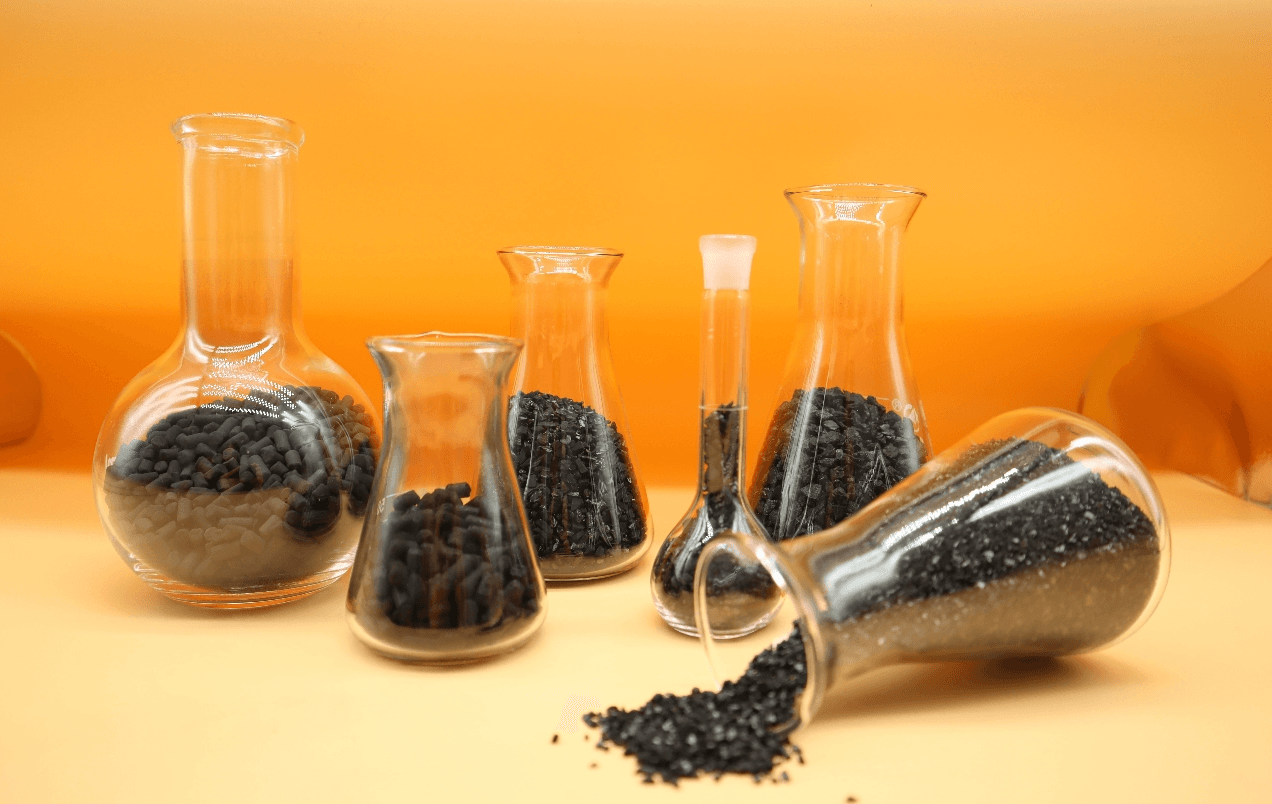
This is the primary method for measuring catalytic activity. A standardized amount of catalytic carbon is exposed to a hydrogen peroxide solution under controlled conditions, and the decomposition rate is measured. High catalytic activity carbon decomposes H₂O₂ rapidly; standard GAC shows minimal decomposition at the same conditions.
A typical specification: catalytic carbon should achieve at least 50–60% H₂O₂ decomposition within 15 minutes under standard test conditions. Standard GAC typically achieves less than 10% in the same test. Always request this data sheet from suppliers — if they cannot provide it, the product may not be genuine catalytic carbon.
Iodine Number
A necessary but not sufficient metric. Quality catalytic carbon should have an iodine number of at least 900 mg/g to ensure adequate micropore development for organic adsorption. However, a high iodine number does not confirm catalytic activity — these are independent properties.
Typical specification for drinking water catalytic carbon: 900–1,100 mg/g iodine number.
Chloramine Reduction Test (ANSI/NSF Standard 42)
For residential filter applications, catalytic carbon used in NSF 42-certified filters must pass standardized chloramine reduction testing at specified flow rates. A product certified under NSF 42 for chloramine reduction has demonstrated actual performance — not just theoretical catalytic activity. This is the most reliable specification for residential/commercial water filter applications.
| Test Parameter | Catalytic Carbon Specification | Standard GAC (Reference) |
|---|---|---|
| Iodine Number | 900–1,100 mg/g | 800–1,200 mg/g |
| H₂O₂ Decomposition (15 min) | >50% (catalytic grade) | <10% (not catalytic) |
| Chloramine Reduction (3 min EBCT) | >90% | <20% |
| Moisture (as packed) | <5% | <5% |
| Ash Content | <5% (coconut base) | <5–15% depending on base |
| Ball-Pan Hardness | >90% | 85–98% |
BET Surface Area and Pore Volume
While BET surface area doesn't predict catalytic activity, it confirms the base material quality. Catalytic carbon should have BET surface area of 900–1,200 m²/g for coconut-shell-based products, indicating a well-developed micropore structure that supports both catalytic decomposition and organic adsorption.
Purchasing Guide: Sourcing Catalytic Carbon
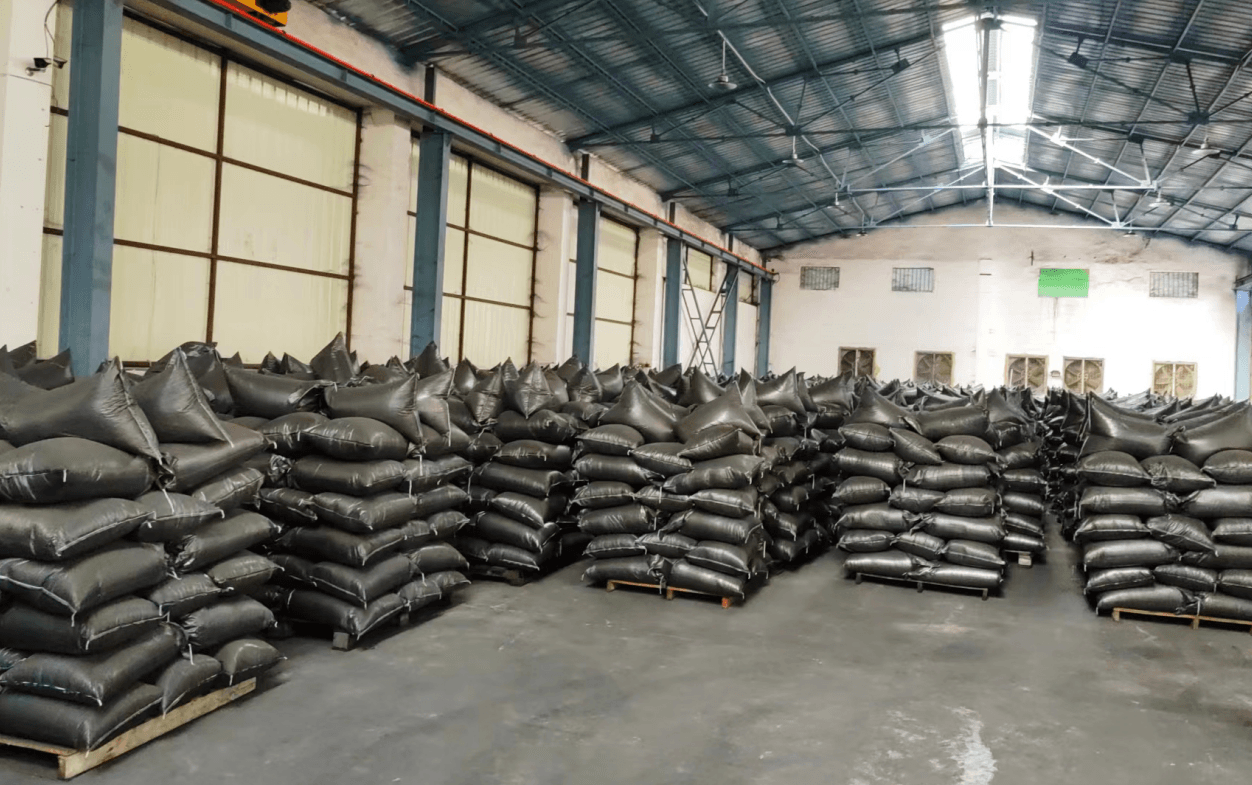
The catalytic carbon market has significant quality variation. Here is what to verify before placing an order:
Request H₂O₂ decomposition rate data
This is the most direct measure of catalytic activity. A credible supplier will have this data from their quality control records. If a supplier cannot provide it, treat the product as unverified standard GAC until you can independently test it.
Verify the base carbon raw material
Coconut-shell-based catalytic carbon typically delivers superior hardness, lower ash content, and more consistent catalytic activity compared to coal-based versions. For drinking water applications, coconut shell base is strongly preferred. For industrial applications, coal-based catalytic carbon may offer a better cost-performance balance.
Confirm NSF 61 certification scope
For drinking water applications, NSF 61 certification is required. Verify the specific carbon grade is listed in the NSF database — not just the manufacturer. NSF 42 certification for chloramine reduction (if applicable) should be verifiable on the NSF website by product and model number.
Request a pre-shipment sample and test it
For large orders (1,000 kg+), request a pre-shipment sample and submit it to an independent lab for iodine number, ash content, moisture, and H₂O₂ decomposition rate before accepting the shipment. The cost of testing ($200–$400) is trivial compared to the cost of a non-performing batch.
Understand pricing relative to base GAC
Catalytic carbon from China typically costs $1,200–$2,200/ton FOB for 8×30 mesh coconut-shell-based product, versus $800–$1,400/ton for equivalent standard coconut shell GAC. Prices below $1,000/ton for claimed catalytic carbon should be investigated carefully — the surface modification process adds real manufacturing cost and very low prices may indicate a mislabeled standard product.
Specify mesh size for your application
The most common mesh sizes for catalytic carbon in water treatment are 8×30 (US mesh) for residential and light commercial systems, and 12×40 for point-of-entry filters and smaller vessels. Confirm mesh size, uniformity coefficient, and effective size specifications match your system design requirements.
Bulk Sourcing: What to Include in Your RFQ
→ Carbon base material (coconut shell or coal)
→ Mesh size (e.g., 8×30 US mesh)
→ Minimum iodine number (e.g., ≥950 mg/g)
→ H₂O₂ decomposition rate requirement (e.g., ≥50% at 15 min)
→ NSF 61 certification requirement (yes/no)
→ Quantity (kg or MT) and delivery port
→ Packaging preference (25 kg bags, jumbo bags, or bulk)
→ COA and pre-shipment sample requirement
Frequently Asked Questions
What is catalytic carbon and how is it made?
Catalytic carbon is activated carbon that has undergone a high-temperature gas-phase surface modification process (not chemical impregnation) to alter its surface chemistry. This treatment introduces specific surface functional groups — primarily basic oxygen complexes — that give the carbon catalytic properties, enabling it to break down chloramines and H₂S through chemical reaction rather than simple physical adsorption.
Can regular activated carbon remove chloramines?
Regular activated carbon removes chloramines extremely slowly — the reaction rate is approximately 100 times slower than for free chlorine. A standard GAC filter would need an empty bed contact time (EBCT) of 20–30 minutes to achieve meaningful chloramine reduction, making it impractical for most systems. Catalytic carbon achieves the same removal in 2–5 minutes EBCT, making it the correct choice for chloramine-treated municipal water.
Is catalytic carbon the same as impregnated carbon?
No. Catalytic carbon is modified through a high-temperature gas-phase process that changes the surface chemistry of the carbon itself — no chemicals are added. Impregnated carbon has chemicals (KOH, KI, KMnO₄, silver, etc.) physically loaded onto the carbon surface. Catalytic carbon is more uniform, doesn't risk leaching additives, and is preferred for drinking water applications where regulatory compliance is critical.
How much more expensive is catalytic carbon than regular GAC?
Catalytic carbon typically costs 40–80% more than standard coconut shell or coal-based GAC. For a typical residential whole-house filter (1–2 cubic feet of media), this translates to $50–$150 additional cost. For municipal or industrial scale, the cost premium is often justified by significantly longer service life, reduced EBCT requirements (smaller vessels), and elimination of dechlorination chemical dosing.
What is the iodine number of catalytic carbon?
High-quality catalytic carbon typically has an iodine number of 900–1,100 mg/g, similar to or slightly lower than premium standard activated carbon. However, iodine number alone does not predict catalytic performance — the key metric for catalytic carbon is hydrogen peroxide (H₂O₂) decomposition rate, which directly measures the catalytic activity of the carbon surface. Always request this specification when evaluating catalytic carbon suppliers.
Need Catalytic Carbon for Your Application?
We supply catalytic activated carbon in 8×30 and 12×40 mesh sizes, coconut-shell and coal base, with NSF 61 certification available. Tell us your application and we'll confirm whether catalytic carbon is the right solution and provide a competitive quote.
Request a QuoteFurther Reading
- Activated Carbon for Water Treatment: Complete Guide →
- Impregnated Activated Carbon: Types, Applications & Selection Guide →
- Understanding Iodine Number in Activated Carbon →
- GAC vs PAC: Which Activated Carbon Is Right for Your Application? →
- Activated Carbon Adsorption Capacity Explained: Iodine, BET & CTC →
- Coconut Shell Activated Carbon Products →
- Request a Quote →