
The raw material used to produce activated carbon is arguably the single most important factor determining its performance characteristics. While activation method, temperature, and post-treatment all play roles, the source material sets the fundamental pore structure, mechanical strength, ash content, and adsorption profile that define what the carbon can and cannot do effectively.
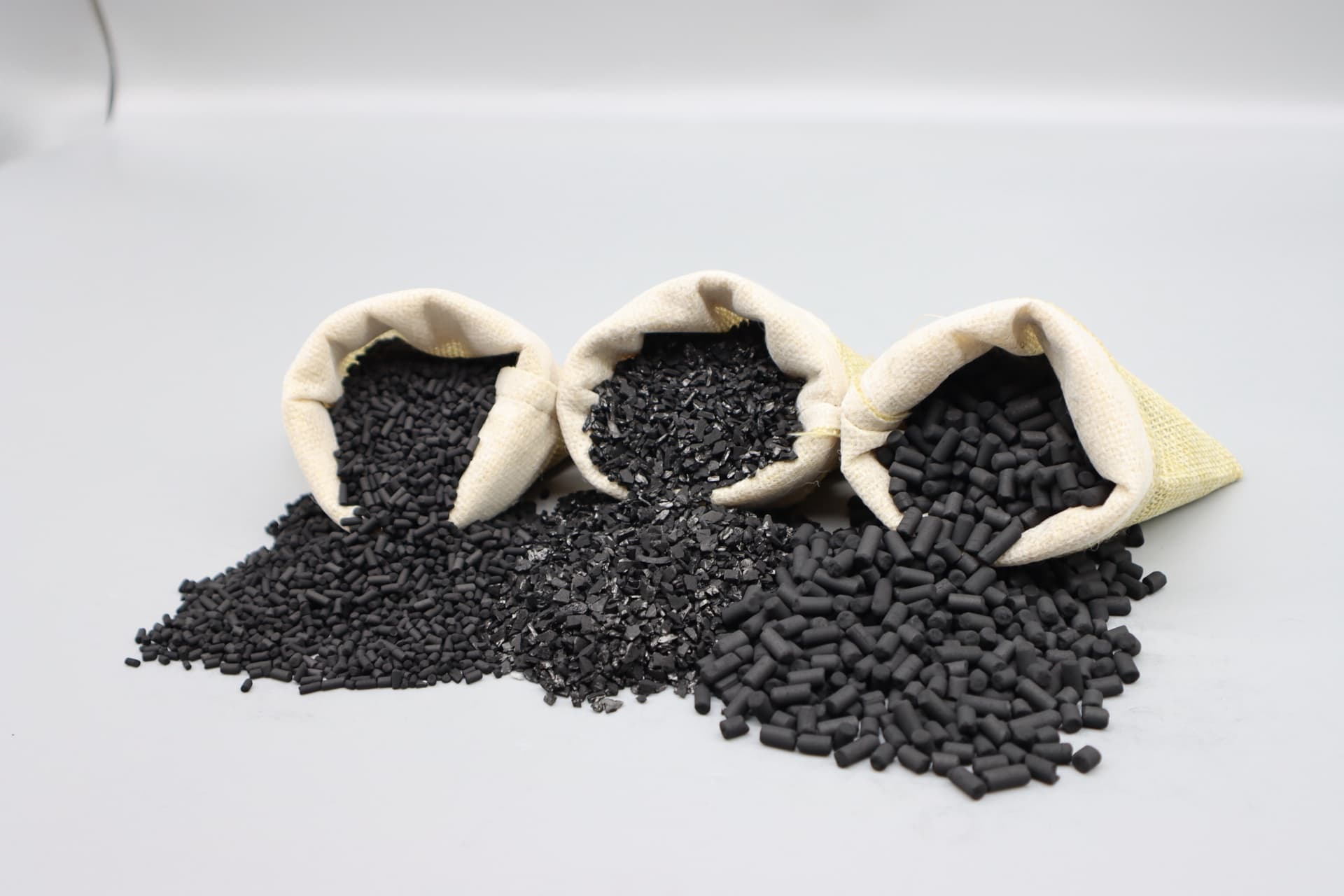
Understanding raw material differences is essential for buyers making procurement decisions. Choosing the wrong carbon type for your application wastes money and delivers poor results. This guide compares every major raw material used in commercial activated carbon production, with specific guidance on which to choose for different applications.
Raw Material Comparison at a Glance
Before diving into each raw material, here is a high-level comparison of the six major activated carbon feedstocks used in commercial production worldwide:
| Property | Coconut Shell | Bituminous Coal | Anthracite | Lignite | Wood | Bamboo |
|---|---|---|---|---|---|---|
| Pore Type | Microporous | Micro + Meso | Microporous | Meso + Macro | Macro + Meso | Micro + Meso |
| Iodine Number | 900–1200+ | 800–1100 | 700–900 | 400–700 | 800–1200 | 800–1100 |
| Hardness | 95–99% | 85–95% | 90–97% | 60–75% | 60–80% | 70–85% |
| Ash Content | 2–5% | 8–15% | 5–12% | 15–25% | 2–8% | 3–8% |
| Density (g/mL) | 0.48–0.55 | 0.45–0.58 | 0.55–0.65 | 0.35–0.50 | 0.25–0.45 | 0.35–0.50 |
| BET (m²/g) | 900–1300 | 800–1200 | 700–1000 | 400–800 | 800–1500 | 800–1200 |
| Relative Price | $$$ | $$ | $$ | $ | $$–$$$ | $$ |
Need activated carbon?
Get Factory-Direct Pricing — No Middlemen
20+ years manufacturing. MOQ 1 ton. Free samples. Reply within 2 hours.
Coconut Shell Activated Carbon
Coconut shell is the premier raw material for producing high-quality, microporous activated carbon. Coconut shells have a naturally dense, uniform cellular structure with high carbon content (approximately 75% fixed carbon) and low ash content. When activated — typically with high-temperature steam — coconut shell produces carbon with an exceptionally high proportion of micropores (pores < 2 nm diameter), making it ideal for adsorbing small molecules.
Key Characteristics
- Pore structure: Predominantly microporous (>85% micropore volume). Extremely high internal surface area per unit weight — typically 900–1,300 m²/g BET surface area.
- Hardness: Highest among all raw materials — 95–99% hardness (ASTM D3802). Generates minimal fines during handling, backwashing, and transport. Ideal for applications with frequent carbon movement like gold CIP/CIL circuits.
- Iodine number: 900–1,200+ mg/g, among the highest achievable. High iodine number reflects the extensive micropore development.
- Ash content: Very low at 2–5%, making it suitable for food-grade, pharmaceutical, and sensitive applications without extensive acid washing.
- Renewability: As a biomass byproduct of coconut farming, it is considered a renewable feedstock — an increasingly important consideration for sustainability-focused buyers.
Best Applications
- Gold recovery (CIP/CIL processes) — premium choice due to extreme hardness and high gold loading capacity
- Drinking water purification — low ash, high adsorption capacity
- Point-of-use water filters — consumer and commercial filtration systems
- Gas-phase adsorption — VOC removal, solvent recovery, air purification
- Aquarium filtration — low dust, low ash, safe for aquatic life
- Food and beverage processing — meets food-grade certification requirements
Supply and Pricing
Coconut shell activated carbon is primarily produced in Southeast Asia (Indonesia, Philippines, Sri Lanka, India) where coconut farming is concentrated. Supply can be seasonal and is affected by coconut harvests, typhoon damage, and competing demand for coconut-based products (coconut oil, coir fiber). Pricing typically ranges from $1,000–$2,500/ton FOB depending on specifications and mesh size. The premium over coal-based carbon reflects limited supply and superior performance characteristics.
Bituminous Coal-Based Activated Carbon
Bituminous coal is the most widely used raw material for activated carbon production globally, accounting for approximately 40% of total production. Found abundantly in China (Shanxi and Ningxia provinces), the United States, and other major coal-producing regions, bituminous coal provides an excellent balance of performance, versatility, and cost-effectiveness.
Key Characteristics
- Pore structure: Balanced distribution of micropores, mesopores, and macropores. This versatile pore profile makes it effective for both small and medium-sized molecules — the "Swiss army knife" of activated carbons.
- Hardness: Good at 85–95%, suitable for fixed-bed adsorbers with periodic backwashing.
- Iodine number: 800–1,100 mg/g — very good overall adsorption capacity.
- Ash content: Moderate at 8–15%. Can be reduced to 3–8% through acid washing for sensitive applications.
- Versatility: Can be produced as granular (GAC), powdered (PAC), or pelletized/extruded forms, each for different applications.
Best Applications
- Municipal water treatment — the industry standard for taste, odor, and micropollutant removal
- PFAS removal — EPA designated BAT; mesopores capture both long and short-chain PFAS
- Industrial wastewater treatment — versatile pore structure handles diverse contaminants
- VOC removal from industrial emissions (as pelletized carbon)
- Solvent recovery — good adsorption capacity with thermal regeneration compatibility
- Groundwater remediation — cost-effective for large-volume treatment systems
Supply and Pricing
Bituminous coal is abundantly available, making supply reliable and pricing relatively stable. China's Shanxi province alone produces enough coal-based activated carbon to supply most of global demand. Typical pricing ranges from $600–$1,500/ton FOB China, significantly below coconut shell carbon. This cost advantage makes coal-based GAC the default choice for large-volume municipal and industrial applications where millions of pounds of carbon are consumed annually. Check our pricing guide for current rates.
Anthracite Coal-Based Activated Carbon
Anthracite is the highest rank of coal, with very high carbon content (86–98%) and low volatile matter. While less commonly used than bituminous coal for activated carbon production, anthracite produces distinctive carbons with specific advantages for certain applications.
Key Characteristics
- Pore structure: Predominantly microporous, similar to coconut shell but with a different pore size distribution. The high carbon density and low volatile content create a very compact pore network.
- Hardness: Very high at 90–97%, second only to coconut shell. Excellent for applications requiring mechanical durability.
- Activation challenge: Anthracite's low volatile content and high density make it harder to activate than bituminous coal. Higher temperatures and longer activation times are needed, increasing production costs.
- Density: Higher bulk density (0.55–0.65 g/mL) means more mass per unit volume — important for some industrial applications where weight matters.
Best Applications
- Industrial gas purification where high hardness and density are required
- Catalyst support applications — the dense structure provides mechanical stability
- Specialized water treatment in high-pressure systems
- Military and defense applications requiring extreme durability
Lignite (Brown Coal) Activated Carbon
Lignite is the lowest rank of coal, with high moisture content and low energy density. Despite these limitations, lignite-based activated carbon has an important niche in the market due to its unique pore structure and low cost.
Key Characteristics
- Pore structure: Predominantly mesoporous and macroporous. The high volatile matter and moisture in lignite create large pores during activation. Very different from the microporous carbons produced from coconut shell or anthracite.
- Surface area: Lower than other raw materials — typically 400–800 m²/g BET. The large pores contribute less surface area per unit volume.
- Hardness: Low at 60–75%. Generates more fines during handling and is not suitable for applications requiring frequent carbon movement.
- Ash content: Highest among major raw materials at 15–25%, which can leach minerals into treated water unless acid-washed.
- Cost: Lowest-cost activated carbon, making it attractive for high-volume, less demanding applications.
Best Applications
- Flue gas treatment — mercury removal from coal-fired power plant emissions
- Wastewater treatment where high removal efficiency is less critical
- Soil remediation — large pores accommodate bulky soil contaminants
- Odor control in sewage treatment plants and composting facilities
Wood-Based Activated Carbon
Wood-based activated carbon — produced from hardwood, softwood, or sawdust — has a distinctive macroporous and mesoporous structure that makes it the material of choice for decolorization and purification of large organic molecules. It is overwhelmingly produced as powdered activated carbon (PAC) using phosphoric acid chemical activation.
Key Characteristics
- Pore structure: Predominantly macroporous and mesoporous. Wood's natural fibrous cellular structure, when chemically activated, creates large transport pores that allow big molecules to reach adsorption sites quickly. This is the key advantage over dense, microporous carbons.
- Surface area: Chemically activated wood carbons can achieve 800–1,500 m²/g BET, with the surface area concentrated in mesopores rather than micropores.
- Ash content: Low at 2–8% — comparable to coconut shell. This makes wood-based PAC suitable for food-contact and pharmaceutical applications with minimal additional purification.
- Form: Almost exclusively produced as powder (PAC), not granular. The powdery form is ideal for batch dosing applications. Some manufacturers produce wood-based GAC through steam activation, but this is less common.
- Renewability: Like coconut shell, wood is a renewable biomass feedstock. Some manufacturers use sustainably managed forestry byproducts (sawdust, wood chips) as their raw material.
Best Applications
- Sugar decolorization — the dominant application for wood-based PAC globally
- Food and beverage processing — edible oil purification, wine fining, juice clarification
- Pharmaceutical purification — API decolorization and impurity removal
- Industrial wastewater decolorization — textile, dye, and chemical industry effluents
- Municipal water treatment — PAC dosing for seasonal taste and odor events
Supply and Pricing
Wood-based activated carbon is produced primarily in China (Fujian, Jiangxi provinces), Southeast Asia, and South America. Raw material costs are moderate, but the chemical activation process (phosphoric acid) adds to production costs. Pricing typically ranges from $700–$1,800/ton FOB depending on methylene blue number, iodine number, and whether it is food-grade certified.
Bamboo Activated Carbon
Bamboo activated carbon is a growing segment of the market, particularly in East Asia where bamboo resources are abundant. While still a niche product compared to coconut shell or coal-based carbons, bamboo offers unique properties that make it attractive for certain applications and markets.
Key Characteristics
- Pore structure: A good balance of micropores and mesopores, somewhat between coconut shell and wood in character. Bamboo's natural vascular bundle structure creates a unique pore network when activated.
- Surface area: 800–1,200 m²/g BET — competitive with bituminous coal and approaching coconut shell levels.
- Growth rate: Bamboo is one of the fastest-growing plants on Earth (up to 1 meter/day for some species), making it the most renewable of all activated carbon raw materials.
- Applications: Consumer products (air purifiers, deodorizers, personal care), specialty water filtration, and environmental remediation.
Bamboo activated carbon is marketed heavily in consumer and lifestyle products (bamboo charcoal bags, skincare products) and commands premium pricing in those segments. For industrial applications, it competes with coconut shell and coal-based carbons on performance but typically cannot match their price-performance ratio at scale.
Other Raw Materials for Activated Carbon
Beyond the six major feedstocks, several other materials are used to produce activated carbon in specific regions or for niche applications:
- Palm kernel shell: Similar properties to coconut shell (microporous, hard) but with slightly higher ash content. Produced mainly in Malaysia and Indonesia.
- Olive pits / fruit stones: Hard, microporous carbons used in specialty applications. Produced in Mediterranean countries where olive processing creates abundant waste.
- Rice husk: Extremely abundant agricultural waste, especially in Asia. Produces mesoporous carbon with high silica content. Used in wastewater treatment and soil remediation.
- Peat: Used historically in Europe. Produces mesoporous to macroporous carbon with moderate performance. Declining use due to environmental concerns about peat harvesting.
- Petroleum coke: High carbon content but often contaminated with sulfur and heavy metals. Used in some industrial applications where purity is less critical.
How to Choose the Right Raw Material for Your Application
Selecting the right activated carbon starts with understanding your target contaminants and application requirements. Here is a decision framework based on common scenarios:
By Application Type
| Application | Recommended Raw Material | Why |
|---|---|---|
| Gold recovery (CIP/CIL) | Coconut shell | Extreme hardness, high gold loading, low fines |
| Drinking water treatment | Coconut shell or bituminous coal | High iodine number, good taste/odor removal |
| PFAS removal | Bituminous coal | Mixed pore structure captures all PFAS chain lengths |
| Sugar decolorization | Wood (PAC) | Macropores adsorb large color molecules efficiently |
| Pharmaceutical purification | Wood (PAC) | Low ash, macroporous, meets pharma-grade standards |
| VOC/air treatment | Coconut shell or coal (pellets) | Micropores capture volatile organic compounds |
| Flue gas mercury removal | Lignite | Low cost for high-volume, single-pass applications |
| Aquarium filtration | Coconut shell | Low ash, no phosphate leaching, safe for fish |
| Soil/groundwater remediation | Bituminous coal or lignite | Cost-effective for large-volume in-situ treatment |
By Key Specification
Sometimes the decision comes down to which quality parameter matters most for your process:
- Need maximum hardness? → Coconut shell (95–99%) or anthracite (90–97%)
- Need highest iodine number? → Coconut shell (900–1,200+)
- Need lowest ash content? → Coconut shell (2–5%) or wood (2–8%)
- Need large pores for big molecules? → Wood-based PAC or lignite
- Need the lowest cost per ton? → Lignite ($400–$800/ton) or bituminous coal ($600–$1,500/ton)
- Need a renewable/sustainable source? → Coconut shell, wood, or bamboo
Environmental and Sustainability Considerations
Raw material choice has significant environmental implications that increasingly influence purchasing decisions, especially for European and North American buyers:
- Carbon footprint: Coal-based carbons have a higher carbon footprint than biomass-based alternatives because coal is a fossil fuel. Coconut shell, wood, and bamboo carbons can be considered carbon-neutral since the CO₂ released during production was recently captured by the plant.
- Resource renewability: Biomass sources (coconut shell, wood, bamboo) regenerate on human timescales. Coal is a finite resource extracted through mining with associated environmental impacts.
- Waste utilization: Coconut shell, palm kernel shell, rice husk, and sawdust are all agricultural or industrial byproducts — using them for activated carbon production adds value to waste streams.
- Supply chain traceability: Some certifications (FSC for wood, fair trade for coconut) provide verified sustainability claims that support green procurement policies.
Frequently Asked Questions: Activated Carbon Raw Materials
What raw materials are used to make activated carbon?
Activated carbon is manufactured from a wide variety of carbonaceous raw materials. The most common are coconut shell, bituminous coal, anthracite coal, lignite coal, wood (hardwood and softwood), and bamboo. Less common sources include peat, olive pits, palm kernel shell, rice husks, and petroleum coke. Each raw material produces activated carbon with distinct pore structures, adsorption properties, and cost profiles. Coconut shell and bituminous coal account for over 70% of global activated carbon production.
Which raw material makes the best activated carbon?
There is no single 'best' raw material — the ideal choice depends entirely on your application. Coconut shell produces hard, microporous carbon ideal for gold recovery, drinking water purification, and gas-phase applications. Bituminous coal yields versatile carbon with mixed pore sizes suitable for water treatment, PFAS removal, and industrial processes. Wood-based raw materials produce macroporous carbons best for decolorization and food/pharmaceutical applications. Choose based on your target contaminants, required specifications, and budget.
Why is coconut shell activated carbon more expensive than coal-based?
Coconut shell activated carbon commands a price premium of 30–80% over coal-based carbon due to several factors: limited raw material supply (coconut shell availability depends on coconut production in tropical regions), higher production costs (coconut shells require more processing before carbonization), superior hardness and abrasion resistance (longer service life in demanding applications), higher iodine number and micropore volume per unit weight, and strong demand from premium applications like gold mining, drinking water, and food processing.
Is wood-based activated carbon better for food and pharmaceutical applications?
Yes, wood-based activated carbon — particularly powdered activated carbon (PAC) from hardwood or softwood — is the preferred choice for food processing, pharmaceutical purification, and decolorization applications. Wood-based carbons have a predominantly macroporous structure that excels at adsorbing large organic molecules like color bodies, tannins, and plant pigments. They also have lower ash content and fewer inorganic impurities than coal-based carbons, making them easier to certify for food-contact and pharmaceutical-grade use.
How does the raw material affect activated carbon pore structure?
Raw material determines the starting cellular structure that gets modified during activation. Coconut shell has a naturally dense, uniform cellular structure that produces predominantly microporous carbon (pores less than 2 nm). Coal has varying density and mineral content that creates a mix of micro-, meso-, and macropores. Wood has an open, fibrous cellular structure that produces predominantly macroporous and mesoporous carbon (pores greater than 2 nm). Activation method (steam vs chemical) further modifies the pore distribution, but the raw material sets the baseline.
Need Help Choosing the Right Activated Carbon?
Hojee manufactures activated carbon from coconut shell, coal, and wood-based raw materials. Tell us your application and we'll recommend the best product with specifications and pricing.
Request a Quote