
Activated carbon has been used in food processing for well over a century. Its ability to selectively adsorb color bodies, off-flavors, odorous compounds, and chemical contaminants makes it indispensable across sugar refining, edible oil processing, beverage production, and food-grade water treatment. But not all activated carbon is suitable for food contact — specific purity standards, certifications, and production methods separate food-grade carbon from industrial grades.
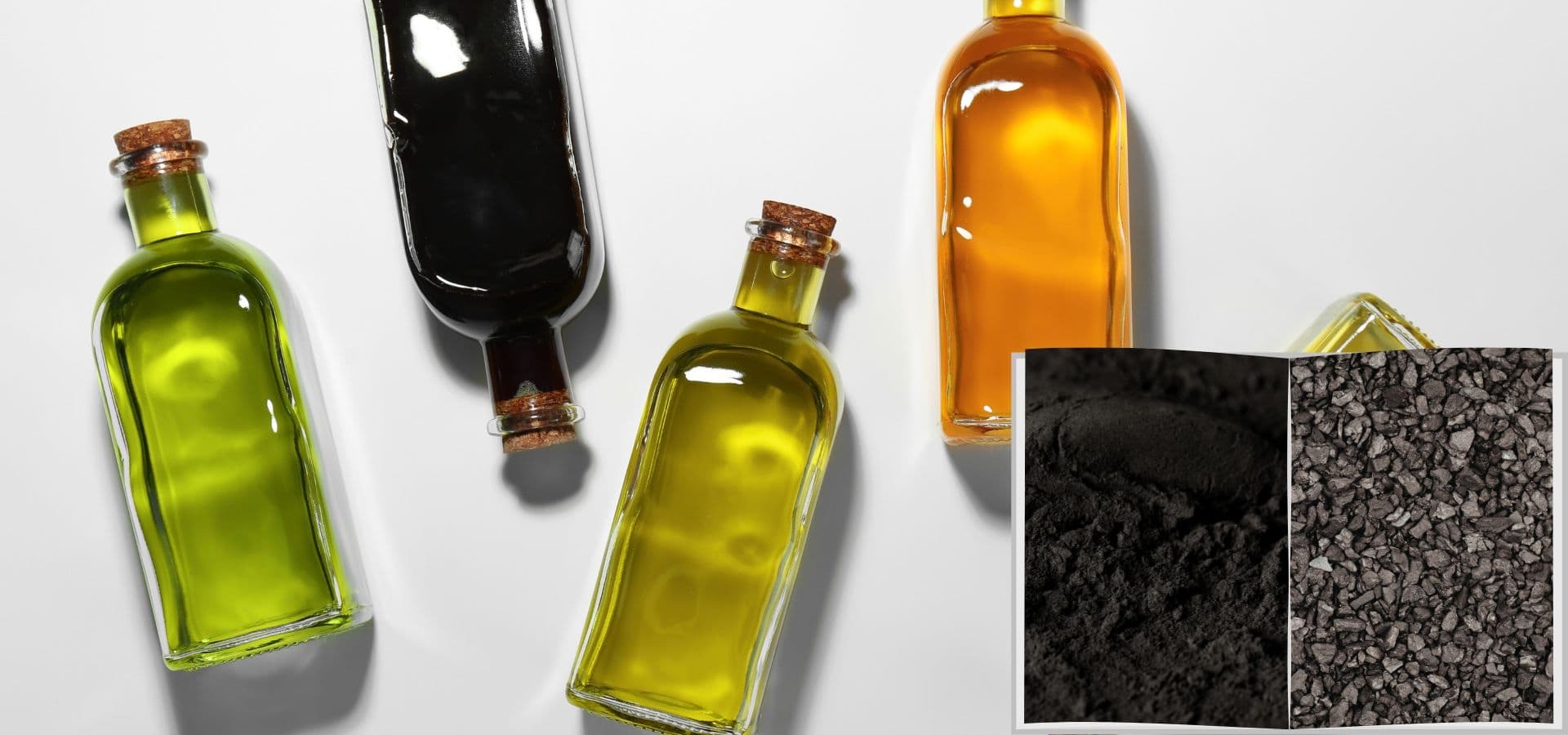
This guide covers every major food-grade application, the certifications and safety standards that govern food-contact carbon, how to select the right product type, and practical dosing and process design guidance.
What Makes Activated Carbon "Food Grade"?
The term "food grade" isn't just marketing — it refers to activated carbon that meets specific purity, manufacturing, and regulatory requirements for direct or indirect food contact:
Purity Requirements
| Parameter | Food Grade Limit | Industrial Grade (Typical) |
|---|---|---|
| Total Ash | < 5% (often < 3%) | 5–15% |
| Water-Soluble Ash | < 1% | 1–4% |
| Lead (Pb) | < 2 ppm | Not specified |
| Arsenic (As) | < 1 ppm | Not specified |
| Mercury (Hg) | < 0.1 ppm | Not specified |
| Cadmium (Cd) | < 0.5 ppm | Not specified |
| Iron (Fe) | < 500 ppm | 500–5000 ppm |
| pH | 5–8 (neutral) | 8–11 (often alkaline) |
| Acid-Soluble Matter | < 3% | 3–8% |
Raw Material & Activation Method
Food-grade activated carbon is predominantly produced from two raw materials:
- Coconut shell: Produces carbon with very low ash (<3%), high hardness, excellent micropore structure, and naturally low heavy metal content. The most widely accepted raw material for food-contact carbon globally. See our coconut shell activated carbon products.
- Wood (hardwood/softwood): Produces carbon with high mesopore volume, excellent decolorization capacity, and low ash when steam-activated. Preferred for sugar and oil decolorization. See our wood-based activated carbon range.
Steam activation is strongly preferred over chemical activation for food-grade products. Chemical activation using phosphoric acid (H₃PO₄) or zinc chloride (ZnCl₂) can leave residual chemicals that are unacceptable for food contact. Some phosphoric acid-activated wood carbons are accepted for specific food applications after thorough washing, but steam activation eliminates this concern entirely. For more on activation methods, read our Steam vs Chemical Activation Guide.
Need activated carbon?
Get Factory-Direct Pricing — No Middlemen
20+ years manufacturing. MOQ 1 ton. Free samples. Reply within 2 hours.
Certifications & Regulatory Framework
Food-grade activated carbon must comply with a web of national and international regulations. Here are the key standards every buyer should know:
United States
- FDA 21 CFR 240.381: Specifically allows activated carbon for removing excess color in the production of wine. Referenced broadly as a food-processing standard.
- GRAS Status: Activated carbon is Generally Recognized As Safe for food-contact use under conditions of good manufacturing practice.
- NSF/ANSI 61: Required for any material contacting drinking water. Ensures no harmful substances leach from the carbon into water. Essential for food processing water treatment.
- Food Chemicals Codex (FCC): Defines identity and purity specifications for activated carbon used as a food processing aid. The most widely referenced purity standard.
European Union
- E153 (Vegetable Carbon): Approved food additive under EU Regulation 231/2012. Used as a food colorant (black). Must be produced from vegetable matter (wood, coconut shell, peat).
- EN 12915: European standard for activated carbon used in water treatment for human consumption. Specifies extraction tests and limits for contaminant leaching.
- REACH Registration: Required for activated carbon imported into the EU in quantities above 1 ton/year.
International & Religious Certifications
- Halal Certification: Required for food products exported to Muslim-majority countries. Confirms the carbon is produced without animal-derived materials or alcohol-based processing.
- Kosher Certification: Similar requirement for products sold in Jewish dietary markets. Must confirm no contact with non-kosher materials during production.
- FSSC 22000 / ISO 22000: Food safety management system certification for the manufacturing facility. Increasingly required by major food processors.
For a comprehensive overview of all activated carbon certifications, see our Certification Standards Guide.
Major Food & Beverage Applications
1. Sugar Refining & Decolorization
Sugar decolorization is the single largest food-grade application of activated carbon globally. Raw sugar liquor contains color bodies (caramel, melanoidin, polyphenols, iron complexes) that must be removed to produce white refined sugar. Activated carbon adsorbs these large color molecules from the sugar solution.
Preferred carbon type: Wood-based powdered activated carbon (PAC) with high mesopore volume (pore diameter 2–50 nm) and methylene blue adsorption value >180 mg/g. The large mesopores are critical because sugar color bodies are large molecules (MW 500–50,000 daltons) that cannot enter micropores.
Process: PAC is added directly to the sugar liquor at 60–80°C, mixed for 20–45 minutes, then separated by filtration (often with diatomaceous earth as a filter aid). Dosage: 0.5–5 kg PAC per ton of sugar liquor, depending on initial color (ICUMSA units) and target color (<45 ICUMSA for refined white sugar).
For a deep dive, see our dedicated Sugar Decolorization Guide.
2. Edible Oil Purification
Edible oils — soybean, palm, rapeseed, sunflower, olive, and coconut — undergo refining steps where activated carbon removes:
- Polycyclic aromatic hydrocarbons (PAHs) — carcinogenic compounds formed during seed drying or processing
- Color bodies — chlorophyll, carotenoids, and oxidation products
- Off-flavors and odors — from oxidation or microbial activity
- Pesticide residues and environmental contaminants
- Mineral oil hydrocarbons (MOSH/MOAH) — increasingly regulated in the EU
Preferred carbon type: Steam-activated wood-based or coconut shell PAC with high mesopore/macropore volume. For PAH removal specifically, carbon with high micropore volume (BET surface area >1000 m²/g) is more effective.
Process: Carbon is added during the bleaching stage at 80–110°C, mixed for 15–30 minutes under vacuum or nitrogen (to prevent oxidation), then removed by filtration. Dosage: 0.5–2% by weight of oil. Often combined with bleaching earth (bentonite) — the carbon handles PAHs and persistent color, while bleaching earth removes chlorophyll and primary color bodies.
3. Wine, Spirits & Brewing
Activated carbon is one of the oldest fining agents in winemaking. Its applications in alcoholic beverages include:
- Color correction: Removing excess brown/amber color from white and rosé wines caused by oxidation or phenolic compounds
- Off-flavor removal: Adsorbing volatile phenols (4-ethylphenol, 4-ethylguaiacol from Brettanomyces), geosmin (earthy taste), and cork taint (TCA/TBA)
- Spirits decolorization: Treating vodka and neutral spirits to remove congeners and achieve crystal clarity
- Beer treatment: Color adjustment, removal of bitter compounds, and clarification in beer production
Preferred carbon type: Food-grade coconut shell PAC or specially formulated oenological carbon (particle size 20–50 µm, low dust). FDA 21 CFR 240.381 specifically governs activated carbon use in wine production.
Dosage: 0.25–1 g/L for wine (bench trials essential — over-dosing strips desirable aroma and flavor compounds). Treatment time: 2–24 hours with gentle agitation, followed by filtration through 0.45–1 µm membrane or pad filter.
4. Juice & Soft Drink Processing
Fruit juice manufacturers use activated carbon for:
- Decolorization: Producing clear apple juice, grape juice, and high-fructose corn syrup from colored raw juices
- Patulin removal: Adsorbing the mycotoxin patulin from apple juice — activated carbon is the most effective treatment method, achieving >90% removal at proper dosage
- Pesticide removal: Reducing pesticide residues to below detection limits
- HMF removal: Reducing 5-hydroxymethylfurfural (a heat-induced compound) in processed juices and honey
Process: PAC (0.5–3 g/L) is added to the juice at 40–60°C, mixed for 15–30 minutes, and removed by filtration. For soft drink production, GAC filters are used in the water treatment train to remove chlorine, chloramine, and organic contaminants that affect taste.
5. Process Water & Ingredient Water Treatment
Every food and beverage plant needs purified water — for ingredient water (becomes part of the product), process water (cleaning, rinsing), and boiler/cooling water. Activated carbon is a critical step in food-plant water treatment:
- Dechlorination: Removing chlorine and chloramine added by municipal water supplies. These chemicals cause off-flavors and can damage downstream equipment (RO membranes, ion exchange resins). Granular activated carbon (GAC) filters are the standard method, typically achieving >99% chlorine removal.
- TOC removal: Reducing total organic carbon to prevent disinfection byproduct formation and ensure consistent product quality
- Taste and odor: Removing earthy/musty compounds (geosmin, MIB) and industrial contaminants that affect product taste
System design: GAC pressure filters with 10–20 minute empty bed contact time (EBCT), using NSF 61 certified coconut shell GAC (8×30 or 12×40 mesh). Bed life: 12–24 months for dechlorination, 6–12 months for organic removal. All GAC in food-plant water systems must be NSF/ANSI 61 certified.
6. Other Food Industry Applications
| Application | Carbon Type | Function |
|---|---|---|
| Citric Acid Purification | Wood PAC | Decolorize and remove fermentation byproducts |
| Amino Acid Processing | Wood/Coconut PAC | Color and impurity removal from MSG, lysine, etc. |
| Glycerin Purification | Wood PAC | Decolorize crude glycerin to USP/food grade |
| Gelatin Processing | Wood/Coconut PAC | Decolorize and deodorize gelatin solutions |
| Honey Processing | Wood PAC | Remove color, HMF, and pesticide residues |
| Starch Syrup/HFCS | Wood/Coconut PAC | Final polishing decolorization |
| Coffee Decaffeination | Coconut GAC | Adsorb caffeine from extract (Swiss Water Process) |
Selecting the Right Food-Grade Activated Carbon
Choosing the right carbon requires matching the pore structure to the target molecule size and the carbon form (PAC vs GAC) to your process design:
PAC vs GAC: Which Form?
| Factor | PAC (Powdered) | GAC (Granular) |
|---|---|---|
| Application Method | Batch dosing into liquid | Fixed bed / column filtration |
| Contact Time | 15–60 minutes | 5–20 minutes (EBCT) |
| Adsorption Speed | Very fast (high surface area exposed) | Slower (diffusion-limited) |
| Best For | Decolorization, batch processing | Water treatment, continuous flow |
| Regeneration | Not practical (single use) | Thermally reactivated or replaced |
| Cost | Lower per kg, higher per unit treated | Higher per kg, lower per unit treated (reusable) |
For a detailed comparison, see our GAC vs PAC Guide.
Pore Structure Matching
The key to effective adsorption is matching the carbon's pore size distribution to the target molecules:
| Target | Molecule Size | Required Pore Type | Best Carbon |
|---|---|---|---|
| Chlorine, off-flavors | Small (<1 nm) | Micropore (<2 nm) | Coconut shell GAC |
| PAHs, pesticides | Medium (1–2 nm) | Micro/mesopore | Coconut shell or wood PAC |
| Sugar color bodies | Large (2–50 nm) | Mesopore (2–50 nm) | Wood-based PAC |
| Oil color bodies, tannins | Large (>5 nm) | Meso/macropore | Wood-based PAC |
Laboratory Testing & Dosage Optimization
Never rely on carbon specifications alone — always conduct bench- scale jar tests with your actual product to determine the optimal carbon type and dosage:
- Obtain samples: Request 2–3 candidate carbons from your supplier (different raw materials and activation methods). At Hojee, we provide free 1 kg samples for evaluation.
- Prepare test solutions: Use your actual product at process temperature and pH. Make enough for 8–10 test points.
- Dosage series: Test 5–6 carbon doses (e.g., 0.1%, 0.25%, 0.5%, 1.0%, 2.0%, 5.0% by weight) with each candidate carbon. Mix at process contact time.
- Filter and analyze: Vacuum filter through 0.45 µm and measure color (absorbance at relevant wavelength), target contaminant concentration, and any impact on desirable attributes (flavor, viscosity, etc.).
- Plot isotherms: Graph remaining concentration vs. carbon dose. The optimal dose is where additional carbon gives diminishing returns — usually the "knee" of the curve.
- Scale-up factor: Apply a 1.2–1.5× safety factor when scaling from lab to production to account for mixing efficiency and process variability.
Safety & Handling in Food Facilities
Activated carbon in food processing environments requires specific handling protocols:
- Dust control: PAC is extremely fine (5–50 µm) and generates significant airborne dust during handling. Use enclosed dosing systems, dust collection, and PPE (N95 respirator, safety glasses). Carbon dust is not toxic but is a nuisance and combustible in high concentrations.
- Fire/explosion risk: Fine carbon dust is combustible. Maintain good housekeeping, eliminate ignition sources near dosing areas, and ensure proper grounding of equipment to prevent static discharge. Wet activated carbon is NOT a fire risk.
- Storage: Store in a cool, dry, well-ventilated area away from strong oxidizers. Keep sealed until use — activated carbon adsorbs moisture and volatile compounds from the air, reducing effectiveness. For detailed guidance, see our Packaging & Storage Guide.
- Traceability: Maintain lot-level traceability for all activated carbon used in food contact. Record supplier, batch number, COA, date of use, dosage, and product lot treated. This is a HACCP requirement.
- Incoming QC: Test each incoming batch for at least: pH, moisture, particle size distribution, and one application-relevant parameter (iodine number, methylene blue value, or decolorization capacity). Compare against your approved specification and the supplier's COA.
Cost Considerations
Food-grade activated carbon commands a premium over industrial grades due to higher raw material quality, acid washing, additional testing, and certification costs:
| Product | Food Grade (FOB China) | Industrial Grade (FOB China) |
|---|---|---|
| Coconut Shell GAC 8×30 | $2,800–$3,800/ton | $1,450–$1,950/ton |
| Coconut Shell PAC | $2,800–$3,800/ton | $1,450–$1,950/ton |
| Wood-Based PAC | $2,000–$3,700/ton | $590–$1,500/ton |
| Acid-Washed GAC 12×40 | $2,100–$3,100/ton | $900–$2,000/ton |
The 20–40% premium for food grade is justified by the additional processing, testing, and certification required. Attempting to use industrial-grade carbon in food applications risks regulatory violations, product recalls, and consumer safety issues — the savings are never worth the risk. For current pricing details, see our 2026 Pricing Guide.
Frequently Asked Questions
What makes activated carbon 'food grade'?
Food-grade activated carbon meets specific purity standards: low ash content (<5%, often <3%), heavy metals below regulated limits (lead <2 ppm, arsenic <1 ppm, mercury <0.1 ppm), no residual chemical activating agents, and compliance with regulations like the US FDA 21 CFR 240.381, EU Regulation 231/2012 (E153), or the Food Chemicals Codex (FCC). It is typically produced from coconut shell or wood using steam activation (not chemical activation with ZnCl₂ or H₃PO₄), followed by acid washing to reduce mineral content. The production facility must follow GMP practices and conduct batch-level testing for heavy metals, pH, and microbiological parameters.
Is activated carbon safe to use in food and beverages?
Yes, when properly certified food-grade activated carbon is used according to Good Manufacturing Practice. Activated carbon has GRAS (Generally Recognized As Safe) status from the US FDA and is approved as a food additive (E153) in the European Union. It has been used in food processing for over a century — primarily in sugar refining, edible oil purification, and water treatment. The carbon does not dissolve in food products; it adsorbs impurities and is then physically removed by filtration. Residual carbon particles in the final product are non-toxic but undesirable for appearance reasons.
What type of activated carbon is best for food processing?
For most food and beverage applications, wood-based or coconut shell-based powdered activated carbon (PAC) is preferred. Wood-based PAC offers high mesopore volume (ideal for decolorization of large molecules like caramel and melanoidin) and low ash content. Coconut shell PAC has higher micropore volume, making it better for removing small molecules like off-flavors and chlorine. Coal-based carbon is generally not used in direct food contact due to higher ash and potential heavy metal content, though acid-washed coal-based GAC is acceptable for water treatment in food facilities.
What certifications should food-grade activated carbon have?
Key certifications include: (1) NSF/ANSI 61 — required for drinking water contact in the US, also accepted for food processing water; (2) FDA compliance under 21 CFR 240.381 — specific to oenological (wine) use but widely referenced; (3) Food Chemicals Codex (FCC) — the standard purity specification; (4) EU E153 approval under Regulation 231/2012; (5) Halal and Kosher certifications — required for export to certain markets; (6) ISO 9001/FSSC 22000 — manufacturing quality management. Always request batch-specific COA with heavy metal analysis.
How much activated carbon is needed per ton of product?
Dosage varies widely by application: Sugar refining uses 0.5–5 kg PAC per ton of sugar liquor. Edible oil purification requires 0.5–2% by weight of oil. Wine and juice fining uses 0.25–1 g/L. Beer treatment uses 0.1–0.5 g/L. Citric acid purification uses 1–3% by weight. Glycerin purification uses 2–5% by weight. Actual dosage depends on the initial color/impurity level and target specifications. Laboratory jar testing is essential to determine the optimal dose for each batch — over-dosing wastes carbon and can strip desirable flavor compounds.
Need Food-Grade Activated Carbon?
Tell us your application — sugar refining, oil purification, beverage processing, or water treatment. We'll recommend the right carbon grade, provide a COA with full heavy metal analysis, and ship free evaluation samples.
Request Food-Grade Samples & Pricing