
Activated Carbon for Energy Storage
High-purity, high-surface-area activated carbon engineered for EDLC supercapacitors, battery electrodes and emerging energy applications — tuned pore structure, ultra-low ash and iron, and consistent batch-to-batch capacitance at 40–60% below Western brand pricing.
The Energy-Storage Challenge
Why pore structure — not just surface area — sets capacitance
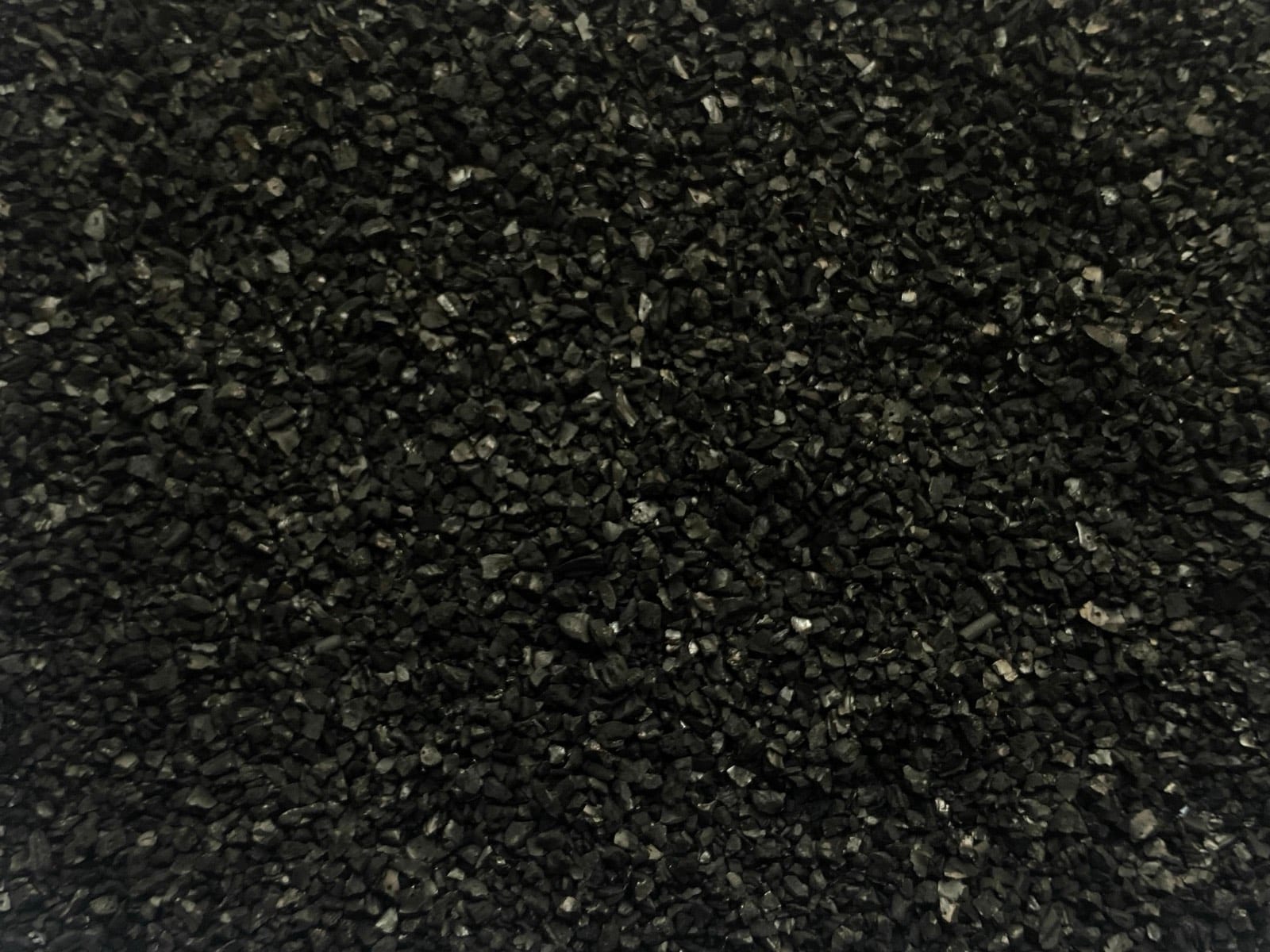
Electric double-layer capacitors (EDLCs) store charge electrostatically on the surface of a porous carbon electrode, so performance is driven by accessible surface area and pore architecture. But raw BET number alone is misleading: micropores (<2 nm) provide the surface for charge storage, while mesopores (2–50 nm) supply the transport pathways electrolyte ions need to reach that surface quickly. A carbon that is all ultra-micropore looks impressive on a BET report yet delivers poor rate performance. Purity matters just as much — residual iron, ash and chloride cause self-discharge, gassing and shortened cycle life. The right electrode carbon balances a tuned pore-size distribution with tightly controlled purity, batch after batch.
How Carbon Stores Energy
From porous carbon to stored charge
When voltage is applied, electrolyte ions accumulate on the carbon surface forming an electric double layer. The larger the accessible surface, the more charge stored — no chemical reaction, so cycling is highly reversible.
Mesopores and macropores act as highways that carry ions to the micropore surface. Adequate mesoporosity is what lets a supercapacitor deliver high power — charge and discharge in seconds.
Low iron, ash and chloride minimise self-discharge and gas evolution, so cells hold voltage and survive hundreds of thousands of cycles. Purity is why electrode carbon commands a premium over water-grade.
Where It's Used
Energy-storage applications we supply
Carbon Selection
Choosing carbon by energy-storage duty
Match the grade to your cell chemistry, voltage window and power target. Every grade ships with a batch COA — BET surface area, pore-size distribution, ash, iron and particle size.
| Duty | Recommended Grade | BET (m²/g) | Key spec |
|---|---|---|---|
| Standard EDLC electrode | Coconut steam-activated | 1,500–2,000 | Ash <3%, balanced micro/meso |
| High-capacitance EDLC | KOH chemical-activated | 2,200–3,000 | High micropore volume |
| High-power / high-rate | Meso-tuned coconut | 1,600–2,000 | Enhanced mesoporosity |
| Lithium-ion capacitor | High-purity coconut | 1,800–2,400 | Iron <30 ppm |
| Brine lithium sorbent | Granular / impregnated | 900–1,500 | High mechanical strength |
Not sure which grade fits your cell chemistry? Send us your target specs.
Get a Grade RecommendationFormulation Factors
Electrode formulation & spec factors
Pore-size distribution
Match pore size to your electrolyte ion diameter. Organic electrolytes (TEABF₄/ACN) need pores >1 nm to admit solvated ions; over-tight ultra-micropores waste surface area that ions can't reach.
Purity & washing
Electrode carbon is acid-washed to strip iron, ash and chloride. We control total iron to <50 ppm (or <30 ppm on request) to suppress self-discharge and gassing over long cycling.
Particle size & packing
Fine, uniform particle size distribution improves electrode density and conductivity. We can supply milled grades to your target D50 for coating and calendering.
Consistency & COA
Capacitance drifts if BET and pore structure wander batch to batch. Every shipment ships with a COA so your electrode formulation stays locked in across production runs.
Capability
High-purity carbon, sample-first workflow
How we qualify an energy-storage carbon order
Energy-storage carbon is spec-critical, so we work sample-first. Send your target BET, pore-size distribution, purity limits (iron/ash/chloride) and particle size, and we ship a qualification sample with full COA before any bulk commitment. Once your electrode performance is validated, we lock the activation and washing protocol to hold capacitance consistent across production batches. This de-risks the switch from a Western brand to factory-direct China supply.
Energy-Storage Carbon — Frequently Asked Questions
What type of activated carbon is best for supercapacitors?
Coconut shell-based activated carbon with a BET surface area of 1,500–2,500 m²/g and a balanced pore-size distribution is the standard choice for EDLC supercapacitors. Micropores (<2 nm) provide the surface for charge storage while mesopores (2–50 nm) enable fast ion transport. Steam-activated coconut carbon typically outperforms coal-based grades thanks to its higher micropore ratio and lower ash (<3%). For maximum capacitance, KOH chemical-activated grades reach 2,200–3,000 m²/g.
What BET surface area do I need for energy-storage carbon?
Most commercial EDLC electrodes use carbon in the 1,500–2,500 m²/g range. Surface area alone doesn't set capacitance — pore accessibility matters just as much. Going from 1,500 to 2,000 m²/g can raise specific capacitance 20–30%, but gains diminish above 2,500 m²/g because ultra-micropores become inaccessible to electrolyte ions. We help you pick the BET and pore structure that actually converts to capacitance in your cell.
How pure does activated carbon need to be for electrodes?
Purity is critical. Residual iron, ash and chloride cause self-discharge, gas evolution and shortened cycle life. Electrode-grade carbon is acid-washed to keep ash <2–3% and total iron <50 ppm (we can supply <30 ppm on request). This purity is the main reason energy-storage carbon costs more than standard water-treatment grade.
How much does supercapacitor-grade activated carbon cost?
Expect roughly $3,000–8,000/ton FOB for high-purity coconut carbon with BET >1,800 m²/g and ash <2%. Premium KOH-activated grades above 2,500 m²/g can exceed $10,000/ton. That's a large premium over water-treatment carbon ($800–1,500/ton), reflecting stricter purity, specialised activation and lower yields — but still typically 40–60% below Western brand pricing.
Can your activated carbon be used for lithium extraction?
Yes. Activated carbon serves as a sorbent and support medium in direct lithium extraction (DLE) from brine, and spent PFAS-removal carbon has been shown to accumulate lithium. We supply granular and impregnated grades with high mechanical strength for these duties. See our lithium extraction guide for the full technical picture.
What is your MOQ and how do you qualify energy-storage orders?
MOQ is 1 tonne, but because electrode carbon is spec-critical we work sample-first: send your BET, pore-size, purity and particle-size targets and we ship a qualification sample with COA before any bulk order. Once validated, we lock the activation and washing protocol to keep capacitance consistent batch to batch.
Qualify a lower-cost energy-storage carbon
Send us your BET, pore-size distribution, purity limits and particle-size target. We'll ship a qualification sample with full COA — and lock the spec once your electrode performance is validated.
Request an Energy-Storage Carbon Quote