
Activated Carbon for Energy Storage & Supercapacitors: Complete Guide (2026)
The supercapacitor market is booming — and activated carbon is at its core. As a manufacturer with 15+ years of experience producing high-surface-area carbons, we break down exactly what makes activated carbon suitable for EDLC energy storage applications.
Table of Contents
Need activated carbon?
Get Factory-Direct Pricing — No Middlemen
20+ years manufacturing. MOQ 1 ton. Free samples. Reply within 2 hours.
The EDLC Supercapacitor Market Boom
The global supercapacitor market is experiencing explosive growth, driven by demand for rapid energy storage in electric vehicles, renewable energy systems, consumer electronics, and grid-scale applications. Cabot Corporation, Haycarb PLC, and Calgon Carbon Corporation are among the industry giants accelerating investments in supercapacitor-grade activated carbon production.
According to Fortune Business Insights (April 2026), the activated carbon EDLC market is projected to grow at a CAGR of 15–20% through 2030, making it one of the fastest-growing segments in the activated carbon industry. The broader activated carbon market itself is expected to reach $11.9 billion by 2034, with energy storage applications capturing an increasing share.
📈 Why This Matters for Activated Carbon Buyers
As supercapacitor demand grows, high-surface-area activated carbon prices are trending upward. Energy-grade coconut shell AC (BET > 1,800 m²/g) commands a 3–5× premium over standard water treatment grade. Securing reliable supply chains now is a strategic advantage.
Key market drivers in 2026:
- Electric Vehicles: Supercapacitors handle regenerative braking energy recovery and cold-start assist, complementing lithium-ion batteries
- Renewable Energy: Grid-scale supercapacitors smooth wind and solar power intermittency, requiring bulk activated carbon supply
- 5G & IoT Infrastructure: Base station backup power systems increasingly use supercapacitors for instant-on reliability
- Industrial Automation: AGVs, cranes, and robotic systems use supercapacitors for burst power delivery
Why Activated Carbon Dominates EDLC Electrodes
Electric Double-Layer Capacitors (EDLCs) store energy through electrostatic charge accumulation at the interface between the electrode surface and electrolyte — no chemical reaction occurs. This mechanism demands electrode materials with three critical properties that activated carbon uniquely delivers:
Massive Surface Area
1,500–2,500 m²/g — more surface area means more charge storage. One gram of EDLC-grade AC has the surface area of half a football field.
Electrical Conductivity
Carbon's inherent conductivity enables efficient electron transport. Combined with carbon black additives, AC electrodes achieve low internal resistance.
Cycle Stability
No faradaic (chemical) reactions means no degradation. AC-based EDLCs deliver 500,000+ charge/discharge cycles — 100× more than lithium-ion batteries.
Compared to alternative electrode materials (graphene, carbon nanotubes, metal oxides), activated carbon offers the best balance of performance, cost, and scalability. Graphene delivers higher theoretical capacitance but costs $100,000+/ton at commercial scale. AC costs $3,000–8,000/ton, making it the only economically viable option for mass-market supercapacitors.
Material Requirements for Energy-Grade Activated Carbon
Not all activated carbon is suitable for energy storage. Supercapacitor-grade carbon must meet significantly stricter specifications than water treatment or air purification grades. Here are the critical parameters:
| Parameter | Water Treatment Grade | EDLC / Supercapacitor Grade | Why It Matters |
|---|---|---|---|
| BET Surface Area | 800–1,200 m²/g | 1,500–2,500 m²/g | Higher surface area = more charge storage capacity |
| Micropore Volume | 0.3–0.5 cm³/g | 0.6–1.0 cm³/g | Micropores (< 2 nm) dominate EDLC charge storage |
| Ash Content | < 8% | < 2% (ideal < 1%) | Ash causes self-discharge and reduces cycle life |
| Moisture | < 5% | < 1% | Moisture degrades electrolyte performance |
| Particle Size | 8×30 or 12×40 mesh | D50: 3–8 µm (powder) | Fine powder for electrode slurry coating |
| Electrical Resistivity | Not specified | < 0.5 Ω·cm | Low resistance enables high power delivery |
| Specific Capacitance | N/A | 100–200 F/g | Direct measure of energy storage performance |
| Price (FOB) | $800–1,500/ton | $3,000–8,000/ton | Premium reflects stricter specs and lower yields |
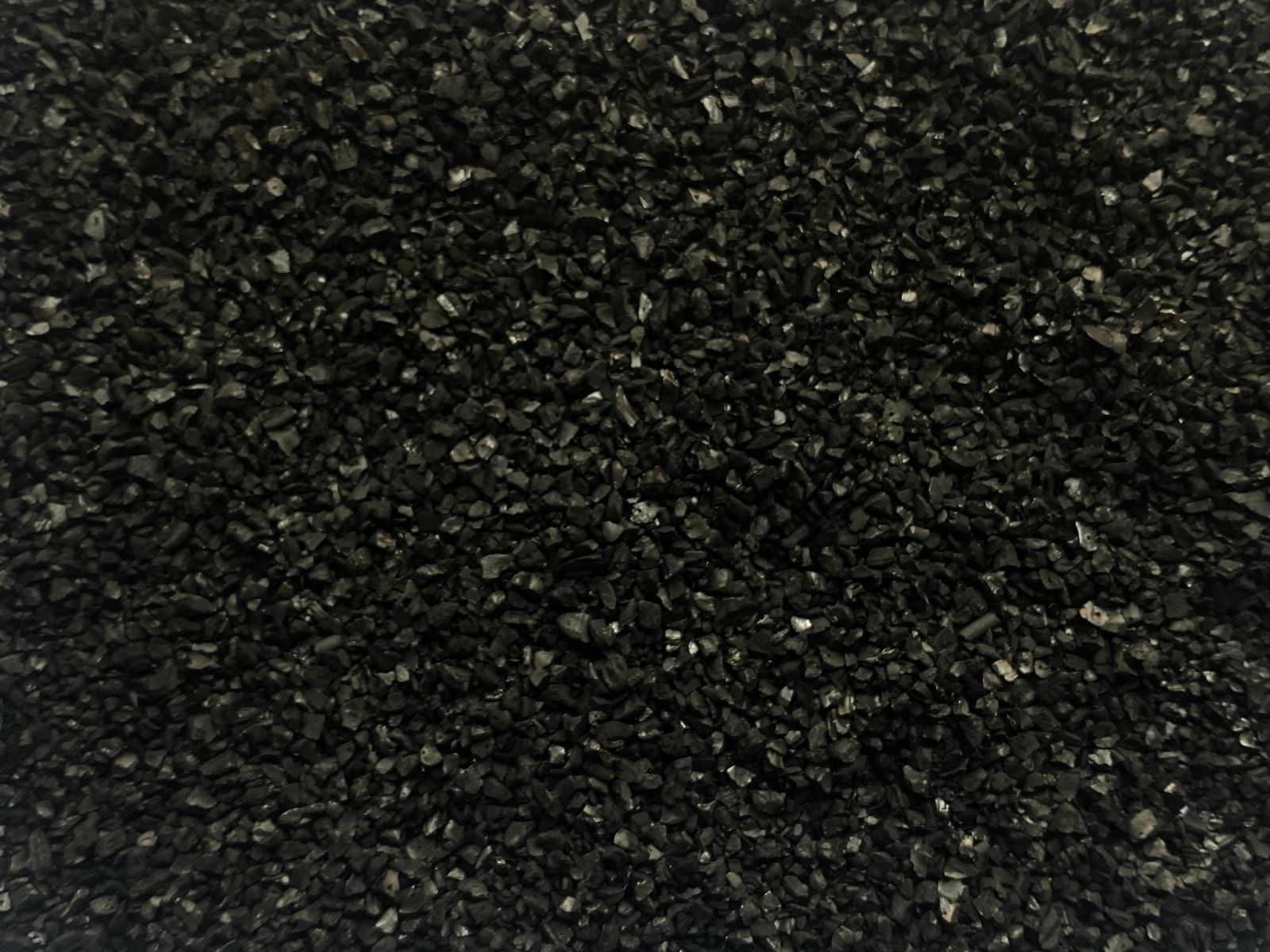
Energy-grade activated carbon powder — fine particle size (D50: 5 µm) for electrode slurry coating applications
Coconut Shell vs Coal-Based vs KOH-Activated Carbon for Supercapacitors
The raw material and activation method fundamentally determine the carbon's suitability for energy storage. Here's how the three main types compare:
🥥 Coconut Shell Activated Carbon (Steam-Activated)
The industry standard for commercial EDLC electrodes. Steam activation at 800–1,000°C produces a well-developed micropore structure ideal for charge storage. Key advantages: naturally low ash content (< 3%), excellent micropore-to-mesopore ratio, good batch consistency. BET typically reaches 1,500–2,000 m²/g. Our Fujian production base processes coconut shell from Southeast Asian supply chains with strict quality control on raw material consistency.
⛏️ Coal-Based Activated Carbon (Steam/CO₂-Activated)
Coal-based AC offers a cost advantage but typically has higher ash content (3–8%) and a broader pore size distribution with more mesopores. While this makes it excellent for water treatment, the higher ash and lower micropore ratio reduce EDLC performance. Some coal-based carbons achieve acceptable performance after acid washing to reduce ash below 2%, but this adds processing cost. Better suited for lower-cost industrial supercapacitor applications where premium performance isn't critical.
🧪 KOH-Activated Carbon (Chemical Activation)
Chemical activation with potassium hydroxide (KOH) produces the highest surface area carbons — up to 3,000+ m²/g — with precisely tunable pore structures. This is the premium option for high-performance research and specialty supercapacitors. The process involves mixing carbon precursor with KOH at 1:1 to 1:4 ratios and activating at 600–900°C under inert atmosphere. Drawbacks: higher cost ($8,000–15,000/ton), corrosive chemicals require specialized equipment, and lower yield (30–40% vs 50–60% for steam activation).
| Property | Coconut Shell (Steam) | Coal-Based (Steam) | KOH-Activated |
|---|---|---|---|
| BET Surface Area | 1,500–2,000 m²/g | 1,000–1,500 m²/g | 2,500–3,000+ m²/g |
| Specific Capacitance | 120–180 F/g | 80–130 F/g | 150–250 F/g |
| Ash Content | 1–3% | 3–8% | < 1% |
| Price (FOB) | $3,000–5,000/ton | $1,500–3,000/ton | $8,000–15,000/ton |
| Best For | Commercial EDLC | Industrial / Low-Cost | R&D / Premium EDLC |
| Supply Stability | ⚠️ Tightening | ✅ Stable | ✅ Process-dependent |
Performance Specifications & Electrode Design Data
Understanding the relationship between carbon properties and supercapacitor performance is critical for material selection. Here's the data that matters:
Surface Area vs Capacitance Relationship
The correlation between BET surface area and specific capacitance is not linear. Research published in peer-reviewed journals shows:
Key Findings:
- BET 1,000 m²/g → ~80–100 F/g capacitance
- BET 1,500 m²/g → ~120–150 F/g capacitance
- BET 2,000 m²/g → ~150–180 F/g capacitance
- BET 2,500 m²/g → ~170–220 F/g capacitance
- Above 2,500 m²/g → diminishing returns
Why Diminishing Returns?
- Ultra-micropores (< 0.7 nm) are too small for solvated electrolyte ions
- Pore accessibility decreases at very high activation levels
- Optimal pore width for organic electrolytes: 0.7–1.5 nm
- Optimal pore width for aqueous electrolytes: 0.5–1.0 nm
Electrode Fabrication Parameters
For supercapacitor manufacturers processing our activated carbon into electrodes, here are typical formulation guidelines:
| Component | Weight % | Function |
|---|---|---|
| Activated Carbon | 80–90% | Active material — charge storage |
| Carbon Black (Super P) | 5–10% | Conductive additive — improves electron transport |
| PVDF Binder | 5–10% | Mechanical integrity — holds electrode together |
Typical electrode thickness: 50–200 µm on aluminum foil current collector. Electrolytes: organic (TEABF₄/acetonitrile, 2.7V) or aqueous (H₂SO₄ or KOH, 1.0V). Organic electrolytes deliver 4–7× higher energy density despite lower capacitance per gram.
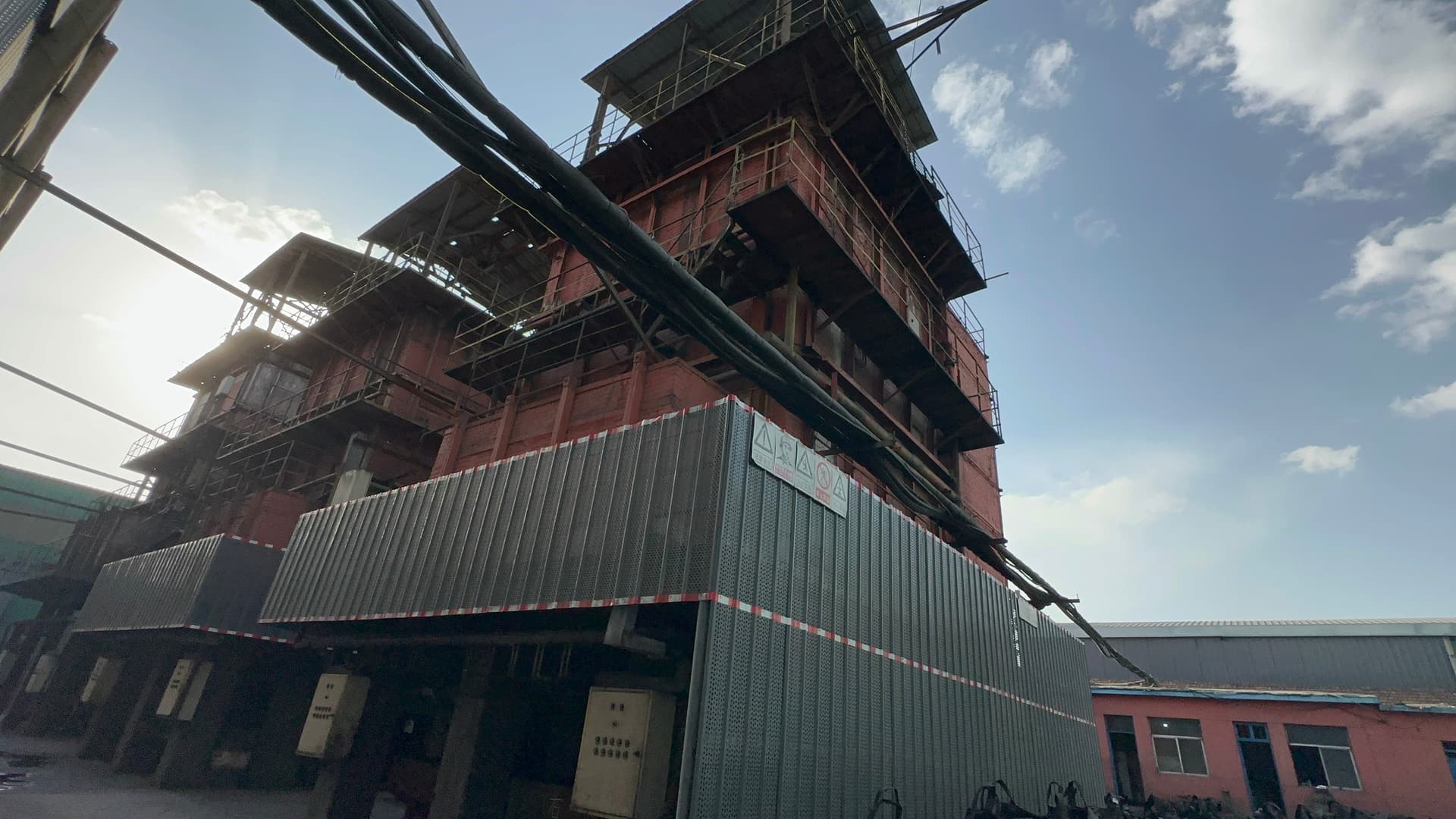
Our activation furnace line — temperature-controlled steam activation produces consistent BET surface area for energy-grade carbon
Innovation: Waste-to-Supercapacitor Research (2026)
The intersection of circular economy and energy storage is producing exciting breakthroughs. Here are the most notable developments from recent research:
🥃 Bourbon Distillery Waste → 25× Energy Improvement
Scientists converted bourbon whiskey production waste into activated carbon electrodes that delivered 25 times higher energy than conventional materials. The organic-rich distillery waste produces carbon with favorable pore structure for charge storage. While still lab-scale, this demonstrates the potential of food industry waste streams.
🌽 Corn Cob Activated Carbon for Water Treatment + Energy
Research published in Nature optimized corn cob-based activated carbon for dual-purpose application: industrial wastewater COD removal and energy storage electrodes. Optimized activation conditions produced carbon with BET > 1,200 m²/g and acceptable capacitance for industrial supercapacitor applications.
♻️ Plastic + Biomass Co-Pyrolysis
Spanish researchers co-pyrolyzed post-consumer plastic waste with biomass to produce activated carbon with CO₂/CH₄ separation performance comparable to commercial products. The same approach is being explored for supercapacitor electrodes, potentially addressing both plastic waste and energy storage challenges simultaneously.
🔥 Flash Heating for CO₂ Adsorption & Storage
Turkish researchers developed a novel flash heating technique that significantly enhances activated carbon's high-pressure CO₂ adsorption capacity. While targeting carbon capture (CCUS), the high-surface-area carbon produced by this method shows promise for energy storage applications as well.
🏭 Manufacturer's Perspective
As a manufacturer, we're closely tracking these innovations. Our current energy-grade carbon uses coconut shell feedstock with proven performance, but we're evaluating agricultural waste streams (palm kernel shell, bamboo) as supplementary feedstocks for next-generation energy storage products. The key challenge remains scaling lab results to consistent, commercial-quality production.
Sourcing Guide for Energy Storage Activated Carbon
Sourcing activated carbon for supercapacitor applications requires a different approach than sourcing for water treatment. See our guide to top activated carbon suppliers for a broader comparison, and note these energy-grade specific requirements:
✅ Must-Have from Your Supplier
- ☑️ BET surface area testing capability (N₂ adsorption)
- ☑️ Pore size distribution analysis (DFT method)
- ☑️ Ash content < 2% with COA per batch
- ☑️ Consistent particle size (D50 control)
- ☑️ Electrochemical pre-testing data (CV curves)
- ☑️ Ability to provide 1–5 kg samples for R&D
🚩 Red Flags
- ⚠️ No BET testing equipment in-house
- ⚠️ Can't provide pore distribution data
- ⚠️ Ash content > 5% without acid washing option
- ⚠️ No experience with energy-grade specifications
- ⚠️ Only water treatment grade in product line
- ⚠️ Can't provide small R&D samples
Pricing Expectations (2026)
| Grade | BET Range | FOB Price (China) | Typical Application |
|---|---|---|---|
| Standard EDLC | 1,500–1,800 m²/g | $3,000–4,500/ton | Consumer electronics, small EDLC cells |
| Premium EDLC | 1,800–2,200 m²/g | $4,500–6,500/ton | EV, grid storage, industrial |
| Ultra-High Performance | 2,200–3,000+ m²/g | $8,000–15,000/ton | R&D, military, aerospace |
💡 Supply Chain Alert: Coconut Shell Prices Rising
Indonesian coconut shell exports have declined in 2026, pushing raw material costs up 15–20%. This directly impacts energy-grade coconut shell AC pricing. Buyers placing large orders should consider securing supply contracts now, as further price increases are expected through Q3 2026. For applications where coal-based AC is acceptable after acid washing, this offers a hedge against coconut shell supply risks.
Frequently Asked Questions
What type of activated carbon is best for supercapacitors?
Coconut shell-based activated carbon with BET surface area of 1,500–2,500 m²/g and high micropore volume is considered optimal for EDLC supercapacitors. The key is a balanced pore size distribution — micropores (< 2 nm) provide high surface area for charge storage, while mesopores (2–50 nm) enable fast ion transport. Steam-activated coconut shell carbon typically outperforms coal-based alternatives due to its naturally higher micropore ratio and lower ash content (< 3%).
What BET surface area is needed for supercapacitor-grade activated carbon?
Commercial EDLC-grade activated carbon typically has BET surface area between 1,500 and 2,500 m²/g. However, surface area alone doesn't determine capacitance — pore size distribution and pore accessibility are equally important. Research shows that increasing BET from 1,500 to 2,000 m²/g can improve specific capacitance by 20–30%, but gains diminish above 2,500 m²/g as ultra-micropores become inaccessible to electrolyte ions.
How much does activated carbon for supercapacitors cost?
Energy-storage grade activated carbon costs significantly more than water treatment grade. Expect $3,000–8,000/ton FOB for high-purity coconut shell AC with BET > 1,800 m²/g and ash < 2%. Premium KOH-activated carbons with BET > 2,500 m²/g can exceed $10,000/ton. Standard water treatment carbon (BET 900–1,100 m²/g) costs only $800–1,500/ton by comparison. The price premium reflects stricter purity requirements, specialized activation processes, and lower production yields.
Can activated carbon from waste materials be used in supercapacitors?
Yes, and this is an active area of research. Scientists have produced high-performance supercapacitor electrodes from bourbon distillery waste (25x energy improvement), corn cob biomass, industrial sludge, and plastic-biomass co-pyrolysis. While lab results are promising, commercial adoption requires consistent feedstock quality and scalable activation processes. Coconut shell and certain agricultural wastes (palm kernel, olive pit) are closest to commercial viability for energy storage applications.
What is the difference between EDLC and battery-type supercapacitors?
EDLC (Electric Double-Layer Capacitor) stores energy through electrostatic charge accumulation at the carbon electrode-electrolyte interface — no chemical reaction occurs. This enables millions of charge/discharge cycles, rapid charging (seconds vs hours), and wide temperature operation. Battery-type (pseudocapacitor) supercapacitors use metal oxide or conducting polymer electrodes with faradaic reactions for higher energy density but lower cycle life. Activated carbon is the standard electrode material for EDLCs, which dominate the commercial supercapacitor market.
Looking for Industrial-Grade Activated Carbon?
We manufacture coconut shell, coal-based, and wood-based activated carbon for water treatment, gold recovery, air purification, and chemical processing. MOQ 5 tons, factory-direct pricing with full COA.
MOQ 5 tons • Free samples available • ISO 9001 certified • Ship worldwide