
Case Study
56 Tons of Coal-Based Granular Activated Carbon Shipped to Saudi Arabia for Municipal Water Treatment
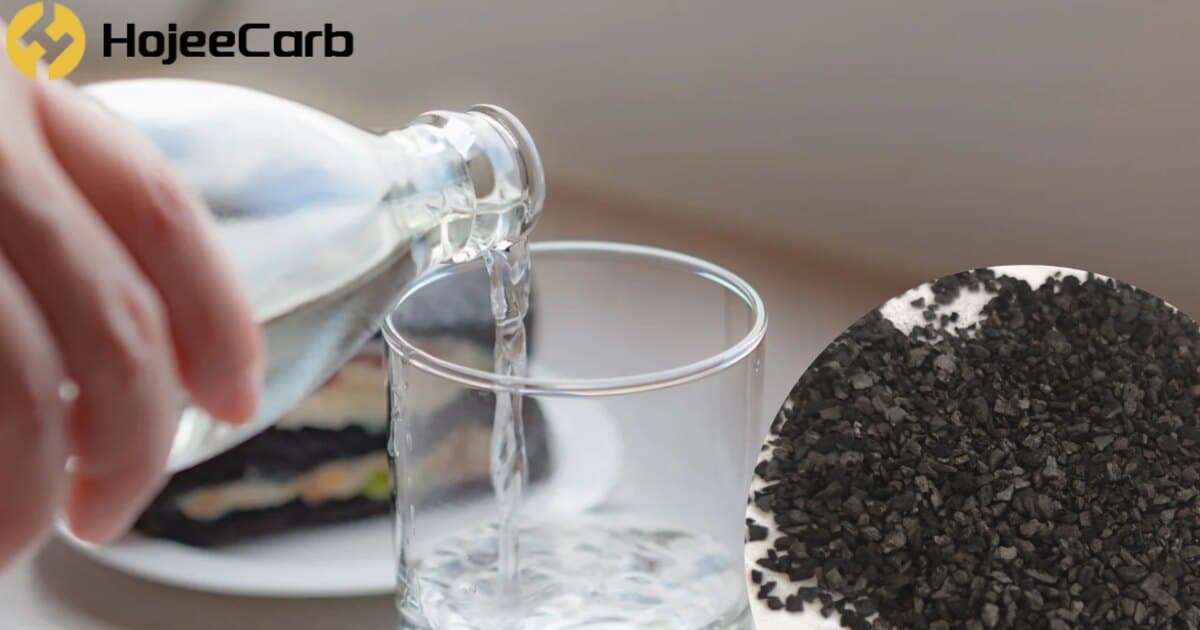
We just shipped 56 tons of coal-based granular activated carbon to a municipal water utility in Saudi Arabia, for use in their drinking-water treatment line. The order was 8×30 mesh, 950 iodine number, packed in 550 kg bags. Here's the full breakdown — specs, why coal-based made sense for this plant, packaging for the Gulf climate, and how the shipment moved.
Order Summary
| Product | Coal-based granular activated carbon (GAC) |
| Quantity | 56 tons |
| Mesh Size | 8×30 |
| Iodine Number | 950 mg/g |
| Ash Content | ≤12% |
| Moisture | ≤3% |
| Application | Municipal drinking water treatment |
| Destination | Saudi Arabia |
| Packaging | 550 kg jumbo bags (FIBC) |
| Port of Loading | Tianjin, China |
Why Coal-Based GAC for This Plant
Not every municipal plant needs premium coconut shell carbon. This utility was after dechlorination and bulk organics removal — the workhorse duties in a drinking-water line — and for that, coal-based GAC is the cost-effective choice.
Coal-based carbon has a wider pore structure than coconut shell. That macro- and meso-pore network is well suited to larger organic molecules, chlorine, and general color/odor load. It handles high throughput without clogging, and it costs less per ton than coconut shell — which matters when you're filling large beds and replacing them on a cycle.
The 8×30 mesh is the standard grade for municipal gravity and pressure filters. It gives a good balance of adsorption kinetics and low pressure drop across a deep bed. If you're weighing the two feedstocks for your own plant, our comparison of coconut shell vs coal activated carbon breaks down where each one wins.
The Numbers That Matter
The 950 iodine number is the headline spec. Iodine number measures adsorption capacity for smaller molecules — the higher it is, the more organic load the bed captures before it saturates. At 950 mg/g this grade sits in the sweet spot for municipal water: strong adsorption without the price premium of an 1,100+ coconut grade. Iodine number is determined by the standardized ASTM D4607 test method, which is why it is a reliable basis for comparing grades between suppliers.
Ash content at ≤12% is normal for coal-based carbon and acceptable for drinking water when the carbon is properly acid-washed to control leachables. Materials in contact with potable water should meet a recognized standard such as NSF/ANSI 61 — worth confirming with your supplier before you commit. Moisture at ≤3% means you're paying for carbon, not water — important when you're buying by the ton. For a deeper look at how these figures are measured, see our iodine number guide.
Need activated carbon?
Get Factory-Direct Pricing — No Middlemen
20+ years manufacturing. MOQ 1 ton. Free samples. Reply within 2 hours.
Packaging for the Gulf Climate
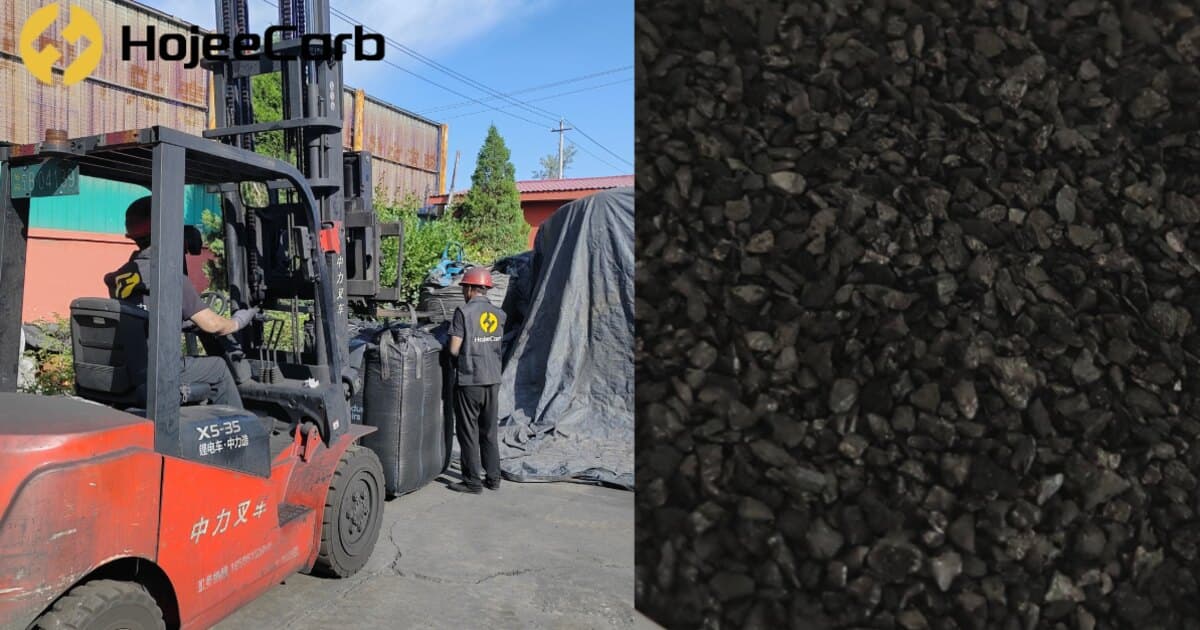
Saudi Arabia is a demanding destination. Cargo can land at over 45°C and sit before it reaches the plant. For this order we used 550 kg FIBC jumbo bags — a size the customer specified to match their bed-filling equipment and reduce handling steps at the receiving end.
Each bag has a PE inner liner to keep moisture out during the ocean crossing, UV-resistant fabric, and crane-rated lifting loops. Fewer, larger bags mean faster unloading and less dust exposure for the plant crew during change-out.
Loading & Shipping
Bags were palletized at our facility, trucked to Tianjin Port, and loaded for the sea route to Saudi Arabia. Every batch shipped with its own Certificate of Analysis, and we handled the full export document set plus the SASO / SABER Certificate of Conformity that Saudi customs requires for imported goods — a step first-time shippers to the Kingdom often miss. You can verify conformity requirements on the official Saudi SABER platform.
We also arranged pre-shipment inspection so the utility had third-party confirmation of the specs before the container left port. On drinking-water contracts, that paper trail matters as much as the carbon itself.
From Inquiry to Delivery
| Inquiry & sample request | Week 1 |
| Sample testing at plant lab | Week 2–3 |
| Order confirmed | Week 4 |
| Production start | Week 5 |
| Production + COA per batch | Week 6 |
| SASO/SABER CoC + inspection | Week 6 |
| Loading & departure | Week 7 |
The utility tested a free sample against their own raw water before committing. That's the right way to buy municipal carbon — validate against your actual water, then order the bulk. We recommend it on every drinking-water enquiry.
We Supply Water-Treatment Carbon Across the Middle East
This is one of many water-treatment shipments we've sent to the region. We supply coal-based and coconut shell GAC to municipal utilities, desalination pre-treatment, and industrial water plants across Saudi Arabia, the UAE, Qatar, and Oman. See our overview for activated carbon buyers in the Middle East.
For a comparable drinking-water project using coconut shell GAC, read our municipal coconut GAC case study — same problem, different feedstock choice.
Sourcing GAC for a Water Plant?
Tell us your raw water profile, target contaminants, and bed size. We'll recommend coal-based or coconut shell grade, send a free sample for lab validation, and handle SASO/SABER conformity for Saudi delivery. COA on every batch.
Frequently Asked Questions
Is coal-based activated carbon safe for drinking water?
Yes, when it is produced to drinking-water grade and properly acid-washed to control leachable impurities. Coal-based GAC is widely used in municipal treatment for dechlorination and organics removal. Confirm the grade meets your finished-water quality targets — ideally against a recognized standard like NSF/ANSI 61 — with a sample test.
What is the difference between coal-based and coconut shell GAC for water treatment?
Coal-based carbon has wider pores suited to larger organic molecules, chlorine, and general color/odor load, at a lower cost per ton. Coconut shell has a dense micropore structure that excels at small taste-and-odor molecules like geosmin and MIB, with higher hardness. Coal is the cost-effective workhorse; coconut is the premium polishing grade.
What iodine number do I need for municipal drinking water?
For general municipal treatment (dechlorination, organics removal), a coal-based grade around 900–1,000 mg/g is standard. For taste-and-odor polishing, a coconut shell grade of 1,000–1,100 mg/g is preferred. The right number depends on your raw water and target contaminants.
Do you ship activated carbon to Saudi Arabia with SASO/SABER conformity?
Yes. We coordinate the SASO / SABER Certificate of Conformity through an approved body before shipment, so the cargo clears Saudi customs without delays. This is mandatory for imported goods under the SABER platform.
What packaging do you use for bulk GAC shipments?
We offer 25 kg bags on pallets, and jumbo FIBC bags up to 550–1,000 kg depending on your handling equipment. All bags for Middle East destinations use a PE inner liner for moisture control and UV-resistant fabric for the climate.