In This Guide
The Middle East is one of the fastest-growing markets for activated carbon, driven by massive investments in oil & gas processing, desalination, and water treatment infrastructure. If you are a procurement manager in UAE, Saudi Arabia, Qatar, or Kuwait looking for a reliable supplier, this guide covers everything — pricing, shipping, specs, and what to watch out for when buying from China.
| Application | Recommended Type | Mesh Size | Iodine Value | Price Range (FOB) |
|---|---|---|---|---|
| Oil & Gas (amine treating) | Coal-based GAC | 4×8 mesh | 950+ mg/g | $900–1,200/ton |
| Desalination pre-treatment | Coal-based GAC | 8×30 mesh | 900+ mg/g | $800–1,100/ton |
| Municipal water treatment | Coconut shell GAC | 8×30 or 12×40 | 1,000+ mg/g | $2,200–2,600/ton |
| Air purification / HVAC | Pelletized carbon | 3mm or 4mm pellet | 900+ mg/g | $1,000–2,500/ton |
| Food & beverage processing | Coconut shell GAC | 12×40 mesh | 1,050+ mg/g | $2,800–3,800/ton |
Middle East Activated Carbon Market Overview
The GCC region imports the majority of its activated carbon from China, India, and Southeast Asia. Local manufacturing is minimal — most suppliers in Dubai and Riyadh are trading companies, not factories. This means buyers are paying distributor margins on top of the original factory price.
Key demand drivers in the region:
- Oil & gas processing — Saudi Aramco, ADNOC, and QatarEnergy all use activated carbon for amine gas treating, H2S removal, and mercury capture in natural gas processing plants.
- Desalination — The Middle East has the world's largest desalination capacity. SWRO plants use GAC for pre-treatment to protect RO membranes from chlorine and organics.
- Municipal water treatment — Rapid urbanization in UAE, Saudi Arabia, and Qatar is driving investment in water treatment infrastructure.
- Industrial wastewater — Petrochemical complexes in Jubail (Saudi Arabia) and Ruwais (UAE) require activated carbon for effluent treatment.
- HVAC & air purification — High-rise buildings and commercial facilities in Dubai and Abu Dhabi use activated carbon filters for odor control and VOC removal.
Top Applications in UAE, Saudi Arabia & GCC
1. Oil & Gas Industry
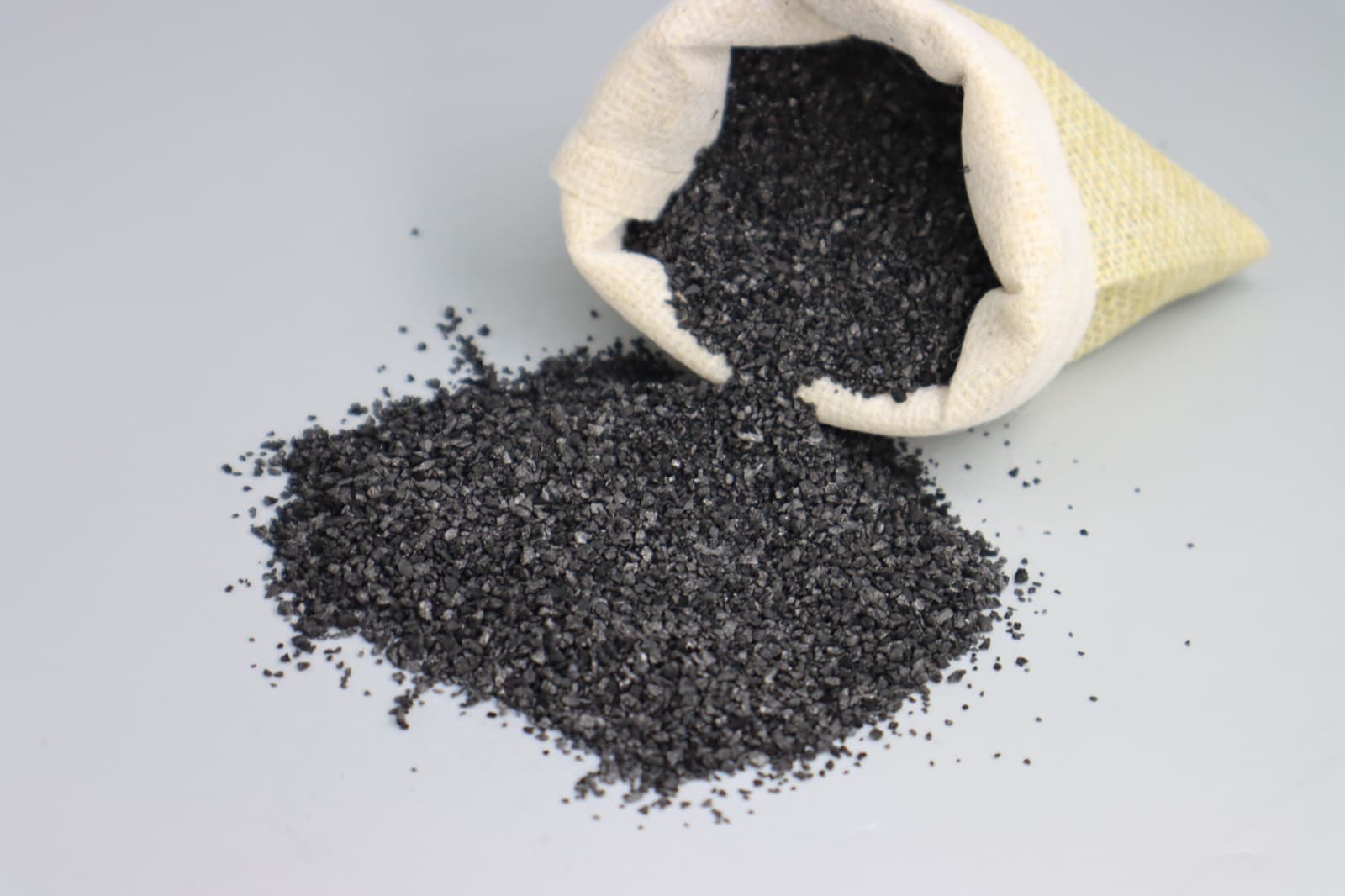
This is the largest application in the GCC. Activated carbon is used in amine gas treating units to remove degradation products that cause foaming and corrosion. It is also used for mercury removal from natural gas streams and H2S polishing after amine scrubbing.
Recommended spec: coal-based GAC, 4×8 mesh, iodine value 950+ mg/g, hardness >95%, ash <12%. For mercury removal, impregnated carbon with sulfur or iodine is required. See our guide on activated carbon for H2S and gas purification.
2. Desalination Pre-Treatment
Saudi Arabia and UAE together account for over 40% of global desalination capacity. SWRO plants require GAC pre-treatment to remove chlorine (which damages RO membranes), organic compounds, and taste/odor. Typical bed life is 2-5 years before reactivation or replacement.
Recommended spec: coal-based GAC, 8×30 mesh, iodine value 900+ mg/g, CTC value >50%, low fines content. Consistent particle size is critical to avoid channeling in the filter bed.
3. Municipal Water Treatment
Dubai Municipality, DEWA, and SWCC (Saudi Arabia) operate large water treatment plants that use GAC for taste, odor, and micropollutant removal. Coconut shell GAC is preferred here due to its higher hardness and lower ash content compared to coal-based carbon.
Recommended spec: coconut shell GAC, 8×30 or 12×40 mesh, iodine value 1,000+ mg/g, hardness >97%, NSF/ANSI 61 certified.
4. Air Purification & HVAC
Commercial buildings, hotels, and industrial facilities across the GCC use activated carbon filters for VOC removal, odor control, and indoor air quality. Pelletized carbon (3mm or 4mm diameter) is the standard format for HVAC applications due to its low pressure drop and high surface area.
Recommended spec: coal-based pelletized carbon, 3mm or 4mm, iodine value 900+ mg/g, hardness >95%. For specific chemical removal (H2S, ammonia, formaldehyde), impregnated variants are available.
5. Food & Beverage Processing
The UAE's growing food manufacturing sector uses food-grade activated carbon for sugar decolorization, edible oil purification, and beverage clarification. This requires the highest purity grade with strict limits on heavy metals and ash content.
Recommended spec: coconut shell GAC, 12×40 mesh, iodine value 1,050+ mg/g, ash <3%, meets food-grade standards (FDA 21 CFR, EU 231/2012).
How to Source: China Factory vs Local Distributor
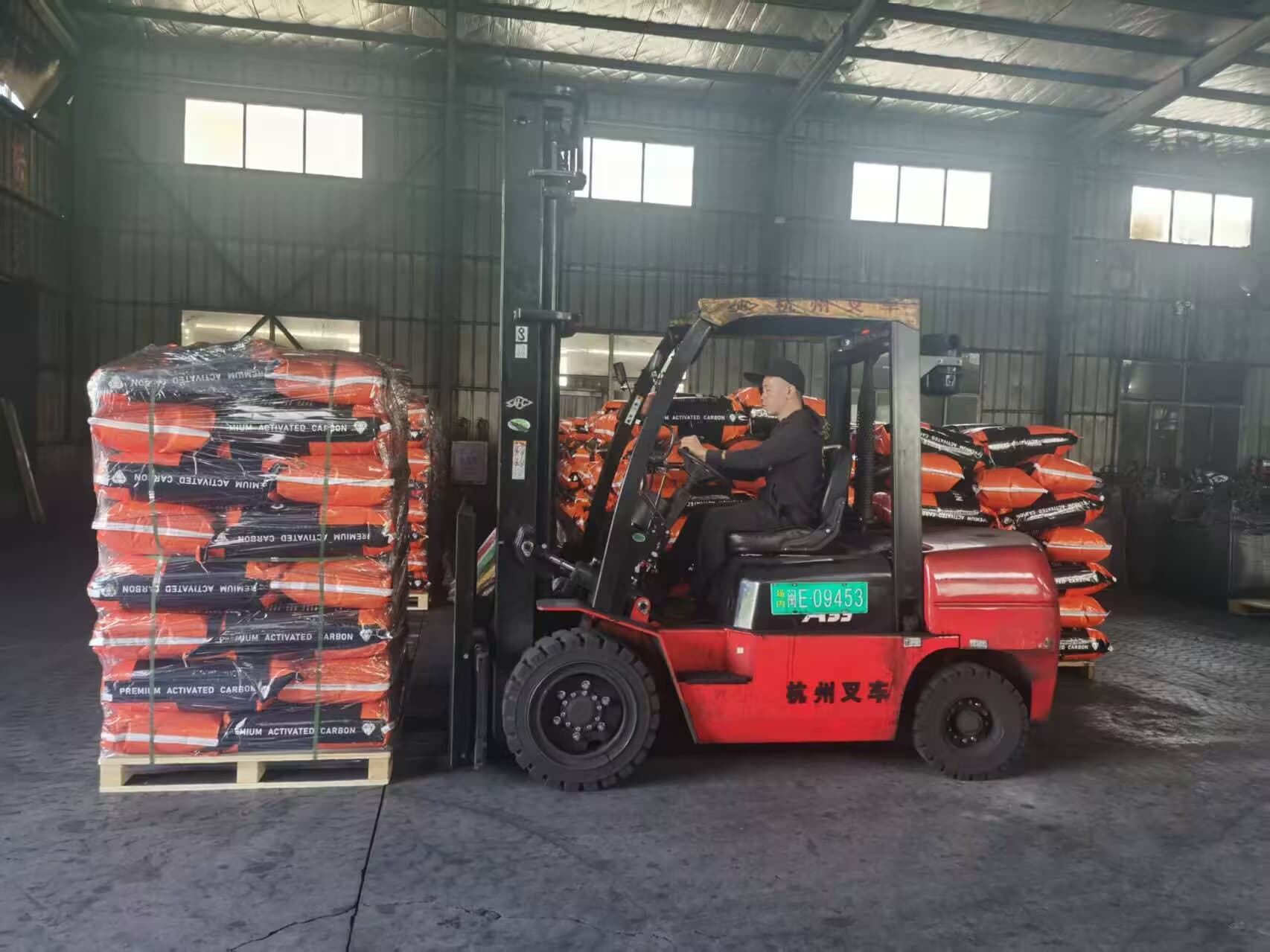
Most activated carbon sold in the UAE and Saudi Arabia comes from local trading companies that import from China or India and add a 30-50% margin. Buying direct from a Chinese factory cuts out this middleman.
Shipping Routes to Middle East
The main entry ports for activated carbon into the GCC are:
- Jebel Ali (Dubai, UAE) — The largest port in the Middle East and a major transshipment hub. Transit time from Chinese ports: 12-18 days. Most Chinese shipping lines have direct services.
- Dammam (Saudi Arabia) — King Abdul Aziz Port, the main entry point for eastern Saudi Arabia. Transit time: 14-20 days from China.
- Shuwaikh / Shuaiba (Kuwait) — 15-20 days from China.
- Sohar (Oman) — 12-16 days from China. Growing as an alternative to Jebel Ali.
- Hamad Port (Qatar) — 14-18 days from China.
We work with COSCO, MSC, Evergreen, and CMA CGM for regular sailings from Tianjin, Qingdao, and Shanghai. We can arrange door-to-port or door-to-door delivery depending on your preference.
LCL vs FCL
For first-time buyers or smaller quantities, LCL (Less than Container Load) is available from 1 ton. A standard 20ft FCL holds 20-22 tons of activated carbon in 25kg bags or 500kg jumbo bags. A 40ft FCL holds 24-26 tons. FCL is significantly cheaper per ton for freight costs.
Get Factory-Direct Pricing
Request a quote from our team — coal-based, coconut shell, or specialty activated carbon delivered worldwide.
Price Comparison: China Factory vs Local Suppliers
| Product | China FOB Price | Freight to Jebel Ali | Landed Cost (UAE) | Local UAE Distributor |
|---|---|---|---|---|
| Coal GAC 4×8 (oil & gas) | $450–1,550/ton | $55–75/ton | $505–1,625/ton | $1,400–1,800/ton |
| Coal GAC 8×30 (water/desal) | $450–1,550/ton | $55–75/ton | $505–1,625/ton | $1,300–1,700/ton |
| Coconut GAC 8×30 (drinking water) | $2,200–2,600/ton | $55–75/ton | $2,255–2,675/ton | $3,000–3,600/ton |
| Pelletized carbon 4mm (air) | $1,000–1,500/ton | $55–75/ton | $1,055–1,575/ton | $1,600–2,200/ton |
Prices as of May 2026. Freight rates vary by shipping line and season. Local distributor prices are estimates based on market research.
The savings from buying direct are typically 30-45% compared to local UAE distributors. For a 100-ton order of coal GAC, that is a saving of $40,000-70,000 — enough to justify the slightly longer lead time.
Key Specifications for Middle East Applications
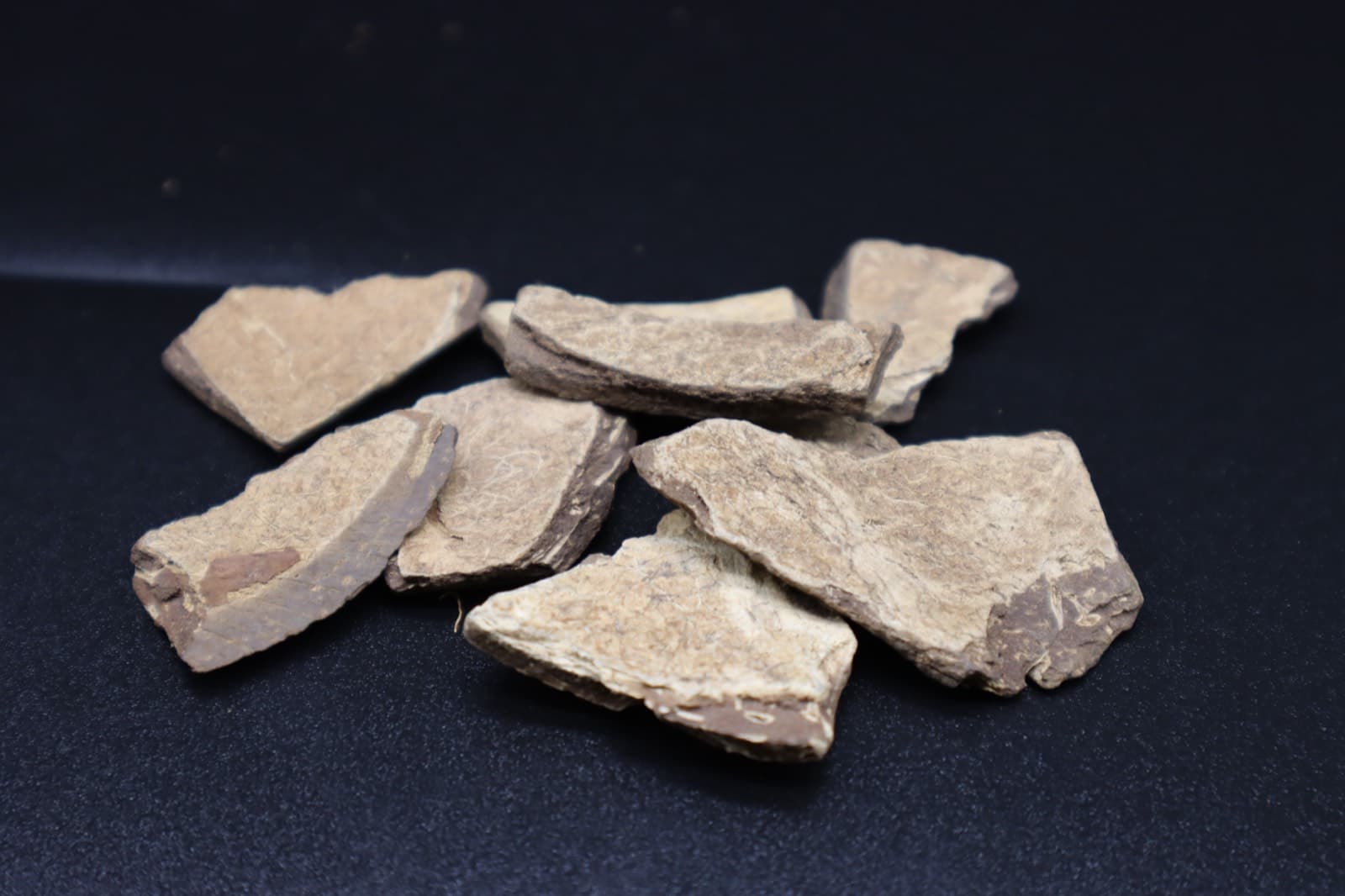
When specifying activated carbon for Middle East projects, these are the parameters that matter most:
- Iodine Number (mg/g) — The primary measure of adsorption capacity. For water treatment: 900+ mg/g minimum. For oil & gas: 950+ mg/g. For food-grade: 1,050+ mg/g. Higher is better, but also more expensive.
- Hardness / Abrasion Number (%) — Critical for applications with backwashing or mechanical agitation. Coconut shell carbon typically achieves 97-99% hardness. Coal-based carbon is 90-95%. Low hardness means more fines generation and shorter bed life.
- Ash Content (%) — Lower ash means higher purity. For food-grade applications, ash should be <3%. For industrial applications, <12% is acceptable for coal-based carbon.
- Moisture Content (%) — Activated carbon is hygroscopic. Standard moisture on delivery is <5% for GAC. Higher moisture means you are paying for water, not carbon. We test moisture before shipment and include results in the COA.
- Particle Size Distribution — Uniformity coefficient (UC) should be <1.9 for most water treatment applications. Consistent particle size prevents channeling and ensures even flow distribution through the filter bed.
- BET Surface Area (m²/g) — Ranges from 800-1,200 m²/g for standard GAC. Higher surface area generally means better adsorption, but the relationship is not always linear — pore size distribution matters too.
Why Source from China?
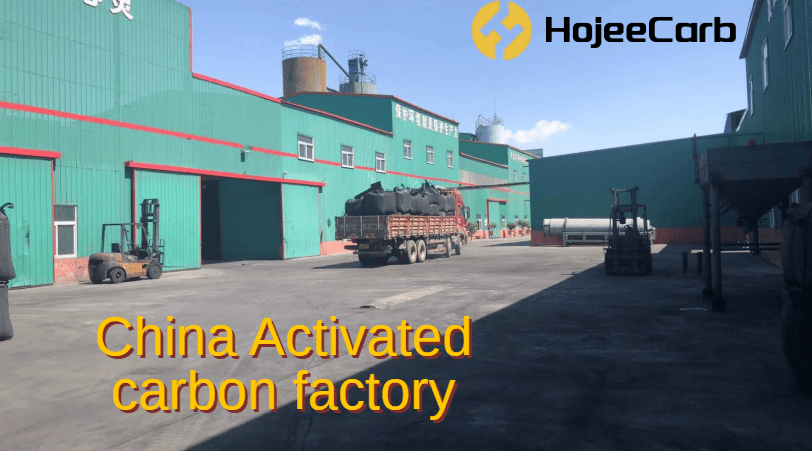
China produces over 60% of the world's activated carbon. The main production bases are in Ningxia (coal-based), Fujian (coconut shell), and Shanxi (coal-based). Chinese manufacturers have invested heavily in production capacity and quality control over the past decade.
Compared to buying from European brands like Jacobi, Norit, or Haycarb through local distributors, sourcing direct from China offers:
- Price advantage of 30-50% — Factory direct pricing without distributor margins or European brand premiums.
- Flexible MOQ — Most Chinese factories accept orders from 1 FCL (20 tons). European brands typically require larger minimum orders.
- Custom specifications — We can adjust mesh size, iodine value, and packaging to match your exact requirements. Standard products ship within 7-14 days; custom specs take 15-25 days.
- Direct communication — No middleman. You talk directly to the factory, get faster responses, and can visit for audits.
We at Hojee have been supplying activated carbon to the Middle East since 2018. Our products are used in water treatment plants, oil & gas facilities, and food processing operations across UAE, Saudi Arabia, Qatar, and Oman. We are ISO 9001:2015 certified and can provide SGS or Intertek third-party test reports for every batch.
If you are currently buying from a local UAE distributor or a European brand, we would be happy to provide a price comparison for your specific grade. Most customers find they can save 25-40% without any compromise on quality. Contact us for a quote — we typically respond within 24 hours.
You can also read our comparison of Haycarb vs Chinese activated carbon to understand the quality differences in detail.
Frequently Asked Questions
What is the MOQ for activated carbon shipped to UAE or Saudi Arabia?
Standard MOQ is 1 FCL (20 tons for a 20ft container, 25 tons for a 40ft container). For first-time buyers, we offer LCL shipments starting from 1-5 tons so you can test quality before committing to full containers. Minimum sample order is 1-5 kg, shipped by express courier.
How long does shipping take from China to Dubai (Jebel Ali)?
Transit time from Chinese ports (Tianjin, Qingdao, Shanghai) to Jebel Ali is typically 12-18 days by sea. Express LCL can be 15-20 days. For urgent orders, we can arrange air freight (3-5 days) for smaller quantities. We work with major shipping lines including COSCO, MSC, and Evergreen.
What import duties apply to activated carbon in UAE and Saudi Arabia?
UAE applies a 5% customs duty on activated carbon (HS Code 3802.10.00) under the GCC Common External Tariff. Saudi Arabia also applies 5% duty. However, if you are importing for re-export within the GCC free trade zone, duty exemptions may apply. We provide all necessary documentation including Certificate of Origin.
What documents do I need to import activated carbon into the Middle East?
Standard documents: Bill of Lading, Commercial Invoice, Packing List, Certificate of Analysis (COA), MSDS/SDS, Certificate of Origin, and Packing Declaration. For food-grade applications, additional HALAL certification or FDA compliance documents may be required. We prepare all export documents in-house.
Is coconut shell or coal-based activated carbon better for Middle East applications?
It depends on the application. Coconut shell GAC (8x30 or 12x40 mesh) is preferred for drinking water treatment and gold recovery — higher hardness, lower ash content. Coal-based GAC is more cost-effective for oil & gas applications, industrial wastewater, and air treatment. We supply both types and can recommend based on your specific process requirements.
Can you supply activated carbon for desalination pre-treatment?
Yes. For SWRO (seawater reverse osmosis) pre-treatment, we recommend coal-based GAC 8x30 mesh with iodine value 900+ mg/g and hardness >95%. This removes chlorine, organics, and taste/odor compounds that would damage RO membranes. We have supplied to desalination projects in Saudi Arabia and Oman.
What certifications do you have for Middle East export?
Our activated carbon is ISO 9001:2015 certified. We can provide SGS or Intertek third-party test reports, MSDS, and Certificate of Analysis for each batch. For drinking water applications, we can supply NSF/ANSI 61 certified products. All documents are available in English and Arabic upon request.
How much does activated carbon cost delivered to UAE or Saudi Arabia?
FOB China prices: coconut shell GAC $2,900-4,500/ton, coal-based GAC $450-1,550/ton, pelletized carbon $1,000-3,950/ton depending on specs. Add $50-80/ton for ocean freight to Jebel Ali or Dammam. Total landed cost is typically 20-35% lower than buying from local UAE distributors or European brands.
Get a Quote for Middle East Delivery
Tell us your application, quantity, and destination port. We will send you a detailed price comparison within 24 hours — including freight to Jebel Ali, Dammam, or any GCC port.