
Activated Carbon for Wastewater Treatment
Granular activated carbon is the workhorse of advanced wastewater treatment — polishing effluent to meet discharge limits, cutting COD and color, and removing dissolved organics that biological treatment can't touch. Factory-direct coal-based GAC engineered for long bed life and stable performance.
Where Carbon Fits
Activated Carbon Is the Tertiary Polishing Step Biological Treatment Can't Replace
Biological treatment removes most BOD and suspended solids, but it leaves behind dissolved organics, refractory COD, residual color and trace heavy metals. Granular activated carbon (GAC) is the finishing step — polishing the secondary effluent to meet tightening discharge and reuse limits. It removes the compounds that bacteria cannot, and it can be regenerated or replaced on a schedule to keep the whole plant compliant.
How It Works
How Activated Carbon Treats Wastewater
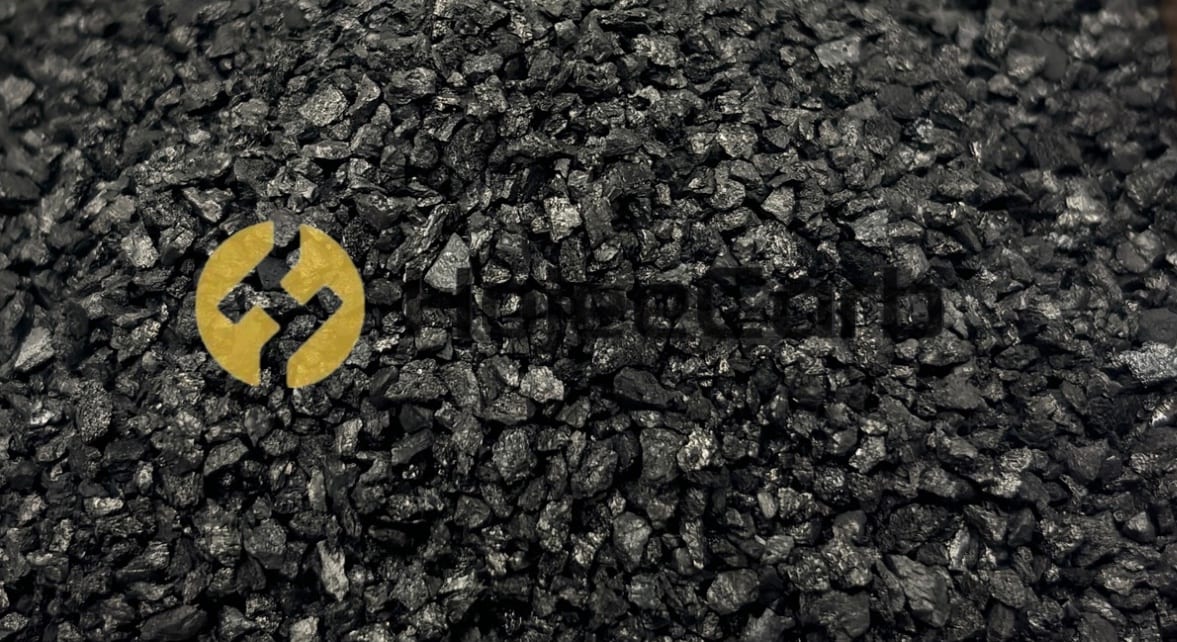
The carbon's internal surface (800–1,200 m²/g) binds dissolved organic molecules — refractory COD, color bodies, and residual solvents — out of the water phase.
Larger, higher-boiling molecules adsorb most readily. The pore-size distribution of the carbon determines which contaminants a given grade captures, so grade selection matters.
Empty-bed contact time drives removal. Wastewater duty needs deeper beds and longer contact — typically 15–30 min — than potable water.
Wastewater Types
Industrial & Municipal Wastewater Streams We Treat
Each stream presents a different organic load and target. We match the carbon grade and contact time to the specific chemistry.
| Wastewater Stream | Key Contaminants | Recommended Carbon | EBCT |
|---|---|---|---|
| Municipal secondary effluent | TOC, residual COD, color | Coal-based GAC 8×30 | 15–20 min |
| Textile / dyeing | Color, dye aromatic compounds | Coal-based GAC 8×30 | 20–30 min |
| Chemical / pharmaceutical | Dissolved solvents, organic COD | Reagglomerated coal GAC | 20–30 min |
| Electroplating / metal finishing | Heavy metals (chelated/ionic) | Impregnated or blend GAC | 20–30 min |
| Landfill leachate | Refractory COD, color, ammonia | Coal-based GAC + polishing | 30–60 min |
What We Remove
Wastewater Contaminants & Removability by GAC
Removal efficiency depends on contaminant type and carbon selection. Some targets need impregnation; others are handled by plain coal-based GAC.
| Contaminant | Typical Removal | Carbon Grade |
|---|---|---|
| COD (dissolved organic) | 30–60% | Coal-based GAC |
| Color / dye | 70–95% | Coal-based GAC, high mesopore |
| TOC / humic organic | 60–90% | Coal-based GAC |
| Heavy metals (non-chelated) | Moderate–high | Impregnated / blended GAC |
| Chlorine / chloramine | High | Coal-based GAC |
| Ammonia (low conc.) | Limited (needs impregnation) | Acid / caustic-impregnated |
Carbon Selection
Which GAC We Recommend for Wastewater
For most wastewater polishing, coal-based GAC with a balanced pore distribution and high hardness is the cost-effective choice. Heavy-metal or ammonia duty may need an impregnated grade.
| Duty | Recommended Carbon | Iodine No. | Mesh | EBCT |
|---|---|---|---|---|
| Municipal tertiary polishing | Coal-based GAC | ≥1000 mg/g | 8×30 | 15–20 min |
| Textile color removal | Coal-based GAC | ≥950 mg/g | 8×30 | 20–30 min |
| Chemical/pharma organics | Reagglomerated coal GAC | ≥1000 mg/g | 8×30 | 20–30 min |
| Heavy-metal removal | Impregnated / blend GAC | — | 8×30 | 20–30 min |
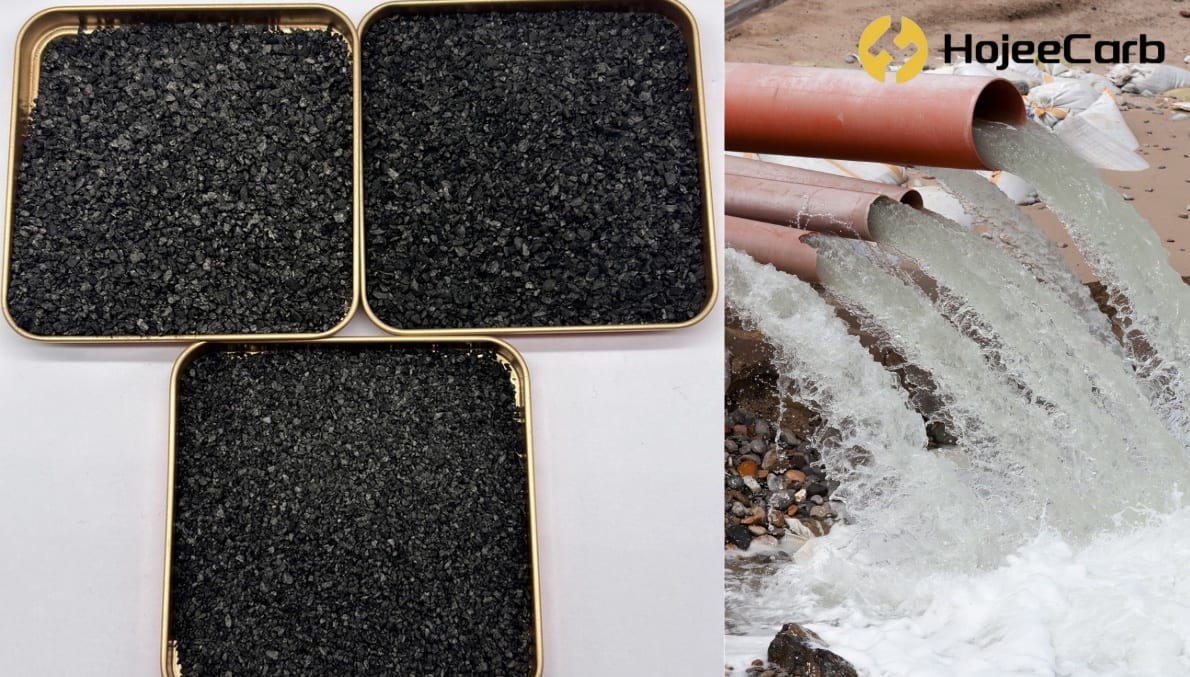
Not sure which grade fits your wastewater? Send us your flow rate, COD/color analysis, and target limits.
Send Us Your Wastewater AnalysisSystem Design
Designing a Wastewater GAC Bed That Won't Break Through Early
Match EBCT to Contaminant
Color and refractory COD need longer contact than simple TOC removal. Over-design the EBCT and you save on change-out frequency; under-design and you break through early.
Lead-Lag Configuration
Two vessels in series — exhaust the lead vessel fully while the lag guarantees compliant effluent, essential for meeting discharge limits without a compliance gap.
Pre-Treatment First
Remove suspended solids, oil, and high TOC upstream. Foulants cut GAC bed life dramatically and cause channeling and pressure drop.
Breakthrough Monitoring
Sample between lead and lag vessels (COD, color, or UV absorbance). Triggers change-out before the effluent is affected.
Field Performance
Proven in Industrial and Municipal Service
Case StudyCase: Textile dyeing plant effluent color polishing
A dyeing and finishing plant with persistent dark color in its secondary effluent (COD ~250 mg/L, color 1,200 Pt-Co) installed coal-based GAC 8×30 at 25-min EBCT in a lead-lag configuration. Color dropped to under 100 Pt-Co — well within the local discharge limit — and COD fell to ~120 mg/L. Bed life ran 8 months before lead-vessel change-out.
Proven in industrial wastewater serviceWastewater Treatment — Frequently Asked Questions
Does activated carbon remove COD from wastewater?
Yes for dissolved organic COD — GAC can achieve 30–60% COD reduction in tertiary polishing, depending on the influent COD type, carbon grade, and EBCT. Refractory organics that pass biological treatment are exactly what carbon adsorption targets.
Which activated carbon is best for wastewater treatment?
Coal-based granular activated carbon with an iodine number around 1000 mg/g and a balanced micro/meso-pore distribution is the standard cost-effective choice for most wastewater polishing. Heavy-metal or ammonia duty may require an impregnated grade.
GAC vs PAC for wastewater — which is better?
GAC is used in fixed beds for continuous polishing with long contact time and easy regeneration. PAC (powdered) is dosed into a process stream and removed with the sludge — often for batch treatment or where a bed isn't practical. For most tertiary polishing, GAC wins on operating cost.
How long does wastewater GAC last before change-out?
Bed life varies widely — typically 6 to 18 months — depending on influent COD, color, suspended solids, and EBCT. Heavily loaded streams may need change-out every 3–6 months; lightly loaded municipal polish can run much longer. Breakthrough monitoring sets the actual schedule.
Can GAC remove heavy metals from wastewater?
GAC can remove certain heavy metals — especially non-chelated, ionic forms — but removal depends on the metal and speciation. An impregnated or blended grade targeting the specific metal is more effective. We recommend a pilot test with your water chemistry.
Facing a Discharge Limit? Let's Spec Your Carbon.
Send us your flow rate, COD/color analysis, and target limits. Our technical team responds within 24 hours with a tailored GAC recommendation and factory-direct quotation.
Request a Wastewater Quote