
Regional Sourcing Guide
Activated Carbon for Mining in Africa: Gold Recovery & Water Treatment
Africa produces over 25% of the world's gold, and nearly every gold mine on the continent relies on activated carbon for extraction. We've been shipping carbon to mines in Ghana, Tanzania, South Africa, and Mali for over 15 years. Here's what you need to know about sourcing the right carbon for your operation.
| Application | Carbon Type | Key Spec | Price Range (FOB) |
|---|---|---|---|
| Gold CIP/CIL | Coconut shell 6×12 mesh | Iodine >1050, Hardness >95% | $3,200–$3,800/ton |
| Gold Heap Leach | Coconut shell 6×16 mesh | Iodine >1000, Hardness >93% | $3,200–$3,600/ton |
| Mine Water Treatment | Coal-based GAC 8×30 mesh | Iodine >900, CTC >55% | $800–$1,400/ton |
| Cyanide Destruction | Coal-based GAC 12×40 mesh | Iodine >800, pH 6–8 | $700–$1,200/ton |
| Mercury Removal | Impregnated (sulfur) carbon | S content 10–15% | $2,500–$4,000/ton |
Why African Mines Need Specialized Activated Carbon
Africa's gold belt stretches from West Africa (Ghana, Mali, Burkina Faso, Guinea) through East Africa (Tanzania, Kenya) to Southern Africa (South Africa, Zimbabwe). Each region has different ore characteristics that affect carbon performance.
West African ores tend to be free-milling with low preg-robbing potential — standard CIP works well. East African ores (particularly in Tanzania) often contain higher levels of organic carbon that can cause preg-robbing, making CIL the better choice. South African deep-level mines deal with refractory ores that may need pre-treatment before carbon adsorption.
The common thread: all these operations need activated carbon that can handle high abrasion, maintain gold loading capacity over multiple regeneration cycles, and arrive on-site reliably despite challenging logistics.
Activated Carbon Specs for African Gold Mining
Based on our experience supplying mines across the continent, here are the specifications that matter most:
Critical Specifications for Gold Recovery Carbon
- Ball-Pan Hardness: >95% — African CIP/CIL circuits are aggressive. Carbon with hardness below 93% breaks down too fast, increasing losses and contaminating your gold room.
- Iodine Number: >1050 mg/g — Directly correlates with gold adsorption capacity. We recommend 1050+ for CIP and 1000+ for CIL.
- Particle Size: 6×12 mesh (CIP) or 6×16 mesh (CIL) — Larger particles for CIP to survive screening; finer for CIL to increase adsorption kinetics.
- Moisture: <5% — Higher moisture means you're paying for water. We ship at 3–5% moisture.
- Ash Content: <3% — Low ash means cleaner gold smelting. Coconut shell carbon naturally has lower ash than coal-based alternatives.
- Apparent Density: 0.48–0.54 g/mL — Affects carbon inventory calculations and settling behavior in adsorption tanks.
We always recommend our coconut shell activated carbon for gold recovery. It outperforms coal-based carbon in hardness, gold loading, and elution efficiency. The price premium (typically 30–50% over coal-based) pays for itself through lower carbon losses and higher gold recovery rates. See our coconut shell carbon guide for full specifications.
Need activated carbon?
Get Factory-Direct Pricing — No Middlemen
20+ years manufacturing. MOQ 1 ton. Free samples. Reply within 2 hours.
Activated Carbon for Mine Water Treatment
Beyond gold extraction, African mines face increasing pressure to treat process water and tailings before discharge. Environmental regulations in Ghana (EPA), South Africa (DWS), and Tanzania (NEMC) now require mines to meet strict discharge limits for cyanide, heavy metals, and organic compounds.
Activated carbon handles several mine water challenges:
- • Cyanide removal — GAC adsorbs free cyanide and weak-acid dissociable (WAD) cyanide to below 0.5 mg/L discharge limits
- • Mercury capture — Sulfur-impregnated carbon removes Hg from process water to <0.001 mg/L
- • Arsenic reduction — Iron-impregnated carbon or standard GAC in combination with coagulation
- • Organic removal — Flotation reagents, xanthates, and other organics that affect downstream treatment
For mine water treatment, our coal-based granular activated carbon (8×30 mesh) is usually the cost-effective choice. You don't need the premium hardness of gold recovery carbon — the water treatment environment is far less abrasive.

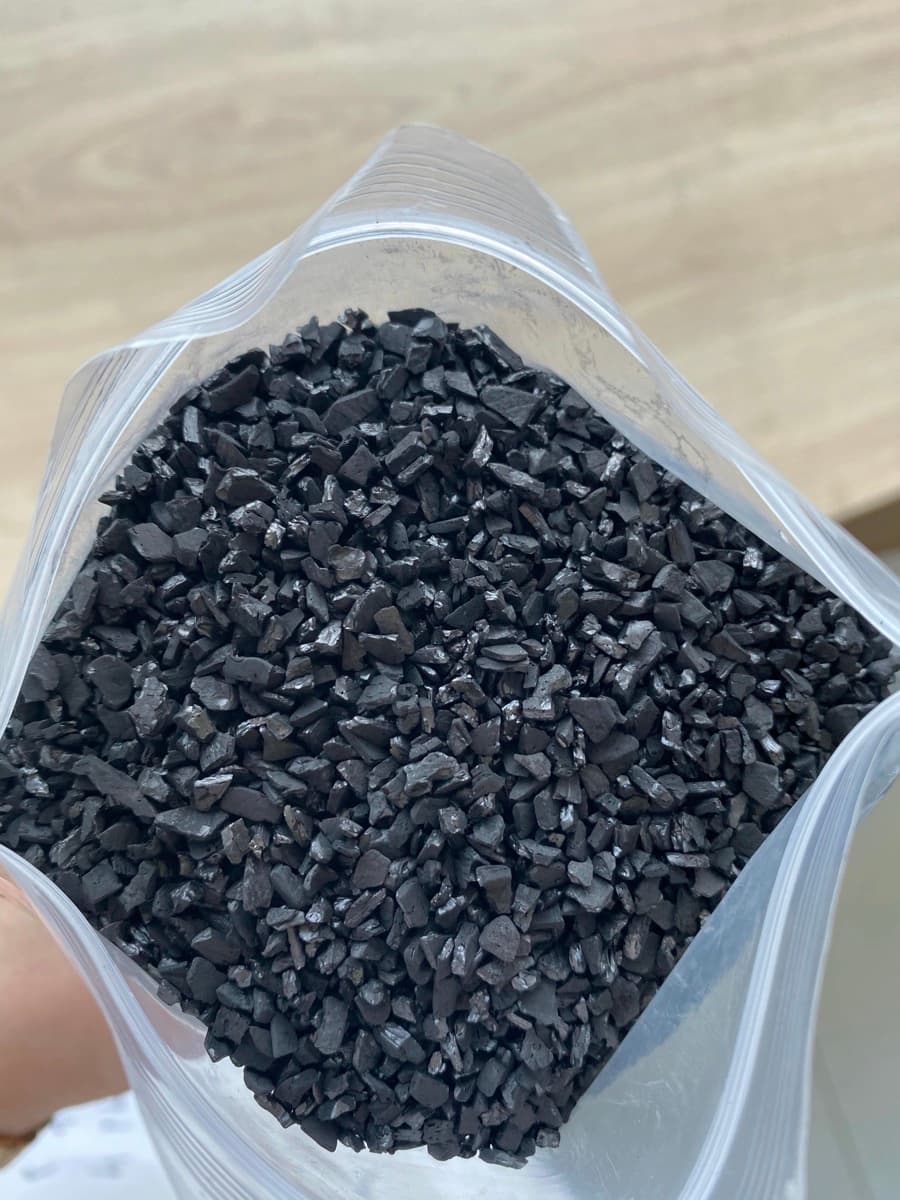
Our activated carbon being loaded for a gold mining operation in Ghana
Shipping to Africa: Ports, Lead Time & Logistics
Getting activated carbon from our factory in China to your mine site in Africa involves careful logistics planning. Here's what we've learned from hundreds of shipments:
| Region | Main Port | Sea Transit | Total Lead Time |
|---|---|---|---|
| West Africa (Ghana) | Tema / Takoradi | 25–30 days | 35–45 days |
| West Africa (Mali, Burkina) | Dakar / Abidjan | 28–35 days | 45–60 days |
| East Africa (Tanzania) | Dar es Salaam | 20–25 days | 30–40 days |
| Southern Africa | Durban / Cape Town | 22–28 days | 32–42 days |
| East Africa (DRC, Zambia) | Dar es Salaam / Beira | 20–28 days | 40–55 days |
Packaging options:
- • 25 kg PP bags — Standard for smaller orders, easy to handle at remote mine sites
- • 500 kg jumbo bags — Most popular for mining, forklift-friendly
- • 1,000 kg (1 MT) super sacks — Best for large operations with crane access
- • All bags are moisture-proof lined with PE inner bags
Pro tip: For landlocked countries (Mali, Burkina Faso, DRC), plan 2–3 weeks extra for inland trucking. We can arrange door-to-mine delivery through our logistics partners, but customs clearance at border crossings adds time. Order 60–90 days ahead of your carbon change-out schedule.
Pricing & MOQ for African Mining Projects
Pricing depends on carbon type, specifications, and order volume. Here's what to expect in 2026:
2026 Pricing Guide (FOB Ningbo/Shanghai)
- • Gold recovery coconut shell (6×12, iodine 1050+): $3,200–$3,800/ton
- • Gold recovery coconut shell (6×16, iodine 1000+): $3,200–$3,600/ton
- • Water treatment coal-based GAC (8×30): $800–$1,400/ton
- • Impregnated carbon (sulfur/KI): $2,500–$4,000/ton
CIF pricing adds $80–$150/ton for West Africa, $60–$120/ton for East/Southern Africa.
MOQ: 1 container (18–20 tons) for standard specs. We can do 5-ton trial orders for new customers testing our carbon against their current supplier.
Payment: T/T (30% deposit + 70% against B/L) or irrevocable L/C at sight. For established customers, we offer 60-day credit terms.
Sourcing Carbon for Your African Mine?
Tell us your specs, tonnage, and destination port. We'll send a detailed quote with CIF pricing and delivery schedule within 24 hours.
Get Mining Carbon Quote →How to Choose a Reliable Supplier for Africa
We've seen mines get burned by suppliers who ship inconsistent quality or can't maintain supply. Here's what to look for:
- Ask for COA from recent batches — Not just spec sheets. Actual test results from the last 3 shipments. If they can't provide this, walk away.
- Check production capacity — A supplier doing 500 tons/month can't reliably serve a mine that needs 200 tons/quarter. You need buffer capacity.
- Request a trial shipment — 5–10 tons to test in your circuit before committing to a long-term contract. Any serious supplier will accommodate this.
- Verify export experience to Africa — Shipping to Tema is different from shipping to Rotterdam. Your supplier should know the documentation requirements, port handling, and common delays.
- Technical support matters — When your gold recovery drops 2%, you need a supplier who can help diagnose whether it's a carbon issue or a process issue. Not just someone who takes orders.
Our Track Record in African Mining
We've supplied activated carbon to mining operations across Africa since 2009. A few highlights:
- • Ghana (Ashanti region): 120+ tons/year of 6×12 coconut shell carbon for a CIP gold plant processing 4,000 tpd
- • Tanzania (Lake Victoria zone): 80 tons/year for a CIL operation with preg-robbing ore — switched from a South African supplier to us in 2019
- • South Africa (Free State): Water treatment GAC for tailings dam seepage control — 200 tons initial order + 50 tons/quarter replenishment
- • Mali (Bamako corridor): Full logistics management including inland trucking from Dakar port to mine site
Every shipment includes a Certificate of Analysis (COA) tested by our in-house lab and verified by SGS or Bureau Veritas on request. We maintain safety stock specifically allocated for our African mining customers to prevent supply disruptions.
Frequently Asked Questions
What is the best activated carbon for gold CIP/CIL in Africa?
Coconut shell activated carbon with iodine number >1050 mg/g, ball-pan hardness >95%, particle size 6x12 or 6x16 mesh, and moisture <5%. These specs ensure high gold loading capacity (20-70 g Au/kg) and minimal carbon losses in abrasive CIP/CIL circuits.
How much activated carbon does a gold mine use per year?
A typical CIP/CIL gold mine processing 3,000-5,000 tons of ore per day uses 50-200 tons of activated carbon per year as make-up carbon. Carbon losses range from 30-100 grams per ton of ore processed, depending on circuit design and ore hardness.
Can you ship activated carbon to landlocked African countries like Mali or Burkina Faso?
Yes. We ship to landlocked countries via transit ports — Dakar (Senegal) or Abidjan (Côte d'Ivoire) for West Africa, Dar es Salaam (Tanzania) for East Africa. We handle transit documentation and can arrange inland trucking to mine sites.
Ready to Source Activated Carbon for Your Mine?
Whether you need gold recovery carbon, water treatment GAC, or specialty impregnated carbon — we ship to every major mining region in Africa. Get a quote with your exact specs and delivery port.
Request Quote →