
Case Study
28 Tons of Gold Recovery Carbon, Shipped to Egypt
Another full container of coconut shell activated carbon heading to our repeat client in Egypt — 6×12 mesh, iodine 1100+, built for CIL gold circuits.
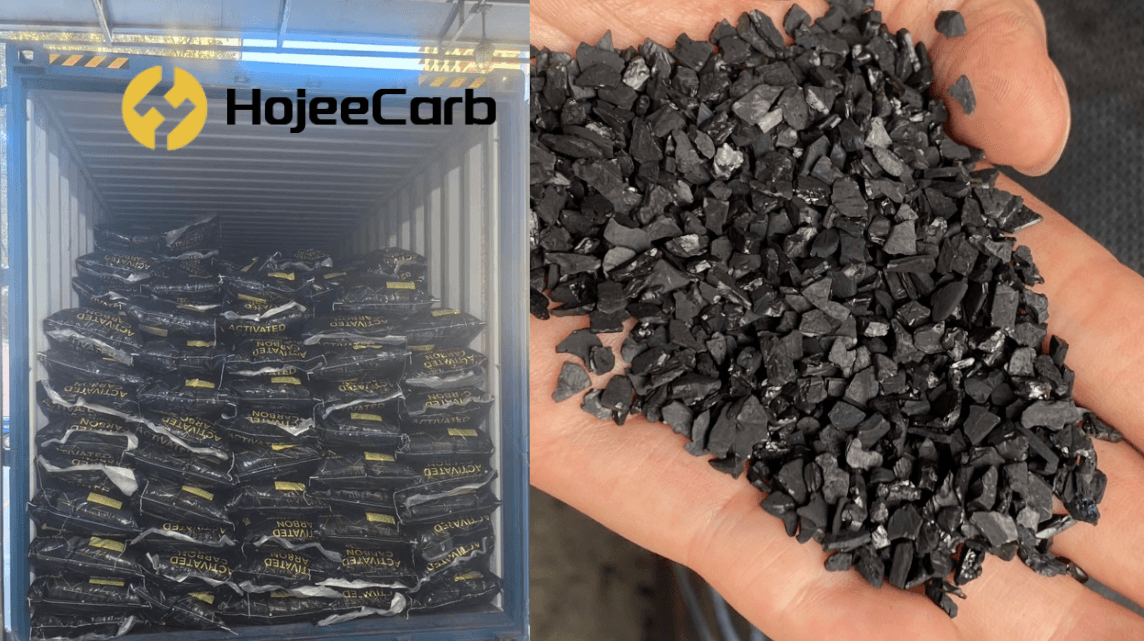
We just finished loading 28 tons of coconut shell activated carbon for gold recovery — destination Alexandria, Egypt. This is not a first order. This client has been buying from us for over three years, and every shipment follows the same spec: 6×12 mesh, iodine 1100+ mg/g, hardness 97%+. They run a CIL gold circuit and the carbon performs.
Order Summary
| Item | Details |
|---|---|
| Client Region | Egypt |
| Product | Coconut shell GAC for gold CIL/CIP |
| Mesh Size | 6×12 |
| Iodine Number | ≥1100 mg/g (ASTM D4607) |
| Hardness | ≥97% (ASTM D3802) |
| Moisture | <5% |
| Ash Content | <3% |
| Apparent Density | 0.48–0.52 g/cc (ASTM D2854) |
| Quantity | 28 tons (1 × 20' FCL) |
| Loading Port | Nansha, Guangzhou |
| Destination | Alexandria, Egypt |
| Transit Time | ~20–25 days |
Why This Client Keeps Ordering
Three years, multiple containers. No drama. That's the short version.
The longer version: their mine runs a CIL circuit processing sulfide ore. They need carbon that holds up through 5+ reactivation cycles without falling apart. Our coconut shell carbon at 97%+ hardness does that. They tested three Chinese suppliers before settling on us — the other two had hardness issues after the third reactivation.
Price matters too. We're factory-direct with no middlemen, so they get a landed cost that's 30–40% below what they were paying their previous European-brand supplier. Same performance, significantly less money.
Need activated carbon?
Get Factory-Direct Pricing — No Middlemen
20+ years manufacturing. MOQ 1 ton. Free samples. Reply within 2 hours.
Why These Specs Matter for Gold Recovery
6×12 mesh — This is the standard particle size for CIL and CIP circuits. Large enough to be retained on inter-stage screens (typically 0.6–0.8 mm aperture), small enough for fast gold adsorption kinetics. Finer mesh like 8×16 gives faster kinetics but higher screen losses. For most African CIL plants, 6×12 is the sweet spot.
Iodine 1100+ mg/g — Higher iodine number means more micropore volume, which translates directly to higher gold loading capacity. At 1100+, this carbon typically achieves 25–30 mg Au/g carbon in a well-run CIL circuit. The client's plant data confirms this.
Hardness 97%+ — Gold recovery carbon takes a beating. It gets pumped between tanks, screened, eluted at 130°C, and thermally reactivated at 700°C — repeatedly. Low-hardness carbon generates fines, and fines mean gold losses. At 97%+ ball-pan hardness, our carbon survives 5–8 reactivation cycles with less than 3% mass loss per cycle.
Ash <3% — Low ash means fewer inorganic impurities that can interfere with gold adsorption and elution efficiency. Coconut shell naturally has lower ash than coal-based carbon, which is one reason it dominates the gold mining carbon market.
Quality Control Before Shipping
Every batch goes through our in-house lab before it leaves the factory:
- Iodine number per ASTM D4607 — tested on composite sample from every production lot
- Ball-pan hardness per ASTM D3802 — minimum 97%, reject below 95%
- Apparent density per ASTM D2854 — target 0.48–0.52 g/cc
- Moisture, ash, and particle size distribution — standard QC panel
- Gold activity test (optional) — K-value and R-value per industry method
For this Egypt shipment, the client requested SGS pre-shipment inspection. SGS drew samples at our warehouse, tested independently, and issued their report before the container was sealed. The COA and SGS report were sent to the client before the vessel sailed from Nansha.
For more on our testing protocols, see our quality testing guide.
Packaging & Shipping
This order was packed in 25 kg PP woven bags with PE inner liner, palletized and shrink-wrapped. We also offer 500 kg and 1,000 kg jumbo bags (FIBC) for mines that prefer bulk handling.
28 tons fits neatly into one 20-foot container. Loaded at our factory, trucked to Nansha port in Guangzhou, and shipped direct to Alexandria. Door-to-port transit is about 20–25 days depending on the shipping line and whether there's a transshipment stop.
We handle all export documentation: commercial invoice, packing list, COA, fumigation certificate, and bill of lading. CIF or FOB — your choice.
Need Gold Recovery Carbon?
Tell us your mesh size, iodine target, and annual volume. We'll send you a spec sheet, pricing, and free samples within 24 hours.
Frequently Asked Questions
What is the MOQ for gold recovery activated carbon?
Standard MOQ is 1 FCL (18–20 tons). For first-time buyers, we can arrange a 1-ton trial shipment for testing. Free 1 kg samples available for lab evaluation.
What is the lead time from order to shipment?
Production takes 7–10 days for standard gold recovery grades. Container loading and customs clearance add 3–5 days. Ocean freight from Nansha to Alexandria is approximately 20–25 days.
Can you customize the carbon specs for our mine?
Yes. We adjust iodine number (1000–1200 mg/g), mesh size (6×12, 6×16, or 8×16), and hardness targets based on your CIP/CIL circuit requirements. Send us your current carbon spec sheet and we’ll match or improve it.
What payment terms do you accept?
T/T (30% deposit, 70% against B/L copy) for new clients. L/C at sight for orders above $50,000. Repeat clients may qualify for open account terms.
Do you provide SGS pre-shipment inspection?
Yes. We support SGS, Intertek, or Bureau Veritas pre-shipment inspection on every order. The inspection report and COA are sent before the vessel sails.