
Activated Carbon for CIP, CIL & CIC Gold Circuits
Hard, high-activity coconut shell carbon engineered for carbon-in-pulp, carbon-in-leach and carbon-in-column adsorption — high gold loading, low attrition, stable through repeated elution and reactivation.
The Adsorption Circuit
Choosing CIP, CIL or CIC starts with the carbon
In cyanide gold recovery, dissolved gold travels as the aurocyanide complex Au(CN)₂⁻ and is recovered by adsorption onto activated carbon. Three circuit configurations dominate — carbon-in-pulp (CIP), carbon-in-leach (CIL) and carbon-in-column (CIC) — and each places different demands on the carbon. What they share is a need for high hardness and consistent activity: carbon is pumped, screened, stripped and thermally reactivated dozens of times, and soft or inconsistent carbon bleeds gold to tailings while inflating make-up cost. The right grade is chosen to match your ore, throughput and circuit type.
How Adsorption Works
From leached pulp to loaded carbon
Cyanide leaching dissolves gold from the ore as the soluble aurocyanide complex Au(CN)₂⁻ in an alkaline slurry or heap solution.
Activated carbon's micropore structure adsorbs the aurocyanide complex. Coconut shell carbon's dense pores give high loading and fast kinetics, concentrating gold onto the carbon.
Loaded carbon is screened out, eluted (Zadra or AARL) to recover gold, then thermally reactivated at 650–750°C and returned to the circuit.
CIP vs CIL vs CIC
Which adsorption circuit fits your operation
The three circuits differ in where carbon meets the gold-bearing solution. Carbon requirements shift with each — but all reward high hardness.
| Parameter | CIP (Carbon-in-Pulp) | CIL (Carbon-in-Leach) | CIC (Carbon-in-Column) |
|---|---|---|---|
| Where carbon is added | After leaching is complete, in dedicated adsorption tanks | Directly into the leach tanks — leaching and adsorption together | In columns, fed by clarified pregnant solution (heap / vat) |
| Best-fit ore | Clean, fast-leaching ores | Preg-robbing ores or limited tank space | Low-grade, large-tonnage heap or dump leach |
| Gold loading per ton | Highest — carbon sees fully leached pulp | Slightly lower — competes with ongoing leach | High — clean solution, no slurry abrasion |
| Carbon inventory | Lower | Higher (more carbon in circuit) | Moderate, staged columns |
| Key carbon demand | High activity + hardness | High activity, very high hardness (pumped, abrasive) | Hard, low-fines to limit column head loss |
Carbon Selection
Recommended grade by circuit
Match mesh and hardness to your circuit duty. Every grade ships with a batch COA — iodine, hardness, mesh and moisture.
| Circuit / Duty | Recommended Grade | Iodine No. | Hardness |
|---|---|---|---|
| CIP high-grade | Premium coconut 6×12 | ≥1050 mg/g | ≥98% |
| CIP standard | Standard coconut 6×12 | ≥1000 mg/g | ≥95% |
| CIL (abrasive / preg-robbing) | Premium coconut 6×12 | ≥1050 mg/g | ≥98% |
| CIC columns (heap leach) | Coconut 6×12 / 8×16 | ≥1000 mg/g | ≥97% |
Not sure which grade fits your circuit? Send us your circuit type and throughput.
Get a Grade RecommendationCircuit Design
Design factors across CIP / CIL / CIC
Counter-current staging
CIP and CIL run carbon counter-current to pulp across multiple tanks. Uniform 6×12 sizing keeps inter-stage screening clean and gold profiles predictable.
Screening & carbon transfer
Carbon is pumped and screened between stages. Hardness ≥98% limits the fines that carry loaded gold to tailings — the largest hidden loss in a circuit.
Column head loss (CIC)
In carbon-in-column duty, fines and irregular mesh raise pressure drop and channel flow. Hard, closely-sized carbon keeps columns running at design flow.
Elution & reactivation loop
All three circuits feed a shared strip (Zadra/AARL) and thermal reactivation loop. Carbon that survives more cycles cuts make-up carbon spend directly.
Field Performance
Proven in African gold operations
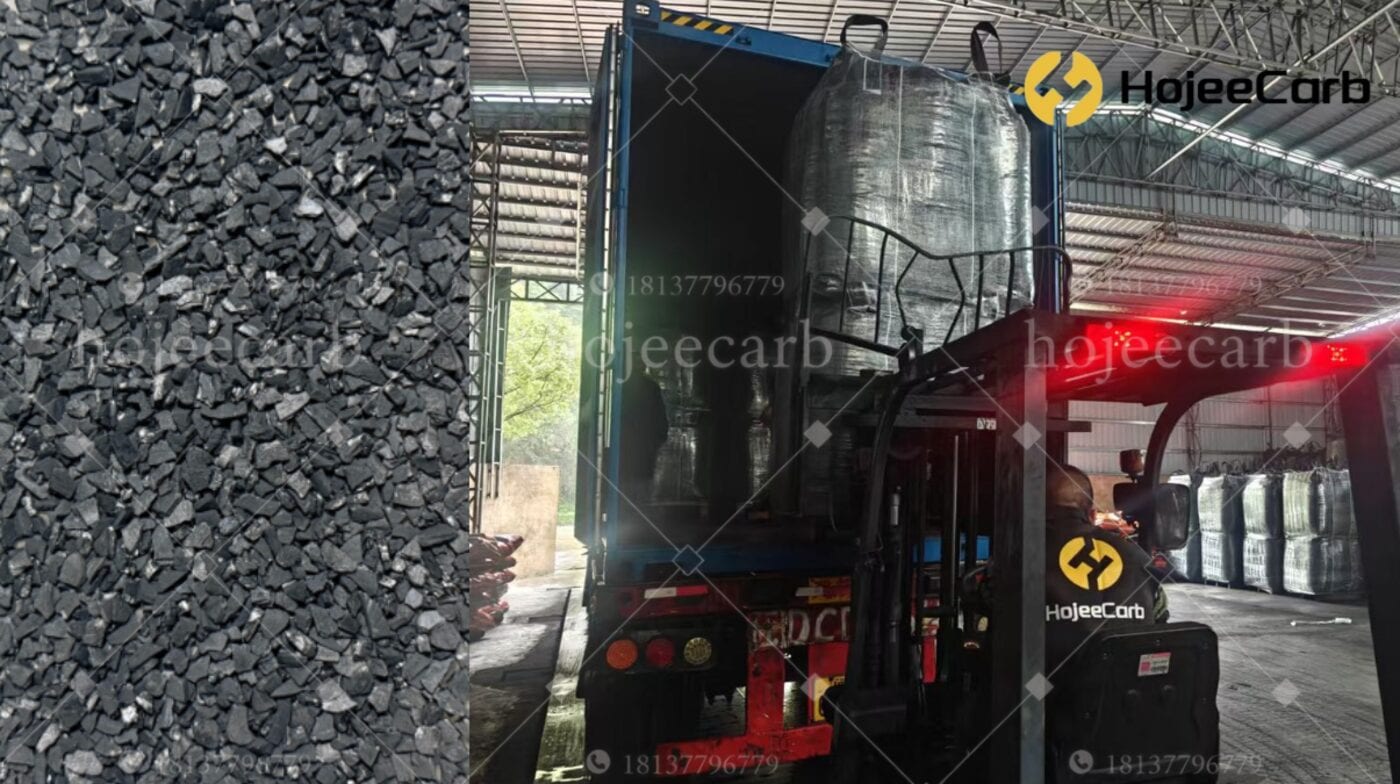
Case: 56-tonne coconut carbon to an Ethiopian CIL + Zadra circuit
An Ethiopian gold producer running carbon-in-leach with a Zadra elution circuit switched to our 6×12 coconut shell carbon after attrition losses on a prior supplier drove up make-up cost. Batch COA confirmed hardness ≥98% and iodine ≥1000 mg/g. Lower fines generation across pumping, screening and reactivation stabilised the barren-carbon return rate and cut annual carbon spend.
CIP / CIL / CIC Carbon — Frequently Asked Questions
What is the difference between CIP, CIL and CIC?
In carbon-in-pulp (CIP) the ore is leached first, then carbon is added in separate adsorption tanks. In carbon-in-leach (CIL) carbon is added directly into the leach tanks so leaching and adsorption happen at once — ideal for preg-robbing ores. In carbon-in-column (CIC) clarified pregnant solution from a heap or vat leach flows through carbon columns. All three adsorb the aurocyanide complex onto activated carbon; they differ in where and how carbon contacts the solution.
Which activated carbon is best for a CIP or CIL circuit?
Coconut shell carbon at 6×12 mesh, hardness ≥98% and iodine ≥1050 mg/g is the industry standard for CIP and CIL. High hardness is critical because carbon is pumped and screened continuously — soft carbon generates fines that carry gold to tailings and raise make-up cost.
How much gold can the carbon load?
A well-run circuit loads roughly 15–25 kg of gold per tonne of carbon before elution, depending on solution grade, residence time and carbon activity. Higher iodine number and fresh, well-reactivated carbon push loading toward the top of that range.
Should I choose CIP or CIL for my ore?
Choose CIL when your ore is preg-robbing (contains carbonaceous material that steals dissolved gold) or when tank space is limited, since leaching and adsorption share the same tanks. Choose CIP for clean, fast-leaching ores where you want higher gold loading per tonne of carbon and lower carbon inventory.
What mesh size do you supply for gold circuits?
6×12 mesh is the standard for CIP, CIL and most CIC columns — it balances kinetics, retention and low pressure drop, and screens cleanly. 8×16 is available for finer circuits needing faster kinetics.
What is your MOQ and lead time?
MOQ is 1 tonne with a typical 7–15 day lead time. We ship worldwide to major gold-mining regions and provide a batch COA (hardness, iodine number, mesh, moisture) with every order.
Get the right carbon for your circuit
Tell us your circuit type (CIP, CIL or CIC), ore characteristics and throughput. We'll recommend the mesh and hardness grade that maximises loading and minimises make-up cost — with a batch COA on every shipment.
Request a Gold Carbon Quote