
Activated carbon is one of the most versatile adsorbents on the planet — used in water treatment, air purification, gold recovery, food processing, pharmaceuticals, and dozens of other industries. But how does a coconut shell or a lump of coal become a material with a surface area exceeding 1,000 m²/g?
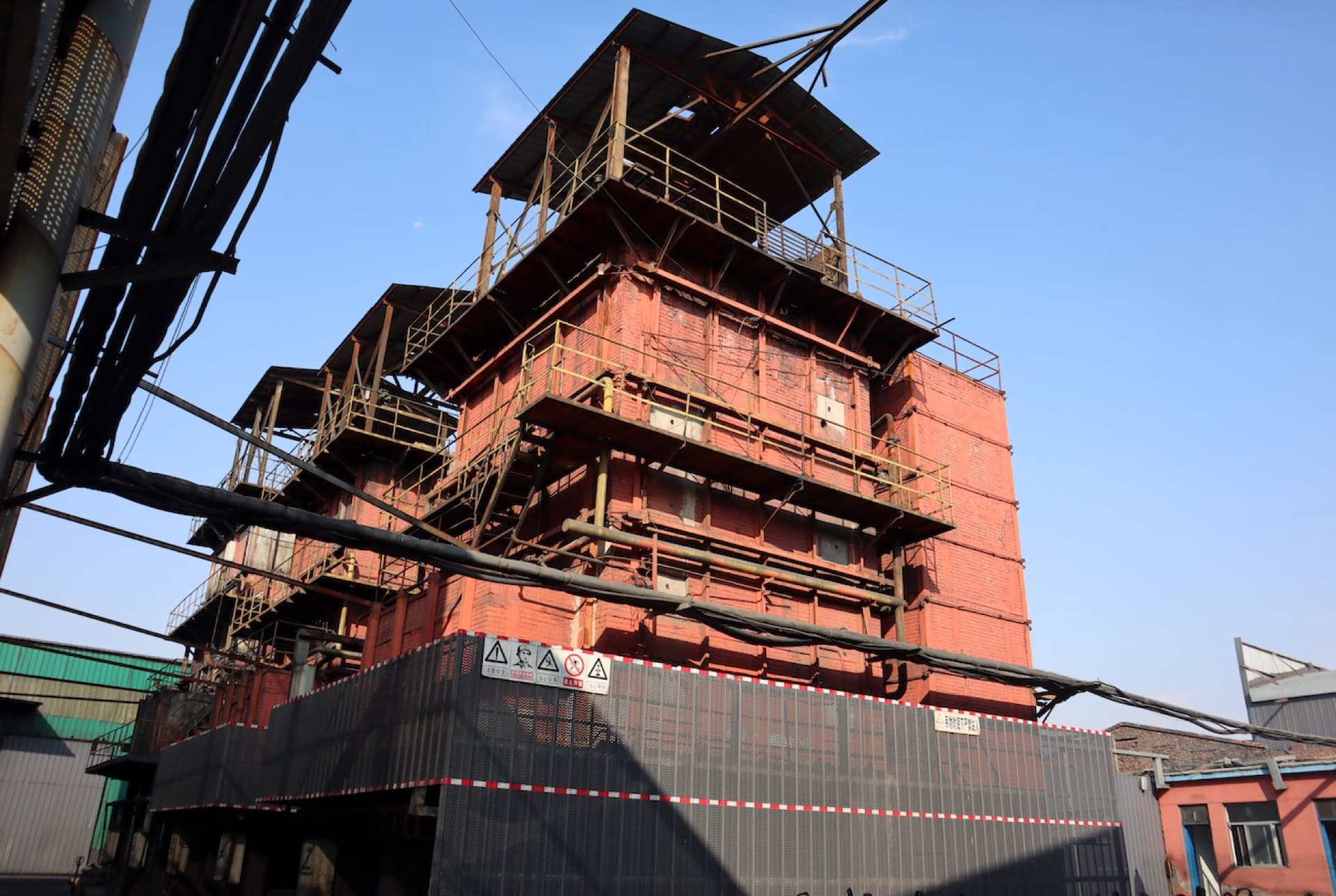
This guide walks through the entire manufacturing process — from raw material selection to final packaging — so you can understand what happens inside an activated carbon factory and why each step directly affects the quality and price of the product you receive.
The Manufacturing Pipeline at a Glance
Raw Materials: Where It All Starts
The choice of raw material is the single biggest factor determining the pore structure, hardness, and application suitability of the finished activated carbon. Every raw material has a different natural cell structure, and that structure carries through to the final product.
| Raw Material | Pore Type | Hardness | Best For |
|---|---|---|---|
| Coconut Shell | Microporous | Very High (97%+) | Water, gold recovery, gas phase |
| Bituminous Coal | Meso + Microporous | High (90–95%) | Water treatment, solvent recovery |
| Anthracite | Microporous | High (90–95%) | Gas phase, catalysis |
| Wood | Macroporous | Low (60–80%) | Decolorization, food & pharma |
| Peat | Meso + Macroporous | Low–Medium | Color removal, wastewater |
| Bamboo | Meso + Macroporous | Medium | Air purification, emerging uses |
Coconut shell is prized for its naturally microporous structure and exceptional hardness, making it ideal for gold recovery and drinking water purification. Coal-based carbons offer a broader pore size distribution, which is advantageous for removing a wider range of contaminants. Wood-based carbons are predominantly macroporous and excel at decolorization in food and pharmaceutical applications.
For a detailed comparison of the two most common raw materials, see our guide on coconut shell vs. coal activated carbon.
Need activated carbon?
Get Factory-Direct Pricing — No Middlemen
20+ years manufacturing. MOQ 1 ton. Free samples. Reply within 2 hours.
Step 1: Raw Material Preparation
Before any heat is applied, the raw material must be prepared. The goal is to create uniform-sized pieces that will carbonize evenly and produce consistent quality.
Preparation quality directly affects yield. Oversized pieces carbonize unevenly (raw centers, over-burned edges), while undersized fines create dust and reduce the yield of usable granular activated carbon.
Step 2: Carbonization (Pyrolysis)
Carbonization is the thermal decomposition of the raw material in the absence of oxygen (or with very limited oxygen). The goal is to drive off volatile compounds — water, methane, tars, and light hydrocarbons — and leave behind a carbon-rich char with a rudimentary pore structure.
Carbonization Parameters
At this stage, the char has a carbon content of 70–80% and a surface area of only 10–50 m²/g — far too low for adsorption. The pores exist but are blocked by tarry residues and disorganized carbon. The char must be activated to open and enlarge these pores.
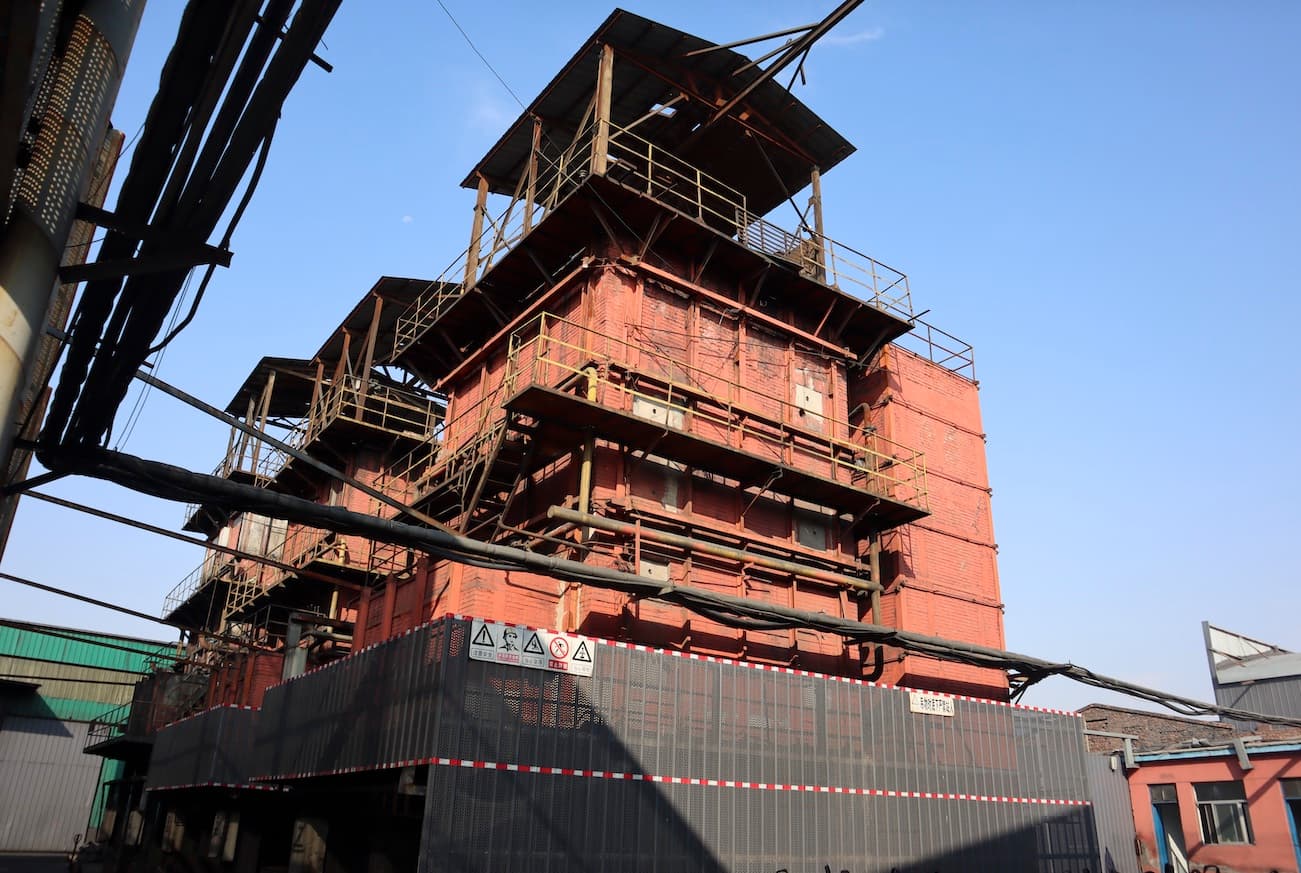
In many factories, especially in Southeast Asia, carbonization is done in brick kilns or pit kilns as a separate step before the char is transported to an activation facility. Larger integrated plants use rotary kilns that feed directly into the activation stage.
Step 3: Activation
Activation is the critical step that transforms low-surface-area char into high-performance activated carbon. There are two primary methods: physical (steam) activation and chemical activation. For a deep dive, see our guide on steam vs. chemical activation.
Physical (Steam) Activation
Steam activation is the most common method worldwide, used for the majority of coconut shell and coal-based activated carbons. The carbonized char is exposed to superheated steam at 800–1,000 °C. The steam reacts with the carbon (C + H₂O → CO + H₂), selectively gasifying carbon atoms and enlarging the pore network.
Steam Activation Parameters
The key trade-off in steam activation is burn-off vs. yield. A higher burn-off creates more pores and a higher iodine number, but it also means less finished product per ton of char. A coconut shell carbon with an iodine number of 1,050 mg/g requires significantly more burn-off (and therefore more energy and raw material) than one rated at 900 mg/g — which is why higher-spec carbons cost more.
Chemical Activation
Chemical activation is primarily used for wood-based and peat-based carbons. The raw material is impregnated with a chemical agent — most commonly phosphoric acid (H₃PO₄) or zinc chloride (ZnCl₂) — before being heated to 400–700 °C. The chemical agent acts as a dehydrating catalyst, promoting pore formation at lower temperatures than steam activation.
Chemical activation combines carbonization and activation into a single step, which can be more energy-efficient. However, it requires careful chemical handling and recovery systems. The resulting powdered activated carbon (PAC) is widely used in sugar refining, MSG production, and pharmaceutical purification.
Step 4: Post-Processing
After activation, the raw activated carbon must go through several post-processing steps before it's ready for shipment.
Washing
Acid washing (typically with HCl) removes soluble ash, metals, and residual chemicals. This is especially critical for food-grade and pharmaceutical-grade carbons, where low ash content and neutral pH are required. Some applications demand additional water washing to bring the pH to a specific range (usually 6–8).
Drying
The washed carbon is dried to a target moisture content of 5% or less (typically 2–5% for granular, up to 8% for some powdered grades). Rotary dryers or fluidized bed dryers are common. Over-drying wastes energy; under-drying adds shipping weight and can promote microbial growth.
Sizing & Screening
The activated carbon is screened to the required mesh size. Common grades include 4×8, 6×12, 8×30, 12×40, and 20×50 mesh for granular activated carbon (GAC). Oversized particles are re-crushed; undersized fines are collected and may be sold as powdered activated carbon or re-processed into pellets.
Pelletizing (Optional)
For applications requiring uniform cylindrical shapes — such as gas-phase adsorption and catalysis — pellet activated carbon is produced by grinding activated carbon to a fine powder, mixing it with a binder (typically coal tar or a food-grade binder), extruding it through a die, and re-activating the pellets. Common diameters are 1.5 mm, 3 mm, and 4 mm.
Step 5: Quality Control & Testing
Every batch of activated carbon is tested against a set of specifications before it leaves the factory. The specific tests depend on the application, but the core parameters are consistent across the industry. For a complete breakdown, see our quality testing methods guide.
| Test | What It Measures | Typical Range |
|---|---|---|
| Iodine Number | Micropore volume (adsorption capacity) | 800–1,200 mg/g |
| CTC (Carbon Tetrachloride) | Gas-phase adsorption capacity | 50–120% |
| BET Surface Area | Total surface area (N₂ adsorption) | 800–1,500 m²/g |
| Hardness (Ball-Pan) | Mechanical strength / abrasion resistance | 85–99% |
| Moisture | Water content | 2–5% |
| Ash Content | Inorganic residue after combustion | 2–15% |
Reputable manufacturers provide a Certificate of Analysis (COA) with every shipment. The COA should include all relevant test results, the test methods used (ASTM, JIS, or GB standards), and the batch/lot number for traceability. Learn more about interpreting these numbers in our iodine number guide.
Step 6: Packaging & Storage
Activated carbon is hygroscopic — it readily adsorbs moisture and volatile compounds from the air. Proper packaging is essential to preserve adsorption capacity during transit and storage. For detailed guidance, see our packaging and storage guide.
Storage should be in a dry, well-ventilated area away from solvents, fuels, and strong odors. Activated carbon will adsorb whatever is in the air around it — storing it near chemicals effectively contaminates the product before it's ever used.
Manufacturing Differences by Raw Material
While the general process (prepare → carbonize → activate → process) is the same, the specifics vary significantly by raw material.
Coconut Shell Process
Coconut shells are typically carbonized in brick kilns or drum kilns near the plantation, then shipped as char to an activation facility. Steam activation at 900–950 °C produces a predominantly microporous carbon with exceptional hardness (97%+). The high natural density of coconut shell means the finished carbon has excellent apparent density (0.48–0.55 g/cm³), making it ideal for fixed-bed adsorption columns.
Coal-Based Process
Coal (bituminous or anthracite) is crushed, sometimes briquetted with a binder, and then carbonized and steam-activated in rotary kilns. The resulting carbon has a broader pore size distribution (micro + mesopores) compared to coconut shell, which makes it more versatile for removing a range of contaminant sizes. Coal-based production is concentrated in China (Shanxi and Ningxia provinces), where raw material and energy costs are lower.
Wood-Based Process
Wood chips or sawdust are chemically activated with phosphoric acid in a single-step process. The wood is mixed with H₃PO₄, heated to 400–500 °C in a rotary kiln, then washed extensively to recover the acid. The result is a highly macroporous powdered activated carbon with high decolorization capacity but low hardness — it's not suitable for fixed-bed applications.
Scale of Production: Kilns & Process Types
Activated carbon factories range from small batch operations producing a few hundred tons per year to large continuous plants producing 20,000+ tons annually. The kiln type determines throughput, consistency, and energy efficiency.
| Kiln Type | Process | Capacity | Notes |
|---|---|---|---|
| Rotary Kiln | Continuous | 5–50 TPD | Most common for large-scale production. Good uniformity. |
| Shaft Kiln (Vertical) | Semi-continuous | 1–10 TPD | Lower capital cost. Common in China for coal-based AC. |
| Fluidized Bed | Continuous | 5–30 TPD | Excellent heat transfer. Used for reactivation. |
| Multiple Hearth | Continuous | 5–20 TPD | Precise temperature control. Common for reactivation. |
Quality Factors That Depend on Manufacturing
Two factories using the same raw material can produce very different activated carbons. The manufacturing parameters that most affect quality include:
How Manufacturing Affects Price
Understanding the manufacturing process helps explain why activated carbon prices vary so widely. For a comprehensive pricing breakdown, see our activated carbon price guide.
Factory Tour: What to Look For
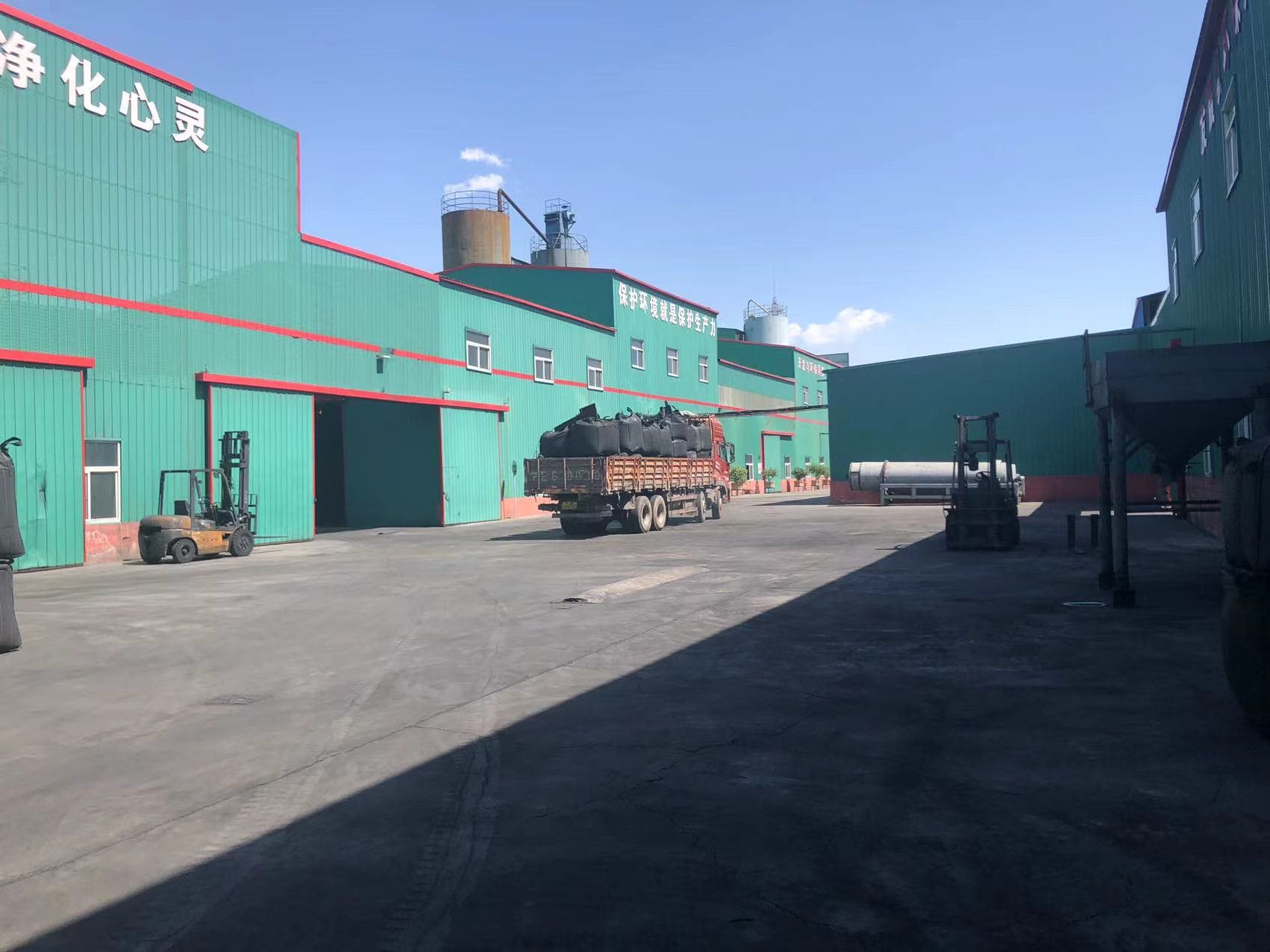
If you're evaluating an activated carbon manufacturer — whether in person or via video — here are the key things to assess. Visiting the factory (or requesting a virtual tour) is one of the best ways to verify a supplier's capabilities before committing to a large order.
For more on evaluating suppliers, see our guide on how to choose an activated carbon supplier and our certification guide.
The Bottom Line
Activated carbon manufacturing is a multi-stage process where every step — from raw material selection to activation temperature to post-processing — directly affects the final product's performance, consistency, and price. Understanding this process gives you a significant advantage when evaluating suppliers, comparing quotes, and specifying the right product for your application.
The best manufacturers control every stage of the process, maintain rigorous quality testing, and can explain exactly how their production parameters translate into the specifications on your COA. When a supplier can't answer basic questions about their activation temperature, kiln type, or burn-off rate, that's a red flag.
Whether you need coconut shell activated carbon for water treatment, coal-based carbon for industrial applications, or wood-based PAC for decolorization — knowing how it's made helps you buy smarter.
Frequently Asked Questions
What are the main steps in activated carbon manufacturing?
Three stages: (1) Raw material preparation — sizing and drying coconut shell, coal, or wood, (2) Carbonization — heating to 400–600°C in oxygen-free environment to create char, (3) Activation — treating char at 800–1000°C with steam or chemicals to develop pore structure. Post-processing includes washing, drying, screening, and quality testing.
What is the difference between physical and chemical activation?
Physical (steam) activation uses steam at 800–1000°C to selectively burn carbon atoms, creating mainly micropores. Chemical activation uses reagents (H₃PO₄, ZnCl₂, KOH) at 400–700°C to dehydrate and restructure, creating more mesopores. Steam activation is cleaner; chemical activation gives higher yield and broader pore distribution.
What raw materials are used to make activated carbon?
Common raw materials: coconut shell (premium microporous carbon), bituminous coal (balanced pore structure), anthracite coal (high hardness), wood (mesoporous carbon), peat, lignite, bamboo, and various agricultural waste products. Each raw material produces carbon with distinctive pore characteristics.
How long does it take to manufacture activated carbon?
Carbonization takes 2–6 hours, activation takes 2–12 hours depending on method and target specifications. Total production time from raw material to packaged product is typically 24–72 hours including cooling, washing, drying, and screening. Large rotary kilns process 5–20 tons per day.
What determines the quality of the finished activated carbon?
Key quality factors: raw material purity and consistency, carbonization temperature and duration, activation method and conditions (temperature, steam ratio, time), post-treatment processes (acid washing, drying), and quality control testing. Precise control of activation temperature and time is the most critical factor.
Want to See Our Factory in Action?
We welcome factory visits and virtual tours. See our kilns, labs, and quality control processes firsthand — or request a sample with full COA to evaluate our products.