
Reactivated Activated Carbon: Is Recycled GAC Right for Your Project?
Reactivated GAC costs 40–60% less than virgin carbon — but is it good enough for your application? With the global activated carbon market hitting $4.2 billion in 2026 and sustainability pressures mounting, more water utilities and industrial users are switching to recycled carbon. Here's what you need to know before making that decision.
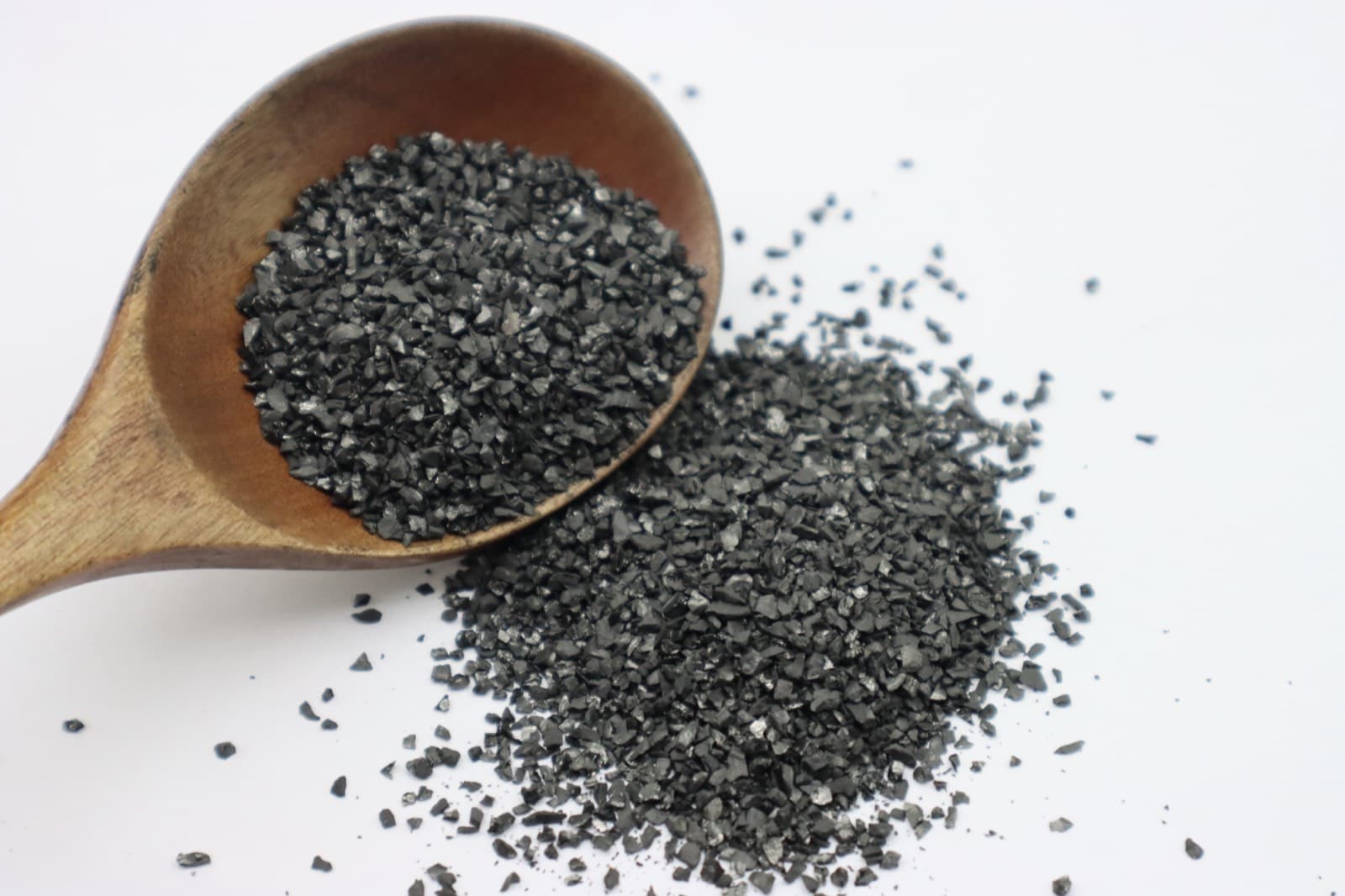
High-quality coconut shell GAC — the preferred base material for reactivation programs due to its superior structural integrity
1. What Is Reactivated Activated Carbon?
Reactivated activated carbon is spent (exhausted) granular activated carbon that has been thermally processed to restore its adsorptive capacity. The process works by heating spent GAC to 700–1000°C in a controlled atmosphere — typically steam or carbon dioxide — which burns off the adsorbed contaminants and reopens the internal pore structure.
Think of it as "resetting" the carbon to near-original condition. A properly reactivated GAC recovers 85–95% of its original iodine number and creates fresh adsorption sites ready for the next service cycle. The process is fundamentally the same as the original activation step in activated carbon manufacturing — the key difference is that you're working with a carbon structure that has already been shaped, so the economics are dramatically better.
The Reactivation Process: Step by Step
- 1. Collection & Transport: Spent GAC is drained, dewatered, and shipped to a reactivation facility (typically in sealed containers to prevent contamination)
- 2. Screening & Sizing: Incoming spent carbon is screened to remove debris, broken granules, and fines that won't survive thermal processing
- 3. Drying (100–200°C): Residual moisture is driven off in a pre-drying stage to improve thermal efficiency
- 4. Pyrolysis (200–700°C): Adsorbed organic contaminants are volatilized and decomposed; heavier organics are carbonized
- 5. Reactivation (700–1000°C): Steam or CO₂ reacts with the carbonized residue, gasifying it and reopening blocked pores. This is the critical step that restores adsorption capacity
- 6. Cooling & Quenching: Reactivated carbon is rapidly cooled in an oxygen-free environment to prevent combustion
- 7. Post-Screening & Make-Up: Final product is screened to spec; virgin carbon (10–15%) is blended in to compensate for mass loss during reactivation
- 8. Quality Testing: Full QC testing — iodine number, moisture, ash, apparent density, particle size distribution
The entire cycle takes 2–4 weeks from collection to delivery of reactivated product — faster than procuring new virgin GAC from overseas, which typically requires 4–8 weeks including ocean freight and customs clearance.
Need activated carbon?
Get Factory-Direct Pricing — No Middlemen
20+ years manufacturing. MOQ 1 ton. Free samples. Reply within 2 hours.
2. Cost Comparison: Virgin vs. Reactivated Activated Carbon
The primary driver behind the reactivation market's growth is economics. With the global market projected to reach $4.2 billion in 2026 and virgin carbon prices rising due to coconut shell supply constraints, the cost advantage of reactivated carbon is becoming impossible to ignore.
| Cost Component | Virgin GAC | Reactivated GAC | Savings |
|---|---|---|---|
| Coconut Shell GAC (12×40) | $1,800–2,400/MT | $700–1,100/MT | 40–55% |
| Coal-Based GAC (8×30) | $1,200–1,600/MT | $500–800/MT | 50–60% |
| Logistics (collect + return) | Included in FOB | $100–300/MT | Added cost |
| Virgin Make-Up Carbon (10–15%) | N/A | $180–360/MT | Added cost |
| Total Effective Cost | $1,800–2,400/MT | $980–1,760/MT | 30–50% net |
⚠️ Break-Even Volume: Reactivation economics improve with scale. Below ~5 MT per service cycle, the logistics overhead (collection, transport, return) can eat most of the savings. The sweet spot is 20–100 MT per cycle, where costs per MT drop significantly and you have leverage to negotiate reactivation service pricing.
For context, a mid-size municipal water treatment plant using 50 MT of GAC per changeout could save $40,000–$60,000 per cycle by switching to a reactivation program. Over a typical 3–5 year contract with biannual changeouts, that's $240,000–$600,000 in total savings. This is why European and North American water utilities are increasingly mandating reactivation in their procurement contracts.
3. Quality Specifications: What to Expect
The biggest concern buyers have about reactivated carbon is quality. Will it perform as well as virgin? The answer depends on the reactivation process, the original carbon quality, and the contaminants it adsorbed. Here's how reactivated GAC typically compares to virgin specifications:
| Parameter | Virgin GAC (Typical) | Reactivated GAC (1st Cycle) | Reactivated GAC (4th Cycle) |
|---|---|---|---|
| Iodine Number (mg/g) | 1000–1200 | 900–1100 | 800–950 |
| BET Surface Area (m²/g) | 900–1100 | 800–1000 | 700–850 |
| Moisture (%) | <5% | <5% | <5% |
| Ash Content (%) | 3–8% | 5–12% | 8–15% |
| Apparent Density (g/cm³) | 0.45–0.55 | 0.42–0.52 | 0.38–0.48 |
| Effective Size (mm) | 0.55–0.75 | 0.50–0.70 | 0.45–0.65 |
| Capacity Retention (%) | 100% | 85–95% | 70–80% |
Key observations: First-cycle reactivated GAC performs very close to virgin — within 10% on most parameters. The real degradation comes from accumulated ash content (which increases with each cycle because mineral contaminants are not volatilized) and gradual structural breakdown that reduces effective size and increases fines.
💡 Pro Tip from 15+ Years of Manufacturing: The initial virgin carbon quality determines reactivation success. High-quality coconut shell GAC with iodine number ≥1050 and low ash (<5%) can be reactivated 5–6 times. Cheap coal-based carbon with high ash (>10%) may only survive 2–3 cycles before becoming uneconomical. Investing in premium virgin carbon upfront yields dramatically better lifecycle economics.
4. Best Applications for Reactivated Carbon
Not every application is a good fit for reactivated carbon. The decision depends on three factors: performance requirements, regulatory constraints, and contaminant type. Here's where reactivated carbon works well — and where it doesn't.
✅ Excellent Fit
- Municipal water treatment (non-PFAS): Taste, odor, chlorine, and general organic removal — reactivated GAC performs nearly identically to virgin
- Industrial wastewater pre-treatment: COD/BOD reduction where ultra-high capacity isn't critical
- Groundwater remediation: Long-term remediation projects where lifecycle cost matters more than peak performance
- VOC removal (solvent recovery): Regeneration is standard practice; reactivated carbon performs well with proper thermal cycling
❌ Not Recommended
- Point-of-use drinking water: NSF/ANSI 42/53 certification typically requires virgin carbon; consumer trust factor
- Food & beverage processing: FDA and food safety regulations generally mandate virgin food-grade carbon
- Pharmaceutical purification: GMP requirements and contamination risk make reactivated carbon unsuitable
- Gold recovery (CIL/CIP): Reactivated carbon's reduced hardness increases gold losses from attrition in high-abrasion circuits
⚖️ Case-by-Case Evaluation
- PFAS water treatment: Technically feasible with validated high-temperature reactivation, but regulatory landscape is evolving — see Section 5
- Mercury removal (flue gas): Spent mercury-laden carbon requires specialized hazardous waste handling; reactivation must demonstrate mercury destruction
- Odor control: H₂S and ammonia applications work with reactivated carbon, but performance testing per batch is recommended
5. The PFAS Reactivation Challenge
PFAS (per- and polyfluoroalkyl substances) represent the most significant challenge — and opportunity — in the reactivation industry. With the US EPA's PFAS drinking water standards driving hundreds of new GAC installations, the question of what to do with PFAS-laden spent carbon is becoming urgent.
The Technical Problem
PFAS compounds have exceptionally strong carbon-fluorine bonds — among the strongest in organic chemistry. Standard thermal reactivation at 800–900°C may not fully destroy all PFAS species, particularly short-chain compounds (PFBS, PFHxA) that require higher temperatures for complete mineralization. This creates a risk of PFAS carry-over into the reactivated product.
Industry Solutions (2026 State of Play)
High-Temperature Reactivation (1000°C+)
Calgon Carbon has invested $100 million in their Ohio facility specifically for PFAS-capable reactivation. Their process uses temperatures exceeding 1000°C with validated PFAS destruction. This is currently the leading commercial solution — but capacity is limited and costs are higher than standard reactivation.
Electrochemical Regeneration
A recent ACS Publications study demonstrates electrochemical regeneration of GAC filters that concentrates short-chain PFAS for separate destruction. This is still at pilot scale but could reduce reactivation costs while ensuring PFAS elimination.
Dual-Use After Reactivation
Rice University research shows that GAC used for PFAS adsorption can subsequently be repurposed for lithium extraction from brine — a creative "second life" application that sidesteps the PFAS destruction challenge entirely.
⚠️ Regulatory Warning: If you're operating a PFAS treatment system, do not assume standard reactivation will handle PFAS-laden GAC. Require your reactivator to provide validated analytical data showing PFAS destruction efficiency for your specific contaminant profile. State regulations vary — some states (Michigan, New Jersey) have stricter requirements than federal guidelines.
6. Decision Framework: Should You Choose Reactivated Carbon?
Use this decision tree to determine whether reactivated or virgin activated carbon is right for your specific application:
Step 1: Is your application food-grade, pharmaceutical, or point-of-use drinking water?
→ YES: Use virgin carbon. Regulatory and safety requirements effectively mandate it.
→ NO: Continue to Step 2.
Step 2: Is your batch size ≥10 MT per service cycle?
→ YES: Reactivation is economically viable. Continue to Step 3.
→ NO (<10 MT): Logistics overhead likely erodes savings. Consider purchasing pre-reactivated GAC from a supplier instead of custom reactivation.
Step 3: Does your spent carbon contain PFAS, heavy metals, or hazardous contaminants?
→ YES (PFAS): Requires specialized high-temperature reactivation facility. Verify PFAS destruction validation.
→ YES (heavy metals): Requires hazardous waste handling and specialized reactivation. Cost savings may be minimal.
→ NO (organic contaminants only): Excellent candidate for standard reactivation.
Step 4: Is there a qualified reactivation facility within 500 km?
→ YES: Reactivation is strongly recommended. Total savings of 30–50% with minimal logistics overhead.
→ NO: Calculate full logistics cost (transport both ways) to determine if savings justify the distance. Long-distance reactivation can still work for large batches (>40 MT).
7. Sustainability & Circular Economy Benefits
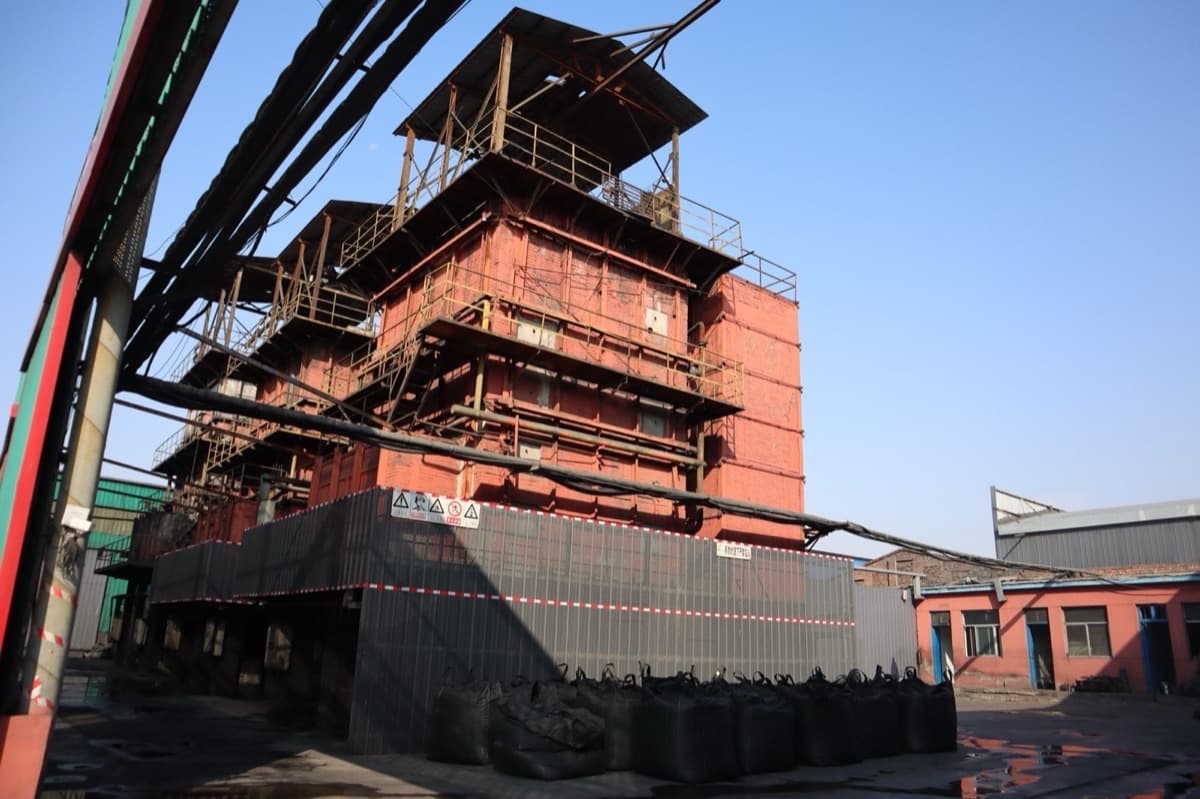
Rotary kilns at our manufacturing facility — the same kiln technology used in industrial reactivation processes
Beyond cost savings, reactivation delivers measurable sustainability benefits that matter to ESG-conscious organizations and regulatory bodies:
| Sustainability Metric | Virgin GAC | Reactivated GAC | Improvement |
|---|---|---|---|
| CO₂ Footprint (per MT) | 3.5–5.0 tonnes CO₂ | 1.5–2.5 tonnes CO₂ | 50–60% reduction |
| Raw Material Consumption | 2.5–4 MT coconut shell per MT AC | 0.25–0.4 MT make-up only | 85–90% reduction |
| Energy Consumption | 8–12 GJ/MT | 4–6 GJ/MT | 40–50% reduction |
| Landfill Diversion | 100% waste at end of life | 85–90% reused per cycle | 5–6× lifecycle extension |
| Supply Chain Risk | Dependent on coconut shell supply | Partially decoupled | Reduced exposure |
The coconut shell supply chain constraint is particularly relevant in 2026. Industry intelligence shows Indonesian coconut shell exports declining and prices trending upward ($1,800–2,400/MT for premium GAC). Reactivation directly reduces pressure on this constrained supply chain by extending the useful life of existing carbon inventory.
Major players like NORIT (Cabot) in Europe and Jacobi Carbons have built their brand positioning around circular economy programs. Haycarb (Sri Lanka) pairs virgin carbon sales with reactivation partnerships. For institutional buyers with ESG reporting requirements, a reactivation program provides concrete, quantifiable sustainability metrics for scope 3 emissions reduction.
Frequently Asked Questions
What is the difference between reactivated and regenerated activated carbon?+
How much cheaper is reactivated activated carbon vs. virgin?+
Can reactivated carbon be used for PFAS removal?+
How many times can activated carbon be reactivated?+
Who are the major activated carbon reactivation service providers?+
Related Guides
Activated Carbon Regeneration Methods
Technical deep-dive into thermal, chemical, biological, and electrochemical regeneration
Activated Carbon for PFAS Removal
GAC vs. PAC for PFAS, media selection, and treatment system design
Activated Carbon Water Treatment Guide
Complete guide to using activated carbon in water treatment applications
Activated Carbon Price Guide 2026
Current pricing by type, origin, and application — including reactivated carbon
Need Virgin GAC for Your Reactivation Program?
Every reactivation cycle needs 10–15% virgin carbon make-up. As a manufacturer producing coconut shell, coal-based, and wood-based GAC, we supply make-up carbon optimized for reactivation compatibility — matched to your existing bed specifications for seamless integration.
Request Make-Up Carbon Quote →