
Whether you're a water treatment company in the US, a gold mine in Africa, or a chemical distributor in Europe, chances are you'll source activated carbon from China at some point. Chinese manufacturers supply the most competitive pricing globally, but navigating the import process — from HS codes to container loading to customs clearance — can be daunting if it's your first time.
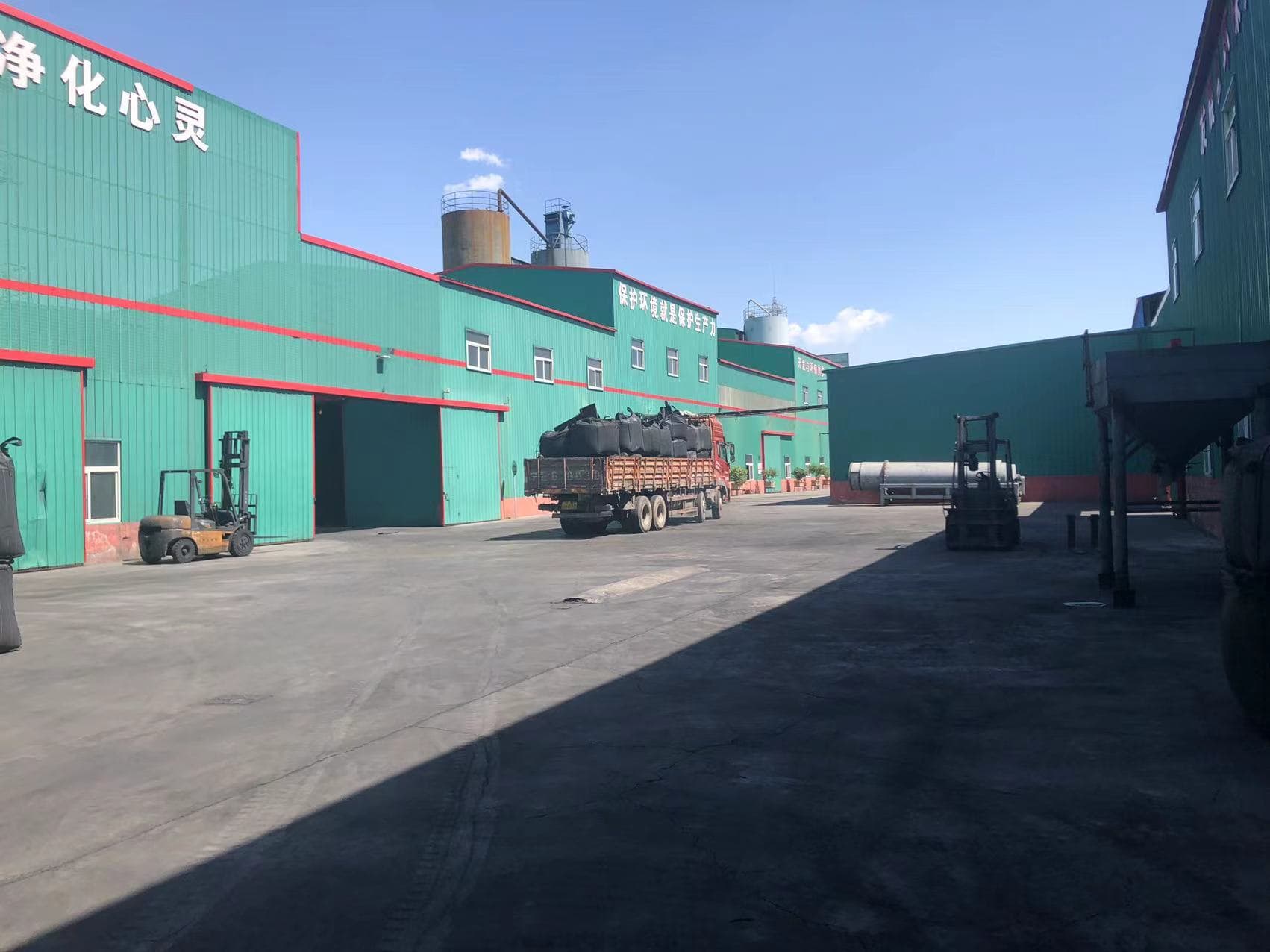
This guide covers the entire process based on our experience shipping thousands of containers to 40+ countries.
Why Import Activated Carbon from China?
China is the world's largest producer of activated carbon, with annual production exceeding 1.5 million metric tons. The country has abundant raw materials — Shanxi province for coal, Hainan and Southeast Asian imports for coconut shell, and extensive forestry resources for wood-based carbon.
The price advantage is significant. FOB China prices for granular activated carbon typically range from $800–$2,500/MT depending on the type and specification, compared to $1,500–$4,000/MT from US or European manufacturers. Even after adding freight, insurance, and import duties, the landed cost is usually 30–50% lower.
Need activated carbon?
Get Factory-Direct Pricing — No Middlemen
20+ years manufacturing. MOQ 1 ton. Free samples. Reply within 2 hours.
Classifying Your Shipment
Most activated carbon ships under HS code 3802.10 — the code determines your duty rate and whether anti-dumping duties apply. Rates vary a lot by destination and by supplier (the US China-wide anti-dumping rate, for example, is very high), so it pays to confirm the exact figure before you order.
For the full breakdown of HS codes, EU anti-dumping duties, US Section 301 tariffs, and duty-reduction strategies by market, see our dedicated Activated Carbon Import Tariffs & HS Code Guide. This article focuses on the sourcing and shipping side — MOQ, factory verification, pricing, container loading, and documentation.
Shipping Options: FCL vs LCL vs Air
Activated carbon is heavy and relatively low-value compared to electronics or consumer goods, so ocean freight is the standard shipping method. Here's how the options compare:
| Method | Volume | Cost (approx.) | Transit Time |
|---|---|---|---|
| 20' FCL | 20–26 MT | $1,500–$3,500 to most ports | 15–40 days depending on destination |
| 40' FCL | 24–28 MT (weight-limited) | $2,000–$5,000 | Same as 20' FCL |
| LCL | 1–10 MT | $80–$150/CBM | +5–10 days for consolidation |
| Air Freight | Samples / urgent (<500 kg) | $4–$8/kg | 3–7 days |
For most buyers, a 20-foot FCL is the sweet spot. It holds 20–26 metric tons of activated carbon (depending on density and packaging) and gives you the best per-ton shipping cost. A 40-foot container doesn't give you double the capacity because activated carbon is dense — you'll hit the weight limit before filling the space.
Container Loading: What Fits?
Loading patterns depend on your packaging choice. Here's what to expect:
Required Documentation
Your supplier should provide these documents. Missing or incorrect documents cause customs delays and demurrage charges, so verify everything before the container ships.
Commercial Invoice
Must include: seller/buyer details, product description, HS code, quantity, unit price, total value, payment terms, Incoterm.
Packing List
Number of bags/pallets, gross weight, net weight, dimensions, container number.
Bill of Lading (B/L)
Original or telex release. This is the document of title — you need it to pick up your container at the port.
Certificate of Analysis (COA)
Test results for iodine number, moisture, ash, hardness, particle size, pH, heavy metals (if applicable).
Certificate of Origin (CO)
Required for preferential duty rates under trade agreements. Get a Form A or Form E depending on destination.
MSDS / SDS
Material Safety Data Sheet. Activated carbon is generally non-hazardous but some customs authorities require it.
Phytosanitary Certificate
Required by some countries (Australia, New Zealand) if using wooden pallets. ISPM-15 heat treatment mark on pallets eliminates this requirement.
Incoterms: FOB vs CIF vs DDP
The Incoterm determines who pays for what, and where responsibility transfers from seller to buyer. For activated carbon imports from China, these are the most common:
| Incoterm | Seller Pays | Buyer Pays | Best For |
|---|---|---|---|
| FOB China Port | Production, inland transport, export customs, loading onto vessel | Ocean freight, insurance, import customs, delivery | Experienced importers with freight forwarder relationships |
| CIF Destination Port | Everything up to destination port (including freight & insurance) | Import customs, duty, inland delivery | Buyers who want a simpler landed cost calculation |
| DDP (Delivered Duty Paid) | Everything including import duty and delivery to buyer's door | Nothing (just unload) | First-time importers, small quantities |
Our recommendation: start with CIF for your first order (simpler logistics), then switch to FOB once you've established a relationship with a reliable freight forwarder. FOB gives you more control over shipping costs and timing.
Payment Methods for China Imports
Standard payment for activated carbon is T/T (Telegraphic Transfer, i.e., bank wire). The typical structure:
Never pay 100% upfront to a supplier you haven't worked with before. And be cautious of suppliers who insist on payment to a personal account rather than a company account — this is a common fraud indicator.
Pre-Shipment Quality Inspection
For orders over $10,000, a pre-shipment inspection (PSI) is worth the investment. Companies like SGS, Bureau Veritas, or Intertek can inspect at the factory for $300–$500 per visit. They'll verify:
Major Export Ports in China
Most activated carbon in China is produced in Shanxi, Henan, Fujian, and Guangdong provinces. The export port depends on the factory location:
| Production Region | Nearest Port | Notes |
|---|---|---|
| Shanxi (coal-based) | Tianjin / Qingdao | Inland transport adds 1–2 days and $50–$100/MT to cost |
| Henan | Qingdao / Shanghai | Central location, access to multiple ports |
| Fujian (coconut shell) | Xiamen / Fuzhou | Coastal — short inland distance, efficient export |
| Guangdong | Shenzhen / Guangzhou | South China hub, most shipping routes available |
7 Common Mistakes When Importing Activated Carbon
Not checking anti-dumping duty status
Anti-dumping and Section 301 duties on Chinese activated carbon can exceed 200% in some markets, turning a “cheap” product into an expensive one. Always verify current rates for your destination — see our import tariffs guide — before ordering.
Choosing the lowest price without quality verification
An iodine number of 900 mg/g from one supplier is not the same as 900 from another if testing methods differ. Always request a sample and test it in your own application before committing to a full container.
Ignoring moisture protection during shipping
Activated carbon is hygroscopic. Without proper PE liners, desiccant, and container liner, you'll receive wet product that doesn't meet spec. Insist on moisture protection measures.
Not specifying packaging clearly
“25kg bags” can mean PP woven, kraft paper, or PE inner. Specify exactly: “25kg PP woven bags with PE inner liner, palletized on fumigated wooden pallets.”
Ordering just before Chinese New Year
Factories shut down 2–4 weeks around Chinese New Year (late Jan / early Feb). Place orders by early December to ensure delivery before the holiday. Post-holiday, there's a 2–3 week backlog.
Paying to a personal bank account
Legitimate manufacturers have company bank accounts. If a supplier insists on payment to a personal account or a third-party company, it's a major red flag. Walk away.
Not retaining pre-shipment samples
Always ask the supplier to retain a sealed sample from the shipped batch. If a quality dispute arises, the retained sample is your reference point for resolution.
Typical Import Timeline
Total lead time from first contact to product in your warehouse: approximately 8–10 weeks. For urgent needs, ask about stock products that can ship within 7 days of payment.
Minimum Order Quantities (MOQ)
Chinese activated carbon factories set MOQ by product type and customization level:
| Order Type | MOQ | Notes |
|---|---|---|
| Sample order | 1–25 kg | Free samples up to 1 kg; buyer pays freight for larger quantities |
| Standard product (stock) | 1 MT | Common specs like 8×30, 12×40 mesh coconut or coal GAC |
| Custom specification | 5–10 MT | Non-standard mesh, iodine number target, or impregnation |
| Private label / OEM | 10–20 MT | Custom packaging, branding, and documentation |
| Full container load (FCL) | 20–26 MT | Best unit price; 20' container holds ~20 MT in 25 kg bags |
For buyers testing a new supplier, a 1-ton trial order is the standard starting point. This gives you enough material for lab testing and a small production run without significant financial commitment.
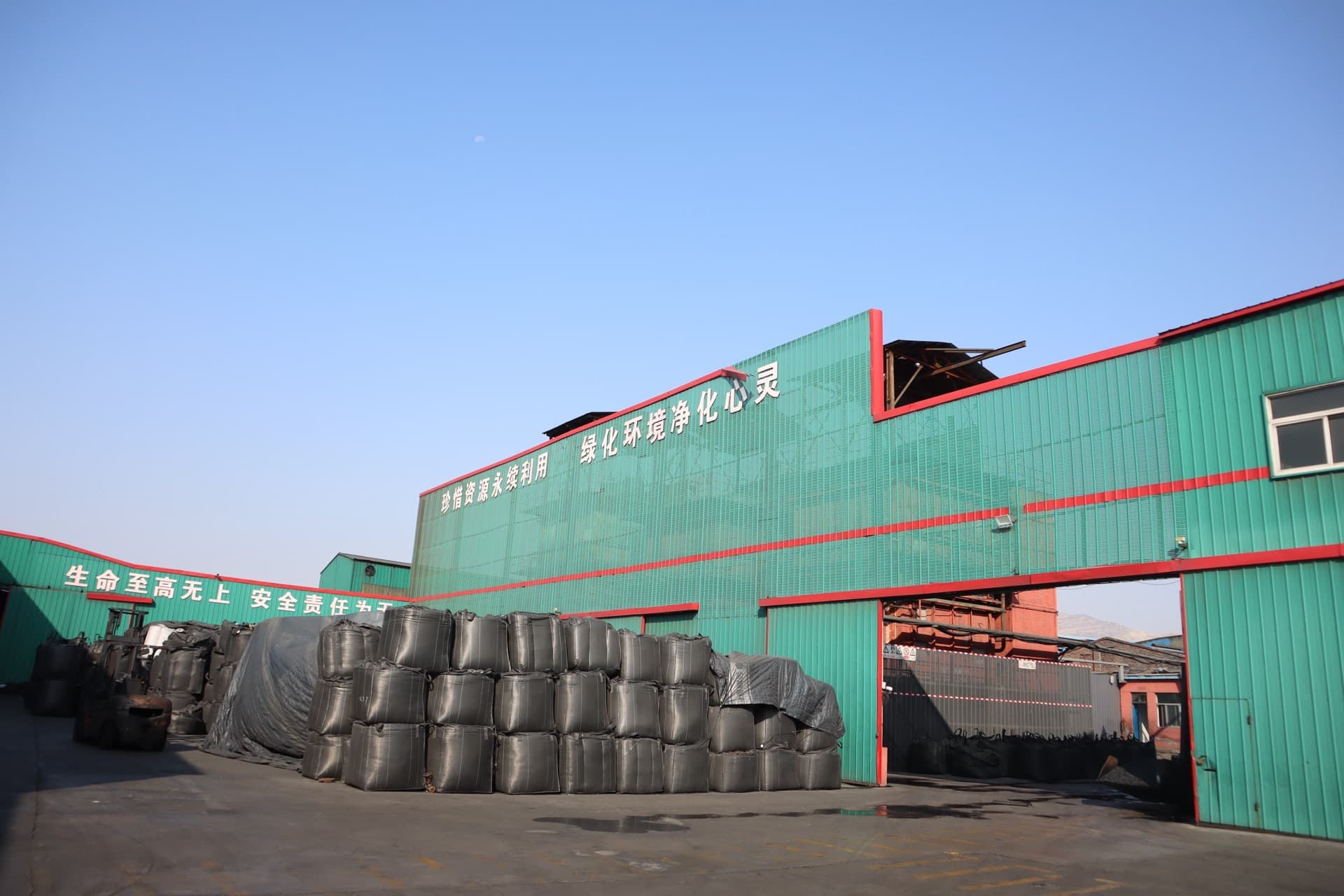
How to Verify a Real Factory vs a Trading Company
Roughly 70% of "manufacturers" on B2B platforms are trading companies that add 10–25% markup. Here is how to identify a genuine factory:
Factory Verification Checklist
→ Business license check: Request the Chinese business license (营业执照). Manufacturers have "生产" or "制造" in their registered scope. Trading companies show "贸易" or "销售".
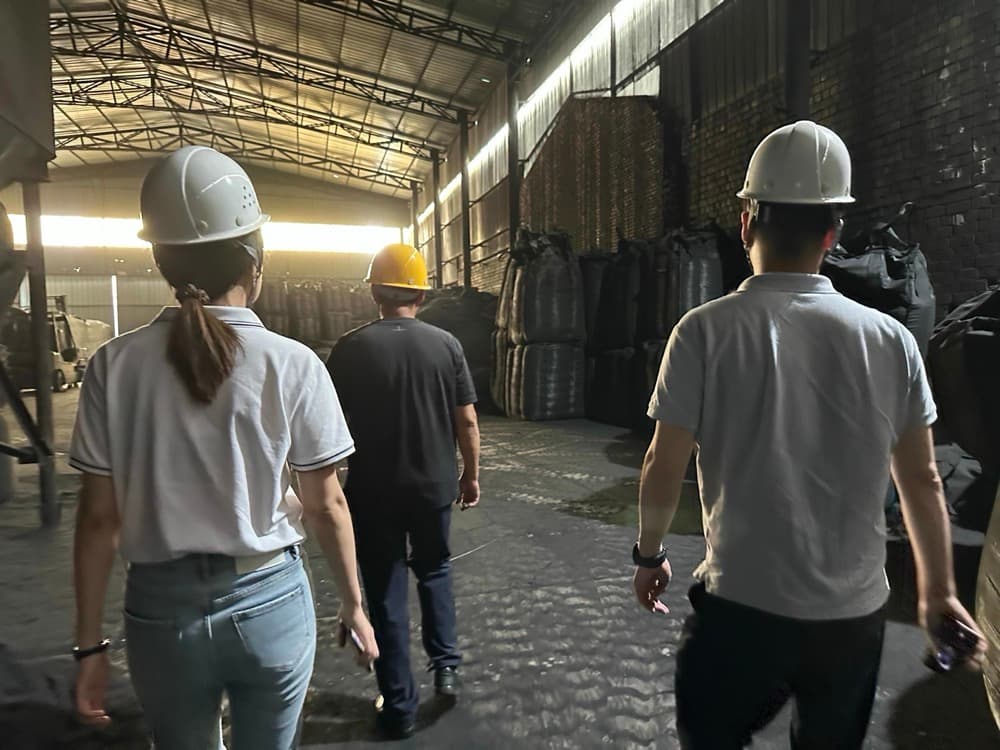
→ Live factory tour: Request a video call walkthrough — carbonization furnaces, activation kilns, screening equipment, and packaging area. Traders cannot show this.
→ Customization capability: Ask for a non-standard mesh size or iodine target. Real factories can adjust production parameters; traders can only offer what their source stocks.
→ Third-party audit: Request an SGS or Bureau Veritas factory audit report. Legitimate factories welcome audits.
→ Export history: Ask for recent Bill of Lading references or customs export data. Established factories have years of documented shipments.
Factory Direct Pricing (FOB China, 2026)
| Product | Specification | FOB Price (USD/MT) |
|---|---|---|
| Coal-based GAC | 8×30 mesh, iodine 800+ | $650–$900 |
| Coal-based GAC | 8×30 mesh, iodine 1000+ | $900–$1,300 |
| Coconut shell GAC | 12×40 mesh, iodine 1050+ | $1,200–$1,800 |
| Coconut shell GAC | 8×30 mesh, iodine 1100+ | $1,400–$2,000 |
| PAC | 200 mesh, iodine 800+ | $500–$800 |
| Pelletized (columnar) | 4 mm, CTC 60+ | $700–$1,100 |
FCL orders (20+ MT) typically get 5–15% lower unit price vs 1 MT orders. Coconut shell prices fluctuate with Southeast Asian supply; coal-based prices track Chinese coal markets.
Bottom Line
Importing activated carbon from China is straightforward once you understand the process. The key is due diligence on your supplier, clear specifications in your purchase order, and proper documentation. Start with a trial order (one 20' container) to validate quality and logistics before committing to larger volumes.
We've shipped to over 40 countries and handle the export documentation, container loading, and logistics coordination as part of our service. Whether you're importing for the first time or switching suppliers, we make the process smooth.
Frequently Asked Questions
Which regions in China produce the most activated carbon?
Ningxia and Shanxi (coal-based, ~60% of output), Fujian and Hainan (coconut shell), Jiangxi and Zhejiang (wood-based), and Hebei (coal-based and specialty). Each region specializes based on local raw material availability.
What quality standards do Chinese manufacturers follow?
Chinese manufacturers follow GB national standards (GB/T 13803). For export, they also test to ASTM, JIS, or EN standards as specified. Leading manufacturers hold ISO 9001, ISO 14001, NSF 61, and HALAL certifications. Always specify which testing standard you require.
How can I verify a Chinese supplier's reliability?
Check business registration on China's credit system, verify certifications, conduct factory audits (in person or third-party), request international customer references, start with trial orders, use L/C or trade assurance for payment, and check export history through customs data providers.
What payment terms are standard for Chinese exports?
Common terms: 30% deposit + 70% before shipping (T/T) for new customers, L/C at sight for larger orders, and net 30–60 days for established relationships. First orders are almost always prepaid or L/C. Avoid 100% advance — use escrow or trade assurance.
Are there export restrictions on activated carbon from China?
Currently no significant restrictions on standard activated carbon. Export VAT rebate (13%) affects pricing. Check your country for anti-dumping duties. Activated carbon is not on China's restricted or prohibited export lists.
Ready to Import?
Tell us what you need — product type, quantity, and destination port. We'll provide a detailed CIF quotation within 24 hours.
Get a CIF Quotation