
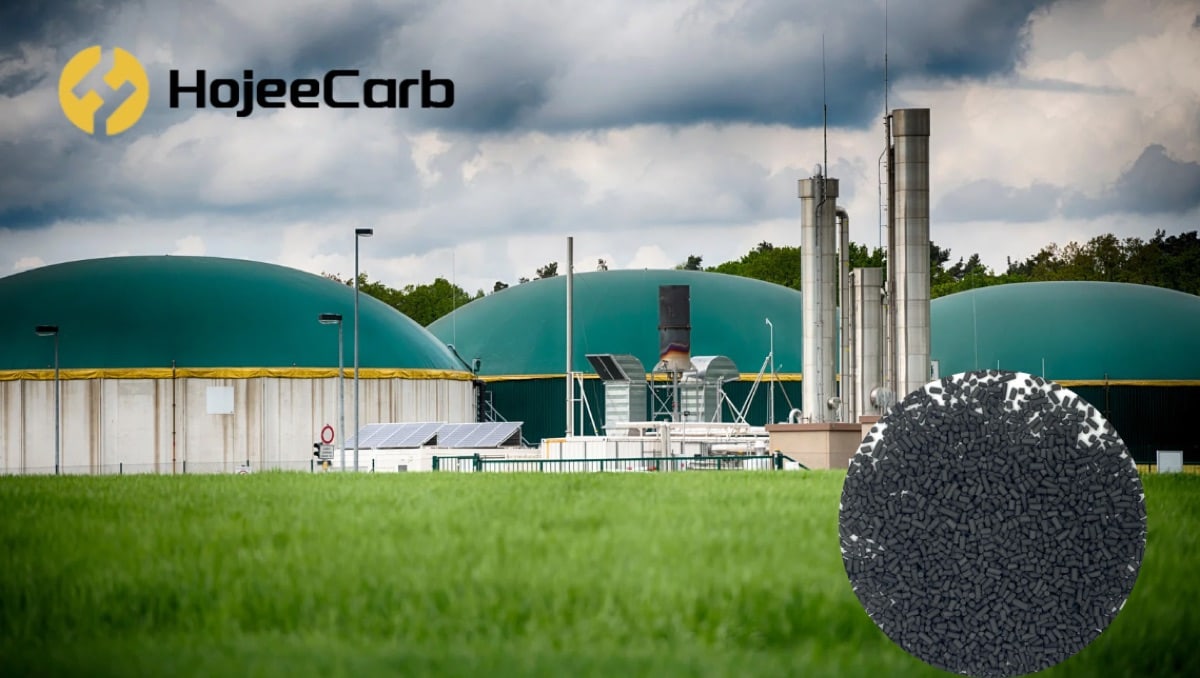
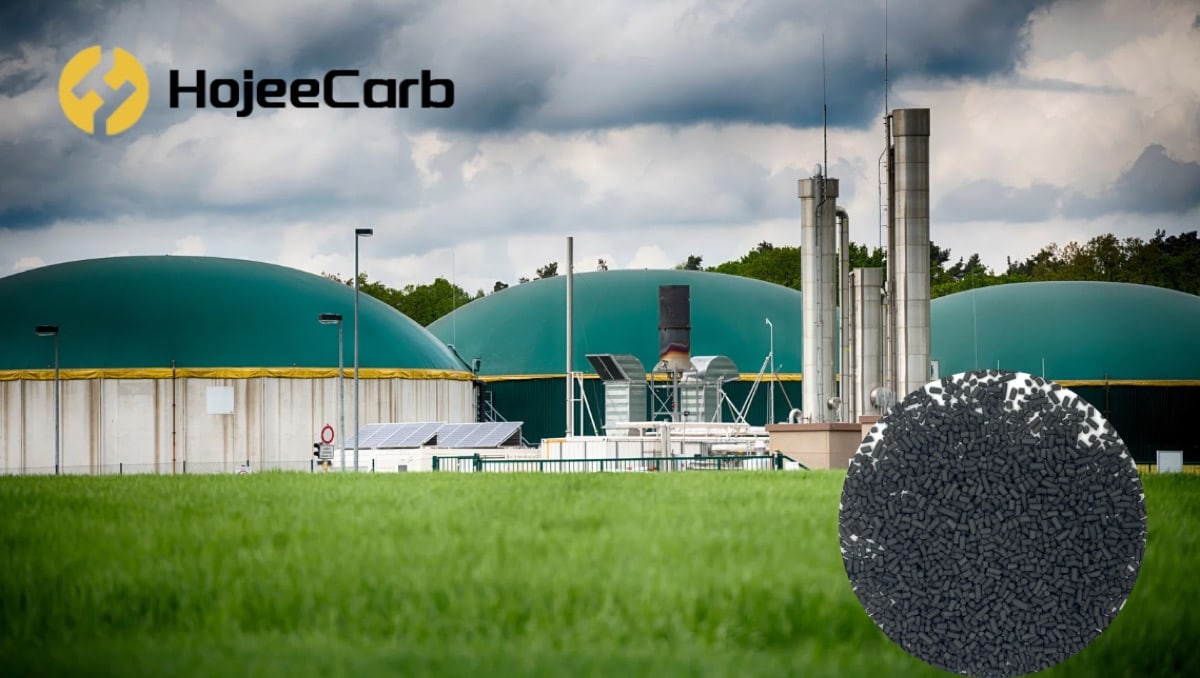
KOH Impregnated Activated Carbon
Industry-standard KOH-impregnated 4mm pellets for H₂S removal from biogas, natural gas, and landfill gas. Working capacity 0.15–0.30 g/cm³.
⚡ Quick Answer
KOH impregnated activated carbon is coal-based Φ3–4mm pellet carbon loaded with 8–15% potassium hydroxide that chemically converts hydrogen sulfide (H₂S) into elemental sulfur and potassium salts. It removes H₂S from biogas, natural gas, and landfill gas at over 99.9% efficiency, cutting outlet levels below 1 ppm with a typical bed life of 6–18 months.
- Impregnation Rate
- 8 – 15% KOH by weight
- H₂S Removal
- > 99.9% (outlet < 1 ppm)
- Working Capacity
- 0.15 – 0.30 g/cm³
- Bed Life @ 2,000 ppm
- 6 – 18 months
Related: 48t WWTP Case Study · All Impregnated Carbon · Biogas Purification · Pellet Activated Carbon · Get a Quote
Product Overview
KOH (potassium hydroxide) impregnated activated carbon is the global standard for removing hydrogen sulfide (H₂S) and other acid gases from biogas, natural gas, landfill gas, and industrial exhaust. The alkaline impregnant reacts chemically with H₂S on the carbon surface, converting it to elemental sulfur and potassium sulfide — achieving removal efficiencies above 99%.
Our KOH-impregnated pellets use high-hardness coal-based extruded carbon as the substrate, ensuring uniform gas distribution, low pressure drop, and long service life. Available in Φ3mm and Φ4mm with impregnation rates from 8% to 15% by weight.
Key Applications
- Biogas H₂S desulfurization
- Natural gas sweetening
- Landfill gas purification
- Wastewater odor control (WWTP)
- Sewage pump station ventilation
- Rendering plant emission control
- Chemical plant acid gas scrubbing
- Anaerobic digester off-gas
Typical Performance in Biogas Systems
| Parameter | Typical Value |
|---|---|
| H₂S inlet concentration | 500 – 5,000 ppm |
| H₂S outlet (after KOH AC bed) | < 1 ppm |
| Removal efficiency | > 99.9% |
| Bed life at 2,000 ppm H₂S inlet | 6 – 18 months |
| Recommended EBCT (empty bed contact time) | 3 – 5 seconds |
| Max operating temperature | 60 °C |
| Optimal relative humidity | 40 – 80% RH |
Data based on EN 12195 / ASTM D6646 test protocol. Actual bed life depends on gas composition, moisture, and flow rate. Contact us for a full bed-sizing calculation.
Municipal Wastewater Plant — 500 m³/hr Biogas, Southeast Asia
A municipal WWTP processing 50,000 m³/day of sewage generates biogas with 2,000–4,500 ppm H₂S. Two 600-liter vessels filled with 8% KOH-impregnated 4mm pellets achieved H₂S outlet <5 ppm continuously for 14 months before the first change-out. The same operator previously used liquid scrubbers, which required daily chemical dosing and had higher OPEX. Carbon total cost of ownership was 40% lower per year.
Read the full case study — 48 tons shipped, 2×40HCTechnical Specifications
| Model | HojeeDesulf K-Series |
| Impregnant | KOH (Potassium Hydroxide) |
| Impregnation Rate | 8 – 15% by weight |
| Base Carbon | Coal-based extruded pellet |
| Diameter | Φ 3.0 / 4.0 mm (standard) |
| H₂S Working Capacity | 0.15 – 0.30 g/cm³ |
| Iodine Number | 400 – 700 mg/g |
| pH | 10 – 12 |
| Hardness | > 90% |
| Moisture | < 5% |
| Bulk Density | 0.45 – 0.55 g/cm³ |
| Bed Pressure Drop | Low (uniform pellet geometry) |
Response within 24 hours
Request TDS / COAOther Impregnated Products
Why KOH Carbon vs Alternatives
Chemical vs Physical
KOH reacts with H₂S permanently — no desorption risk unlike plain GAC which physically holds H₂S and releases it when conditions change.
Higher Capacity
KOH loading of 8–15% delivers H₂S working capacity of 0.15–0.30 g/cm³, 3× higher than NaOH-impregnated carbon.
Moisture-Assisted
Unlike iron-based media, KOH carbon performance improves slightly in humid conditions (40–80% RH) — ideal for real biogas environments.
Low Pressure Drop
Extruded 4mm pellet geometry ensures uniform bed packing and low ΔP — critical for small biogas engines with limited blower capacity.
Moisture-Barrier Packaging
Sealed PE-lined bags
Heat-sealed moisture barrier for hygroscopic KOH
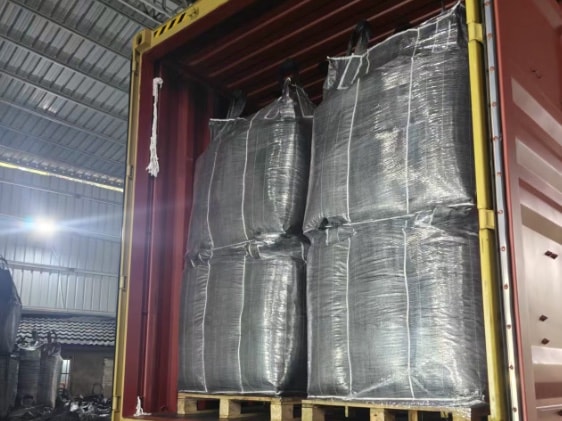
Jumbo bags + PE liner
Sealed against humidity, forklift ready
Super sacks
Bulk biogas / WWTP supply
OEM packaging
Your brand, free design
KOH is hygroscopic, so every bag uses a heat-sealed PE inner liner to keep the product at spec during transit and storage. Keep bags sealed until the media is loaded into the vessel.
Uniform Pellets, Ready to Ship
Every KOH batch is extruded to a consistent Φ3–4mm pellet geometry before impregnation, then sealed in PE-lined bags and dispatched from our own yard. Consistent pellet size is what keeps bed pressure drop low and gas distribution even across the vessel.
Frequently Asked Questions
Why choose KOH over NaOH impregnated carbon?
What H₂S inlet concentration can KOH carbon handle?
How long does a KOH carbon bed last before replacement?
Is KOH impregnated carbon regenerable?
Why does the packaging use a sealed PE liner?
Need Custom H₂S Removal Carbon?
Share your gas composition, flow rate, and H₂S concentration. Our engineers will size the bed and recommend the optimal KOH loading.
Get Custom Quote