
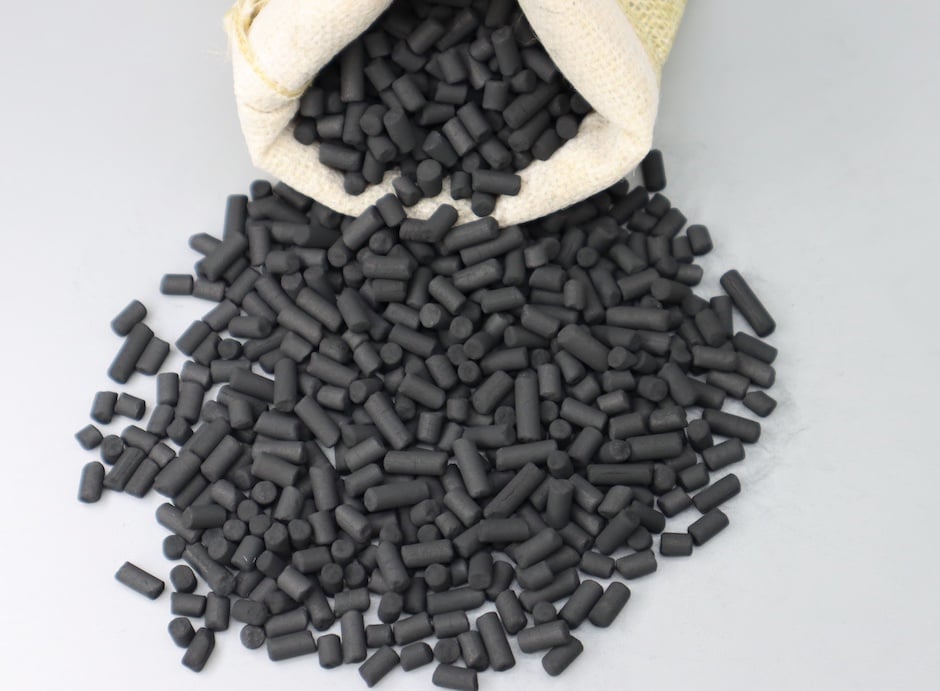
Sulfur Impregnated Activated Carbon
Sulfur-loaded carbon for mercury (Hg⁰) vapor capture from coal-fired power plants, waste incinerators, and chlor-alkali plants. >99% removal efficiency.
Product Overview
Sulfur impregnated activated carbon is specifically designed for mercury vapor (Hg⁰) removal from flue gas, industrial exhaust, and process streams. Elemental sulfur is uniformly distributed within the carbon's micropore structure, where it reacts with gaseous mercury to form thermally stable mercuric sulfide (HgS) — a non-leachable compound safe for landfill disposal.
Unlike standard activated carbon which relies on physical adsorption alone, sulfur impregnation provides a chemical reaction pathway that is highly selective for mercury even at elevated temperatures (up to 200°C) and in the presence of competing gases like SO₂, NOx, and HCl.
Key Applications
- Coal-fired power plant flue gas
- Municipal waste incineration
- Chlor-alkali plant cell gas
- Cement kiln exhaust
- Natural gas mercury guard beds
- Crematorium emission control
- Gold mining process gas
- Industrial boiler flue gas
Regulatory Standards & Test Methods
| Standard | Context |
|---|---|
| ASTM D6784 (Ontario Hydro Method) | Benchmark mercury measurement in flue gas |
| EPA MATS (40 CFR Part 63) | US coal plant Hg limit: 1.2 lb/TBtu |
| EU IED Directive 2010/75/EU | EU industrial Hg emission limit: 0.03 mg/Nm³ |
| China GB 13271 | Boiler mercury limit: 0.05 mg/m³ |
| Typical Hg inlet in coal flue gas | 5 – 30 μg/Nm³ |
| Outlet after S-AC bed | < 0.5 μg/Nm³ |
Chlor-Alkali Plant — Mercury Guard Bed, Southeast Asia
A chlor-alkali plant producing 100,000 MT/year of caustic soda uses mercury cells that generate 5–15 μg/Nm³ Hg in the hydrogen off-gas stream. A 1,200-liter sulfur-impregnated carbon bed (10% S loading, Φ4mm pellets) maintains outlet Hg below 0.2 μg/Nm³ continuously. Carbon is replaced every 24 months. HgS-laden spent carbon is classified as non-hazardous waste after TCLP leach testing confirms <0.2 mg/L leachate Hg.
Technical Specifications
| Model | HojeeMerc S-Series |
| Impregnant | Elemental Sulfur (S) |
| Sulfur Loading | 5 – 15% by weight |
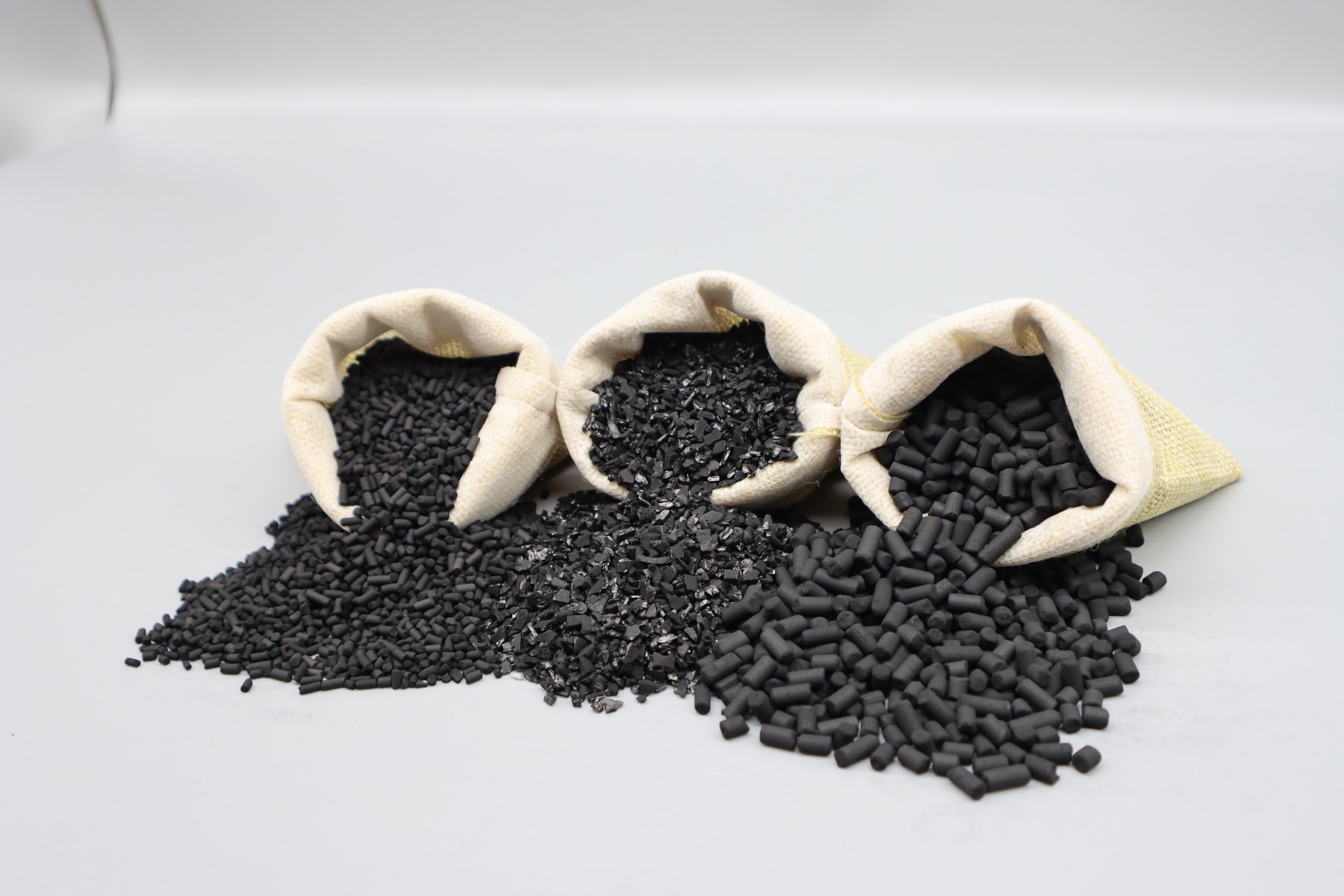
| Base Carbon | Coal pellet Φ4mm / Granular 4×10 |
| Mercury Capacity | ≥ 4 mg Hg/g carbon |
| Hg Removal Rate | > 99% (ASTM D6784) |
| Operating Temp | 20 – 200 °C |
| Iodine Number | 500 – 800 mg/g |
| Hardness | > 92% |
| Moisture | < 5% |
| Bulk Density | 0.45 – 0.58 g/cm³ |
Response within 24 hours
Other Impregnated Products
Why Sulfur Carbon vs Alternatives
Highly Selective
HgS chemisorption is extremely selective — SO₂, NOx, CO₂ and moisture in flue gas do not competitively displace mercury, unlike physical adsorbents.
High-Temp Capable
Effective up to 200°C, making it suitable for direct injection into hot flue gas streams without pre-cooling — reduces capital cost significantly.
Safe Disposal
HgS product is thermally stable and passes TCLP leach tests (Hg <0.2 mg/L), classifying spent carbon as non-hazardous in most jurisdictions.
Proven at Scale
Used in EPA MATS compliance at hundreds of US coal plants since 2015. ASTM D6784 test data available on request.
Packaging Options
Sealed PE-lined bags
Standard export, palletized
Jumbo bags
Bulk with pallet, forklift ready
Super sacks
Large-scale industrial
OEM packaging
Your brand, free design
Frequently Asked Questions
How does sulfur impregnated carbon remove mercury?
Sulfur vs KI impregnation for mercury — which is better?
Mercury Compliance Made Simple
Tell us your Hg concentration, temperature, and flow rate. We will recommend the right sulfur loading and bed size.
Discuss Your Project