
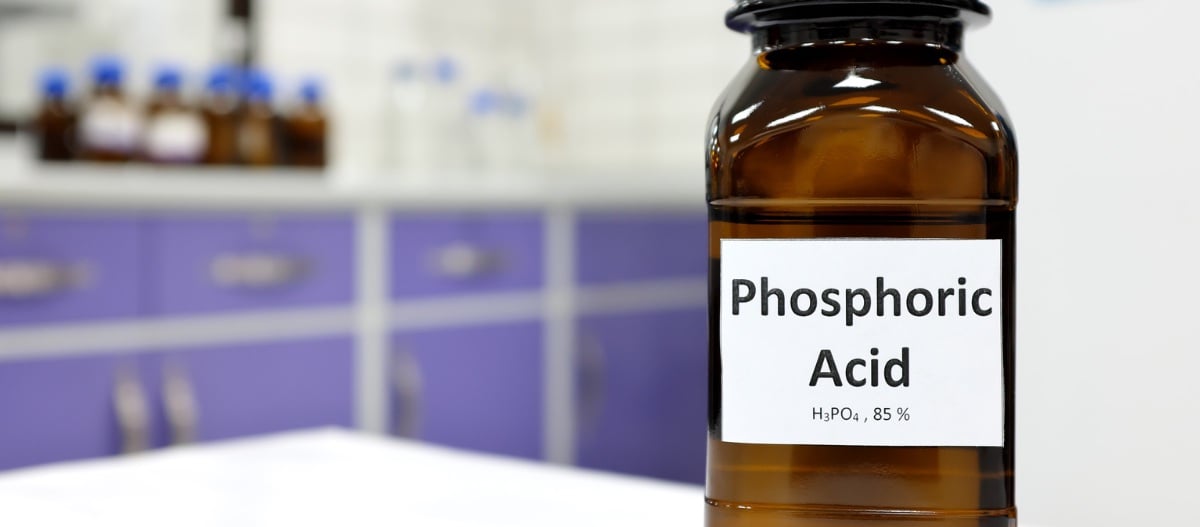
Phosphoric Acid (H₃PO₄) Impregnated Activated Carbon
H₃PO₄-impregnated activated carbon for neutralizing alkaline gases — ammonia (NH₃), amines, formaldehyde and other basic contaminants from industrial exhaust, wastewater treatment plant emissions and indoor air. The acid impregnation reacts chemically with alkaline molecules, delivering far higher capacity and longer bed life than plain carbon.
⚡ Quick Answer
H₃PO₄ impregnated activated carbon is coal-pellet carbon loaded with 8–15% phosphoric acid that reacts chemically with alkaline gases — ammonia (NH₃), volatile amines and formaldehyde — forming stable salts locked in the pore network. It delivers 5–10× the ammonia capacity of plain carbon and is the standard media for WWTP odour control, industrial exhaust and indoor air purification where alkaline contaminants are the target.
- H₃PO₄ Loading
- 8 – 15% by weight
- NH₃ Removal
- > 90% efficiency
- Base Carbon
- Coal pellet Φ4mm
- Targets
- NH₃, amines, HCHO
Related: All Impregnated Carbon · K₂CO₃ Impregnated (acid gas) · KOH Impregnated (H₂S) · Get a Quote
The Removal Challenge
Why ammonia and amines need acid-impregnated carbon
Ammonia (NH₃) and volatile amines are alkaline gases that are only weakly held by physical adsorption on plain activated carbon — a standard carbon bed breaks through quickly because the basic molecules lack the affinity needed for strong van der Waals bonding in carbon micropores. Phosphoric acid impregnation solves this by adding a chemical reaction pathway: H₃PO₄ distributed through the pore network reacts with ammonia to form stable ammonium phosphate salts that stay locked in the carbon. The result is 5–10× the working capacity of unimpregnated carbon for NH₃ duty, with predictable breakthrough behaviour. H₃PO₄ is a mild acid — far less corrosive and easier to handle than hydrochloric or sulfuric acid — making it practical for routine industrial use.
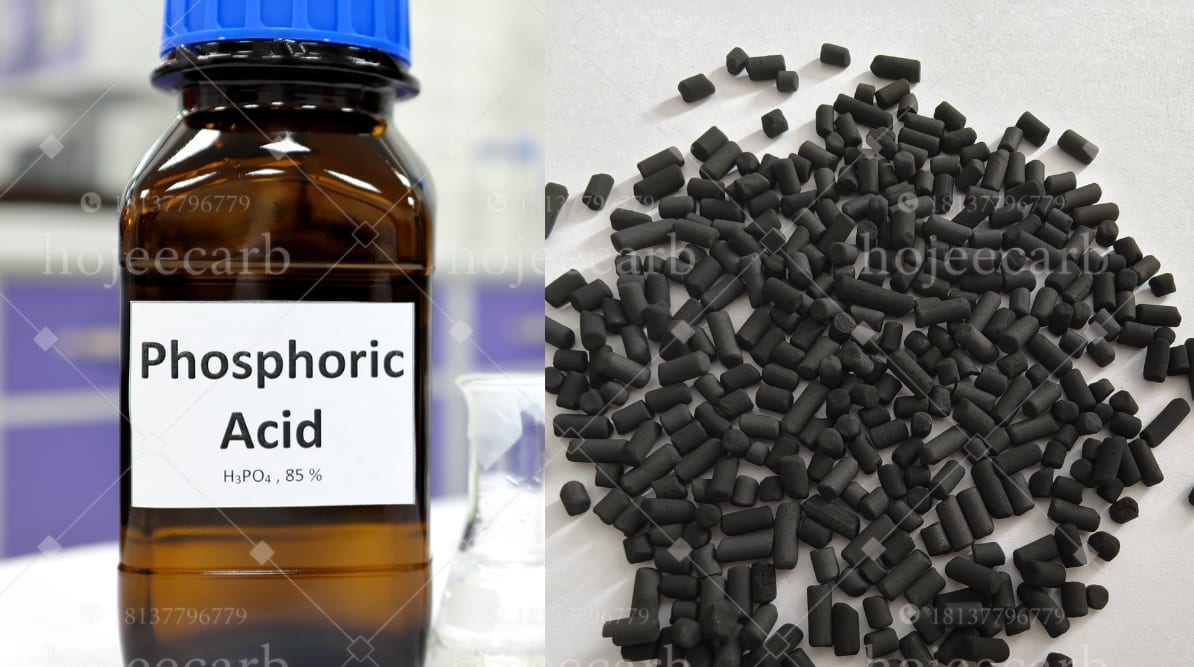
How H₃PO₄ Carbon Works
Mild acid traps alkaline gas that plain carbon releases
Base coal-pellet carbon is impregnated with 8–15% phosphoric acid, distributing acidic reactive sites evenly across the internal pore network.
NH₃ and amine molecules diffuse into the pores and react with H₃PO₄ to form stable ammonium phosphate and amine-phosphate salts — no desorption risk.
Phosphoric acid is a weak, food-grade acid — far less corrosive than HCl or H₂SO₄. The media is safe to handle, gentle on equipment and produces non-hazardous spent carbon.
Where It's Used
Applications for H₃PO₄-impregnated carbon
Carbon Selection
Choosing H₃PO₄ carbon by duty
Match base carbon, form and acid loading to your gas stream and ammonia concentration. Every lot ships with a batch COA — iodine number, H₃PO₄ content, ash, moisture and NH₃ capacity.
| Removal Duty | Recommended Base | Impregnant | Form |
|---|---|---|---|
| Industrial NH₃ (mid-high inlet) | Coal-based pellet | H₃PO₄ 10–15% | Pellet Φ4mm |
| WWTP / odour polishing | Coal-based pellet | H₃PO₄ 8–10% | Pellet Φ3–4mm |
| Indoor air (formaldehyde + NH₃) | Coal-based pellet | H₃PO₄ 8–10% | Pellet Φ3mm |
| Chemical plant amine vent | Coal-based pellet | H₃PO₄ 10–15% | Pellet Φ4mm |
Process Design
Maximizing ammonia capture per dollar
H₃PO₄ loading vs capacity
Higher acid loading (10–15%) gives more ammonia capacity for high-inlet industrial streams. 8–10% loading is economical for polishing and indoor-air duty. We size loading to your inlet concentration and target breakthrough.
Bed contact time (EBCT)
The acid-base reaction needs adequate empty-bed contact time — typically 0.5–2 seconds for NH₃ duty. Under-sized beds break through early. Share your flow rate for a bed-sizing calculation.
Temperature & humidity
H₃PO₄ carbon works well at ambient temperature. Moderate humidity (30–70% RH) helps the reaction; very dry gas slows it. High temperature (>60°C) can release adsorbed moisture — we advise on conditioning for your stream.
Complementary with K₂CO₃ carbon
Many exhaust streams contain both acid gases (H₂S, SO₂) and alkaline gases (NH₃). A two-stage bed — K₂CO₃ carbon for H₂S, followed by H₃PO₄ carbon for NH₃ — gives comprehensive treatment. We design dual-bed systems on request.
Technical Specifications
| Parameter | Coal Pellet (NH₃ Duty) | Coal Pellet (Amine Duty) |
|---|---|---|
| Impregnant | H₃PO₄ | H₃PO₄ |
| Impregnant Content | 10–15% by weight | 8–12% by weight |
| Iodine Number | ≥700 mg/g | ≥700 mg/g |
| Form | Pellet Φ4mm | Pellet Φ4mm |
| Target Gas | NH₃, formaldehyde | Amines (TMA, DMA, MEA) |
| NH₃ Capacity | 0.08–0.15 g/cm³ | — |
| Ash Content | ≤15% | ≤15% |
| Moisture | ≤5% | ≤5% |
| Bulk Density | 0.45–0.60 g/cm³ | 0.45–0.60 g/cm³ |
Field Performance
Proven alkaline-gas capture in the field
Case: WWTP installs H₃PO₄ carbon to eliminate ammonia odour complaints
A municipal wastewater treatment plant in Southeast Asia received persistent odour complaints from neighbouring residents, traced to ammonia and amine emissions from the sludge dewatering building. Installing H₃PO₄-impregnated coal-pellet carbon (12% loading) in the existing exhaust scrubber cut outlet NH₃ from 25 ppm to below 1 ppm. Bed life exceeded 8 months before the first change-out, and the plant received zero complaints during that period.
Related Products
Explore other impregnated grades and base carbons. Contact us for a tailored recommendation.
Impregnated Activated Carbon (Overview)
All impregnant types — KOH, sulfur, silver, KMnO₄, KI, K₂CO₃, H₃PO₄, CuO/MgO
K₂CO₃ Impregnated Activated Carbon
For acid gas (H₂S, SO₂) removal — complementary to H₃PO₄
KOH Impregnated Activated Carbon
Strong caustic for high-capacity H₂S removal
Coal-Based Pellet Activated Carbon
Base carbon for H₃PO₄ impregnation
H₃PO₄ Carbon — Frequently Asked Questions
What is phosphoric acid impregnated activated carbon used for?
H₃PO₄ (phosphoric acid) impregnated activated carbon is used to remove alkaline gases — primarily ammonia (NH₃), volatile amines (trimethylamine, dimethylamine) and formaldehyde — from industrial exhaust, wastewater treatment emissions, composting facilities and indoor air. The acid impregnation reacts chemically with these basic molecules to form stable salts locked in the carbon pores, giving 5–10× the working capacity of plain carbon for ammonia duty.
Why can't plain activated carbon remove ammonia effectively?
Ammonia is a small, polar alkaline molecule with weak affinity for the non-polar carbon surface. Physical adsorption alone gives very low capacity and early breakthrough. H₃PO₄ impregnation adds a chemical reaction: phosphoric acid reacts with NH₃ to form ammonium phosphate, a stable solid salt that stays permanently in the pores. This chemisorption mechanism is what makes reliable ammonia removal possible.
What H₃PO₄ loading should I choose?
10–15% loading suits high-inlet industrial NH₃ streams where maximum chemical capacity is needed. 8–10% is economical for polishing, odour control and indoor air applications with low inlet concentration. We size loading to your gas analysis and target breakthrough.
Is phosphoric acid corrosive to carbon-steel equipment?
H₃PO₄ is a weak, food-grade acid — far less corrosive than hydrochloric or sulfuric acid. At the loading levels used in activated carbon (8–15%), it does not attack carbon-steel vessels or stainless-steel piping under normal operating conditions. Spent H₃PO₄ carbon is typically classified as non-hazardous waste.
Can H₃PO₄ carbon be used together with K₂CO₃ or KOH carbon?
Yes. Many exhaust streams contain both acid gases (H₂S, SO₂) and alkaline gases (NH₃, amines). A two-stage bed — alkaline carbon (K₂CO₃ or KOH) upstream for H₂S, followed by H₃PO₄ carbon downstream for NH₃ — gives comprehensive multi-pollutant treatment. We design dual-bed systems on request.
What is the MOQ and lead time?
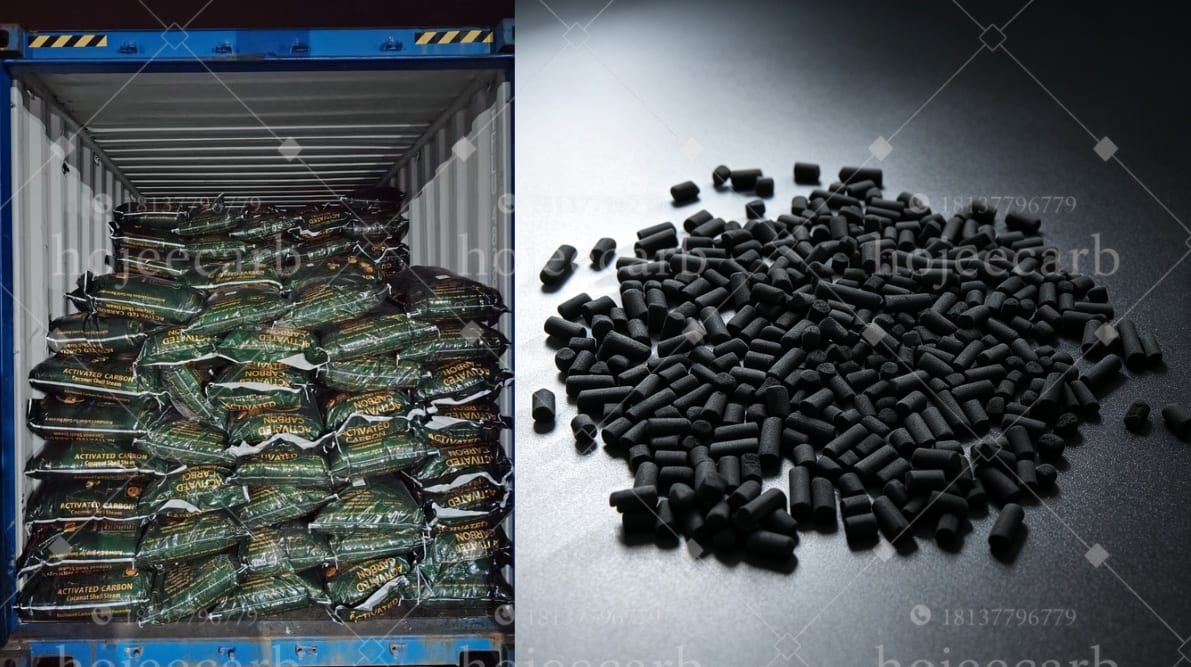
MOQ is 1 ton with custom H₃PO₄ loading. Standard lead time is 10–15 days factory-direct. Packaging: sealed 25 kg bags or 500 kg jumbo bags with PE liner. Private-label available. Every lot ships with a batch COA.
Need H₃PO₄ carbon sized for your ammonia or amine duty?
Tell us your gas composition, flow rate, temperature and inlet NH₃ / amine concentration. Our engineers will recommend the acid loading and bed size — and ship a free sample for evaluation.
Request an H₃PO₄ Carbon Quote