
Activated Carbon Market 2026: Size, Growth Trends & Industry Outlook
The activated carbon market enters 2026 at an inflection point. PFAS drinking water regulations are forcing billions in new GAC infrastructure. Coconut shell supply is tightening. And high-performance specialty carbons are commanding premium pricing that generic suppliers cannot match. Here is what the data shows — and what it means for buyers.
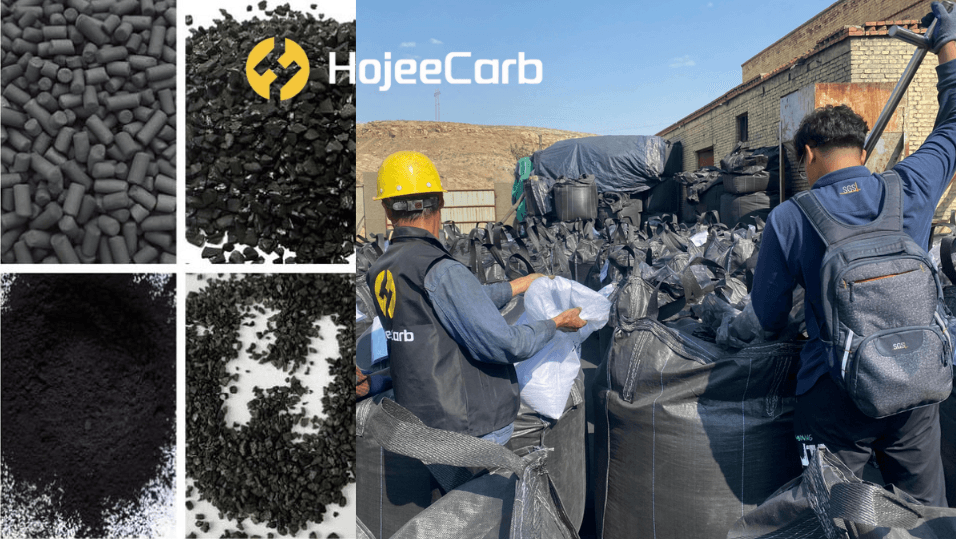
HojeeCarb product range and quality inspection team — ensuring premium activated carbon for global buyers
1. Global Market Size & Forecasts
Multiple research houses have published 2026 estimates, and the range is wide — from $4.19 billion (Grand View Research) to $6.04 billion (Fortune Business Insights). The gap comes from methodology: conservative reports count only raw activated carbon production value; expansive ones include reactivation services, filter system integration, and specialty chemical uses.
For procurement planning, the most actionable figure is the raw-carbon market: approximately $4.2 billion in 2026, growing to $5.5 billion by 2033 at a 4.0% CAGR. If you include reactivation and full-service GAC systems, market size estimates push toward $8–12 billion by 2034.
| Research Firm | 2026 Estimate | CAGR | Forecast End Year | Terminal Value |
|---|---|---|---|---|
| Grand View Research | $4.19B | 4.0% | 2033 | $5.50B |
| Fortune Business Insights | $6.04B | 8.8% | 2034 | $11.90B |
| Market.us | ~$5.6B | 8.4% | 2032 | $10.0B |
| MarketsandMarkets | ~$5.0B | ~7.5% | 2030 | $8.4B |
Sources: Grand View Research (2025), Fortune Business Insights (2024), Market.us (2025), MarketsandMarkets (2025). All figures in USD.
The wide range reflects genuine uncertainty in growth rate, not market size today. All forecasters agree: the market is growing, driven by regulatory compliance more than underlying industrial expansion.
Need activated carbon?
Get Factory-Direct Pricing — No Middlemen
20+ years manufacturing. MOQ 1 ton. Free samples. Reply within 2 hours.
2. Key Growth Drivers in 2026
PFAS Regulations: The Dominant Force
The US EPA's PFAS Maximum Contaminant Levels — PFOA and PFOS at 4 ppt, finalized April 2024, compliance required by 2029 — are reshaping the entire GAC supply chain. Hundreds of US water utilities are now signing 5–10 year GAC supply contracts to fund PFAS filtration infrastructure buildout.
As of early 2026, at least 15 US states have enacted PFAS drinking water limits covering over 62 million people (Safer States, 2026). A further 31 states are considering new legislation. This is not speculative demand — these are signed contracts and active procurement cycles.
The EU is running a parallel track under the updated Drinking Water Directive, setting stricter thresholds for PFAS and emerging contaminants. European water operators face the same GAC procurement pressure as their US counterparts — with a tighter 2026 compliance calendar in some member states.
Mercury & Air Toxics Compliance
The US Mercury and Air Toxics Standards (MATS) revision, combined with equivalent regulations rolling out in China and India, creates stable long-term demand for powdered activated carbon (PAC) injection and impregnated activated carbon in coal-fired power plants. This segment is mature but captive — utilities cannot easily substitute away from carbon injection once installed.
Industrial VOC Treatment (Asia-Pacific)
China's tightening VOC emission standards for coatings, printing, and chemical manufacturing are driving honeycomb activated carbon and solvent-recovery-grade GAC demand. New Chinese patents for mesoporous and honeycomb carbon composites indicate active domestic R&D investment in this segment.
Emerging Applications Creating Premium Segments
Two technical developments from 2026 deserve mention as early signals of new demand categories. Rice University research (published in Nature Water) demonstrated that PFAS-laden spent GAC can be used to extract lithium from brine — converting waste remediation into a battery materials input. Separately, activated carbon derived from bourbon whiskey barrel waste has shown supercapacitor electrode performance comparable to commercial YP-series carbon. These applications remain niche but signal that activated carbon's addressable market extends well beyond water and air treatment.
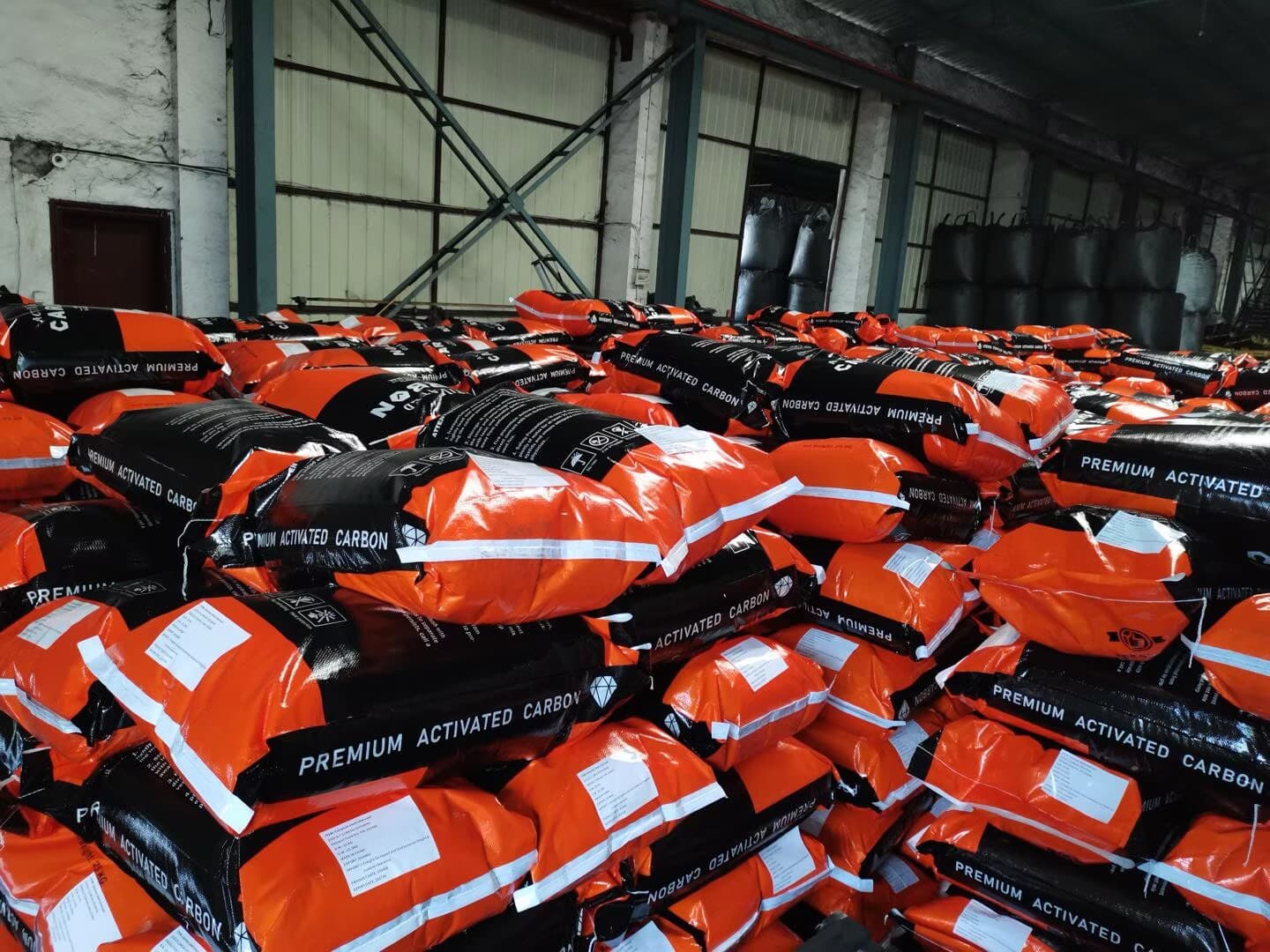
Coal-based GAC production line — bituminous coal GAC is the primary choice for PFAS water treatment
3. Regional Market Breakdown
| Region | Market Share | CAGR | Primary Driver |
|---|---|---|---|
| Asia-Pacific | 48.9% | 4.0% (China) | Industrial expansion, water treatment, VOC control |
| North America | ~25% | 6–9% | PFAS MCL compliance, mercury MATS |
| Europe | ~18% | 4–6% | EU Drinking Water Directive, PFAS, biogas upgrading |
| Middle East & Africa | ~8% | Fastest growing | Desalination, pollution control investment |
Asia-Pacific dominance reflects production reality. China manufactures the majority of global coal-based activated carbon and a significant share of coconut shell carbon (alongside Indonesia, Sri Lanka, and the Philippines). The region is simultaneously the largest producer and consumer — though export to North America and Europe is a core revenue channel for Chinese manufacturers.
North America is where the money is moving. PFAS compliance capex is creating a multi-year procurement cycle that is structurally different from typical commodity demand. Our clients in the US are increasingly requesting 12–24 month blanket supply agreements rather than spot purchases — a direct response to the regulatory timeline.
Source Activated Carbon at Factory-Direct Prices
Lock in competitive pricing before the market tightens. Get a quote for coal-based, coconut shell, or specialty carbon — delivered worldwide.
4. Product & Application Segments
By Product Form
| Product Type | Revenue Share (2025) | Key Applications |
|---|---|---|
| Powdered AC (PAC) | 61.4% | Water treatment dosing, food/bev decolorization, mercury injection |
| Granular AC (GAC) | ~30% | Fixed-bed water filtration, PFAS removal, solvent recovery, air purification |
| Pellet / Other | ~9% | Gas purification, automotive evaporative emission control, biogas upgrading |
By End-Use Application
| Application | Value Share (2025) | Growth Outlook |
|---|---|---|
| Water Treatment | 42.5% | Strong — PFAS, emerging contaminants |
| Air Purification & Gas Treatment | ~22% | Growing — VOC regs, biogas upgrading |
| Food & Beverage Processing | ~12% | Stable — sugar decolorization, edible oil |
| Pharmaceuticals & Chemicals | ~10% | Stable — API purification, catalyst support |
| Mercury & Energy (Power Plants) | ~8% | Stable — MATS compliance, long-term contracts |
5. Price Trends & Procurement Outlook
Activated carbon pricing in 2026 is bifurcating. Commodity-grade coal-based GAC faces modest price pressure from Chinese overcapacity in standard grades. Specialty grades — coconut shell GAC for PFAS, impregnated carbon for mercury and H₂S control, acid-free grades for sensitive applications — are commanding 20–40% premiums over standard specifications.
| Carbon Type | FOB China Price (2026) | 2025 vs 2024 | Trend |
|---|---|---|---|
| Coconut Shell GAC (8×30) | $1,200–$3,400/MT | +10–15% | 📈 Tight — Indonesia/Philippines supply constraints |
| Coal-Based GAC (8×30) | $500–$1,100/MT | Flat | ➡️ Stable — Chinese capacity adequate |
| Powdered AC (PAC, wood-based) | $600–$1,300/MT | Flat–slight up | ➡️ Stable demand from water treatment |
| Impregnated Carbon (H₂S/Hg grade) | $2,000–$3,500/MT | +8–12% | 📈 MATS/biogas demand rising |
| Activated Carbon Fiber (ACF) | $3,500–$6,000/MT | +15%+ | 📈 Specialty demand growing |
⚠️ Procurement Alert: Coconut Shell GAC Supply
Our procurement team flagged in Q1 2026 that coconut shell GAC availability from Indonesia and the Philippines remains constrained. Export restrictions, weather impacts on coconut yields, and competing demand from food/cosmetics are keeping inventory lean. Buyers requiring coconut shell GAC for PFAS or drinking water applications should initiate procurement discussions at least 90 days ahead of need — earlier for volumes above 20 MT.
6. Supply Chain Signals
North American Capacity Expansion
Calgon Carbon (Kuraray) announced a $100M investment to expand its Ohio drinking water reactivation facility, targeted for 2028 completion. This signals confidence in long-term PFAS-driven demand but also underscores the current gap between demand and domestic US supply. In the interim window (2026–2028), imported GAC — primarily from China — will fill the shortfall.
Arq Inc. (NASDAQ: ARQ) faced operational challenges with its Louisiana GAC expansion, constraining one of the few US-based coal-derived GAC producers. This creates additional near-term supply tightness for buyers preferring North American origin.
US Tariff Impact on Import Economics
US tariffs on Chinese-origin activated carbon remain a cost factor. Chinese manufacturers who have obtained NSF/ANSI 61 certification and can demonstrate full traceability continue to win water utility contracts despite the tariff burden — because the alternative (domestic US supply) is either unavailable at required volumes or significantly more expensive on a total landed cost basis.
Our clients in the US water treatment sector typically find that landed cost for NSF/ANSI 61-certified Chinese GAC at the required specification remains competitive with domestically available alternatives, even accounting for current tariff schedules.
China Export Competitiveness
China's position as the world's dominant activated carbon exporter is reinforced by scale, vertical integration (domestic coal supply, kiln manufacturing), and rapidly improving quality management. Chinese export statistics show active diversification into Latin America and Southeast Asia, with Yuanli's acquisition of 49% of Mexico's Clarimex a high-profile example of Chinese producers internalizing distribution in key markets.
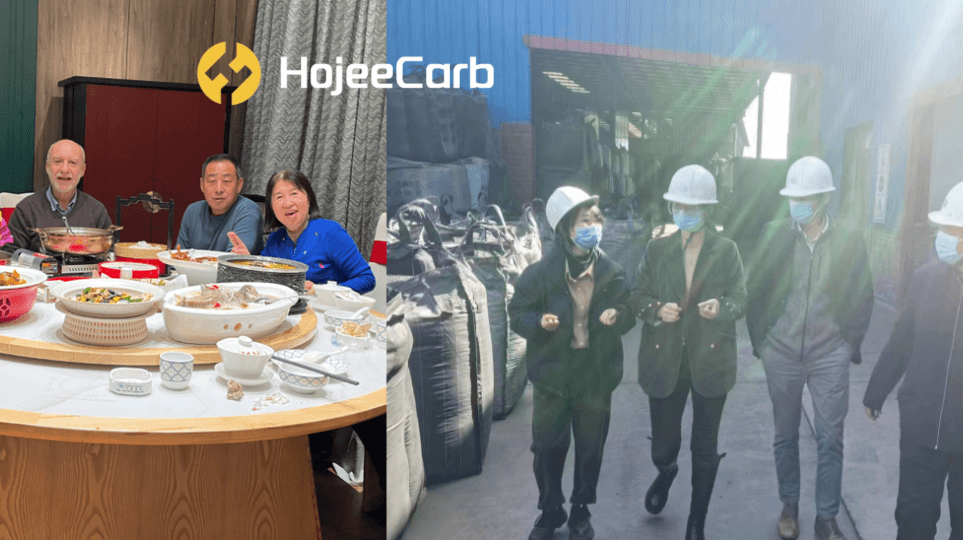
HojeeCarb team at our warehouse facility — every batch inspected before shipment
7. Competitive Landscape
The activated carbon market is structurally bifurcated between a handful of large Western producers (Calgon Carbon/Kuraray, Cabot Norit, Jacobi Carbons, Haycarb) and a much larger base of Asian manufacturers — primarily Chinese — that supply the commodity and mid-tier specialty markets.
| Company / Tier | 2026 Strategy | Differentiation |
|---|---|---|
| Calgon Carbon (Kuraray) | PFAS remediation, $100M Ohio expansion | World's largest GAC producer, FILTRASORB brand, full reactivation service |
| Cabot Norit | Specialty grades, 400+ product types | Broadest product portfolio, steam activation heritage |
| Jacobi Carbons | PFAS, biogas, sustainability positioning | AquaSorb™ brand, ESG storytelling, ion exchange resin cross-sell |
| Haycarb (Sri Lanka) | Coconut shell focus, ESG/community narrative | 313 carbonization pits, green charcoal sourcing, PFAS removal landing pages |
| Activated Carbon Factory (China) | Direct manufacturer pricing, full certification stack | 3 production bases, 100,000+ MT/yr capacity, ISO 9001 / NSF-61 / Halal / Kosher |
For buyers comparing sourcing options, the key differentiators in 2026 are: (1) PFAS-grade certification (NSF/ANSI 61 is non-negotiable for US water utilities), (2) supply reliability during coconut shell shortages, (3) ability to provide full TDS/MSDS documentation and test batch traceability, and (4) minimum reorder quantity flexibility for mid-sized buyers. We have invested significantly in all four areas to serve the mid-market buyer who needs manufacturer-direct pricing with enterprise-level documentation.
Key Takeaways for Procurement Teams
- ✅PFAS compliance is a secular demand driver — not a one-time replacement cycle. GAC procurement will remain elevated through at least 2029 as US utilities hit EPA compliance deadlines.
- ⚠️Coconut shell GAC is supply-constrained. Lock in contracts early if you need this grade. Coal-based alternatives work for many PFAS applications — ask us for a side-by-side comparison.
- 📈Specialty carbon commands premiums. If your process requires impregnated, acid-washed, or high-purity grades, budget for 20–40% above standard GAC pricing and secure supply early.
- 🔍Documentation is the new battleground. NSF/ANSI 61, full CoA traceability, MSDS with CAS numbers, and Halal/Kosher certifications are increasingly required — not optional.
Frequently Asked Questions
What is the global activated carbon market size in 2026?
The global activated carbon market is estimated at approximately USD 4.19 billion in 2026 (Grand View Research) to USD 6.04 billion depending on scope and methodology. The variance reflects different inclusions: some reports count only raw activated carbon, others include reactivation services and carbon-based specialty chemicals. The most conservative credible estimate for raw AC is ~$4.2B in 2026.
What is driving activated carbon market growth in 2026?
Four primary drivers are accelerating demand in 2026: (1) PFAS drinking water regulations in the US and EU forcing water utilities to sign multi-year GAC supply contracts; (2) mercury emission controls under MATS-equivalent standards in the US, China, and India; (3) industrial VOC treatment expansion in Asia; and (4) coconut shell supply tightness pushing buyers to secure long-term contracts. PFAS compliance alone is adding hundreds of millions in annual GAC procurement.
Which region dominates the activated carbon market?
Asia-Pacific leads with approximately 48.9% of global consumption, driven by China (largest producer and consumer), India, and Southeast Asia's industrial expansion. North America is the fastest-growing major region by value, powered by PFAS regulatory compliance spending. The Middle East and Africa show the highest growth rate percentage, driven by desalination and pollution control investment.
How is the PFAS regulation affecting activated carbon procurement?
The US EPA's PFAS MCL rules (PFOA/PFOS at 4 ppt, finalized April 2024, compliance by 2029) are forcing hundreds of US water utilities to install or upgrade GAC filtration systems. This is creating multi-year, high-volume supply contracts. Calgon Carbon invested $100M in Ohio to expand reactivation capacity; Arq's GAC expansion faced operational challenges. Buyers should lock supply contracts now as GAC availability tightens through 2027.
What is the activated carbon price outlook for 2026?
Prices vary significantly by type and region. Coconut shell GAC: $1,200–$3,400/MT (tight supply from Indonesia/Philippines). Coal-based GAC: $500–$1,100/MT (China capacity stable). Powdered activated carbon (PAC): $600–$1,300/MT. Premium grades for PFAS removal and mercury control command 20–40% premiums. Chinese manufacturers offer the most competitive FOB pricing with full certification stacks including NSF/ANSI 61.
Related Resources
Need Activated Carbon for PFAS Compliance or Water Treatment?
We supply NSF/ANSI 61-certified GAC and PAC to water utilities, municipal contractors, and industrial buyers worldwide. 15+ years manufacturing experience, 3 production bases, 100,000+ MT annual capacity. Competitive FOB pricing with full documentation.
Request PFAS-Grade Carbon Samples & Quote