
How to Choose Activated Carbon Filter Media: Complete Selection Guide
GAC, PAC, or pellet? Coconut shell or coal-based? 8×30 or 12×40 mesh? This guide walks you through every decision point so you pick the right carbon filter media the first time.
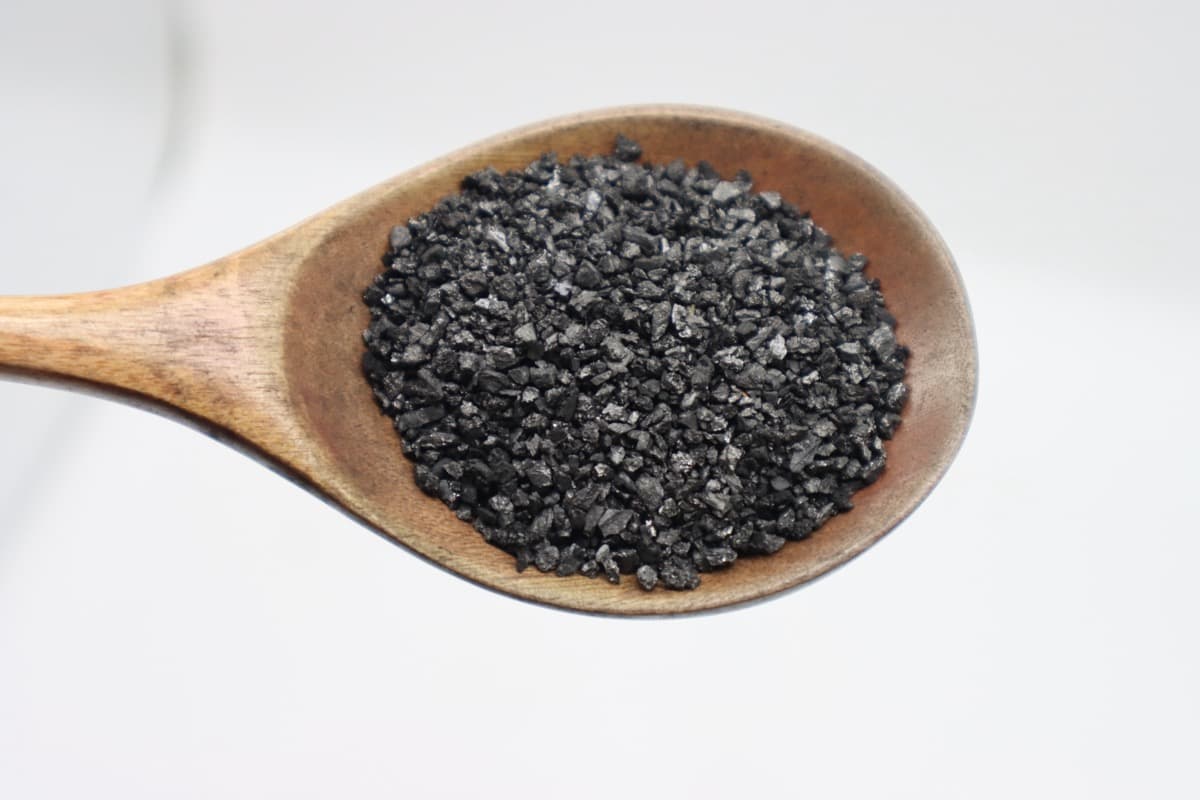
Choosing the wrong activated carbon filter media is one of the most expensive mistakes in water and air treatment. Use carbon that's too coarse and you get poor adsorption. Too fine and your pressure drop kills flow rates. Wrong raw material and you're replacing media every few months instead of every year.
After 20+ years of supplying activated carbon to water treatment plants, industrial facilities, and OEM filter manufacturers across 50+ countries, we've seen every mistake in the book. This guide distills that experience into a practical decision framework.
We'll cover the three main filter media forms (GAC, PAC, pellet), raw material selection (coconut shell vs coal vs wood), mesh size optimization, application-specific recommendations, and a specification checklist you can hand directly to your supplier.
⚡ Quick Answers
- What is the best activated carbon filter media for drinking water?
- Coconut shell GAC in 8×30 or 12×40 mesh is the industry standard for drinking water. It has the highest micropore ratio (ideal for removing chlorine, THMs, and taste/odor compounds), lowest ash content, and is NSF 61 certifiable. For PFAS removal, choose coconut shell GAC with iodine number above 1,000 mg/g.
- How do I choose between GAC and PAC for water treatment?
- Use GAC (granular) for continuous flow-through systems — it's reusable, has lower operating cost long-term, and provides consistent treatment. Use PAC (powdered) for batch treatment, seasonal taste/odor events, or as a polishing step. PAC has faster kinetics but is single-use and generates more sludge.
- What mesh size activated carbon should I use?
- For gravity filters: 8×30 or 12×40 mesh. For pressure vessels: 8×30 mesh (balances flow rate and contact time). For air treatment: 4×8 or 4×10 mesh (lower pressure drop). For point-of-use filters: 20×50 mesh (fine granules for compact cartridges). Smaller mesh = better adsorption but higher pressure drop.
- How often should activated carbon filter media be replaced?
- Replacement frequency depends on contaminant load and flow rate. General guidelines: municipal drinking water GAC — 12–24 months; industrial wastewater — 3–12 months; air treatment — 6–18 months; point-of-use cartridges — 3–6 months. Monitor effluent quality and replace when breakthrough occurs.
Need activated carbon?
Get Factory-Direct Pricing — No Middlemen
20+ years manufacturing. MOQ 1 ton. Free samples. Reply within 2 hours.
Need bulk pricing for carbon filter media?
Factory-direct rates, MOQ 1 ton. Get a quote in 24 hours.
Step 1: Choose Your Filter Media Form
The first decision is form factor. Each type has fundamentally different operating characteristics:
| Property | GAC (Granular) | PAC (Powdered) | Pelletized / Extruded |
|---|---|---|---|
| Particle Size | 0.5–4.0 mm | <0.075 mm (200 mesh) | 1.5–4.0 mm diameter |
| System Type | Fixed-bed columns, pressure vessels | Batch dosing, slurry contact | Fixed-bed, air treatment vessels |
| Pressure Drop | Low–Medium | N/A (not in fixed beds) | Very Low |
| Adsorption Speed | Moderate (minutes) | Fast (seconds) | Moderate |
| Reusability | Yes (backwash + regenerate) | No (single-use) | Yes (regenerable) |
| Best For | Continuous water/air treatment | Batch treatment, emergencies | Air/gas treatment, VOC removal |
| Typical Cost | $800–2,500/ton | $600–1,800/ton | $1,200–3,500/ton |
When to Use GAC
GAC is the default choice for most filtration applications. Use it when you need continuous treatment with predictable performance. It works in gravity filters, pressure vessels, and point-of-use cartridges. GAC can be backwashed to remove accumulated sediment and thermally regenerated for reuse.
For detailed GAC vs PAC comparison, see our GAC vs PAC guide.
When to Use PAC
PAC excels in situations where you need rapid contaminant removal without installing permanent infrastructure. Common scenarios: seasonal taste and odor events in municipal water, emergency spill response, and as a polishing step in wastewater treatment. See our PAC guide for dosing calculations.
When to Use Pelletized Carbon
Pelletized (extruded) carbon is the go-to for air and gas treatment. Its uniform cylindrical shape provides consistent airflow with minimal pressure drop — critical for HVAC systems, industrial exhaust treatment, and gas-phase adsorption. See our pelletized carbon guide.
Step 2: Select the Right Raw Material
The raw material determines the pore structure, which determines what contaminants the carbon can remove effectively. This is where most buyers make their biggest mistake — choosing based on price alone.
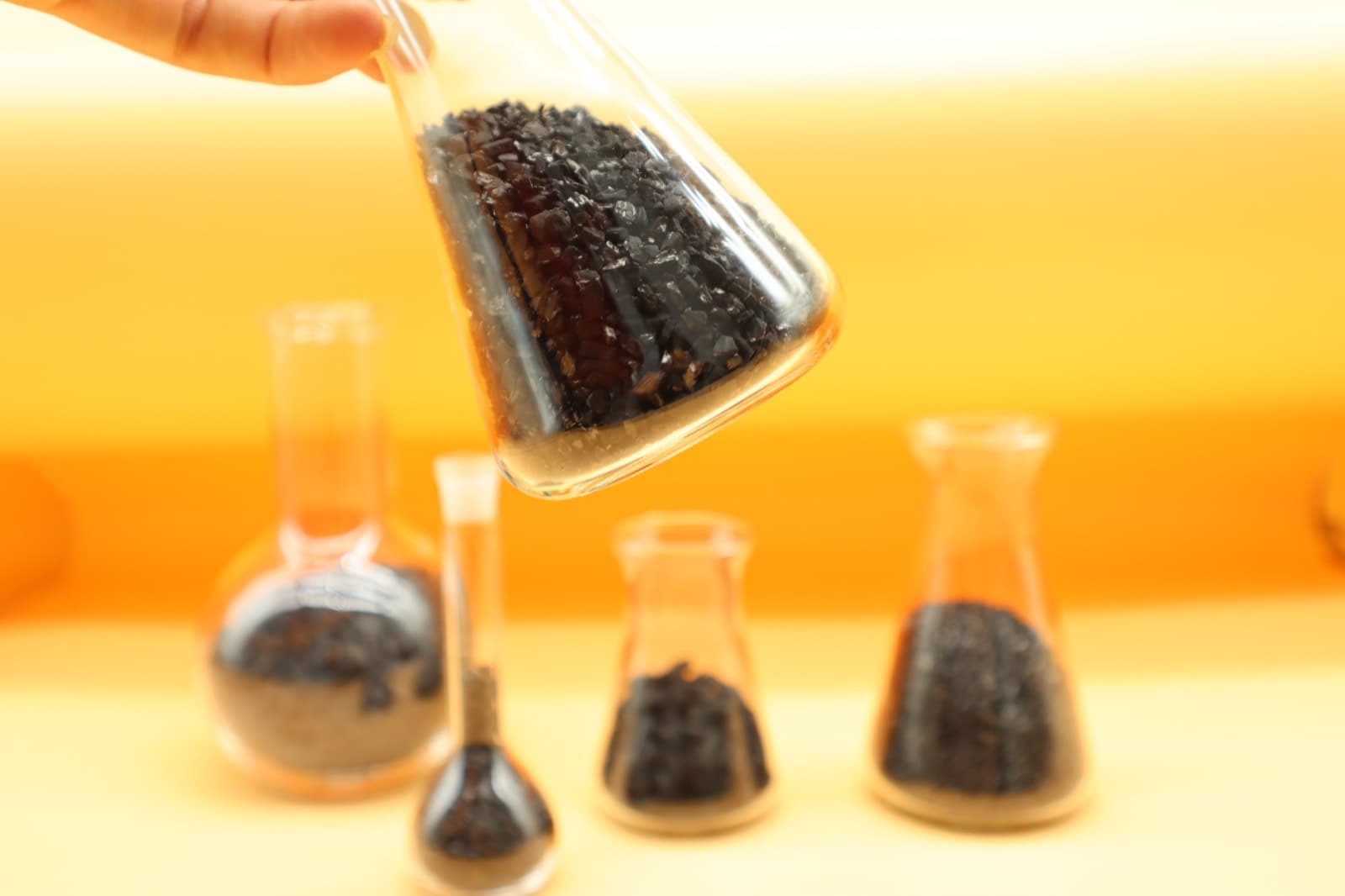
| Property | Coconut Shell | Bituminous Coal | Wood / Lignite |
|---|---|---|---|
| Pore Structure | Predominantly microporous (<20 Å) | Mixed micro + mesoporous | Predominantly mesoporous (20–500 Å) |
| BET Surface Area | 1,000–1,300 m²/g | 800–1,100 m²/g | 600–900 m²/g |
| Hardness | ≥98% | 85–95% | 70–85% |
| Ash Content | 2–5% | 8–15% | 5–10% |
| Best Applications | Drinking water, dechlorination, PFAS, gold recovery | Wastewater, color removal, mixed organics | Decolorization, food/beverage, pharmaceutical |
| Price Range | $1,200–2,500/ton | $800–1,800/ton | $600–1,500/ton |
The Pore Size Rule of Thumb
Match the pore size to the contaminant molecule size. Small molecules (chlorine, THMs, VOCs) need micropores. Large molecules (color bodies, humic acids, tannins) need mesopores. Mixed contaminant streams need a broad pore distribution.
- Micropores (<20 Å): Chlorine, chloramine, THMs, VOCs, light gases → Coconut shell
- Mesopores (20–500 Å): Color, NOM, humic/fulvic acids, large organics → Coal or wood-based
- Macropores (>500 Å): Transport pores — don't adsorb, but provide access to interior micropores
For a deep dive into raw material differences, read our coconut shell vs coal-based comparison and raw materials comparison guide.
Step 3: Optimize Mesh Size for Your System
Mesh size is the most overlooked specification in carbon filter design. It directly controls the trade-off between adsorption efficiency and hydraulic performance.
How Mesh Size Affects Performance
- Smaller particles (higher mesh number): More external surface area → faster adsorption kinetics → but higher pressure drop and risk of channeling
- Larger particles (lower mesh number): Lower pressure drop → better flow distribution → but slower kinetics and potentially lower utilization
| Mesh Size | Particle Size (mm) | Application | Pressure Drop | Contact Time Needed |
|---|---|---|---|---|
| 4×8 | 2.4–4.8 | Air treatment, gas phase, PSA | Very Low | 2–5 seconds |
| 8×30 | 0.6–2.4 | Pressure vessel water treatment | Low–Medium | 5–15 min EBCT |
| 12×40 | 0.4–1.7 | Gravity filters, drinking water | Medium | 7.5–20 min EBCT |
| 20×50 | 0.3–0.8 | POU cartridges, fine polishing | High | Short (cartridge flow) |
| 200 mesh (PAC) | <0.075 | Batch dosing, slurry contact | N/A | 15–60 min contact |
For detailed mesh size specifications and their impact on filter performance, see our mesh size guide.
Step 4: Match Carbon to Your Application
Here's our application-specific recommendation matrix based on real-world performance data from our clients across 50+ countries:
| Application | Recommended Carbon | Key Spec | EBCT / Contact Time |
|---|---|---|---|
| Municipal drinking water | Coconut GAC 12×40 | Iodine ≥1,050, NSF 61 | 10–15 min |
| PFAS removal | Coconut GAC 8×30 | Iodine ≥1,000, micropore >0.45 cm³/g | 10–20 min |
| Industrial wastewater | Coal GAC 8×30 | Iodine ≥900, broad pore dist. | 15–30 min |
| VOC air treatment | Pellet 4mm or Coal GAC 4×8 | CTC ≥60%, hardness ≥95% | 2–5 sec |
| H2S / odor control | Impregnated pellet (KOH/NaOH) | H2S capacity ≥0.15 g/cm³ | 2–4 sec |
| Gold recovery (CIL/CIP) | Coconut GAC 6×12 | Hardness ≥97%, gold activity >25 mg/g | N/A (slurry) |
| Sugar decolorization | Wood PAC 200 mesh | Methylene blue ≥180 mg/g | 30–60 min batch |
| Aquarium filtration | Coconut GAC 8×30 | Acid-washed, low phosphate | Flow-through |
| Biogas upgrading | Coconut GAC 4×8 | Iodine ≥1,100, hardness ≥95% | PSA cycle |
Quick Decision Tree: Which Carbon Do I Need?
Answer these 4 questions:
- Water or air treatment?
- Water → Go to question 2
- Air/gas → Use pelletized carbon or GAC 4×8 mesh. For H2S, use impregnated carbon.
- Continuous flow or batch treatment?
- Continuous → Use GAC in fixed-bed columns
- Batch/seasonal → Use PAC (powdered)
- What are you removing?
- Small molecules (chlorine, THMs, VOCs, PFAS) → Coconut shell GAC
- Large molecules (color, NOM, humic acids) → Coal-based GAC
- Mixed contaminants → Coal-based GAC (broader pore distribution)
- Gravity filter or pressure vessel?
- Gravity → 12×40 mesh
- Pressure → 8×30 mesh
- POU cartridge → 20×50 mesh
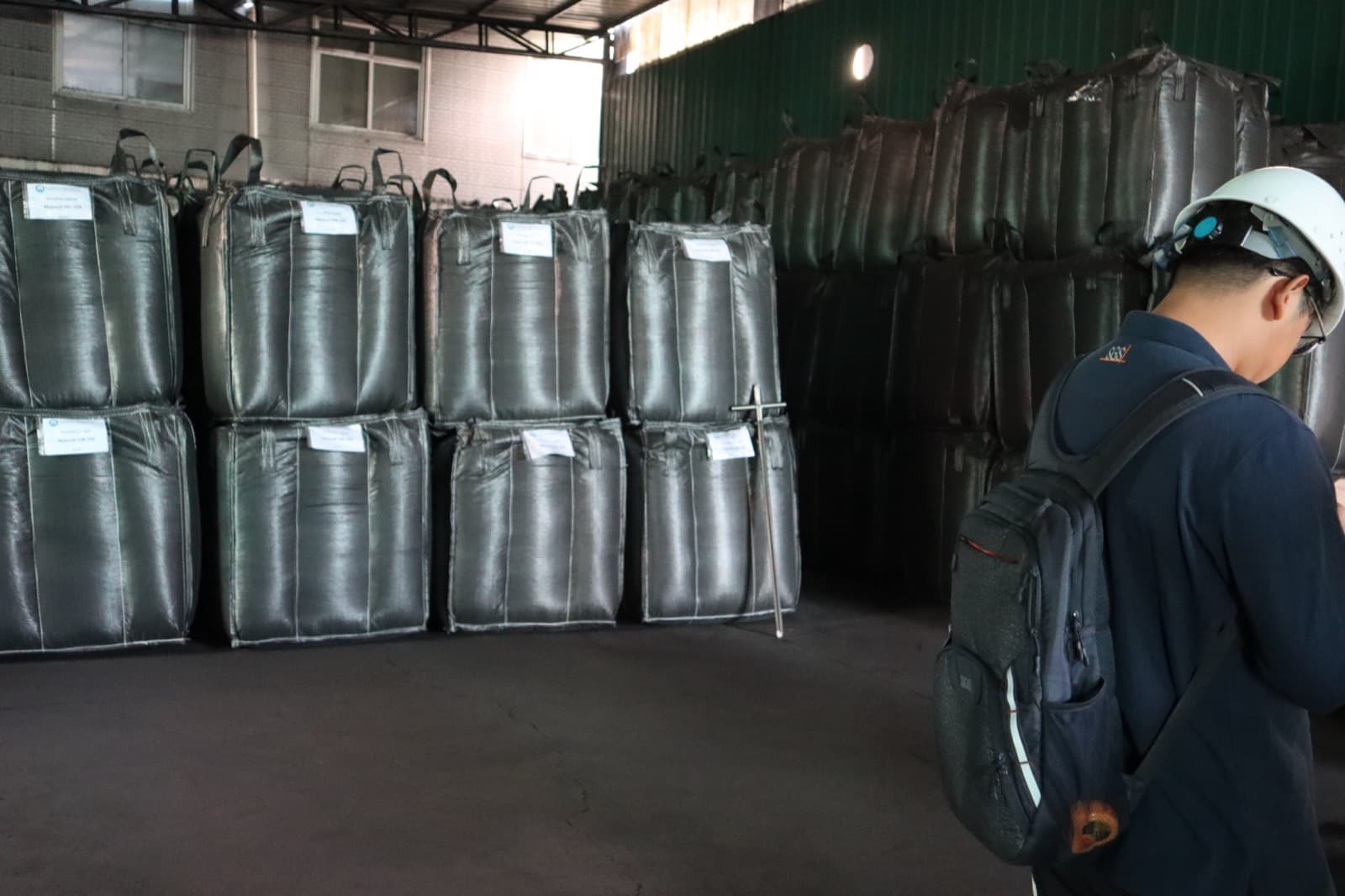
Every batch of filter media undergoes quality inspection at our facility — iodine number, hardness, moisture, ash content, and particle size distribution.
Step 5: Your Specification Checklist
When requesting quotes from suppliers, include these specifications. Missing any of them can lead to receiving carbon that technically meets spec but performs poorly in your system.
Must-Specify Parameters
- Raw material: Coconut shell / bituminous coal / wood / lignite
- Form: GAC / PAC / pelletized / extruded
- Mesh size: e.g., 8×30 US mesh (specify standard: US, Tyler, or BSS)
- Iodine number: Minimum value in mg/g (e.g., ≥1,050)
- Moisture content: Maximum % (typically <5%)
- Hardness: Minimum % by ball-pan method (e.g., ≥95%)
- Ash content: Maximum % (e.g., <5% for coconut, <12% for coal)
Application-Specific Parameters
- For drinking water: NSF 61 / NSF 42 certification, pH of water extract, extractable metals
- For PFAS removal: Micropore volume, BET surface area, CO2 adsorption capacity
- For air treatment: CTC (carbon tetrachloride) value, butane activity, pressure drop per bed depth
- For gold recovery: Gold adsorption activity (K-value), abrasion resistance, apparent density
- For food/pharma: USP/EP compliance, heavy metals limits, acid-washed grade
Red Flags When Evaluating Suppliers
- Cannot provide COA (Certificate of Analysis) for each batch
- Iodine number is the only spec they mention — it's important but not sufficient
- No third-party test reports available
- Unwilling to send samples before bulk order
- Price significantly below market — likely blended with inferior material or recycled carbon sold as virgin
For a complete supplier evaluation framework, see our supplier audit checklist and quality testing guide.
Cost Optimization: Getting the Best Value
The cheapest carbon per ton is rarely the cheapest per unit of contaminant removed. Here's how to think about total cost of ownership:
- Bed life matters more than unit price. A $2,000/ton coconut shell GAC that lasts 18 months costs less than a $1,200/ton coal GAC that needs replacement every 8 months.
- Factor in disposal costs. Spent carbon disposal can add $200–800/ton depending on contaminant classification.
- Consider regeneration. Thermal regeneration recovers 85–95% of capacity at 40–60% of virgin carbon cost. It makes economic sense for systems using >10 tons/year. See our regeneration guide.
- Buy direct from manufacturer. Cutting out distributors saves 20–40%. Hojee ships factory-direct with no minimum order for sample quantities. See our pricing guide for current market rates.
The global activated carbon market is projected at $5.78 billion in 2026 (CAGR 8.7%), with water treatment accounting for 42% of demand. Coconut shell prices have risen 15–20% since mid-2025 due to supply chain disruptions, making specification accuracy even more important — you don't want to over-specify and pay premium prices for performance you don't need.
Request a Quote
Get carbon filter media Pricing — Factory Direct
Tell us your application and required quantity. We reply with a factory quote within 24 hours.
Frequently Asked Questions
What is the best activated carbon filter media for drinking water?
Coconut shell GAC in 8×30 or 12×40 mesh is the industry standard for drinking water. It has the highest micropore ratio (ideal for removing chlorine, THMs, and taste/odor compounds), lowest ash content, and is NSF 61 certifiable. For PFAS removal, choose coconut shell GAC with iodine number above 1,000 mg/g.
How do I choose between GAC and PAC for water treatment?
Use GAC (granular) for continuous flow-through systems — it's reusable, has lower operating cost long-term, and provides consistent treatment. Use PAC (powdered) for batch treatment, seasonal taste/odor events, or as a polishing step. PAC has faster kinetics but is single-use and generates more sludge.
What mesh size activated carbon should I use?
For gravity filters: 8×30 or 12×40 mesh. For pressure vessels: 8×30 mesh (balances flow rate and contact time). For air treatment: 4×8 or 4×10 mesh (lower pressure drop). For point-of-use filters: 20×50 mesh (fine granules for compact cartridges). Smaller mesh = better adsorption but higher pressure drop.
How often should activated carbon filter media be replaced?
Replacement frequency depends on contaminant load and flow rate. General guidelines: municipal drinking water GAC — 12–24 months; industrial wastewater — 3–12 months; air treatment — 6–18 months; point-of-use cartridges — 3–6 months. Monitor effluent quality and replace when breakthrough occurs.
Is coconut shell or coal-based carbon better for filtration?
Coconut shell is better for: drinking water, taste/odor removal, chlorine removal, and applications requiring low ash/dust. Coal-based is better for: wastewater with mixed contaminants, color removal, higher-molecular-weight organics, and cost-sensitive bulk applications. Coal-based has a broader pore size distribution that handles diverse contaminants.
Not Sure Which Filter Media You Need?
Tell us your application, flow rate, and target contaminants. Our technical team will recommend the right carbon grade, mesh size, and quantity — with sample shipment available for pilot testing.
Get a Custom Filter Media RecommendationRelated Articles
GAC vs PAC: Which to Choose?
Detailed comparison of granular vs powdered activated carbon for water treatment applications.
Coconut Shell vs Coal-Based Carbon
Performance, cost, and application comparison with 2026 pricing data.
Activated Carbon Mesh Size Guide
How mesh size affects filtration performance, pressure drop, and system design.