
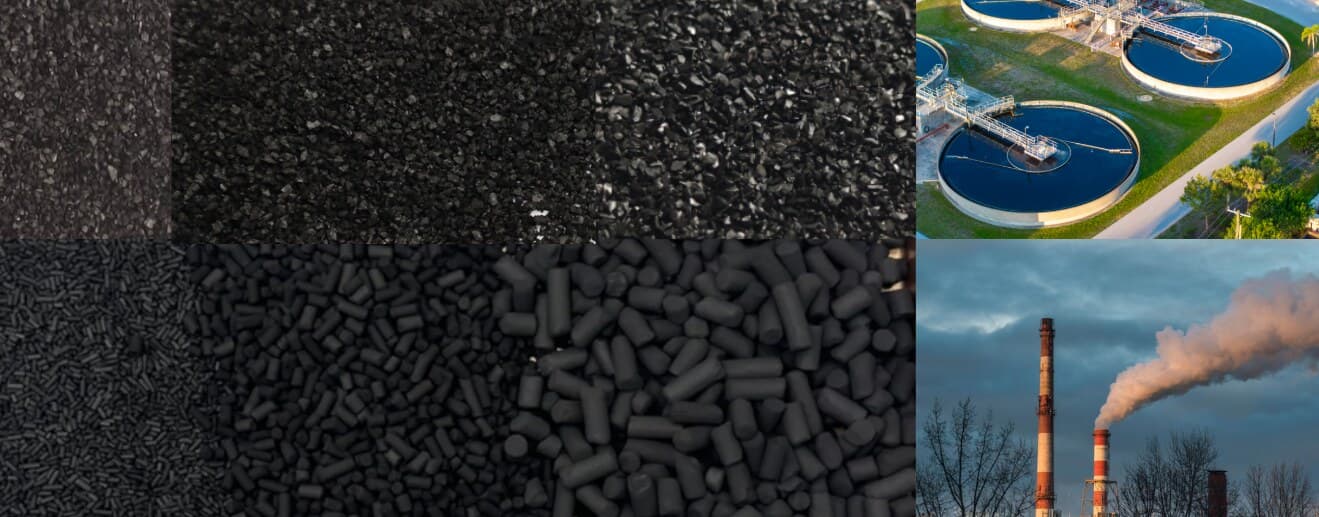
Activated carbon is one of the most widely used adsorbents on the planet, yet most people have never looked closely at what it is. You'll find it in the filter under your kitchen sink, in the purifier cleaning your city's drinking water, in the mine recovering gold from ore, and in the scrubber keeping a factory's exhaust clean. This guide explains what it is in plain terms — no chemistry degree required.
The short definition
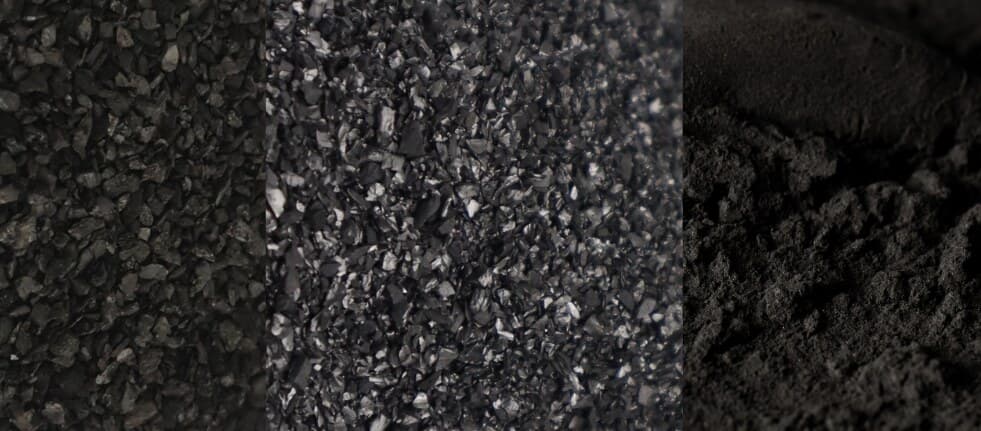
Activated carbon (also called activated charcoal) is a form of carbon that has been processed to riddle it with millions of tiny pores. Those pores create an enormous internal surface area — typically 800 to 1,500 square meters per gram. To put that in perspective, a single teaspoon of activated carbon can have more surface area than a football field.
That surface is where the work happens. As water or air passes through, contaminant molecules stick to the pore walls in a process called adsorption (with a “d” — the molecules adhere to the surface, they aren't absorbed like a sponge soaks up water). The more surface area and the better the pore structure matches your target molecule, the more it can hold.
Activated carbon vs. regular charcoal
People use “charcoal” and “activated carbon” interchangeably, but they aren't the same thing. Regular charcoal is just carbonized material — wood or coconut shell burned with little oxygen. It has some porosity, but not much.
Activated carbon takes that charcoal through a second, high-temperature activation step that blasts open a dense network of microscopic pores. The result has vastly more surface area and far stronger adsorption. Every activated carbon starts as charcoal, but not all charcoal is activated. For a closer look at where a related traditional material fits, see our binchotan charcoal vs activated carbon comparison.
How activated carbon is made
Manufacturing happens in two stages:
1. Carbonization
The raw material — coconut shell, coal, or wood — is heated to roughly 400–600°C in an oxygen-starved kiln. Volatile compounds burn off, leaving behind a carbon-rich char with a basic pore skeleton.
2. Activation
The char is then activated one of two ways. In physical (steam) activation, it's exposed to steam at 800–1,000°C, which etches out the micropore network. In chemical activation, agents like phosphoric acid or potassium hydroxide develop the pores at lower temperatures — common for wood-based powders.
The choice of raw material and activation method determines the final pore structure, hardness, and purity. For the full production picture, read how activated carbon is manufactured.
Need activated carbon?
Get Factory-Direct Pricing — No Middlemen
20+ years manufacturing. MOQ 1 ton. Free samples. Reply within 2 hours.
Why the pore structure matters
Not all pores are the same size, and that's the key to matching carbon to a job. Adsorption works best when the pore is a close fit for the target molecule:
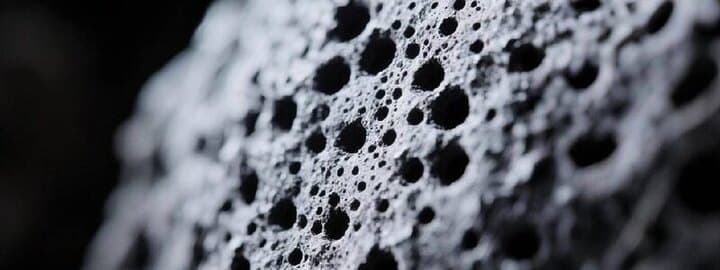
- Micropores(<2 nm) — trap small molecules like chlorine, taste and odor compounds, and gold-cyanide complexes. Coconut shell carbon is rich in these.
- Mesopores(2–50 nm) — handle larger molecules such as dyes, humic acids, and many VOCs. Coal-based carbon offers more of these.
- Macropores(>50 nm) — act as highways that funnel molecules into the smaller pores.
This is why a lab measures properties like iodine number (micropore capacity), CTC value (vapor capacity), and BET surface area. The “best” carbon is the one whose pores match your contaminant — not simply the one with the highest headline number.
The main types of activated carbon
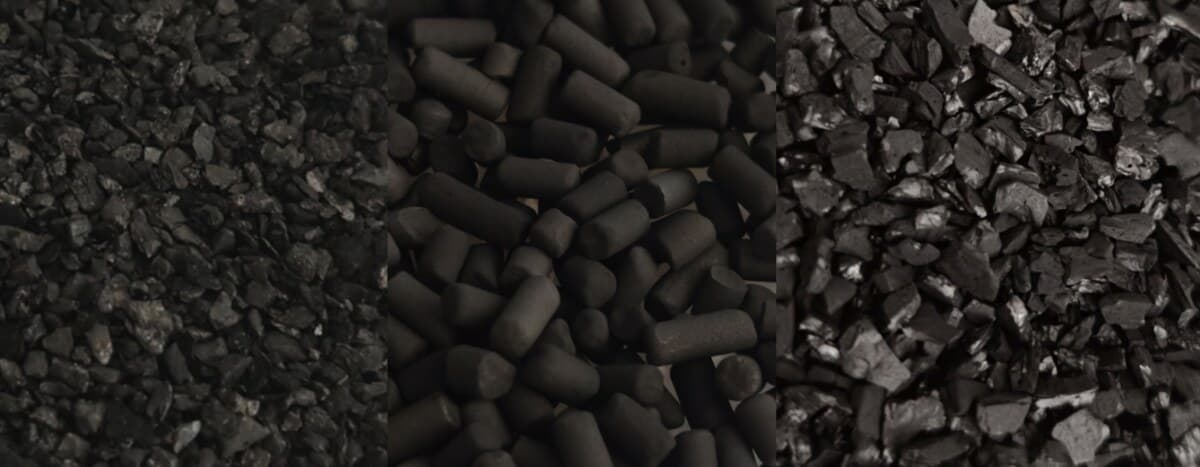
Activated carbon is grouped two ways — by raw material and by physical form.
By raw material
- Coconut shell — hard, high in micropores, low ash; the go-to for drinking water, gold recovery, and food/pharma.
- Coal-based — broad pore range, economical; strong for wastewater, air, and general industrial duty.
- Wood-based — mostly powdered, high in mesopores; used for decolorizing sugar and edible oils.
By physical form
- Granular (GAC) — for fixed-bed filters and continuous flow.
- Powdered (PAC) — for batch dosing and fast liquid treatment.
- Pellet / extruded — uniform cylinders for low-pressure-drop gas-phase work.
- Impregnated — treated with chemicals to target specific gases like H₂S or ammonia.
For a full breakdown with specs and pricing, see the complete types guide, or compare the two most common feedstocks in our coconut shell vs coal article.
What activated carbon is used for
Its versatility is remarkable. The largest applications include:
- Water treatment — removes chlorine, taste, odor, PFAS, and organics from drinking water and wastewater.
- Air & gas purification — captures VOCs, odors, and H₂S in industrial scrubbers and HVAC systems.
- Gold recovery — adsorbs gold-cyanide complexes in CIP/CIL mining circuits.
- Food & beverage — decolorizes sugar syrup, sweeteners, and edible oils.
- Chemical & pharma — purifies solvents, intermediates, and active ingredients.
Does it wear out?
Yes. Pores fill up over time until the carbon is “spent” and can no longer adsorb. Small filters simply get replaced; large industrial systems often send spent carbon for reactivation — a furnace burns off the trapped contaminants so the carbon can be reused, cutting cost and waste. How long a bed lasts depends on the contaminant load, flow rate, and the grade you chose up front — which is why picking the right carbon and supplier matters.
Frequently Asked Questions
What is activated carbon in simple terms?
Activated carbon is a form of carbon processed to have millions of tiny pores, giving it an enormous internal surface area — often 800 to 1,500 square meters per gram. That surface traps contaminants from water, air, and liquids through a process called adsorption, where molecules stick to the pore walls.
What is the difference between activated carbon and charcoal?
Regular charcoal is simply carbonized material (wood or coconut shell burned with little oxygen). Activated carbon takes that charcoal one step further — it is 'activated' with steam or chemicals at high temperature to open up a vast network of micropores. This activation multiplies its surface area many times over, making it far more effective at adsorption than plain charcoal.
How is activated carbon made?
It's made in two stages. First, carbonization heats the raw material (coconut shell, coal, or wood) to 400–600°C without oxygen, driving off volatiles and leaving carbon char. Second, activation exposes that char to steam at 800–1,000°C (physical activation) or to chemicals like phosphoric acid (chemical activation), which etches the pore network that does the adsorbing.
What is activated carbon used for?
The biggest uses are drinking-water and wastewater treatment, air and gas purification (VOCs, odors, H₂S), gold recovery in mining, food and beverage decolorization, and chemical and pharmaceutical purification. It also appears in household water filters, air purifiers, and aquarium filters.
Does activated carbon expire or get used up?
Yes. Every pore eventually fills with adsorbed molecules — the carbon becomes 'spent' or saturated and stops working. At that point it must be replaced or, in larger systems, reactivated (regenerated) in a furnace that burns off the trapped contaminants so the carbon can be reused.
Is activated carbon safe?
Yes. Food- and water-grade activated carbon is inert, non-toxic, and widely certified (for example to NSF/ANSI 61 for drinking water). It's used in medicine, food processing, and municipal water plants. The key is choosing a grade appropriate for the application, with low ash and third-party testing.
Need Activated Carbon for Your Application?
Tell us what you're treating and we'll recommend the right grade, send free samples, and quote factory-direct pricing.
Request a Quote & Samples