
In This Guide
If you are sourcing activated carbon internationally, India probably came up first. It has a decades-old reputation for coconut shell carbon, and a lot of buyers treat "Indian coconut shell" as the default premium choice. That reputation is real — but it is also dated.
Here is what has changed: China is now one of the largest processors of coconut shell activated carbon in the world, alongside its long-standing dominance in coal-based carbon. Chinese factories import premium coconut shell charcoal from Indonesia, the Philippines, and Sri Lanka, then activate it at industrial scale with tighter process control than most Indian plants can match. For many specs — especially high-iodine gold grade and specialty carbons — China now delivers better consistency at a competitive price.
This is not an anti-India article. India makes good carbon. But if you are choosing an origin in 2026, you owe it to your margins to compare properly instead of defaulting to reputation. I have been exporting activated carbon worldwide for years — here is the honest India vs China comparison, no fluff.
India's Reputation: Where It Came From
India's standing in activated carbon is built on one real advantage: domestic coconut feedstock. Southern India grows coconuts at scale, so a coconut shell carbon industry grew up around Tamil Nadu and Kerala, and Indian exporters have been shipping GAC and PAC for decades. That head start is why India is often the first name buyers hear. Here is the snapshot:
| Factor | Data |
|---|---|
| Domestic Production | ~80,000–100,000 tons/year (mostly coconut shell) |
| Annual Imports | ~25,000–30,000 tons (mostly coal-based from China) |
| Key Applications | Water treatment, gold recovery, pharma, sugar decolorization, air/gas treatment |
| Manufacturing Hubs | Tamil Nadu, Kerala (coconut shell); no major coal-based AC production |
| HS Code | 3802.10.00 (Activated Carbon) |
| Growth Rate | 8–10% CAGR (2024–2030) |
Note the last row carefully: India produces coconut shell activated carbon but has almost no coal-based GAC, pelletized carbon, or specialty carbon capacity. A large share of the "Indian" coal-based and specialty carbon on the market is actually Chinese product, imported and repackaged with a markup. If you are buying anything beyond basic coconut shell grades, you may already be buying Chinese carbon — just through a middleman.
Top Activated Carbon Suppliers in India
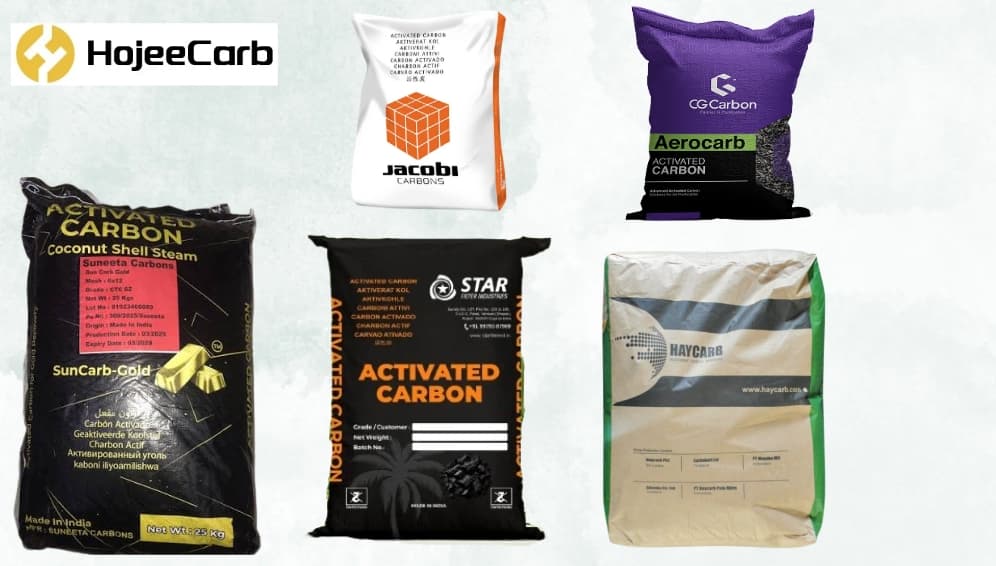
If you are evaluating Indian suppliers, here are the established players. Most are concentrated in southern India (coconut shell feedstock region):
| # | Company | Location | Main Products |
|---|---|---|---|
| 1 | Suncarb (Suneeta Carbons) | Maharashtra | Coconut shell, coal & wood-based GAC/PAC, acid-washed |
| 2 | Carbotech (India) | Gujarat | Coal-based GAC (limited), coconut PAC |
| 3 | Kalpaka Chemicals | Kerala | Coconut shell GAC, PAC |
| 4 | Active Char Products | Tamil Nadu | Coconut shell GAC, steam activated |
| 5 | Haycarb (subsidiary) | Tamil Nadu | Coconut shell, premium export-grade |
| 6 | CG Carbon | Kerala | Coconut shell GAC/PAC, impregnated & pelletized carbon |
| 7 | TRB Group | Punjab | Industrial & mining chemicals, activated carbon trading |
What Indian suppliers do well: coconut shell GAC with high hardness (97–99%) and low ash (<3%). The base quality is genuinely good. The problem is not quality — it is consistency, capacity, and price stability.
Where Indian coconut shell carbon falls short: most Indian producers are small-to-mid scale plants running batch kilns. Batch-to-batch iodine numbers can swing 50–100 mg/g. Domestic coconut shell feedstock is increasingly tight — shell prices in Tamil Nadu and Kerala have climbed sharply as charcoal and other industries compete for the same raw material, and that volatility gets passed straight to your carbon price. Lead times stretch during peak season, and few Indian plants can hold a consistent 1000+ mg/g gold-grade spec across large repeat orders.
What Indian suppliers don't do well at all: coal-based carbons. India has coal, but it is high-ash bituminous or lignite — not ideal for producing high-iodine coal-based GAC. Most "coal-based activated carbon" sold in India is actually imported from China and repackaged.
Why Chinese Coconut Shell Carbon Is Worth a Serious Look
Here is what many international buyers miss: China is now one of the largest processors of coconut shell activated carbon in the world, even though it grows almost no coconuts. Chinese factories import premium coconut shell charcoal from Indonesia, the Philippines, and Sri Lanka, then activate it in large-scale, computer-controlled high-temperature furnaces. That combination — top feedstock plus industrial-scale precision — delivers things smaller Indian plants struggle to match:
- Rock-solid batch consistency. Furnaces running 50,000+ tons/year hold iodine number, hardness, and mesh distribution within tight tolerances batch after batch. For a CIL gold plant or a municipal water tender, consistency is worth more than a headline price.
- Guaranteed high-iodine gold grade. We routinely supply coconut shell GAC at 1050–1200 mg/g iodine with 98%+ hardness — the exact spec gold recovery operations demand, in volume, every time.
- Full spec range from one source. Water grade, gold grade, food/pharma grade, acid-washed, impregnated, pelletized — you source your entire carbon program from a single supplier instead of juggling multiple small Indian plants.
- Stable pricing at scale. Chinese supply is insulated from India's domestic shell-price swings. For 20+ ton repeat orders, factory-direct pricing plus documentation often lands within 5–15% of local Indian prices — and for gold-grade and specialty coconut carbon the total value frequently comes out ahead once you factor in consistency and reject rates.
- Export-grade documentation. Batch COA, MSDS, NSF/ANSI 61 and food-grade certifications, and full customs paperwork come standard — the kind of paper trail government tenders and export customers expect.
The honest takeaway: for small, urgent, low-spec coconut shell orders, a local Indian distributor is convenient. But if you need consistent, high-iodine coconut shell carbon at volume — for gold recovery, drinking water, or export-grade applications — factory-direct Chinese coconut shell carbon is usually the smarter long-term call. You get tighter specs, one-stop sourcing, and price stability you simply cannot get from a fragmented local market.
India vs China: Quality & Price Compared
This is the question every international buyer eventually has to answer. Here is the honest comparison based on current export pricing (FOB):
| Product | India FOB | China FOB | Consistency | Better Origin |
|---|---|---|---|---|
| Coconut Shell GAC (water grade) | $1,100–1,600/ton | $1,450–1,950/ton | China ★★★★★ / India ★★★ | Close — China wins on consistency |
| Coconut Shell GAC (gold grade 1050+) | $1,500–2,200/ton | $3,200–3,800/ton | China ★★★★★ / India ★★ | China 🇨🇳 |
| Coal-Based GAC (8×30) | $1,200–1,800/ton (often resold Chinese) | $800–1,200/ton | China ★★★★★ / India N/A | China 🇨🇳 |
| Pelletized Carbon (4mm) | $1,450–2,200/ton | $1,000–1,500/ton | China ★★★★★ / India ★★ | China 🇨🇳 |
| Impregnated Carbon (KOH/KI) | $2,400–4,200/ton | $1,800–3,000/ton | China ★★★★ / India ★★ | China 🇨🇳 |
| Acid-Washed GAC | $1,800–2,700/ton | $1,400–2,000/ton | China ★★★★★ / India ★★★ | China 🇨🇳 |
The pattern: China wins on 5 out of 6 product categories outright. Even for standard coconut shell GAC — where India's headline price is slightly lower — China delivers substantially better batch-to-batch consistency. And for gold-grade coconut shell (1050+ mg/g iodine), China is both cheaper and more reliable at volume, because Indian plants struggle to hold that spec across large repeat orders.
Why is China so competitive on carbon? Two reasons. First, it has the world's largest coal-based activated carbon base (Shanxi and Ningxia provinces). Second, it is now a leading processor of coconut shell carbon — importing premium shell charcoal from Indonesia and the Philippines and activating it at industrial scale. Scale economics plus tight process control bring both cost and consistency to a level a fragmented Indian market cannot match. For detailed pricing, see our activated carbon price guide.
Need activated carbon?
Get Factory-Direct Pricing — No Middlemen
20+ years manufacturing. MOQ 1 ton. Free samples. Reply within 2 hours.
When China Is the Better Choice
Not every scenario favors one origin. Here is a straightforward decision framework for international buyers:
✅ Choose China when:
- You need high-iodine coconut shell carbon at volume. For gold recovery (1050+ mg/g) or export-grade water treatment, Chinese coconut shell carbon gives you guaranteed spec and batch consistency that Indian plants struggle to hold across repeat orders.
- You need coal-based GAC, pelletized carbon, or specialty carbons. India simply does not produce these at scale. Most "Indian" coal-based carbon in the market is resold Chinese product with a 20–40% markup.
- Volume matters. A full container (20 tons) gives the best economics, and Chinese factories handle 100+ ton monthly programs without capacity strain.
- You need impregnated, acid-washed, or catalytic carbon. Indian manufacturers have limited capability in specialty processing.
- You are a repeat buyer who values price stability. Chinese supply is insulated from India's volatile domestic coconut shell market, which swings 20–30% between seasons.
- You need one supplier for your full carbon program. Coconut, coal, pellet, impregnated, acid-washed — all from one factory, one set of documentation, one relationship.
🟡 Consider India when:
- You need very small trial volumes fast. Under 5 tons, urgent — some Indian traders can ship ex-stock. But note they are often shipping repackaged Chinese carbon at a premium.
- Your destination has anti-dumping duties on Chinese carbon. The US applies AD duties on certain steam-activated grades from China. If you are importing into the US and your product is covered, India may be cheaper after duties — though Chinese suppliers can sometimes work around AD via product classification. Always verify the current ITC rulings for your specific grade.
- Your buyer specifically requires Indian origin. Some end-users or tenders specify origin. Outside of that, there is no quality reason to restrict yourself to India.
Trade & Anti-Dumping: What International Buyers Need to Know
One concern that keeps some buyers defaulting to India: anti-dumping duties on Chinese activated carbon in certain markets. Here is the factual picture:
| Destination | AD Duty on Chinese AC? | Scope / Notes |
|---|---|---|
| United States | Yes (certain grades) | Covers certain steam-activated carbon. Coal-based and some specialty grades may be outside scope. Verify with USITC for your specific HS code and product description. |
| European Union | No active AD duty | No current anti-dumping measures on Chinese activated carbon. Standard HS 3802.10 tariff (1.7% MFN) applies. |
| Southeast Asia (ASEAN) | No | ACFTA (ASEAN-China FTA) means 0% duty for most activated carbon products from China. |
| Middle East / Africa | No | No AD measures. Standard tariff 5–10% depending on country. China is the dominant supplier. |
| Australia / Japan / Korea | No | No current AD. Standard tariffs apply (0–5%). |
| India (domestic import) | Periodic | India has applied AD duties on certain coconut shell AC grades from China. Check DGTR notifications. |
Bottom line: outside the US (and periodic Indian actions), there are no anti-dumping barriers on Chinese activated carbon. For buyers in the EU, ASEAN, Middle East, Africa, Oceania, and Latin America, Chinese carbon arrives duty-free or at minimal MFN tariff — making it straightforwardly more competitive than Indian supply. Even for US buyers, many product grades fall outside the AD scope, and it is worth verifying your specific classification before ruling China out.
HS code for activated carbon globally: 3802.10. For a detailed breakdown of tariffs by destination, see our import tariffs & HS codes guide.
China's Global Shipping Reach
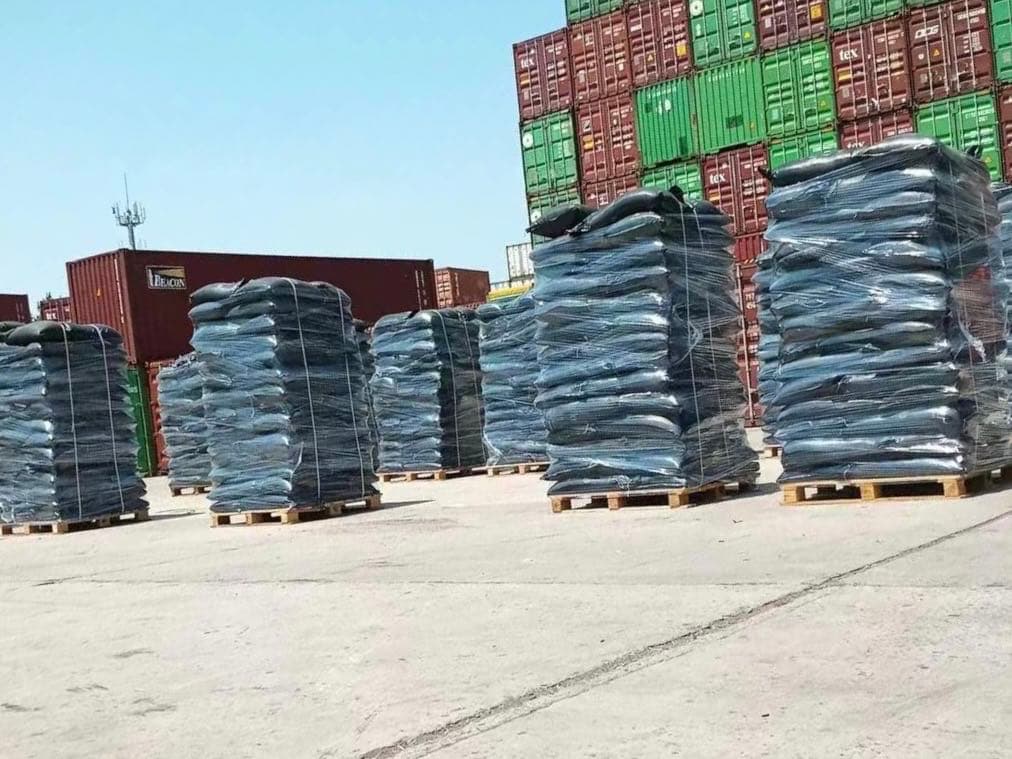
One operational advantage of sourcing from China: shipping infrastructure. China has the world's largest container port network. Ningbo, Shanghai, Tianjin, and Qingdao connect directly to every major market with high-frequency sailings:
| Destination Region | Transit Time | FCL Cost (20ft, 2026) |
|---|---|---|
| Southeast Asia | 5–10 days | $400–800 |
| Middle East (Jebel Ali, Dammam) | 14–20 days | $1,000–1,800 |
| East Africa (Mombasa, Dar es Salaam) | 20–28 days | $1,800–2,500 |
| Europe (Rotterdam, Hamburg) | 25–32 days | $1,500–2,500 |
| Americas (LA, Santos, Cartagena) | 15–30 days | $2,000–3,500 |
| Australia / Oceania | 12–18 days | $1,200–2,000 |
By contrast, Indian ports (Chennai, Nhava Sheva) have fewer direct connections to Africa and Latin America, longer transshipment routes, and less frequent sailings. For a buyer in Accra, Dar es Salaam, or Bogotá, China ships faster and cheaper than India in most cases.
Per-ton ocean freight from China works out to roughly $50–150/ton for FCL depending on destination. That is a small fraction of the $200–500/ton you save on product cost versus Indian supply for coal-based and specialty carbons.
Documents We Provide (Standard)
- Bill of Lading — original set of 3
- Commercial Invoice — with FOB/CIF value in USD, HS code 3802.10
- Packing List — container number, bag count, weights
- Certificate of Analysis (COA) — batch-specific test results
- MSDS / SDS — Material Safety Data Sheet
- Certificate of Origin — for preferential tariff claims where applicable
- NSF/ANSI 61 certificate — for drinking water grades (on request)
We prepare all export documents and send scans within 2–3 days of shipment. Originals go by DHL/FedEx courier (3–4 days). For the full import process, see our bulk import guide.
How to Verify Quality Before You Buy
Whichever origin you choose, quality verification is non-negotiable. Here is a checklist based on what we see international buyers get wrong most often:
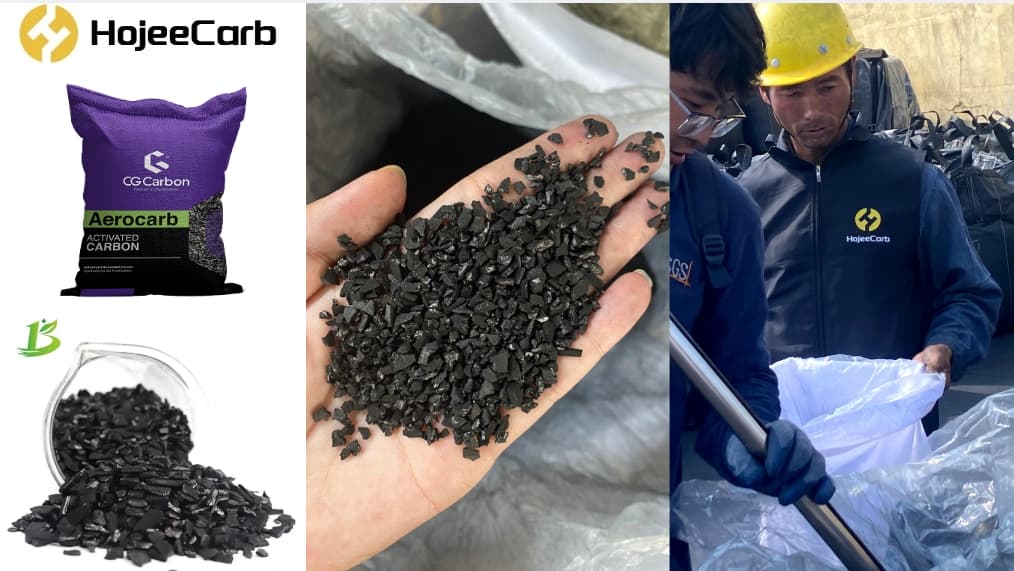
1. Always Request a Batch-Specific COA
A generic product spec sheet is marketing material. You need the actual test results for the batch being shipped. Key parameters to check:
- Iodine Number — minimum 900 mg/g for water treatment, 1000+ for gold recovery
- Moisture — should be ≤5% (higher means you are paying for water weight)
- Ash Content — ≤3% for coconut shell, ≤8% for coal-based
- Hardness — ≥95% for GAC, ≥90% for pellets (ball-pan test per ASTM D3802)
- Mesh Size Distribution — should match your spec within ±5%
- CTC / Butane Activity — critical for air/gas treatment carbons
2. Test Free Samples in Your Lab
Any serious supplier — Indian or Chinese — provides free samples (1–5 kg). Test them in your actual application or send to a third-party lab. Do not skip this step for a new supplier, even if their COA looks perfect.
3. Third-Party Inspection
For large orders (40+ tons), consider pre-shipment inspection by SGS or Bureau Veritas at the factory. Costs $300–500 per inspection but prevents receiving a bad batch worth $20,000+. We welcome third-party inspection at our facility — any supplier who refuses this is a red flag.
4. Check Certifications
- ISO 9001:2015 — basic quality management (should be mandatory)
- NSF/ANSI 61 — required for drinking water contact applications
- HALAL — needed for food/beverage applications (export markets)
- IS 8078 — Indian standard for activated carbon (government tenders)
For more on quality testing methods, see our guide on how to test activated carbon quality.
Frequently Asked Questions
Who are the main activated carbon suppliers in India?
India has a strong coconut shell activated carbon industry concentrated in Tamil Nadu and Kerala. Well-known Indian manufacturers include Suncarb (Suneeta Carbons), Carbotech, Kalpaka Chemicals, Active Char Products, and CG Carbon. These companies mostly produce coconut shell GAC and PAC. For coal-based and specialty carbons, India still relies heavily on imports from China.
Is Indian or Chinese activated carbon better quality?
Both origins can produce excellent activated carbon. India has a strong reputation for coconut shell carbon thanks to local feedstock. But China now imports premium coconut shell charcoal from Indonesia and the Philippines and activates it in large-scale, computer-controlled furnaces, delivering tighter batch-to-batch consistency and guaranteed high-iodine gold grade (1050+ mg/g) at volume. For coal-based, pelletized, impregnated, and acid-washed carbons, China is the clear quality and capacity leader. The right answer depends on your spec, volume, and how much batch consistency matters.
Why do international buyers often prefer Indian activated carbon suppliers?
India built an early reputation in coconut shell carbon because it had domestic coconut feedstock and an established export trade. That reputation is real but dated. Today China processes coconut shell carbon at far larger scale with tighter process control, and holds high-iodine gold grade and export specs more consistently across large repeat orders. Many buyers who default to India have simply not re-compared origins recently.
Is Chinese activated carbon cheaper than Indian?
For coal-based GAC, pelletized carbon, and specialty impregnated or acid-washed carbon, China is typically 15-30% cheaper because of scale and feedstock. For coconut shell carbon, India's headline price can look lower, but it is standard water grade and moves with India's volatile domestic shell prices. For guaranteed high-iodine gold grade at volume, Chinese factory-direct pricing is competitive and often wins on total delivered value once batch consistency and reject rates are factored in.
What MOQ do Chinese activated carbon suppliers require?
Standard MOQ is 1 FCL (about 20 tons for a 20ft container). Most reputable factories also offer LCL shipments from 1-5 tons for first-time buyers who want to test quality before committing to a full container. LCL costs more per ton but reduces first-order risk.
How do I verify the quality of activated carbon before buying?
Ask for a batch-specific Certificate of Analysis (COA) covering iodine number, CTC adsorption, moisture, ash content, hardness, and mesh size. Test free samples in your own lab before bulk ordering. For drinking water applications, confirm NSF/ANSI 61 certification. Reputable suppliers from any origin provide SGS or Intertek third-party test reports on request.
Are there anti-dumping duties on Chinese activated carbon?
Some destinations apply anti-dumping duties on certain Chinese activated carbon grades — notably the US on steam-activated carbon. The EU and many other markets do not, or apply them narrowly. Always check the current trade-remedy rules for your specific destination and product grade before ordering, and ask your supplier for the correct HS code (3802.10) documentation.
Ready to Compare? Get Factory-Direct Pricing from China.
We supply high-iodine coconut shell GAC (gold & water grade), coal-based GAC, pelletized carbon, impregnated carbon, and specialty products to buyers worldwide. Factory direct — guaranteed batch-consistent specs, MOQ 1 ton (LCL) for first orders.
Tell us your product specs, volume, and destination port. Quote within 24 hours including FOB/CIF pricing, batch COA, and full export documentation.
Get Factory-Direct Pricing — Shipped Worldwide
Coconut shell GAC (gold & water grade), coal-based GAC, pellets, impregnated & specialty carbon. Batch COA, MSDS, Certificate of Origin, NSF/ANSI 61 available. Free samples.