
Buyer's Guide
How to Source Activated Carbon for Air & Gas Treatment
We get asked about this a lot — which carbon type to pick, what specs actually matter, and how to buy from China without getting burned. This guide covers the practical side of sourcing activated carbon for air and gas treatment, from product selection to pricing.
Quick Reference
| Carbon Types | Pelletized, impregnated, granular (GAC) |
| Key Applications | VOC removal, H₂S scrubbing, mercury capture, odor control |
| Critical Specs | CTC value (≥50%), hardness (≥90%), impregnant type |
| Price Range (FOB China) | $450–$3,950/ton depending on type and spec |
| Typical MOQ | 1 FCL (20–22 tons) for standard grades |
| Lead Time | 2–4 weeks production + 3–5 weeks shipping |
1. Three Carbon Types You Need to Know
Air and gas treatment uses three main forms of activated carbon. Each has a sweet spot, and picking the wrong one means wasted money or poor performance.
| Type | Best For | Pressure Drop | Price Range |
|---|---|---|---|
| Pelletized | Industrial VOC, H₂S, odor systems | Low | $1,000–$3,950/ton |
| Impregnated | H₂S, mercury, acid gases, NH₃ | Low–moderate | $1,200–$2,200/ton |
| GAC (Granular) | General air filtration, HVAC | Moderate–high | $450–$1,550/ton |
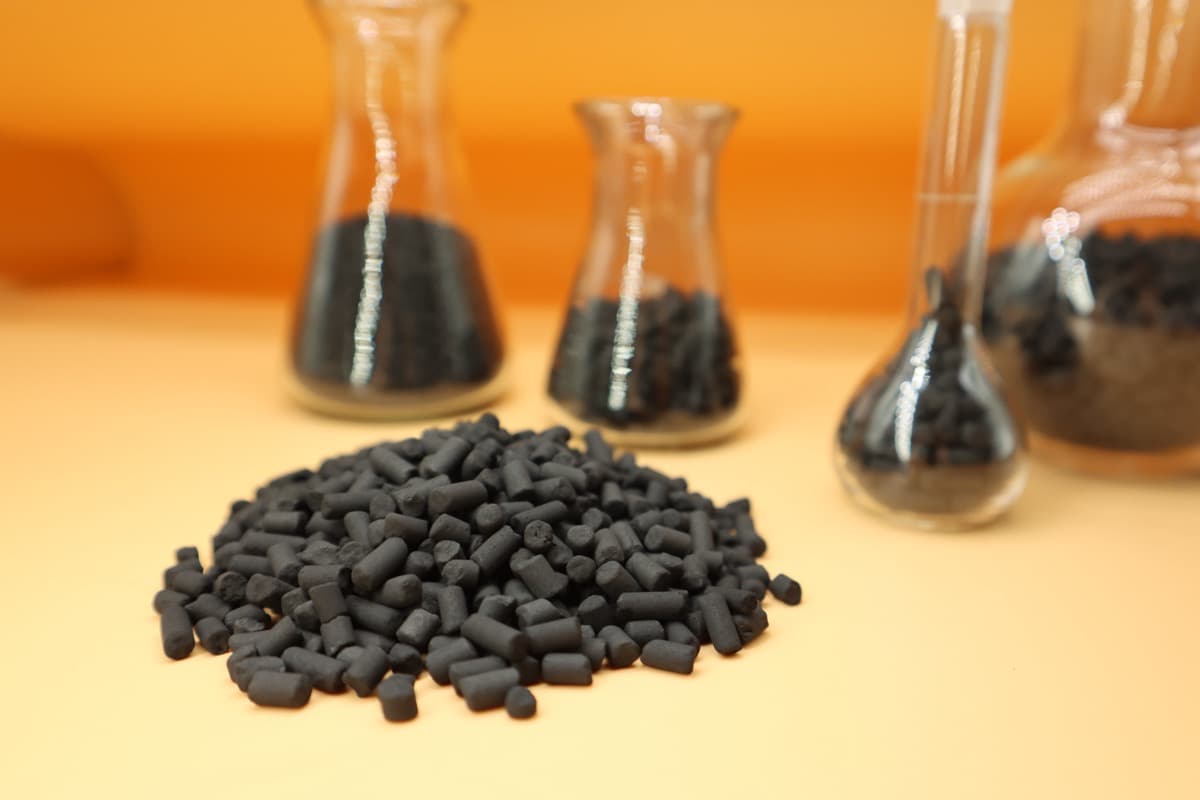
Pelletized carbon is our go-to recommendation for most gas-phase work. The uniform shape means predictable airflow and lower fan energy costs. We supply 3mm and 4mm pellets — 4mm for standard industrial use, 3mm when you need more surface contact in a thinner bed.
Impregnated carbon is what you need when physical adsorption alone won't cut it. KOH-impregnated pellets handle H₂S and acid gases. Sulfur-impregnated types capture mercury vapor. Our engineers can recommend the right impregnant based on your target contaminant and concentration.
Need activated carbon?
Get Factory-Direct Pricing — No Middlemen
20+ years manufacturing. MOQ 1 ton. Free samples. Reply within 2 hours.
2. Matching Carbon to Your Application
The application drives the product. Here's what we typically recommend for the most common air and gas treatment jobs:
| Application | Contaminant | Recommended Carbon |
|---|---|---|
| VOC removal | Benzene, toluene, xylene, solvents | Coal-based pellet, CTC ≥60% |
| H₂S scrubbing | Hydrogen sulfide, mercaptans | KOH-impregnated pellet |
| Mercury capture | Hg⁰ vapor | Sulfur-impregnated pellet |
| Odor control | Amines, aldehydes, mixed organics | Virgin pellet or coconut GAC |
| Indoor air (HVAC) | Low-level VOCs, formaldehyde | Coconut shell pellet or GAC |
| Biogas cleanup | H₂S, siloxanes | Impregnated pellet, high capacity |
If you need help matching a product to your specific gas stream, send us the contaminant list and concentrations. We'll recommend a grade and can ship samples for pilot testing.
3. Specs That Actually Matter
Datasheets can list 20+ parameters. For air and gas treatment, focus on these:
CTC Activity (gas-phase capacity):
≥50% standard, ≥60% premium
Hardness (mechanical durability):
≥90% — prevents dust and bed compaction
Pellet Diameter:
3mm (thin bed) or 4mm (standard)
Moisture Content:
≤5% — excess moisture reduces capacity
Ash Content:
≤12% standard, ≤8% for sensitive apps
Impregnant Loading (if applicable):
Varies by type — ask for % by weight
CTC value is the single most important spec for gas-phase carbon. It measures how well the carbon adsorbs vapor-phase molecules. Iodine number, which many buyers fixate on, is a liquid-phase metric — useful for water treatment, less relevant here.
4. Sourcing from China: What to Watch
China is the world's largest producer of activated carbon, and most of the pelletized and impregnated carbon used globally comes from Shanxi and Ningxia provinces. Buying direct from a manufacturer — rather than through a trading company — gives you better pricing and more control over specs.
Here's what we tell buyers who are sourcing for the first time:
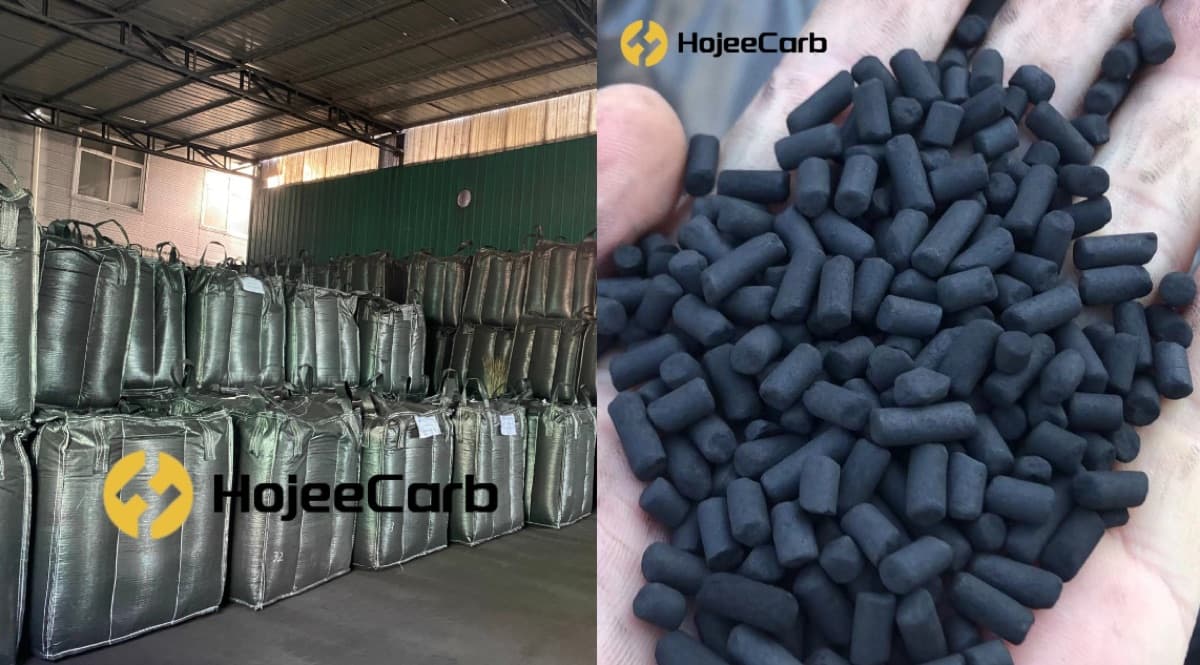
- 1. Verify the factory is real. Ask for photos of the production line, activation furnaces, and lab. A supplier audit checklist helps structure this.
- 2. Request third-party test reports. In-house COAs are a starting point, but independent lab results (SGS, Intertek) carry more weight.
- 3. Start with a trial order. One pallet or a few drums before committing to a full container. Test the carbon in your actual system.
- 4. Clarify the spec sheet upfront. Agree on test methods (ASTM or GB standards), acceptable ranges, and what happens if a shipment fails QC.
- 5. Check production capacity. Make sure the factory can handle your ongoing volume, not just the first order.
5. Pricing: What to Expect
Prices vary by carbon type, specification level, and order volume. Here are typical FOB China ranges as of 2026:
| Product | FOB Price/Ton | Notes |
|---|---|---|
| Coal-based pellet (standard) | $900–$1,200 | CTC 50%, 4mm |
| Coal-based pellet (premium) | $1,200–$1,500 | CTC 60%+, 3mm or 4mm |
| KOH-impregnated pellet | $1,400–$1,800 | For H₂S, acid gas removal |
| Sulfur-impregnated pellet | $1,500–$2,200 | For mercury capture |
| Coconut shell GAC (4x8 mesh) | $2,200–$3,100 | HVAC, light-duty air |
Add $100–$200/ton for ocean freight to most destinations. Import duties vary by country — check our price guide for landed cost details.
6. Why Working with a Manufacturer Matters
Trading companies can get you carbon, but they can't adjust the product. When you work directly with a manufacturer, you get access to things that make a real difference:
- • Custom specifications — need a specific CTC value, pellet diameter, or impregnant loading? We adjust production parameters to match.
- • Technical support — our engineers help with carbon selection, bed sizing, and troubleshooting performance issues.
- • Consistent quality — same raw material source, same activation process, same QC lab. Batch-to-batch consistency matters when your system is tuned to a specific carbon grade.
- • Better pricing — no middleman markup. Annual contracts bring additional savings.
Frequently Asked Questions
What type of activated carbon is best for VOC removal from air?
For most VOC applications, coal-based pelletized carbon with CTC ≥60% works well. It offers high adsorption capacity for organic vapors at a reasonable price point. For trace-level VOCs in clean environments, coconut shell pellets provide higher purity but cost more.
How do I choose between pelletized and granular carbon for gas treatment?
Pelletized (extruded) carbon is preferred for gas-phase work because the uniform shape gives lower, more predictable pressure drop. Granular carbon works fine in smaller vessels or where cost is the main concern, but expect higher dust and uneven airflow.
What is a good CTC value for air treatment carbon?
CTC (carbon tetrachloride activity) of 50% is the minimum for gas-phase use. For industrial VOC and odor control, aim for ≥60%. Premium grades reach 70%+, but the cost jump is significant — only worth it for high-value applications like semiconductor fabs.
Can I source activated carbon directly from Chinese manufacturers?
Yes, and most large-volume buyers do. China produces over 60% of the world's activated carbon. Direct sourcing typically saves 20–40% versus buying through distributors. The key is verifying quality — request third-party test reports, visit the factory if possible, and start with a trial order.
What is the typical MOQ for activated carbon from China?
Most manufacturers require a minimum of 1 FCL (full container load), which is roughly 20–22 metric tons in a 20ft container. Some suppliers accept LCL (less than container load) orders of 1–5 tons, but at a higher per-ton price. For impregnated or custom-spec carbon, MOQs may be higher due to production batch sizes.
Need Activated Carbon for Air or Gas Treatment?
We manufacture pelletized and impregnated activated carbon for VOC removal, H₂S scrubbing, mercury capture, and odor control. Tell us your application and we'll recommend a product, send specs, and arrange samples for testing.
Request Quote →