
Shipment Case Study
56 Tons Gold Recovery Carbon Shipped to Sudan for CIL Gold Mining
A gold producer in Sudan brought a sample of coconut shell carbon from a well-known Chinese brand and asked us to run it against ours, side by side. Our carbon matched on every number that matters, at a lower price per ton. They placed a 56-ton order, shipped through Port Sudan.
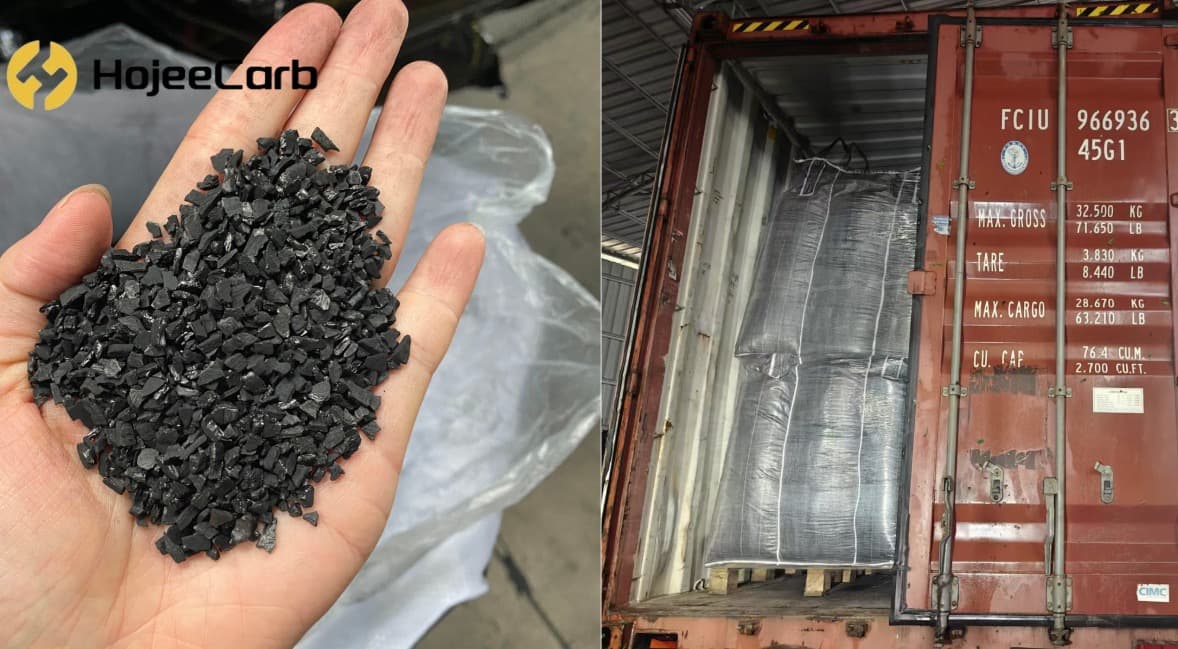
56 tons of coconut shell gold recovery carbon loaded into 40'HQ containers, ready to ship to Port Sudan
Order Summary
| Client region | Sudan (Red Sea Hills gold belt) |
| Application | Coconut shell GAC for gold CIL & tailings retreatment |
| Mesh size | 6×12 (1.70–3.35 mm) |
| CTC activity | ≥ 60% |
| Hardness | ≥ 98.5% |
| Attrition (AARL) | ≤ 2% |
| Ash content | ≤ 3% |
| Moisture | ≤ 5% |
| K value | 32 kg/tonne |
| R value | 50–60 |
| Quantity | 56 tons |
| Packaging | 550 kg FIBC jumbo bags in 40'HQ containers |
| Discharge port | Port Sudan |
The Buyer Wanted Proof, Not a Datasheet
Switching carbon suppliers is a real risk for a gold operation. The wrong carbon means slower gold loading, higher attrition losses, and fines in the tails. This buyer already had a working supplier, so the burden was on us to show we were at least as good.
Instead of arguing specs on paper, we invited them to test both carbons under identical conditions. They brought their current carbon, we pulled our production stock, and we ran them together.
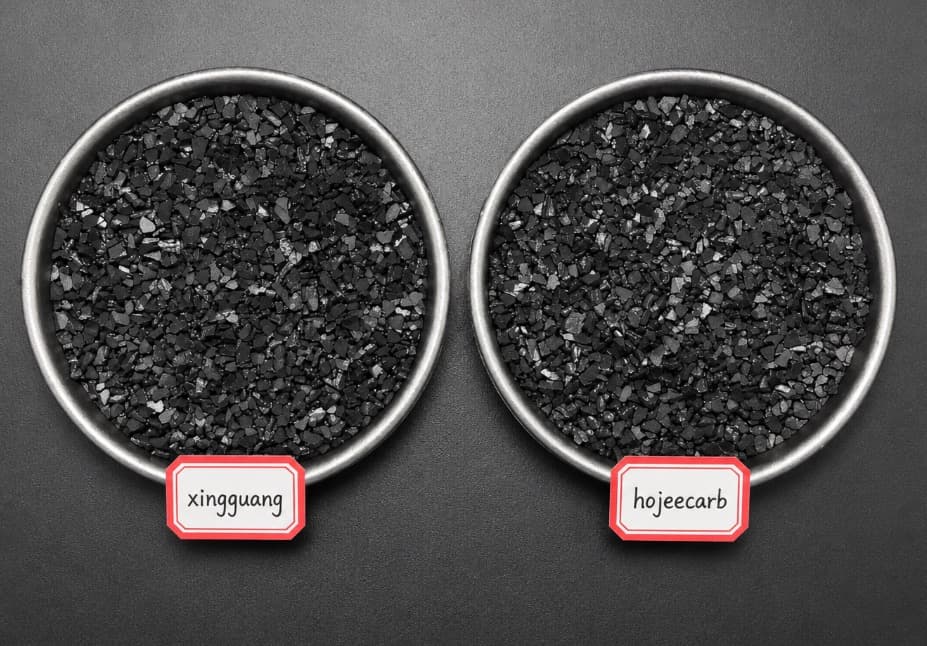
The Side-by-Side Test — What We Showed
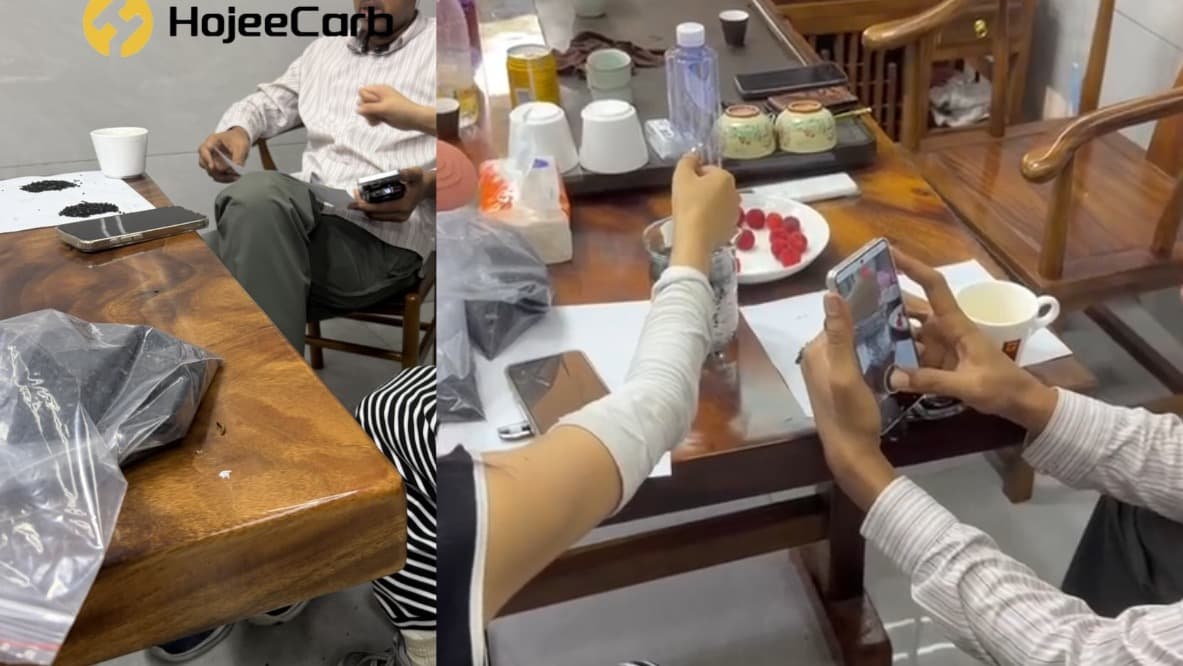
We tested both carbons on the same gold-cyanide solution, at the same dosage and the same contact time, with our in-house lab team walking them through each step.
- Gold loading (K and R value). Our coconut shell gold carbon reached a K value of 32 kg/tonne and an R value in the 50–60 range, matching the competing sample. No meaningful gap in adsorption speed or equilibrium loading.
- Hardness. Ball-pan hardness came in at ≥ 98.5%, the same tier as their sample. Hardness is what keeps attrition losses and gold-bearing fines low in a working CIL circuit.
- Attrition (AARL). Attrition stayed at ≤ 2%, matching their reference. Lower attrition means less carbon lost per cycle and less locked-up gold.
- Price. With matched performance, the deciding factor was cost. Our factory-direct quote came in lower per ton, with no trading-company markup in between.
The point was simple: same performance, better price, and they saw it happen rather than reading it in an email.
Need activated carbon?
Get Factory-Direct Pricing — No Middlemen
20+ years manufacturing. MOQ 1 ton. Free samples. Reply within 2 hours.
Factory Visit — Seeing the Whole Chain
After the test, we walked the buyer through the plant: raw coconut shell feedstock, the activation kilns, the in-house lab where we run CTC, hardness, and attrition checks on every batch, and the packing line where carbon goes into 550 kg FIBC jumbo bags.
Seeing the QC lab in person is usually what closes the deal. A buyer who watches us test carbon the same way they will can trust that batch #1 and batch #40 will behave the same in their circuit. Consistency at volume is what separates a real manufacturer from a reseller.
Why Gold Producers in Multiple Countries Choose Our Coconut Shell Carbon
This wasn't a one-off. The same coconut shell gold recovery carbon is running in CIP and CIL circuits across Africa and beyond.
- • We recently completed a 28-ton shipment to a Ghana gold mine through the port of Tema.
- • A 56-ton order for Ethiopia passed a strict pre-shipment loading supervision before it sailed.
- • We supply mines across the Sudan gold belt and tailings retreatment projects through Port Sudan.
The common thread: coconut shell activated carbon for gold extraction with CTC ≥ 60%, hardness ≥ 98.5%, and K value up to 32 kg/tonne, supplied factory-direct at volume without batch-to-batch drift.
Shipping to Sudan via Port Sudan
Sudan's gold sits mainly in the Red Sea Hills belt, with a growing share of production coming from tailings retreatment. Cargo moves through Port Sudan on the Red Sea, then inland to the operation.
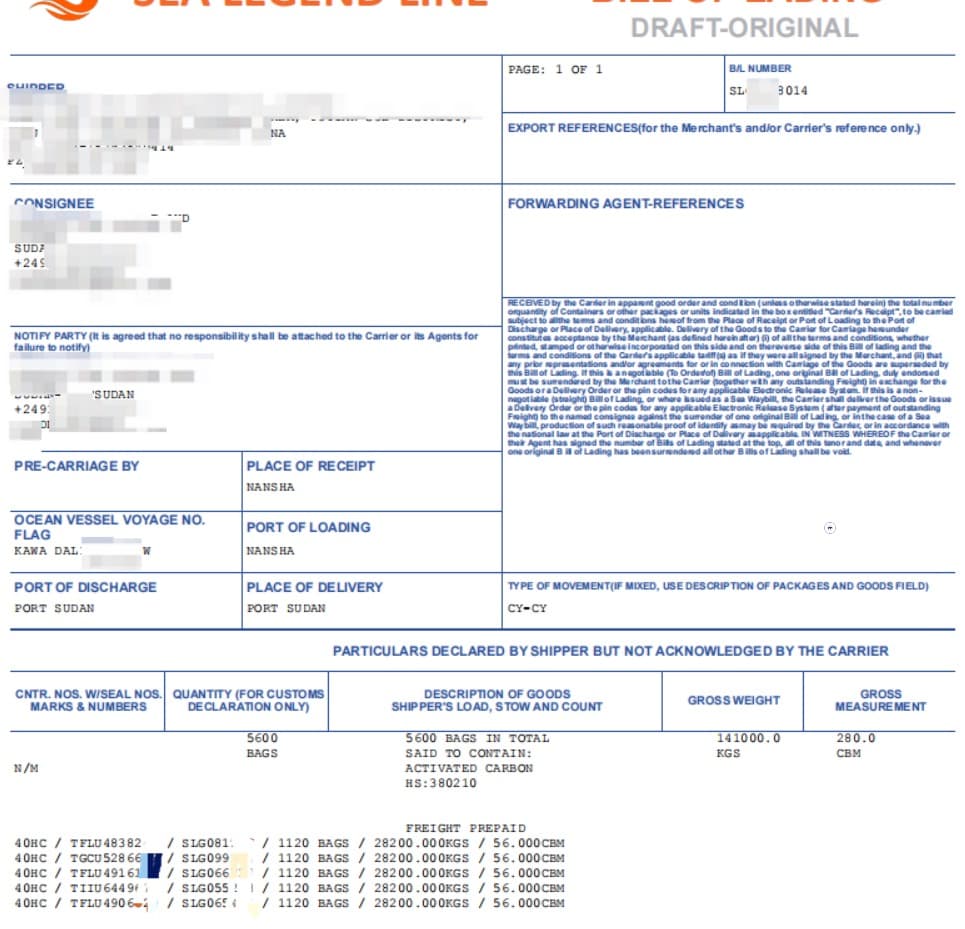
We handle the full export package: COA, packing list, weight certificate, and fumigation certificate, issued before the vessel sails. The 56 tons were packed in 550 kg FIBC jumbo bags and loaded into 40'HQ containers. For sites that prefer smaller handling units, we also supply 25 kg PP woven bags with a PE inner liner, palletized and wrapped.
You're Welcome to Visit Our Factory
The Sudan order started with a buyer who wanted to see for themselves, and that's an invitation we extend to everyone. Come test your current carbon against ours on the same feed, tour the plant, and see the lab. If you'd rather have a third party involved, we coordinate SGS, Intertek, or Bureau Veritas to witness the testing and inspect the loading.
If you would like to try our coconut shell gold recovery carbon, request a quote or fill out the form below. Send us your circuit conditions (K value target, mesh, tonnage) and we'll match a grade and price.
Request a Quote
Get Sudan Gold Recovery Carbon Pricing — Factory Direct
Tell us your circuit type (CIL, heap-leach CIC, or tailings retreatment), tonnage, and whether you clear through Port Sudan. We reply with a factory quote and CIF pricing within 24 hours.
Frequently Asked Questions
Can I test your carbon against my current supplier's before ordering?
Yes. Send us a sample of your current carbon or bring it to the factory, and we run both side by side on the same gold-cyanide solution at the same dosage and contact time. You see the K value, R value, hardness, and attrition results directly.
How does your coconut shell gold carbon compare to other Chinese brands?
On the specs that drive gold recovery — CTC activity, K value, R value, hardness, and attrition — our carbon matches the established Chinese brands. Because we sell factory-direct, the price per ton is usually lower for the same performance.
What grade do you recommend for a CIL circuit?
Our high grade: 6×12 mesh, CTC ≥ 60%, hardness ≥ 98.5%, attrition ≤ 2%, K value 32 kg/tonne, R value 50–60. Final selection depends on your ore, solution chemistry, and elution method.
How do you ship to Sudan?
Through Port Sudan on the Red Sea, in 550 kg FIBC jumbo bags loaded into 40’HQ containers. We issue the COA, packing list, weight certificate, and fumigation certificate before the vessel departs.
Can we visit the factory?
Yes. We welcome buyers to tour the plant, see the activation and packing lines, and watch our lab run CTC, hardness, and attrition tests. Contact us to arrange a visit.
Sourcing Carbon for Your Gold Operation?
Send us your specs, tonnage, and circuit type. We'll return a detailed quote with CIF pricing to Port Sudan and a delivery schedule within 24 hours.
Get Sudan Carbon Quote →