
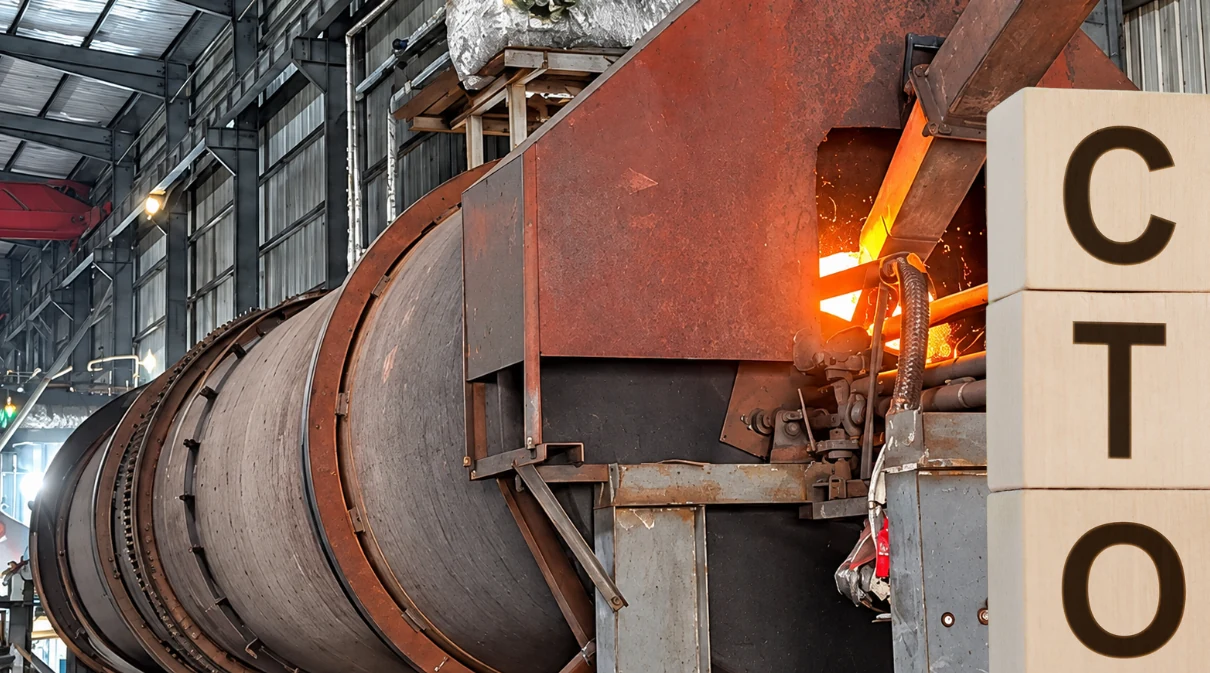
Activated Carbon Media for Water Filter Cartridge Manufacturing
Factory-direct activated carbon powder and granular media for CTO carbon block and UDF cartridge production. Customized specifications, batch COA, and OEM supply support — shipped from China to filter manufacturers worldwide.
Raw Material Supply, Not Finished Cartridges
Bulk Carbon Media for Filter Cartridge & Carbon Block Manufacturers
Reviewed by HojeeCarb application engineers · Updated November 2026
We supply the activated carbon raw material that goes inside CTO carbon block and UDF granular cartridges — not the finished cartridges themselves. If you extrude carbon blocks or fill granular cartridges, we provide the powdered and granular carbon media, matched to your spec, with a certificate of analysis on every batch. Our role is to be a consistent, document-backed carbon source so your cartridge line stays within spec run after run.
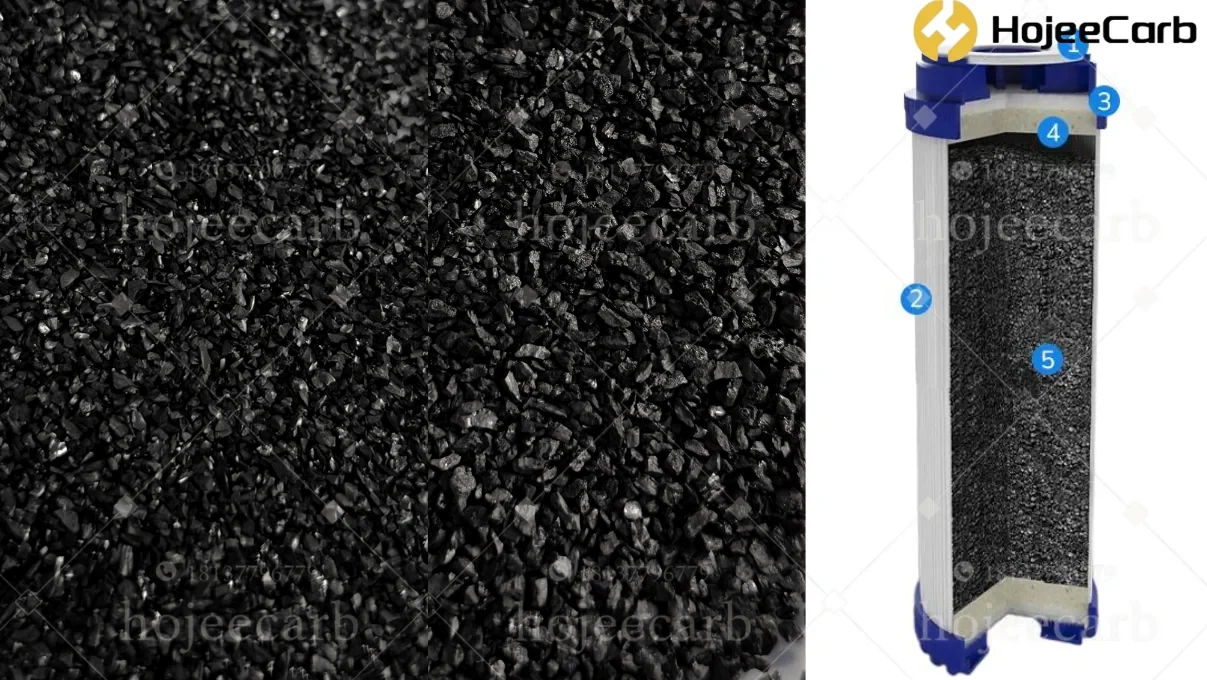
Where Our Carbon Sits
Carbon Media Across the Multi-Stage Filtration Train
A typical under-sink or RO system runs five stages. Three of them are carbon stages — UDF granular, CTO block, and the post-filter polish — and all three can be fed from the same qualified carbon source. That is why cartridge lines usually buy both PAC and GAC from one supplier rather than splitting the spec across two.
- 1PP sediment cartridgeNot carbon
Melt-blown polypropylene intercepts silt, rust, and large suspended solids, protecting the carbon stages downstream from premature loading.
- 2UDF granular carbonCoconut / coal GAC
Loose-fill granular bed adsorbs free chlorine, odor, and part of the organic load at high flow with low pressure drop. Mesh cut and hardness control dusting and channeling.
- 3CTO carbon blockPowdered PAC + binder
Extruded block gives a denser, higher-contact structure — deeper chlorine/taste/odor removal plus mechanical filtration down to roughly 5–10 µm.
- 4RO or UF membraneNot carbon
Removes dissolved solids, heavy metal ions, and microbes. The carbon stages ahead of it exist largely to protect the membrane from chlorine attack.
- 5Post carbon polishCoconut GAC / carbon block
Final taste polish, removing any odor picked up in the storage tank. Low-ash, high-hardness coconut carbon is the usual pick here.
We supply the carbon for stages 2, 3, and 5. One qualified source, one COA format, one set of incoming-QC numbers across all three.
CTO Carbon Block Media
Powdered Carbon for CTO Carbon Block Filters
CTO (Chlorine-Taste-Odor) carbon blocks are extruded from fine powdered activated carbon bound into a rigid porous cylinder. The base carbon — coconut shell, coal, or wood — and its particle-size distribution drive block permeability, pressure drop, and contaminant capacity. We help you select and lock a powder grade, then hold it batch to batch.
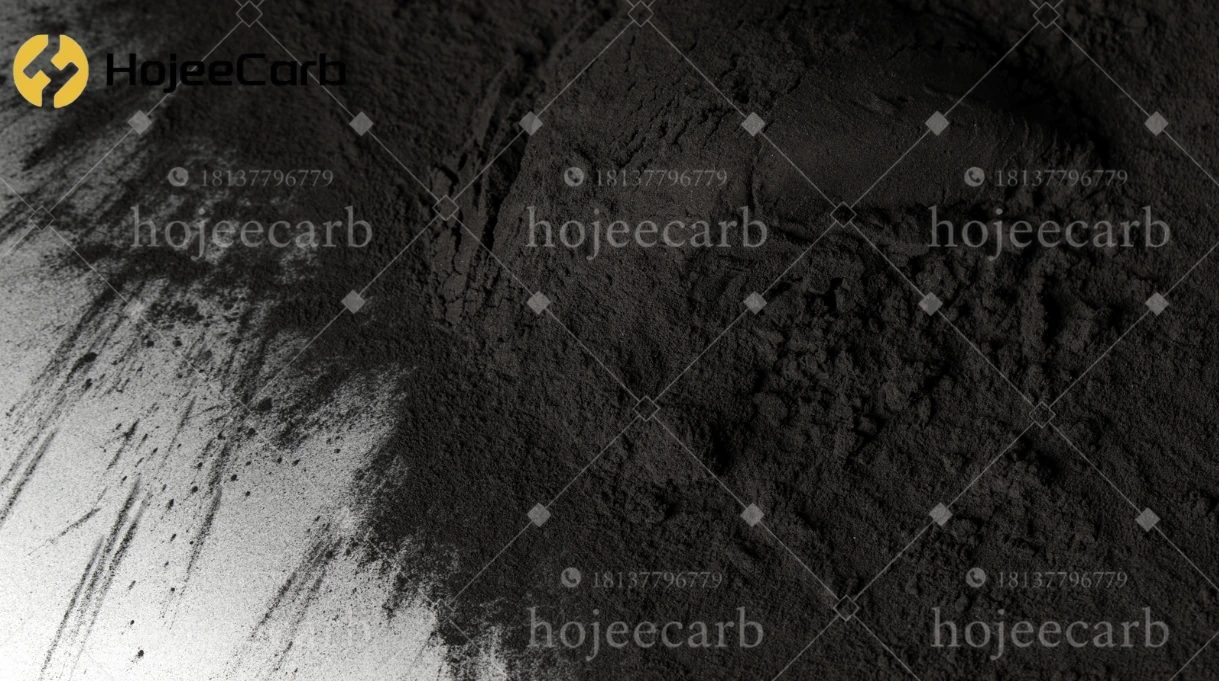
Which Powder Base for Carbon Block
High micropore volume and hardness — the usual first choice for chlorine, taste, and odor duty in drinking-water blocks where a clean taste profile matters.
Broader mesopore structure for larger organic molecules; used where blocks target a wider contaminant range rather than taste/odor alone.
Very high surface area and decolorization power (e.g. HojeePure WPW1200). Suited to specialty blocks; applicability to a given CTO recipe should be confirmed against your binder and extrusion process.
The spec that matters for carbon block is powder fineness (D50/D90), iodine and methylene-blue number, ash, moisture, and pH — plus how the powder behaves with your binder and sintering/extrusion process. We publish the parameters we can confirm from our TDS below; block-specific particle-size distribution and binder-compatibility data are provided per project against a real sample and COA rather than quoted as fixed catalogue numbers.
Confirmed Powder Spec We Can Supply Today
| Parameter | HojeePure WPW1200 (wood PAC) |
| Fineness | 200–325 mesh |
| Iodine number | 700–1200 mg/g |
| Methylene blue | 180–280 mg/g |
| Caramel decolorization | >100% |
| Surface area (BET) | 1000–1300 m²/g |
| Ash | <3% |
| MOQ | 3 tons |
HojeePure WPW1200 wood-based powdered activated carbon — a confirmed grade from our technical data sheet. Other CTO-oriented powder grades are matched per project with sample + COA.
UDF Granular Media
Granular Activated Carbon for UDF Cartridges
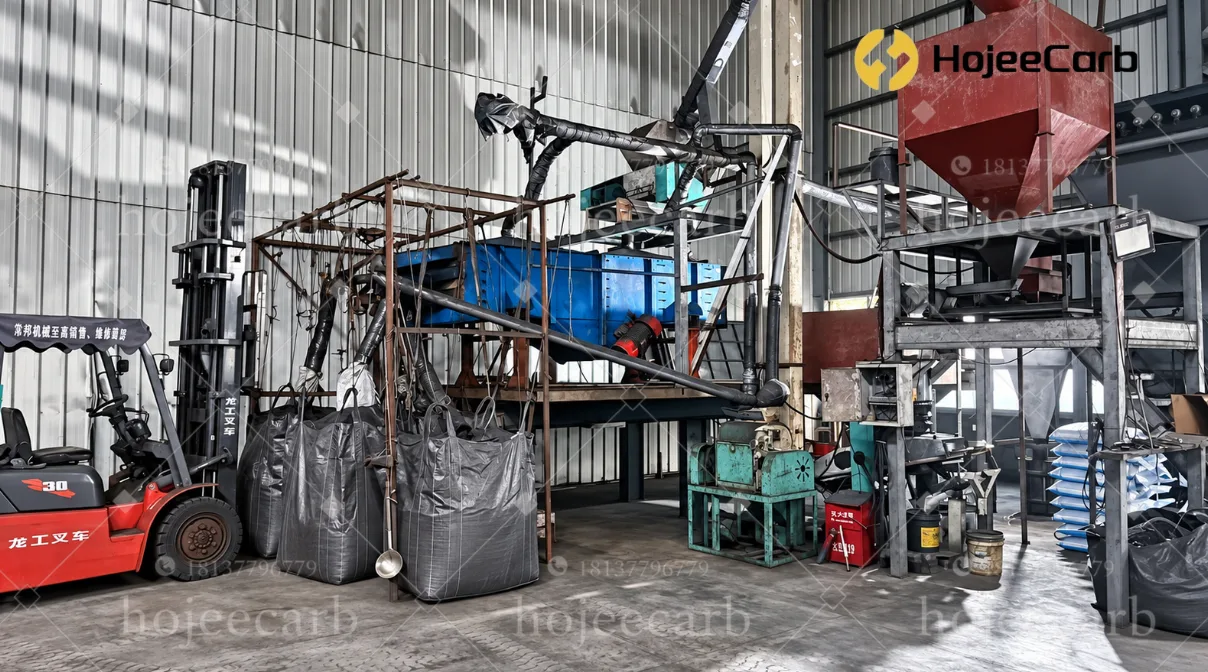
UDF (Up-flow Density Filter) cartridges are loose-fill granular carbon held in a shell. Performance depends on the base carbon, mesh/particle size, hardness, and uniformity — fines and soft granules cause dusting, pressure drop, and channeling. We supply coconut shell and coal GAC in the common UDF mesh cuts, washed to low dust.
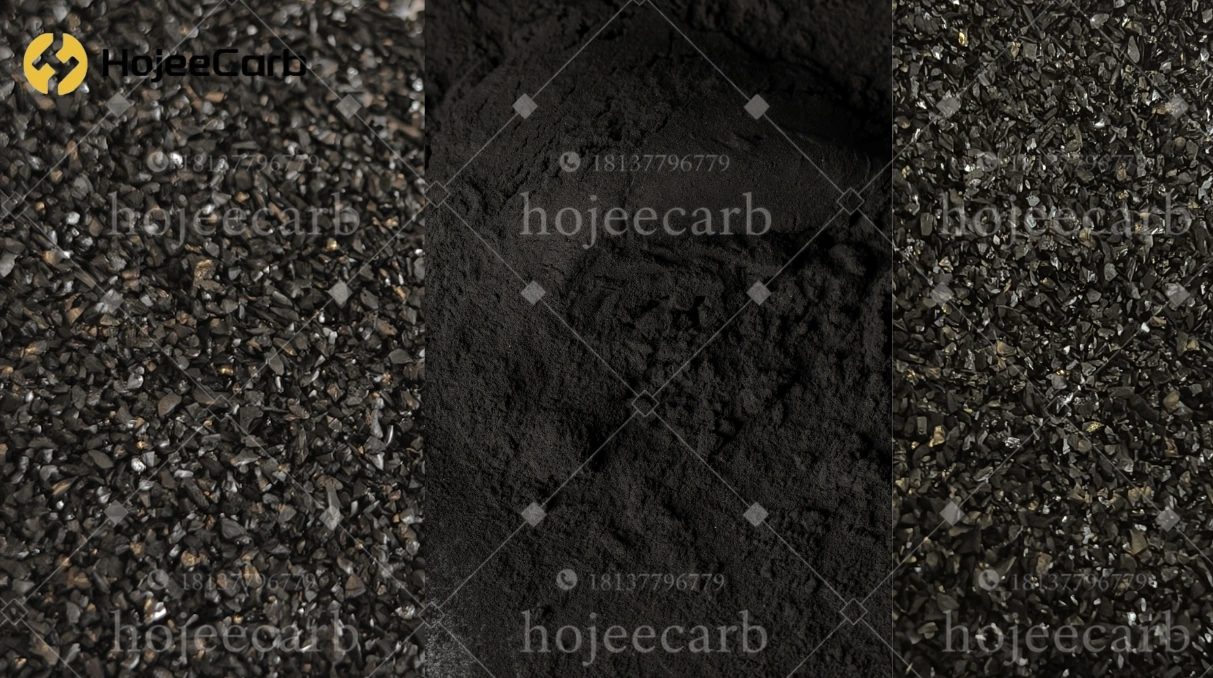
Granular Media Options
Hard, high-iodine granular carbon for taste/odor and chlorine duty in drinking-water UDF cartridges. Low ash and high hardness keep dust and attrition down.
Broader pore structure for wider organic removal; a cost-effective fill where taste polish is not the only goal.
Confirmed Granular Spec We Can Supply Today
| Parameter | Coconut Shell GAC |
| Iodine number | ≥1100 mg/g |
| Hardness | >98% |
| Ash | ≤3% (acid-washed ≤1%) |
| Particle size | 0.42–1.70 mm |
| Mesh grades | 8×30 / 12×40 / 20×50 |
| Acid-washed grade | Ash <1%, Fe <0.05% |
Coconut shell GAC parameters from our technical data sheet. UDF-specific uniformity coefficient and fill-density targets are matched per project against your cartridge geometry.
Uniformity coefficient, specific fill density, and attrition targets for a given UDF cartridge are confirmed per project with a sample and COA rather than listed as fixed catalogue figures.
Spec Comparison
CTO vs UDF Media Requirements
Same carbon, different form factor — and the spec that controls quality differs. Carbon block lives or dies on powder fineness and binder behavior; UDF depends on granule size, hardness, and uniformity.
| Requirement | CTO Carbon Block | UDF Granular |
|---|---|---|
| Carbon form | Powdered (PAC) | Granular (GAC) |
| Typical base | Coconut / coal / wood | Coconut / coal |
| Critical size spec | Fineness D50/D90 | Mesh cut & uniformity coefficient |
| Iodine number | Grade-dependent | ≥1100 mg/g (coconut) |
| Ash | <3% | ≤3% (acid-washed ≤1%) |
| Moisture / pH | Per TDS | Per TDS |
| Custom spec basis | Binder compatibility, sample + COA | Hardness, fill density, sample + COA |
Mesh & Fineness Reference
Common Cartridge Grades in Industry Terms
Cartridge lines usually order by mesh cut rather than by micron. These are the cuts most commonly asked for in CTO and UDF production. Grades marked “per project” are matched against a real sample and COA rather than quoted as a fixed catalogue spec.
| Cartridge stage | Typical mesh / fineness | Carbon form | Availability |
|---|---|---|---|
| UDF granular fill | 8×30 | GAC | Standard cut |
| UDF granular fill | 12×40 | GAC | Standard cut |
| UDF granular fill / fine bed | 20×50 | GAC | Standard cut |
| CTO block — coarse recipe | 30×60 | Fine granular | Per project, sample + COA |
| CTO block — standard recipe | 60×120 | Fine granular / PAC | Per project, sample + COA |
| CTO block — fine recipe | 80×200 | PAC | Per project, sample + COA |
| CTO / specialty block | 200–325 mesh | PAC (e.g. WPW1200) | Confirmed from TDS |
Micron rating of the finished cartridge (commonly 5 or 10 µm for CTO) is a function of your binder, die, and compaction — not of the carbon mesh alone. We quote carbon spec; the device rating stays yours to validate.
On Your Production Line
How the Carbon Behaves in Your Cartridge Process
Incoming carbon spec only matters through what it does on your line. These are the points where a carbon grade usually makes or breaks a run — and the parameters we hold to keep them stable.
- 01Dosing & mixing — PAC blended with PE/EVA binder in a high-speed mixer. Wide particle-size spread causes uneven binder coating and soft spots.
- 02Extrusion — heated to roughly 130–180 °C and pushed through the die. Fineness and moisture drive die pressure and surface finish.
- 03Cooling & sizing — the block sets. Over-fine powder raises pressure drop; over-coarse loses contact area and taste performance.
- 04QC — flow rate, chlorine reduction, pressure drop, crack and void inspection.
What we hold for you: fineness window (D50/D90), moisture, ash, and iodine, locked grade-to-grade after sample approval.
- 01Filling — GAC metered into the shell. Carbon must pack dense but not bridge; inconsistent bulk density shifts fill weight run to run.
- 02Sealing — end caps welded or mechanically sealed. Fines on the sealing face cause leak rejects.
- 03QC — fill weight, flow test, leak test, and a rinse-water clarity check for dust carryover.
What we hold for you: mesh cut, hardness, bulk density, and low-dust washing so fill weight and rinse-down stay predictable.
Proven on a Customer's Cartridge Line
A Filter Manufacturer Already Runs This Carbon in Volume
The most useful evidence for a cartridge buyer is not a spec sheet — it is another cartridge maker on repeat purchase. This one came to us with the exact failure mode that kills a filter brand: the water coming out of the cartridge was yellow.
Case study · Turkey
Yellow water fixed by changing the production process, not the spec
A Turkish water filter manufacturer was getting yellow filtered water and unstable batch quality from his previous coal GAC supplier. Iron, ash, and dust were only part of it — the real cause was coal gas and coal tar residues left in the raw coal during carbonisation. We extracted the gas and tar before carbonisation and sprayed with clean tap water afterwards. The yellow water stopped, and bulk density dropped, so he now fills the same filter housing with fewer tons of carbon.
28 tons coconut GAC — municipal water plant
Taste-and-odor complaints cleared with a coconut shell GAC grade selected from lab sampling. Same drinking-water duty as your post-filter polish stage.
Municipal water case study →Switching from an imported brand
What actually changes when a buyer moves from Haycarb-grade imported carbon to factory-direct Chinese supply — spec matching, MOQ, and price basis.
Imported-brand comparison →OEM Supply
OEM Sourcing & Supply Capability
Customized specifications
We tune base carbon, mesh/fineness, iodine, and washing level to your cartridge recipe — within what we can confirm against a real sample and COA.
Batch consistency
Per-batch COA on every shipment so your incoming QC sees the same numbers run to run.
COA + TDS
Technical data sheet up front, certificate of analysis per batch. Sample testing before you commit volume.
Packaging & logistics
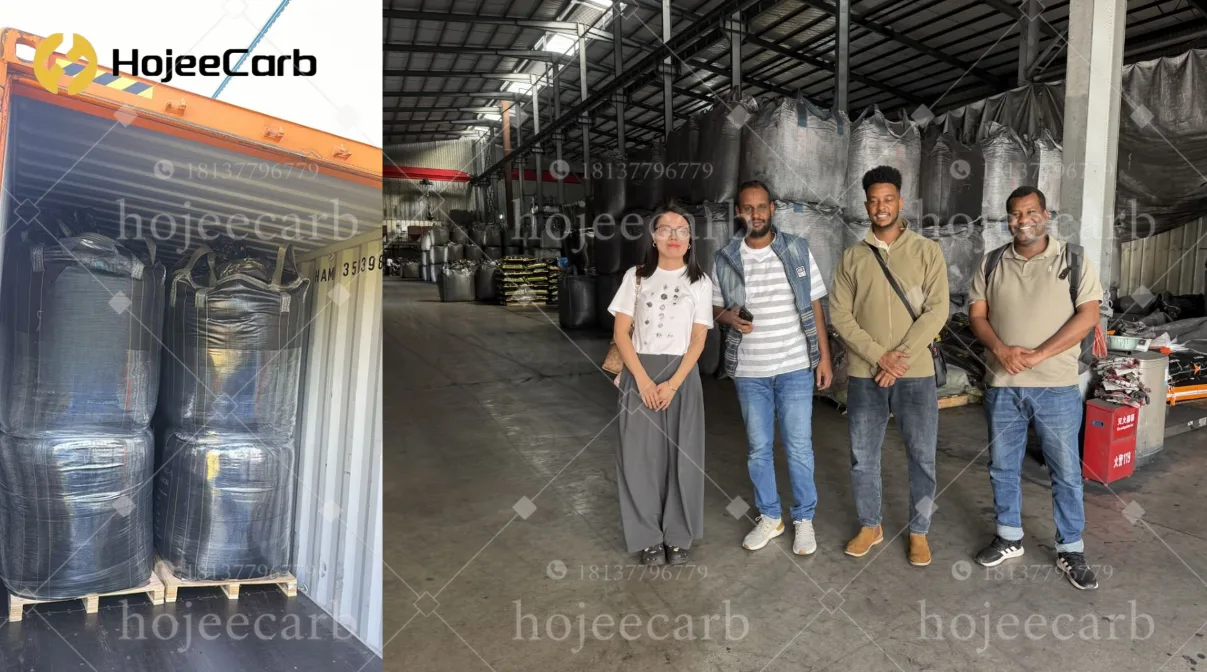
25 kg bags or 1-ton bulk bags, palletized for container loading. MOQ from 1 ton, scalable to full-container volumes.
Need a custom carbon grade for your cartridge line? Send us your spec and volume.
Send Your SpecDrinking Water Compliance
NSF/ANSI 42, 53 & 61 — What We Can and Cannot Claim
NSF/ANSI 42 and 53 certify finished filter devices, not raw carbon. NSF/ANSI 61 covers materials of construction in contact with drinking water. We supply raw activated carbon material and can provide a COA confirming material parameters to your specification. If you are building a certified finished cartridge, the certification is applied for by you as the device manufacturer, not by us as the raw material supplier. We do not hold NSF/ANSI 61 product certification for our carbon. We hold ISO 9001:2015, ISO 14001:2015, and ISO 45001:2015 for our manufacturing process.
Quality management — batch traceability, process control, COA.
Environmental management system.
Occupational health and safety.
These apply to finished devices / drinking-water contact materials. We provide material COA to support your device certification process.
Before You Commit Volume
Free Sample, Then a Locked Grade
We send a free carbon sample with its TDS so your lab and your line can test before any volume commitment. Once a grade passes your trial, we lock it and ship it against a per-batch COA so your incoming QC sees the same numbers every run.
Cartridge type (CTO or UDF), carbon form, target iodine, mesh or fineness, ash and moisture limits, annual volume.
We ship a sample of the matching grade with its technical data sheet, typically within a few working days.
Lab check plus a real extrusion or fill trial on your line. We adjust the grade if the trial asks for it.
Grade frozen, per-batch COA on every shipment, 25 kg bags or 1-ton bulk bags for container loading.
Activated Carbon Media for Cartridges — FAQ
What is the difference between CTO and UDF activated carbon?
CTO cartridges use powdered activated carbon extruded into a solid block; they remove chlorine, taste, and odor and have a consistent density. UDF cartridges are loose-fill with granular carbon and rely on the particle bed for contact time. The key spec difference is powder fineness for CTO versus granule mesh size and hardness for UDF.
Which carbon base is best for carbon block extrusion?
Coconut shell PAC is the most common choice for drinking-water CTO blocks due to its high micropore content and clean taste profile. Wood-based PAC offers very high surface area and methylene-blue value. Coal-based PAC suits wider organic-removal duty. The best choice depends on your binder system and extrusion process — we recommend trialing with a sample and COA before locking a grade.
What mesh sizes do you supply for UDF cartridges?
We supply coconut shell and coal GAC in 8×30, 12×40, and 20×50 mesh as standard cuts. Custom mesh ranges are available per project with confirmation against a sample and COA.
Can you supply to OEM specifications?
Yes. Send us your target iodine number, fineness or mesh range, ash and moisture limits, and any special washing requirement (acid-washed, low-iron). We will confirm feasibility against a sample, provide a TDS, and lock the grade for recurring supply with per-batch COA.
What testing should I do before committing to a carbon supply?
At minimum: iodine number, methylene blue, ash, moisture, and pH against your spec. For CTO blocks: powder fineness (D50/D90) and a trial extrusion with your binder. For UDF fill: mesh distribution, hardness/attrition, and a pressure-drop test at target bed depth. We provide a sample and COA before you place a volume order.
Do you offer free samples?
Yes. We send a free carbon sample with its technical data sheet so your lab and your production line can test before any volume commitment. Tell us the cartridge type and target spec and we will match a grade; you only pay freight on larger trial quantities.
Which stages of a water filter system do you supply carbon for?
Stages 2, 3, and 5 of a typical five-stage system — the UDF granular bed, the CTO carbon block, and the post-filter taste polish. The PP sediment cartridge and the RO or UF membrane are not carbon and we do not supply those. Buying all three carbon stages from one source keeps your COA format and incoming-QC numbers consistent.
Does the carbon mesh set the micron rating of my cartridge?
No. The finished cartridge rating — commonly 5 or 10 µm for CTO blocks — comes from your binder system, die, and compaction, not from the carbon mesh alone. We specify and hold the carbon parameters; validating the device rating stays with you as the cartridge manufacturer.
Ready to Source Carbon Media for Your Filter Line?
Tell us your cartridge type (CTO or UDF), carbon form (PAC or GAC), target spec, and annual volume. We respond within 24 hours with a grade recommendation, TDS, and sample offer.
Request a Quote