Activated carbon price in South Africa spans two orders of magnitude depending on where you buy it. A 60-capsule bottle of 1000 mg charcoal on Takealot costs about R109 — only 60 g of carbon, which works out to roughly R1,800/kg. Order 3 tons direct from a Chinese factory and the same chemistry costs R14–22/kg landed in Durban. This article explains the full price ladder with verified retail figures, what drives each tier, and how to calculate whether factory-direct bulk import makes sense for your volume.
One boundary first: this article covers South Africa–specific landed costs and price tiers. For global FOB China pricing across all grades, see our activated carbon price guide. For the coconut shell grade specifically, see the coconut shell activated carbon price page. For the full HS 3802.10 tariff reference, see activated carbon import duties by country.
The South Africa Activated Carbon Price Ladder (2027)
The table below converts every buying channel to a comparable ZAR/kg basis. Retail figures are verified in-market prices (Takealot, November 2026). Exchange rate used: 1 USD = R17.5.
| Channel | Typical pack / unit | Approx. ZAR/kg | Who buys here |
|---|---|---|---|
| Retail capsules (Takealot / pharmacy) | 60–120 caps × 500–1000 mg | R1,800–R2,700 | Consumers — detox / digestive / oral use |
| Retail loose powder (online / health store) | 100–125 g tub | R500–R800 | Home users, small food & beverage producers |
| Local industrial distributor | 25 kg bag (≈ R1,500 online) | R60–R100/kg | Small water filters, lab, aquarium industry |
| LCL bulk import (3–10 t, consolidated) | Bags or bulk, min 3 t | R25–R45/kg landed | Mid-scale industrial, municipal pilots |
| FCL direct import (full container) | 20–24 t per container | R14–R22/kg landed | Water utilities, gold mines, industrial plants |
Note: Retail prices are verified from in-market listings (Takealot, Nov 2026) and exclude promotional discounts; capsule figures are converted to ZAR per kg of actual carbon content. Industrial landed costs include sea freight, duty-free HS 3802.10, 15% VAT on the added tax value, and standard clearance fees — see the full breakdown below.
Why Retail Activated Charcoal Costs 100–200× More Per Kilogram
The gap is not a markup scandal — it reflects two completely different products and supply chains.
- Dosage form overhead: A 60-capsule bottle holds only 30–60 g of carbon. Everything else — the vegicap shell, bottle, printed packaging, QA, and consumer distribution markup — costs far more than the raw material itself.
- Distribution chain: Pharmaceutical-channel goods pass through importer → national distributor → pharmacy group → store, each layer adding 20–40%. Industrial bulk moves importer → end user, sometimes with no intermediate step at all.
- Grade and certification: Pharmaceutical-grade activated carbon must meet BP/USP compendia specifications for heavy metals, residue on ignition, and adsorptive capacity. These add cost. But the same performance specs — or better — are available in bulk industrial and food-grade activated carbon at a fraction of the price when bought direct.
The practical takeaway: retail activated charcoal and bulk industrial carbon are not interchangeable. Retail serves a consumer market. Industrial grades serve water treatment, gold mining, food & beverage, and air purification — applications that need tonnes, not grams.
Need bulk activated carbon for South Africa?
Get Factory-Direct Pricing — No Middlemen
20+ years manufacturing. MOQ 1 ton. Free samples. Reply within 2 hours.
What You Actually Pay: South Africa Landed Cost Breakdown
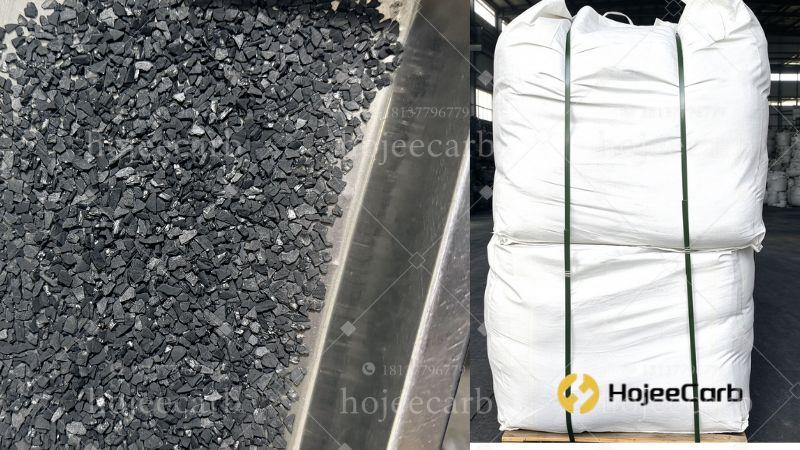
Factory-direct bulk import pricing has five components. Working through each one with a real example — 20 tons of coal-based GAC 8×30 mesh shipped FOB Qingdao to Durban:
| Cost component | Basis | Indicative range (20 t, USD) | Notes |
|---|---|---|---|
| FOB factory price | per ton × 20 t | $600–$900/t → $12,000–$18,000 | Coal GAC 8×30, iodine 800–1000 mg/g |
| Sea freight | per 20ft FCL to Durban | $1,200–$2,500 total | 22–28 day transit; Cape Town +3–5 days |
| Import duty (HS 3802.10) | Free (0%) | $0 | SARS Schedule 1 general duty is Free; confirm current ITAC trade remedies |
| VAT at import | 15% of ATV (customs value ×1.10 + duty) | $1,980–$2,970 | ≈16.5% of customs value when duty is Free; VAT-registered importers reclaim |
| Customs clearance & port fees | per shipment | R8,000–R18,000 (~$450–$1,000) | Agent fee, terminal handling, documentation |
| Total landed (Durban port gate) | per ton | ~$780–$1,225/t → R13,650–R21,440/t → R14–22/kg | Excludes inland delivery to Jo'burg (~R2,500–R4,000/t by road) |
Figures are indicative ranges based on 2026 shipping and factory data. Actual costs depend on grade, volume, port congestion, and current freight rates. Request a formal quote for a project-specific landed cost calculation.
One point on the VAT base: South Africa does not charge 15% on CIF directly. SARS first builds the Added Tax Value (ATV) — the customs value plus 10%, plus any duty — and charges 15% on that. With HS 3802.10 duty-free, the VAT works out to about 16.5% of the customs value. VAT-registered importers reclaim it on their periodic VAT return, so the effective cash cost post-reclaim is lower. For buyers without a VAT registration, the full VAT is a sunk cost — factor this into your comparison against local distributor pricing, which already has VAT built in to the R60–100/kg range.
Which Grade Does South Africa Actually Need?
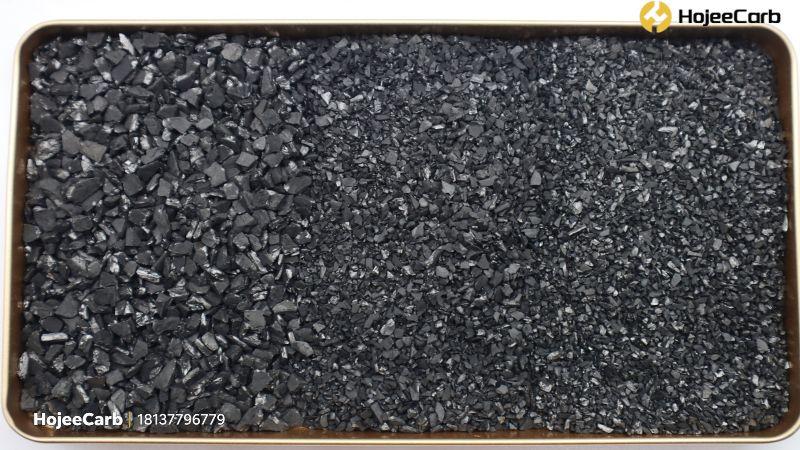
South Africa's activated carbon demand splits three ways, and the grade — and therefore the price — is different for each:
Gold mining (Rustenburg, Limpopo, Free State)
CIP/CIL circuits use coconut shell 6×12 mesh GAC(HojeeGold CG series), iodine value 1000–1150 mg/g, CTC 45–60%, ball-pan hardness ≥99%, ash <3%, moisture <5%, apparent density 480–520 kg/m³. South Africa buyers judge this grade on CTC and hardness, not iodine alone. This is the highest-performance, highest-cost grade: FOB $900–$1,400/ton. South Africa is our second-largest African gold-mining carbon destination after Ghana. See our mining Africa carbon guide for circuit-specific specs.
Municipal water treatment (DWS, water boards)
Drinking water GAC (8×30 or 12×40 mesh, iodine 800–1000 mg/g) is specified against SANS 52915-1 (the SA adoption of EN 12915-1), with NSF/ANSI 61 as the separate drinking-water-contact certification. Coal-based grades are most common at this scale. FOB $600–$900/ton. The main port for Gauteng water utilities is Durban, then road to reservoirs inland. We supply COA, NSF 61 test reports, and MSDS for every water-treatment shipment.
Industrial & food/beverage (sugar, breweries, food processing)
Sugar decolorization and food-grade applications use powdered activated carbon (PAC), 200 mesh, methylene blue ≥200 mg/g. FOB $700–$1,100/ton. Food-grade requires a declaration of food contact material compliance and typically a third-party COA. See our food-grade activated carbon guide.
Get Your South Africa Quote
Factory-Direct Pricing to Durban or Cape Town
3-ton minimum. Full landed cost calculation included. Samples available before bulk order.
Local Distributor vs Direct Import: When Does Each Make Sense?
Factory-direct import is not automatically the right answer. Here is an honest breakdown:
| Scenario | Better route | Why |
|---|---|---|
| Annual volume < 3 tons | Local distributor | Below LCL minimum; freight economics do not work |
| Urgent reorder (stock-out) | Local distributor | 30-day sea transit vs same-week local delivery |
| Annual volume 3–17 t, no VAT registration | Compare carefully | VAT not reclaimable; LCL freight premium reduces gap |
| Annual volume ≥18 t (1 FCL) + VAT registered | Direct import | R40–R80/kg saving vs local; VAT reclaimable; full spec control |
| Mining / utility with custom spec | Direct import | Local stock is generic grade; factories make to spec with COA |
Shipping to South Africa: Ports, Lead Times & Compliance
Two main port options for bulk activated carbon imports:
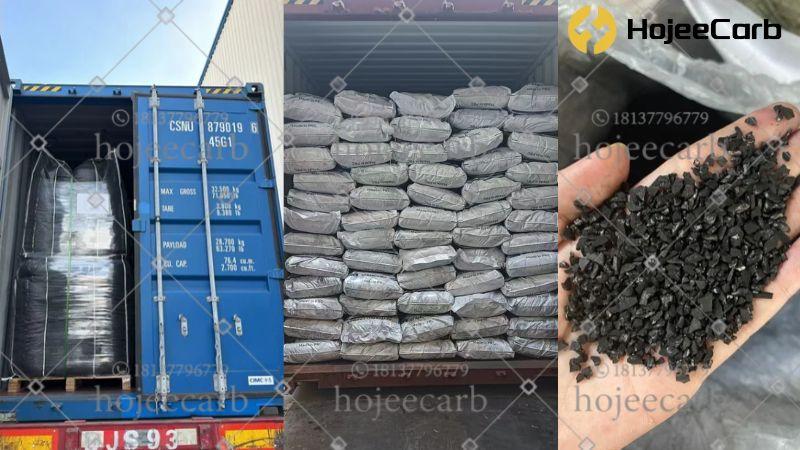
- Durban (Port of Durban): South Africa's largest container port. Transit from Qingdao/Shanghai: 22–28 days. Best for Johannesburg, Gauteng, Rustenburg, and Limpopo gold fields. Inland road from Durban to Jo'burg approximately R2,500–R4,000/ton.
- Cape Town (Port of Cape Town): Better for Western Cape buyers — wine region food and beverage, Saldanha Bay industrial zone. Transit 25–35 days from China.
Key compliance documents we provide with every South Africa shipment:
- Certificate of Analysis (COA) — iodine value, CTC, ash, moisture, mesh size, hardness number, apparent density
- MSDS / SDS compliant with SANS GHS requirements
- Bill of Lading, Commercial Invoice, Packing List, Certificate of Origin
- SANS 52915-1 compliance letter + NSF/ANSI 61 test report (water treatment grade, on request)
- Food-grade compliance declaration and food-contact material statement (food/beverage grade, on request)
For the broader Africa logistics picture including ports in Ghana, Nigeria, Kenya and Tanzania, see our activated carbon suppliers for Africa guide.
FAQ: Activated Carbon Price in South Africa
What is the price of activated carbon in South Africa?
Activated carbon price in South Africa depends heavily on the buying channel. Verified retail prices (Takealot, Nov 2026): loose powder in 100–125 g tubs runs R500–R800/kg, and capsules work out to R1,800–R2,700/kg of actual carbon (e.g. a 60 × 1000 mg bottle at R109 ≈ R1,817/kg). Industrial 25 kg bags from local distributors land around R60–R100/kg (a 25 kg GAC bag retails near R1,500 on Takealot). Factory-direct bulk import from China (3-ton minimum, FOB $600–900/ton for coal GAC) works out to roughly R14–22/kg landed at Durban or Cape Town after sea freight, duty-free HS 3802.10, and 15% VAT.
What is the import duty on activated carbon in South Africa?
Activated carbon imports into South Africa are classified under HS code 3802.10. The general customs duty under SARS Schedule 1 Part 1 is Free (0%). Imports are subject to 15% VAT at entry, charged on the Added Tax Value (ATV) — the customs value plus 10% plus any duty — so with duty Free the effective VAT is about 16.5% of the customs value. Confirm any current ITAC trade remedies (anti-dumping or safeguard measures) at the time of import.
What is the minimum order quantity (MOQ) for bulk activated carbon to South Africa?
Our factory minimum is 3 metric tons per order. Container load depends on bulk density: a 20-foot container holds roughly 10–20 tons of granular activated carbon (GAC), while coconut shell gold-recovery carbon in 550 kg FIBC bulk bags loads around 24 tons per 40-foot HQ container. For buyers not ready to fill a container, LCL (less-than-container load) consolidation is available from 3 tons, though the per-ton freight cost is higher. Sample orders (25–50 kg) are available for lab testing and specification verification before committing to bulk.
How long does shipping from China to South Africa take?
Transit time from Chinese ports (Qingdao, Tianjin, Shanghai) to Durban is typically 22–30 days; to Cape Town 25–35 days. Add 5–10 working days for customs clearance and inland delivery to Johannesburg, Rustenburg, or other inland destinations. Lead time from order confirmation to cargo ready at factory is 7–15 days depending on grade and volume.
Is South African SABS certification required for activated carbon imports?
SABS (South African Bureau of Standards) certification is not mandatory for activated carbon imports in most industrial applications. For potable water treatment, the relevant performance standard is SANS 52915-1 (granular activated carbon, identical to EN 12915-1), with SANS 52915-2 covering reactivated carbon. NSF/ANSI 61 is a separate certification covering the health effects of drinking-water contact materials — it is not an adsorption-performance standard, so the two are quoted separately. For food-grade applications, buyers typically require a Certificate of Analysis (COA), MSDS, and a food-contact compliance declaration. We supply these documents with every shipment.
Why is activated charcoal so expensive at retail compared to bulk?
Retail activated charcoal capsules sell in dosage form — typically 60–120 capsules of 500–1000 mg each, so a bottle holds only 30–120 g of carbon. At verified Takealot prices that works out to R1,800–R2,700 per kg of actual carbon. Loose retail powder is cheaper at R500–R800/kg. The price covers encapsulation, consumer packaging, QA, distribution margin, and retail markup. The same carbon chemistry in bulk 25 kg sacks or FCL import costs R14–100/kg depending on channel. Retail serves a consumer/medical market and is not a substitute for industrial or water-treatment bulk grades.
Ready to Buy?
Get a Landed Cost Quote for South Africa
Tell us your grade, volume, and destination port. We'll send FOB price plus estimated freight to Durban or Cape Town within 24 hours. Samples available before bulk order. MOQ 3 tons.